

Child Sex Crimes Defense | Frisco, Texas
Under Investigation? Understand the Timeline Before Charges Are Filed
Barbieri Law Firm defends clients accused of child sex crimes in Collin County, Dallas-Fort Worth and across Texas. Learn how investigations move and what can affect when charges come.
By Heather Barbieri · Published October 30, 2026
A Texas child sexual abuse investigation does not run on one clock. The answer to how long before charges is a series of stages, and each stage can take a different amount of time. Most cases move from a report, to an investigation, to a charging decision, and then to arrest or a summons and court dates. This page walks through each stage in order and explains what drives its length.
The Stages of a Texas Child Sexual Abuse Investigation at a Glance
A typical child sexual abuse investigation moves through five stages, and none has a fixed length. The stages are the report, the investigation, the charging decision, arrest or a summons, and court proceedings. Not every case reaches every stage, and the order can change from one case to the next.
Two tracks can run at the same time. The Texas Department of Family and Protective Services (DFPS) handles a civil child-welfare case. That case is separate from a police investigation. DFPS child safety guidance draws that line. A DFPS case and a police case can therefore move on different schedules.
Each later section ties one stage to a choice you may face. Those choices include what to say, how to keep records, and how to plan work, school and family around court dates.
If police or DFPS have contacted you about a child sexual abuse report, you do not have to sort out the timeline alone. We can walk through it with you. Talk it through with our team — the first consultation is free, confidential, and carries no obligation.

How the Report Starts and What Happens First
A report usually begins with a child’s outcry, or with a concern from a parent, school employee or doctor. It may go to police, to DFPS, or to both. DFPS report abuse procedures states that emergencies are reported to law enforcement.
Reporting questions in school settings depend on the facts of each situation, and our team can review the facts of yours. The Children’s Advocacy Centers of Texas educator guide explains that DFPS and law enforcement may both become involved after a report.
The police side depends on what evidence exists, so it often runs on its own schedule.
Police may ask you to come in for an interview. Before you answer questions, you can ask to speak with a lawyer first. Many people make their costliest mistake here by answering on the spot, without knowing what the investigator already has. A short pause protects your options.
The Forensic Interview and Evidence Gathering
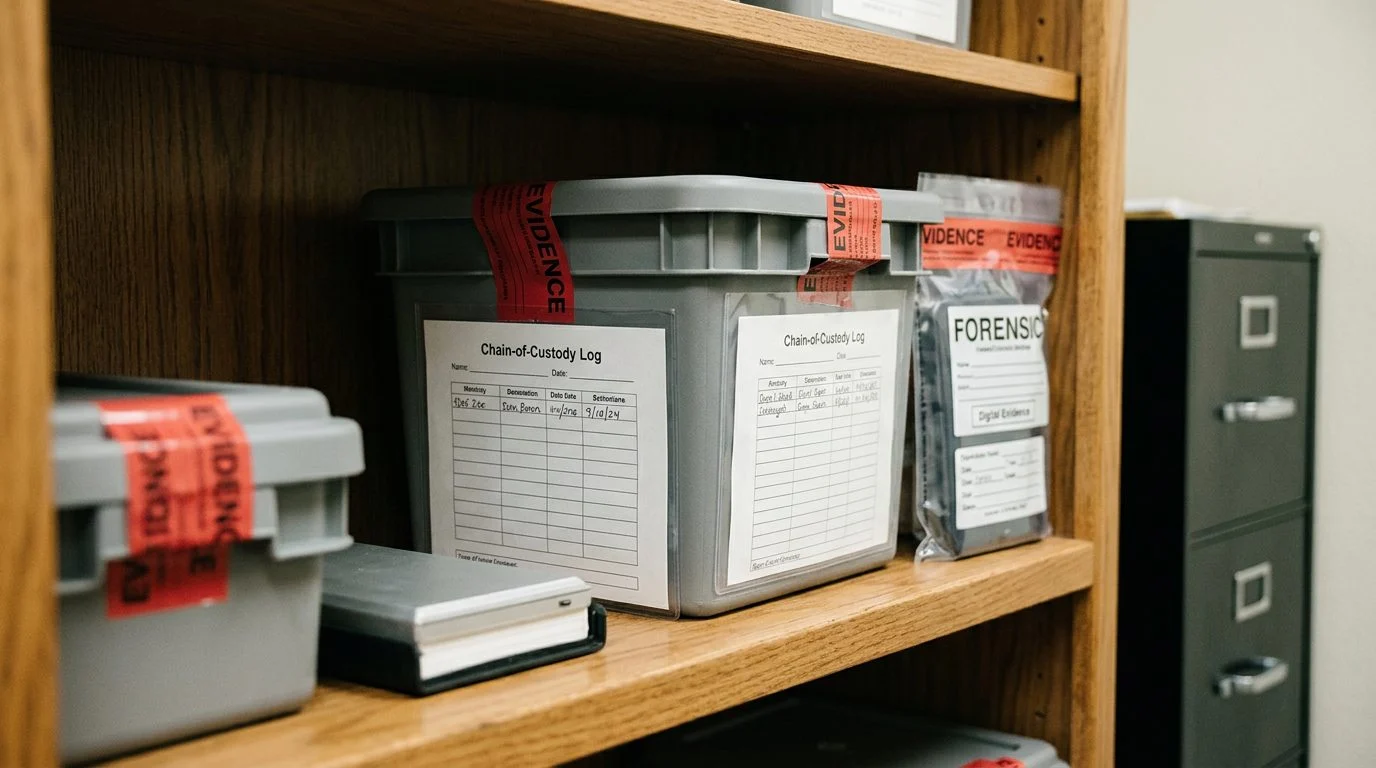
The forensic interview usually comes early, and evidence gathering often takes longer than people expect. A trained interviewer speaks with the child, and the session may be recorded. The interview is one piece of the case, not the whole case.
Investigators may also seek medical exams, search warrants for phones, computers and online accounts, and subpoenas for records. Each step needs time for requests, review and lab work. Digital evidence alone can take weeks or months to review.
The length of this stage depends on three things. They are how much evidence must be collected, how many people must be interviewed, and how quickly records come back. A case with several devices, accounts and witnesses usually takes longer than one with a single witness and no digital trail.
From Investigation to the Charging Decision
A prosecutor decides whether to file charges after the investigation is complete, and that decision has no set date. The review starts when police send their file. It can take longer when the file is large or missing items.
Formal charges in Texas can come through a grand jury indictment. In some situations, they come through a complaint or information instead. The grand jury meets on a schedule, so an indictment may not come back on the day the file is complete.
A charge is not a conviction. Charges can be filed, reduced or declined. Knowing that helps you avoid assuming the worst before the review is done.
Arrest, Bond and First Court Dates
Arrest can follow a warrant issued after charges are filed. Some people learn of charges through a summons instead. Either way, the next steps are a bond setting and a first court date.
Bond may come with conditions. Common ones include no contact with the complainant and limits on contact with minors. Texas makes it an offense to violate certain bond conditions in a sexual assault or abuse case when the condition relates to a victim’s or the community’s safety, according to Texas Penal Code § 25.07. Follow every condition exactly, even when a family member contacts you first.
Arraignment is the first formal court appearance. The judge explains the charge and sets the next steps. Court settings in Collin County and nearby counties are set by each court, so dates can shift. Write down every date as soon as you receive it.
Why Limitations Periods Can Make the Clock Long
Texas sets time limits for many offenses, but some carry no fixed limit: Code of Criminal Procedure art. 12.01(1) lists offenses, including aggravated sexual assault under Penal Code § 22.021(a)(1)(B) and indecency with a child under § 21.11, that may be presented at any time. Under Texas Code of Criminal Procedure Article 12.01, certain offenses against a child can have periods that run from the victim’s 18th birthday. The exact period depends on the offense and the facts.
Some time does not count toward the limit. Under Texas Code of Criminal Procedure Article 12.05, time the accused is absent from the state is not counted. Time while an indictment, information or complaint is pending is not counted either.
A long gap since the alleged event does not automatically end the matter. These offenses also carry serious penalties. Indecency with a child is a second-degree felony for sexual contact and a third-degree felony for exposure, according to Texas Penal Code § 21.11. Aggravated sexual assault is a first-degree felony under Texas Penal Code § 22.021. Under Texas Penal Code § 12.32, a first-degree felony is punishable by imprisonment for life or for any term of not less than 5 years or more than 99 years, and a fine not to exceed $10,000 may be added. Under § 22.021, the minimum prison term rises to 25 years if the victim was younger than 10, or younger than 14 when the offense was committed in an aggravated manner the section describes, so the applicable range depends on the specific charge.
Not sure what your next step is?
Talk it through with our team — the first consultation is free, confidential, and carries no obligation.
Planning Work, Family and Defense Across the Timeline
Start a written timeline from the first contact. Log dates, names and what was said. Pretrial periods can last many months, and a clear record helps you plan work, school and family needs.
Keep copies of every notice, bond paper and court date. If a no-contact order applies, follow it exactly. A violation can create a separate charge.
Family plans matter too.
Early defense review also helps. Reviewing the timeline while evidence is still being gathered lets you ask better questions sooner.

Talk Through Your Timeline With Barbieri Law Firm
If you recently spoke with police or DFPS, or you learned that charges are under review, the decisions in front of you come first. Barbieri Law Firm is an all-women firm in Frisco, Texas. It defends people accused of sex crimes and assaultive offenses across Collin County, Dallas-Fort Worth and Texas. Heather Jean Barbieri, Board Certified, Criminal Law — Texas Board of Legal Specialization, leads the firm’s defense work.
Call (972) 424-1902 or send your case details. The first consultation is free, confidential and without obligation. No lawyer can promise how a case will end, but we can review where your case stands and explain each stage.
Frequently asked questions
How long does a Texas child sexual abuse investigation take?
There is no fixed length. Each stage depends on the evidence, the schedule and the decisions made along the way.
Can charges come years after the alleged event?
Texas time limits vary by offense, and some time is not counted. A long gap does not automatically end a case.
Do I have to answer police questions?
Whether to answer police questions is an important decision, and our team can explain your options before you respond. Talk with a lawyer before any interview if you can.
Attorney responsible for this site: Heather Barbieri, Barbieri Law Firm, Frisco, Texas.
Be careful with statements
Statements to investigators, family members or school officials can become evidence. Speak with a lawyer before you answer questions about the allegation.
How early review can help
Review of the evidence
We will review the reports, interview records and any available recordings and explain what they show and what they do not.
Awareness of the timeline
We will walk you through the steps that may come before any charging decision so you know what to expect.
Plain-language explanation
We will explain your options in clear terms, including what to do if you are contacted by investigators.
Confidential, free first consultation
Our initial consultation is free, confidential and without obligation to continue.
What can affect the timing
Investigation steps
Investigators may gather reports, schedule interviews and request records before they decide how to proceed.
Forensic and interview work
Medical, forensic and recorded interview findings can take time to obtain and review, which can extend the process.
Charging decisions
Prosecutors decide whether to file charges based on the evidence available at the time. Their review can take weeks or longer.
Gaps between events and reports
Many cases are reported long after the alleged conduct. A delay in reporting does not by itself settle how a case will proceed.
Facing an investigation?
Talk with Barbieri Law Firm before you respond to questions. Our free, confidential initial consultation comes with no obligation to continue.
Related practice areas
Request a Consultation
Fill out the short form and we will take it from there.