

Frisco, Texas | Collin County and Dallas-Fort Worth
Facing a Forensic Interview in a Texas Child Sex Crime Case? Know Your Options.
Barbieri Law Firm focuses on defending people accused of child sex crimes across Texas. Here is how a forensic interview works and how a defense lawyer can review it with you.
Who we are and how we work
Free
Initial consultation, confidential and without obligation
All-women
Criminal defense firm led by Heather Barbieri
Frisco
Texas home base serving Collin County and beyond
By Heather Barbieri · Published October 29, 2026
For anyone reading about a forensic interview child sex crime case Texas defense, two questions come first: what is the interview, and can the defense see it? A forensic interview is a structured, recorded conversation with a child. A trained interviewer asks questions to learn what, if anything, the child experienced. A defense lawyer generally asks to review the recording and related records, and how the interview was conducted often matters as much as what the child said. This page explains the process in plain terms for parents, relatives, and accused adults who are new to it.
Why a Forensic Interview Comes Up in a Texas Child Sex Crime Case
A forensic interview usually comes up after someone reports that a child may have been harmed. Police or Child Protective Services (CPS) may then arrange an interview so the child can describe what happened. A forensic interview is different from everyday talk with a parent or teacher. It is planned, recorded, and carried out by someone trained to ask questions in a careful way. Texas CPS investigations include an ongoing assessment of child safety, as described in the Texas CPS Handbook 2200. Many people first hear the term while they are scared and have few details. If you are reading this, you probably didn’t choose this situation. You may be a parent, grandparent, or other relative of a child who was interviewed. You may also be an adult who has learned that an interview is part of a case involving you. To see the full sequence of how these cases move, read how these cases unfold.
If a child in your life was just interviewed, you don't have to sort out what comes next alone, and we can talk through the interview with you. Talk it through with our team — the first consultation is free, confidential, and carries no obligation.

Who Conducts the Interview and Where It Usually Happens
In Texas, many forensic interviews take place at a children’s advocacy center, with one trained interviewer. A children’s advocacy center is a child-friendly setting where several agencies work together on a case. The Children’s Advocacy Centers of Texas says Texas centers coordinate forensic interviews within a multidisciplinary response. That means law enforcement, CPS, and other professionals may all play a part in the same case. The interviewer’s training, background, and role can differ by agency. A defense lawyer looks at who conducted the interview, which agency sent them, and what they were told before they spoke with the child. The location can also vary from case to case, so the setting is one more fact to check.
How Structured Interview Protocols Are Designed to Work
Most structured forensic interviews follow a set protocol built on open-ended questions and careful wording. One widely used structure is the NICHD Protocol. The OJJDP child abuse investigations publication describes professional standards for these interviews. Those standards include avoiding repeated questioning and using open-ended questions.
A typical sequence runs like this. The interviewer first builds rapport and talks about everyday topics. Then the child practices telling a simple story, such as describing a recent day. Next, open prompts ask about the event itself, like “Tell me what happened.” Follow-up questions then build on what the child already said.
Questions fall into a few broad groups. Open-ended questions let the child answer in their own words. Focused questions ask about a specific detail, such as “Where were you?” Closed questions allow only a yes or no answer. Suggestive questions introduce a detail or idea the child has not offered. The wording matters because it shapes how the answer should be judged. Whether the interviewer followed the protocol is a fact to check in each case. A defense review tests the interview’s content against that protocol instead of assuming it was done correctly.
Can the Defense Review the Interview Recording?
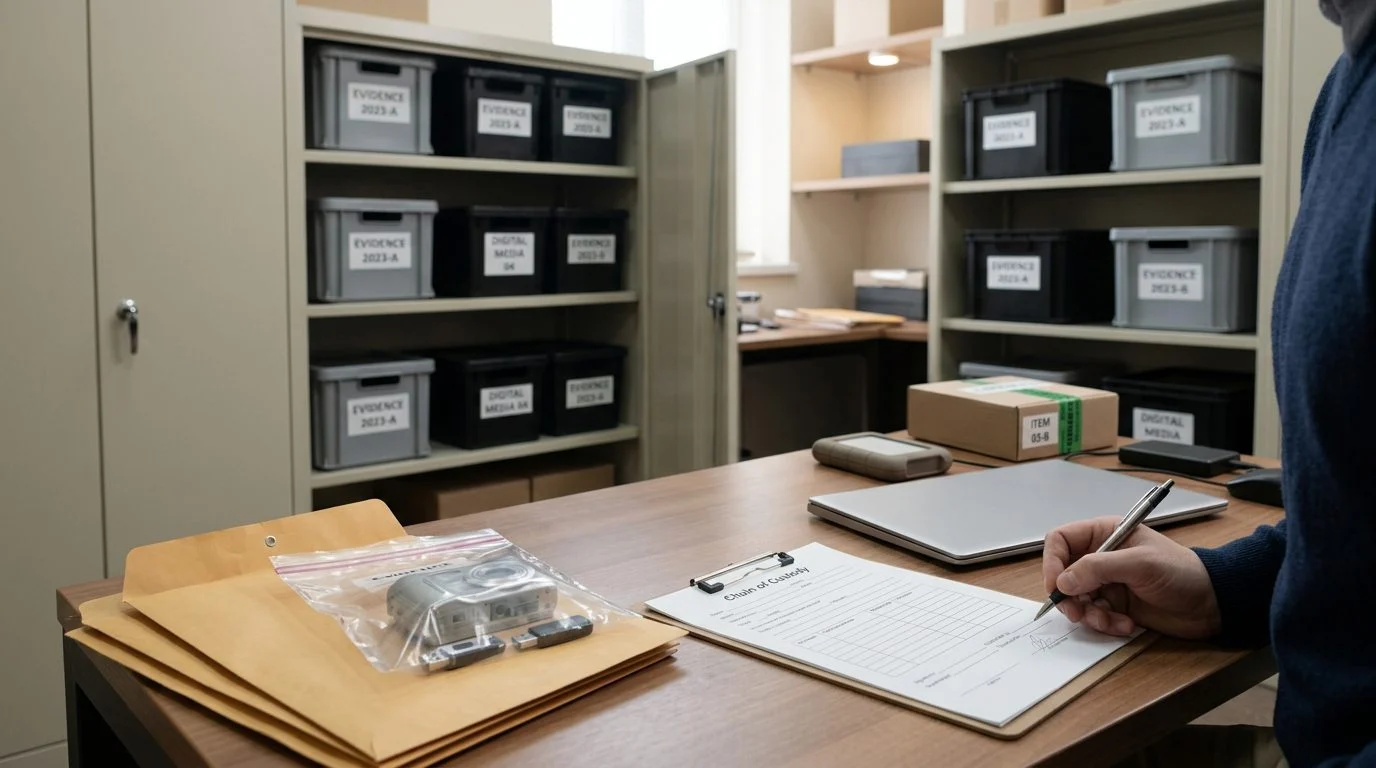
Generally, yes. The defense asks the prosecution for the recording and related materials as part of discovery, the process of exchanging evidence before trial. Related materials can include a transcript if one exists, the interviewer’s notes, police and CPS reports, and any other recorded contact with the child. A recording shows the child’s words, tone, and the exact questions asked. A written summary cannot show those things. Limits on copying or viewing may come from orders in the case. How and when the defense gets access depends on the facts and the court’s orders in the specific case. Gaps in what has been produced matter, so the defense tracks them from the start.
What a Defense Lawyer Looks for When Reviewing the Interview
A defense lawyer checks how the interview was conducted, what was asked, and how the child’s account changed over time. These are the points that come up most often in that review:
- Protocol: Did the interview follow its stated structure, including rapport, open prompts, and the order of questions?
- Suggestive wording: Did the interviewer repeat questions, offer details the child never gave, or hint at the answer?
- Earlier statements: What did the child say to a parent, teacher, or other adult before the interview, and when?
- Completeness: Does the recording include the pre-interview talk, breaks, and any other sessions?
- Notes: Do the interviewer’s notes match what is on the recording?
These are the points a defense team checks in any forensic interview child sex crime case Texas courts hear. Each one is tested against the full recording, not a short clip.
How the Interview Fits With Other Evidence in the Case
The interview is usually one piece of a larger file. That file can include medical examination findings, CPS records, police reports, and digital evidence. A medical examination may or may not be part of a case. The defense reviews what those records show and what they do not show, without assuming what they mean.
The stakes depend on the charge. For example, aggravated sexual assault is a first-degree felony under Texas Penal Code § 22.021. The minimum prison term rises to 25 years in certain cases, including when the victim is younger than 10. A first-degree felony can carry life, or any term from 5 to 99 years, under Texas Penal Code § 12.32.
Timing matters in other charges too. Under Texas Penal Code § 21.02, jurors don’t have to agree on the exact dates or which specific acts happened. They must agree that two or more acts of sexual abuse occurred within a period of 30 or more days. That makes the timeline in the interview important to the defense.
Not sure what your next step is?
Talk it through with our team — the first consultation is free, confidential, and carries no obligation.
Common Questions About Forensic Interviews in Texas
Here are short answers to questions parents and relatives ask most often.
Can a parent be in the room during the interview?
The rules can vary by agency and setting. The defense checks who was present and when.
Can the interview be used in court?
Questions about what evidence may be presented at trial are part of reviewing a case with you. The defense can challenge the recording and the child’s statements.
What is an outcry witness?
An outcry witness is usually the first adult the child told about the abuse. The defense looks closely at that first disclosure, when it happened, and what words the child used.
What if the child says nothing useful in the interview?
The interview is still documented. The notes and recording show what was and was not said.
Not every report leads to a charge.
Rules to Keep in Mind While the Case Is Pending
While a case is open, avoid discussing the interview or the child’s statements with the child, other witnesses, or on social media. Those conversations can complicate the case. Court orders can also set contact rules. Under Texas Penal Code § 25.07, breaking a bond condition in a sexual assault case can be its own offense. That applies when the condition is related to the safety of a victim. It can include communicating with a protected person in any manner, except through the person’s attorney, when the order prohibits it. The safest course is to follow every order exactly as written. If a condition is unclear, raise it with the defense lawyer on the case right away.
Talk With Barbieri Law Firm About Your Situation
Barbieri Law Firm is based in Frisco. The firm defends clients in sex crime and assaultive offense matters across Collin County, Dallas-Fort Worth, and Texas. If a child in your life was just interviewed, or you were told an interview is part of a case involving you, you don’t have to work out the next steps alone. We can review the interview and the evidence with you. Call (972) 424-1902 for a free, confidential initial consultation with no obligation to continue, or send your case details through the contact form.
Attorney responsible for this site: Heather Barbieri, Barbieri Law Firm, Frisco, Texas.
Heather Jean Barbieri, Board Certified, Criminal Law — Texas Board of Legal Specialization.
How a defense lawyer reviews a forensic interview
We review the recording
We look at the full recording, including how the interview started, how it was introduced, and how it ended.
We examine the timeline
We compare dates, the sequence of events and when each statement was first made.
We check the process
We look at who was present, what questions were asked, and how closely the interview followed the protocols used in the case.
We explain your options
After reviewing the evidence, we explain what it means for your case and what steps are available to you.
Before you discuss the case
Statements made about a child sex crime allegation can affect the rest of a case. Talking with a lawyer before answering questions from investigators can help you understand what is being asked and why.
Questions people ask us first
Can a parent be in the room?
Rules can vary by agency and setting. We check who was present and when, and we explain how that may matter in your case.
Can the interview be used in court?
What evidence may be presented at trial is part of reviewing your case with you. We can challenge the recording and the child's statements.
What if the child's story changed?
We compare statements made at different times, including those made to family, school staff, medical providers and investigators.
Is a consultation confidential?
Our free initial consultation is confidential and comes with no obligation to continue. We will listen first and then explain your options.
Talk with Barbieri Law Firm about your case.
Related practice areas
Request a Consultation
Fill out the short form and we will take it from there.