

Child Sex Crimes Defense | Frisco, Texas
Child Advocacy Center Forensic Interviews in Texas: What Families Need to Understand
A forensic interview can become a central part of a child-related criminal investigation. Barbieri Law Firm, led by Heather Barbieri, defends people accused of child sex crimes across Collin County, Dallas-Fort Worth and Texas.
By Heather Barbieri · Published October 30, 2026
A child advocacy center forensic interview in Texas is a structured, child-friendly conversation between a trained interviewer and a child. Its purpose is to learn, in plain facts, what the child experienced. If a child you care about is scheduled for one, or has already had one, you may feel lost. You may also be worried about an adult who has been accused. Both worries are common. Texas children’s advocacy centers coordinate these interviews as part of a wider team response to abuse concerns, as the Children’s Advocacy Centers of Texas brochure explains.
What Is a Forensic Interview With a Child?
A forensic interview is a structured, child-friendly conversation led by a specially trained professional. It aims to learn what a child has experienced, without suggesting the answer. The word “forensic” means the information is meant for use in an investigation or court case. That is why these interviews are often recorded.
The interview is not therapy, and it is not cross-examination. It is a fact-finding step. The interviewer does not decide whether a crime happened or what comes next.
Interviews usually take place at a children’s advocacy center. This is a setting designed to feel less intimidating than a police station. These centers bring several agencies into one process. The National Children’s Alliance CAC model describes a team process in which child interviews and decisions are coordinated among child protective services, law enforcement, medical, mental-health, prosecution, and victim-advocacy professionals. The interview is one piece of that larger response.
If a child you love is tied to a sex crime or assault charge, we can review the case file with you and explain your options. Talk it through with our team — the first consultation is free, confidential, and carries no obligation.
Why Does a Child Have a Forensic Interview?
A child usually has a forensic interview after someone reports that the child may have been harmed. The goal is to get the child’s account in one coordinated session, rather than many separate talks.
Consider what happens without one. A child may tell a relative, a teacher, a doctor, and an officer, each asking the same questions. Each retelling can upset the child. Several separate accounts can also be harder to document clearly later. A single recorded interview reduces that burden. OJJDP guidance on child abuse investigations states general professional standards that include avoiding repeated questioning and using open-ended questions.
The interview also helps investigators decide what further steps may be needed, such as a medical review or follow-up. Those steps depend on the facts. A reason for an interview is not proof that anything happened. The appointment gathers information. It does not establish facts by itself.
Who Conducts the Interview and Who Is Involved?
A specially trained forensic interviewer conducts the interview. Interviewers learn about child development and about interview methods that fit young children.
Other professionals often take part from a separate room. Law enforcement, child protective services, prosecutors, and others may watch through a monitored room or review the recording afterward. Usually they are not in the room with the child. Because several agencies use the same recording, the child may not need to repeat the story to each one.
The child is usually interviewed in a child-friendly room. These rooms often have comfortable furniture and toys. The goal is a calmer setting than a courtroom or police station.
Who is present, and how the interview is set up, depends on the facts of the case and the local protocol. Caregivers should expect the answer to vary from case to case.
What Do Interviewers Ask a Child?
Interviewers usually begin with rapport and simple ground rules. Then they ask open-ended questions about the child’s experience. Open-ended questions invite the child to explain in their own words.
A typical interview follows a loose order. First, the interviewer builds comfort and explains the rules. Next, the child may practice answering questions about a neutral topic, such as a recent day or a favorite food. Then the interviewer moves to the topic of concern, often with a prompt like “Tell me what happened.”
Open-ended questions are preferred over yes-or-no questions that suggest an answer. A question that suggests its own answer can put words in a child’s mouth. Follow-up questions usually build on what the child already said. The interviewer may ask the child to explain words, places, people, and the order of events.
Children are often asked whether they know the difference between the truth and a lie. They are also told it is fine to say “I don’t know” or “I don’t remember.” The interviewer generally avoids discussing case details with the child beyond what the interview requires.
What Happens After a Forensic Interview With a Child?
After the interview, the recording and notes become part of the case file. Investigating agencies then decide what steps come next. The team reviews the interview as part of its work.
The child may be referred for a medical examination or counseling. Whether those referrals happen depends on the facts. Investigators may later interview other witnesses and the accused person. The forensic interview is one source of information among several.
Texas child protective investigations have their own process. The Texas Department of Family and Protective Services investigation handbook describes an ongoing child-safety assessment during its basic investigation process.
The interview itself does not set a timeline. Charges, investigations, and court dates vary widely. The interview does not, by itself, decide whether a crime occurred or who is responsible.
How Is the Recording of a Forensic Interview Used in a Criminal Case?
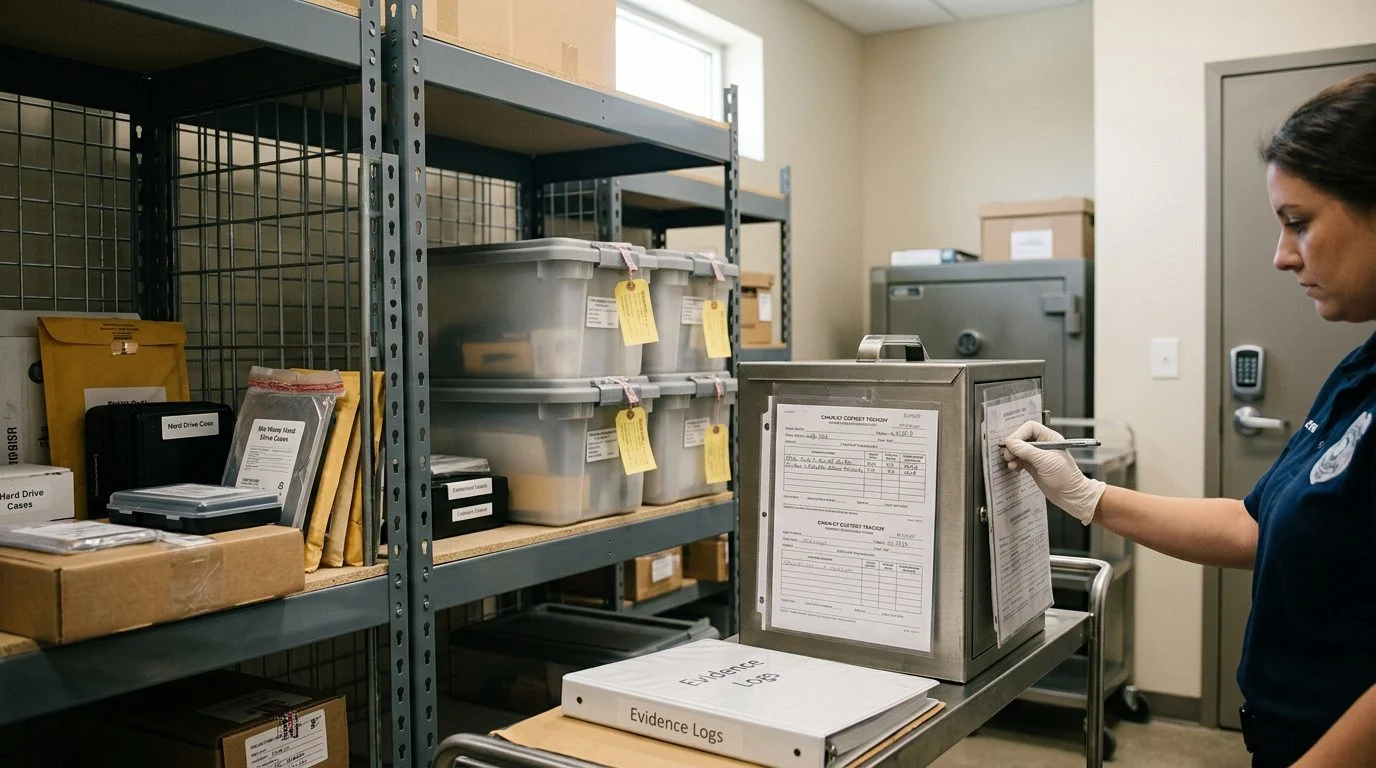
A recording is one kind of evidence that may come up in a criminal case.
Defense lawyers review the recording closely. They look at how each question was asked. Open-ended and suggestive questions can sound very different on tape. The review also covers how the child’s answers were recorded, and whether the interview followed the agreed protocol.
Questions about the interviewer’s training, and about any earlier statements the child made to other adults, are also common subjects of review. The child’s age can matter too. Under Texas Penal Code § 22.011, a “child” is a person younger than 17 years of age. A defense review is a process of examining the record. Its results depend on the facts of each case.
Not sure what your next step is?
Talk it through with our team — the first consultation is free, confidential, and carries no obligation.
Common Questions Parents and Relatives Ask
A child advocacy center forensic interview in Texas often raises practical questions. Here are the ones caregivers ask most.
Can a parent be in the room?
Arrangements vary by center and by case. The answer depends on the facts and the local protocol. It can change from one situation to the next.
What should I tell a child before the interview?
Keep it short, calm, and honest. Tell the child that a person will ask questions, and that saying “I don’t know” is okay. Avoid rehearsing answers, because the interviewer needs the child’s own words.
Should I ask the child what they said?
Adults should avoid quizzing the child about what was said. Repeated retelling can complicate the record. This is a common concern in these cases. This is general information, not legal advice for your situation.
Why the Interview Matters When Someone Close to You Has Been Accused
When a family member, coach, or neighbor is accused, the interview recording often sits at the center of the case. You may be carrying two worries at once. One is for the child. The other is for the adult who has been accused. Both can be true at the same time.
The accused person’s defense often turns on the details of the investigation. That includes the recording, how the child’s account was obtained, and how it was written down. An early, careful review of the records helps a family understand what the case file holds.
Some charges depend on the type of conduct alleged. Under Texas Penal Code § 21.11, indecency with a child involves sexual contact or exposure. Sexual contact is a second-degree felony, and certain exposure is a third-degree felony.
No lawyer can say how a criminal case will turn out. Each case depends on its own facts.
Talk With Heather Barbieri About Your Situation
If a forensic interview is tied to a sex crime or assault charge, you do not have to sort it out alone. You are trying to understand a process you did not choose. You may be doing it for a child you love, and for an adult you are also worried about.
Barbieri Law Firm is based in Frisco, Texas. The firm defends people accused of sex crimes and assaultive offenses across Collin County, Dallas-Fort Worth, and Texas. Heather Barbieri can review the case file, including any recorded interview, and explain your options.
The first consultation is free, confidential, and carries no obligation to continue. Call (972) 424-1902, or send your case details through the contact form.
Author: Heather Jean Barbieri, Board Certified, Criminal Law — Texas Board of Legal Specialization, founding attorney of Barbieri Law Firm, Frisco, Texas.
Attorney responsible for this site: Heather Barbieri, Barbieri Law Firm, Frisco, Texas.
How the Process Often Works
A Structured Interview
Child advocacy centers commonly use a trained interviewer and a set protocol. The format is designed to gather information from a child in a controlled setting.
Often Recorded
Many interviews are video or audio recorded. A recording can be reviewed later, along with other evidence in the case.
Part of a Larger Investigation
The interview is one piece of a broader inquiry that may include law enforcement, child protective services and medical or other records.
Facts Still Matter
Every case turns on its own facts, the charges involved and the evidence available. We review those details with you.
Important: Early Questions Matter
If you have learned that a forensic interview has been scheduled or has already taken place, speaking with a criminal defense lawyer early can help you understand how the process works and what questions to ask.
Ways We Help Families Navigate the Process
Reviewing the Interview
We review the recording or notes, the protocol used and the circumstances surrounding the interview so you understand what was asked and how it was documented.
Understanding the Investigation
We explain the charges, the investigating agencies and the evidence they may be relying on, including any medical or digital records.
Explaining Your Options
We will walk through the possible next steps in your situation and answer your questions in plain language, at a pace that works for you.
Protecting Your Communications
We advise you on speaking with investigators, family members, schools and others, because statements made outside our office can become part of the case.
Talk With Heather Barbieri About Your Situation
Related practice areas
- How Texas Child Sex Crime Cases Unfold: Investigation, Charges, Bond, and Defense Options
- Defense Investigation in a Texas Child Sex Crime Case
Request a Consultation
Fill out the short form and we will take it from there.