

Frisco, Texas | Educator Defense
Accused of a Child Sex Crime as a Texas Educator? Get Focused Defense Now.
Barbieri Law Firm defends educators and other professionals accused of child sex crimes across Collin County, Dallas-Fort Worth and Texas. We will review the evidence, explain your options and help you protect your career and your future.
How We Approach Your Defense
Confidential From the First Call
Your first consultation is free, confidential and comes with no obligation to continue.
A Full Review of the Evidence
We will review the allegations, the investigation and the evidence, and explain the options available to you.
Led by Heather Barbieri
Heather Jean Barbieri, Board Certified, Criminal Law — Texas Board of Legal Specialization, leads the firm's defense work. Barbieri Law Firm is an all-women firm, and our team handles every case with care and discretion.
Coordinated With Your Career
We help you understand how a criminal case may affect your teaching certificate and employment, and we coordinate your defense with those concerns.
By Heather Barbieri · Published October 21, 2026
A child sex crime charge in Texas puts an educator’s career at risk. It also creates two separate cases at once: the criminal case in court and the certificate case before the State Board for Educator Certification (SBEC). This page explains how the two fit together, so you can understand your situation before you decide on anything.
Barbieri Law Firm is an all-women criminal defense firm in Frisco, Texas. The firm defends professionals accused of sex crimes and assaultive offenses.
Who This Defense Is For and What Charges It Covers
This defense is for Texas educators, and their families, facing a child sex-related charge or an allegation involving a minor.
Teachers, aides, coaches and administrators can all face these charges. So can the spouse or parent trying to understand what comes next.
The firm’s work covers Collin County, Dallas-Fort Worth and Texas. The charges include:
- Aggravated sexual assault of a child. Under Texas Penal Code § 22.021, this is a first-degree felony. The minimum prison term rises to 25 years in certain cases, including when the victim is younger than 10.
- Sexual assault of a child. This offense generally is a second-degree felony.
- Indecency with a child. Under Texas Penal Code § 21.11, sexual contact is a second-degree felony, and certain exposure is a third-degree felony.
- Online solicitation of a minor. This offense covers sexually explicit messages and solicitation to meet a minor. The degree depends on the conduct and the minor’s age.
An allegation is an accusation. It is not a finding of guilt.
If you're an educator facing a child sex charge, you don't have to sort out the court case and the certificate alone. Our team can talk with you in a free, confidential consultation. Talk it through with our team — the first consultation is free, confidential, and carries no obligation.

How Allegations Usually Begin Inside Schools
Most of these cases start with a report made inside a school, at home or online.
- A student tells a friend, counselor or teacher about something that happened.
- A parent sees a message on a child’s phone or school account and complains to the campus.
- Administrators pass the concern to the district. From there, it can reach police or child protective services.
- Online messages can start a criminal matter too. Internet Crimes Against Children task forces support investigation of technology-facilitated child sexual exploitation.
Early statements matter. A statement to a principal, a district investigator or an employer can become evidence in both tracks. A district’s internal investigation can also create records that matter later.
Two Tracks: The Criminal Case and the SBEC Certificate Case
The criminal case decides the charge in court. The SBEC process decides whether the educator keeps a certificate.
- The criminal track runs in court, with its own rules, timeline and possible outcomes.
- The certificate track runs before SBEC, which handles educator certificates. It has its own investigation and process.
- The two move on separate clocks. A step in one can change the other.
A court result does not end the certificate question on its own. Subsection (d) lets a licensing agency consider prior deferred adjudication in certain conditions, including when the job involves direct contact with children.
How a criminal result is treated in a certificate case depends on the facts. We review that question with each client.
What a Certificate Defense Involves
- Read the notice closely. Note the allegations as written and any date to respond.
- Coordinate with the criminal defense. A written response to the certificate matter can become evidence in court. The two must fit together.
- Gather the right records. These include employment history, evaluations and any district findings.
How the Criminal Defense Works, Step by Step
The criminal defense moves through five steps. Timing depends on the court’s schedule and the stage of the case.
- Free, confidential initial consultation. We review the charge, the timeline and any notices you have received.
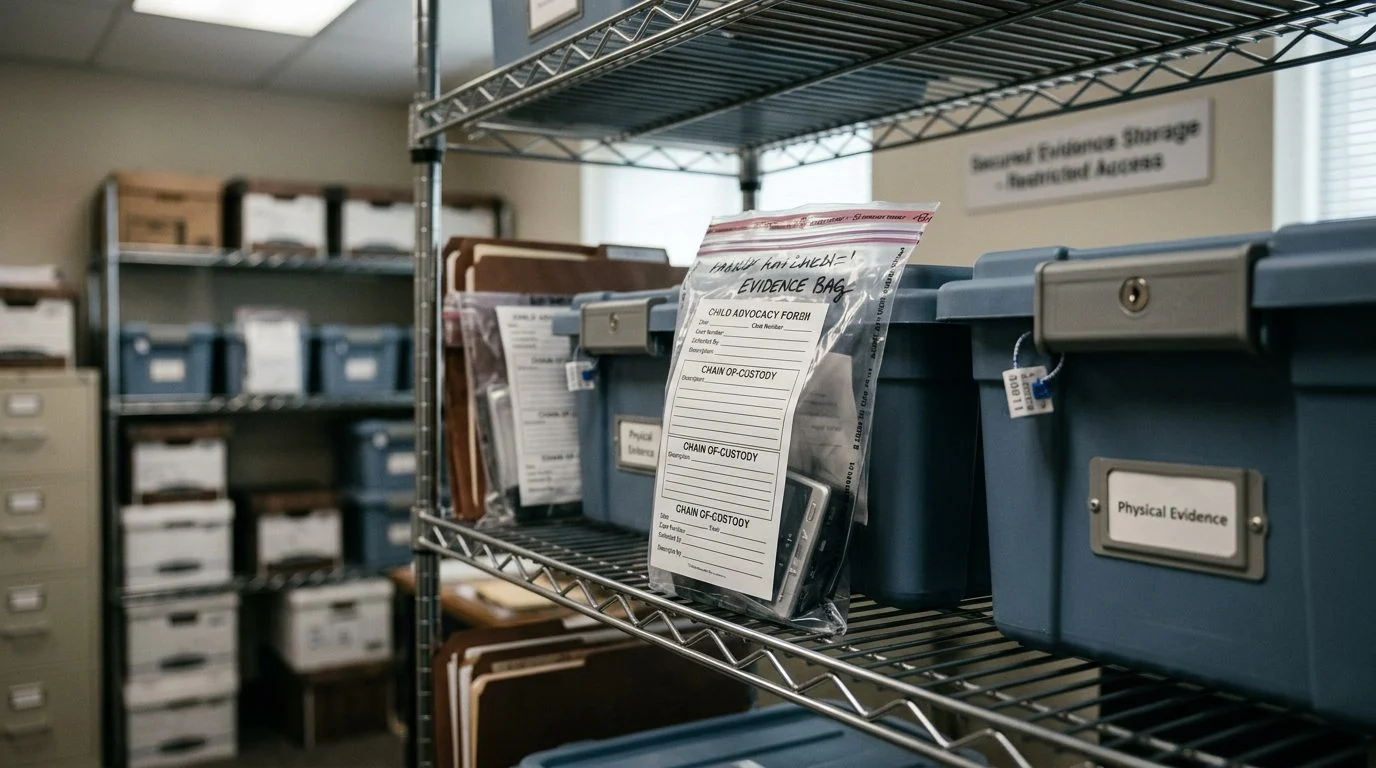
- Evidence review. We look at the child’s forensic interview, medical examination records, school records, digital evidence and witness statements.
- Pretrial work. This can include motions, challenges to evidence and negotiations with the prosecutor.
- Options. We explain dismissal possibilities, deferred adjudication, probation terms and whether to take the case to a jury trial. Each option carries its own consequences.
- Coordination with the certificate track. Decisions in court and in the SBEC matter are made together.
Deferred Adjudication, Probation and Your Certificate
Deferred adjudication lets a judge delay a finding of guilt. Probation follows a conviction. Each one carries different terms.
- Under art. 42A.101(a), if the judge believes the best interest of society and the defendant will be served, the judge may, after a plea of guilty or nolo contendere and a finding that the evidence substantiates guilt, defer further proceedings without entering an adjudication of guilt. The judge must explain the possible consequences of violating supervision.
- Eligibility limits. Under art. 42A.102(a), a judge may place a defendant charged with indecency with a child, sexual assault or aggravated sexual assault on deferred adjudication only if the judge makes a finding in open court that it is in the victim’s interest.
- Dismissal at the end. Under art. 42A.111(a), if no adjudication of guilt is entered when the supervision period ends, the judge shall dismiss and discharge the defendant. Texas Code of Criminal Procedure Art. 42A.111 reads: “(b) The judge may dismiss the proceedings and discharge a defendant before the expiration of the period of deferred adjudication community supervision if, in the judge’s opinion, the best interest of society and the defendant will be served, except that the judge may not dismiss the proceedings and discharge a defendant charged with an offense requiring the defendant to register as a sex offender under Chapter 62.”
Each path affects the certificate and employment picture in its own way. Those effects are weighed case by case.
Not sure what your next step is?
Talk it through with our team — the first consultation is free, confidential, and carries no obligation.
Why Work With Barbieri Law Firm
Barbieri Law Firm is an all-women criminal defense firm in Frisco, Texas. It defends professionals accused of sex crimes and assaultive offenses.
- Heather Jean Barbieri, Board Certified, Criminal Law — Texas Board of Legal Specialization.
- Our lawyers are Heather Barbieri and Carrie Thomas. Our team includes support staff who keep case files organized.
- The firm defends clients in Collin County, Dallas-Fort Worth and across Texas.
- Practice areas include sex crimes, aggravated sexual assault, child sex crimes, online sex crimes, aggravated assault, family violence, and theft defense for students and non-citizens.
Common Questions About Teacher Certificates and Child Sex Charges
Will a charge alone cost me my certificate?
A charge is not a conviction. Whether a certificate is affected depends on the facts and the agency’s process.
Should I respond to an SBEC letter right away?
Identify any deadline in the notice right away. Coordinate any response with the criminal defense so the two don’t conflict.
Can I keep talking to my school?
Statements to the district can become evidence in both tracks.
Is deferred adjudication available for indecency with a child?
It can be, but only if a judge finds in open court that it is in the victim’s best interest, and not if the defendant was previously placed on community supervision for an offense of this kind.
Is the first consultation free?
Yes. The initial consultation is free, confidential and carries no obligation to continue.

Talk With Our Lawyers About Your Situation
If you’re an educator facing a child sex charge, or watching a family member go through one, you’re making decisions under pressure. The criminal case and the certificate may both need answers now.
Share the charge, any notices you received and the timeline. We’ll explain the options for both tracks.
- Call (972) 424-1902.
- Schedule a free consultation.
- Send your case details through the website.
Attorney responsible for this site: Heather Barbieri, Barbieri Law Firm, Frisco, Texas.
Do Not Ignore Any Notice
A letter from a school district, the State Board for Educator Certification or a law enforcement agency should be reviewed promptly. Bring it to us so we can identify any deadline stated in the notice and coordinate your response with your criminal defense.
Charges We Defend
Child Sex Crimes
We defend people accused of child sex crimes in Collin County, Dallas-Fort Worth and across Texas.
Online Sex Crimes
We review how digital evidence was obtained, what it shows and what it does not show in cases involving online activity.
Sex Crimes
We handle a wide range of sex crime allegations, with attention to the facts, the evidence and the impact on your life.
Aggravated Sexual Assault
We defend serious sexual assault allegations and explain the charges, the potential consequences and your options at every stage.
Talk to Barbieri Law Firm About Your Case in Confidence
Related practice areas
Request a Consultation
Fill out the short form and we will take it from there.