

Child Sex Crimes Defense | Frisco, Texas
A Family Member Has Been Accused of Child Sexual Abuse. Talk to a Lawyer Before You Say Anything Else.
Your first consultation is free, confidential and without obligation.
By Heather Barbieri · Published October 28, 2026
A family member accused of child sexual abuse Texas defense is built from the charge, the timeline and the evidence, and the work starts early. Relatives often learn about an accusation from a police call, a CPS caseworker or a court paper. This page explains the charges, the two tracks that often run at once, and what the first weeks look like.
What It Means When a Family Member Is Accused of Child Sexual Abuse in Texas
An accusation against a relative can lead to a police interview, a criminal case, a CPS investigation, or all three at once. Three charges commonly apply in these cases:
- Continuous sexual abuse of a young child. This requires two or more acts of sexual abuse over a period of 30 or more days. For continuous sexual abuse of a young child, the actor must be 17 or older, and the victim must be a child younger than 14.
- Aggravated sexual assault of a child. This is a first-degree felony.
- Indecency with a child. Sexual contact is a second-degree felony. Exposure is a third-degree felony (Texas Penal Code § 21.11).
Each charge has its own elements. Elements are the facts the state must prove. The charging document, not the family’s account of events, names the offense the state must prove.
This page is written for parents, grandparents, spouses, adult siblings and other relatives. Your family member’s rights and your family’s choices are separate questions. Both need attention early, before court dates arrive.
If a relative has just been accused and decisions are coming fast, we can review the charge, the timeline and the evidence with you. Talk it through with our team — the first consultation is free, confidential, and carries no obligation.

What a Defense for a Family Member Covers
A defense starts with the charge and the timeline, then tests the state’s proof one piece at a time.
- Charge review. The charging document is checked against the statute. That includes the acts alleged, the dates and the complainant’s age.
- Timeline. The defense maps where the accused, the child and other household members were on each date alleged.
- Statement history. Every account given to police, CPS, medical staff, school staff and family is collected and compared over time.
- Interview review. The forensic interview recording is reviewed for technique, question style and whether the full session was captured.
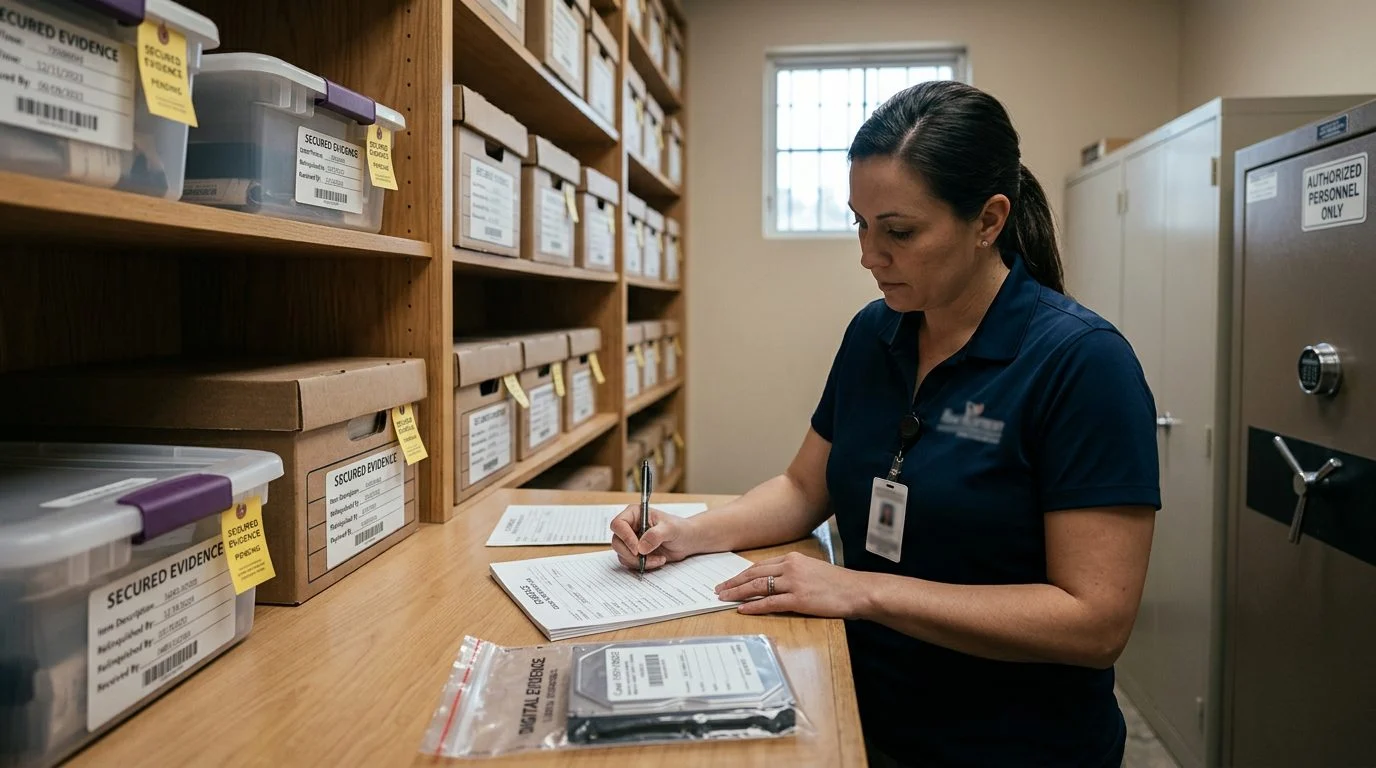
- Physical and digital evidence. Medical records, photos, messages and devices are reviewed for what each can and cannot show.
- Time limits. Texas sets no filing deadline for some of these offenses, including continuous sexual abuse of a young child or disabled individual and aggravated sexual assault of a child. Time while an indictment is pending is not counted toward a limitation period (art. 12.05).
- Family communication plan. The plan covers who talks to the accused, the child and investigators, and how, while the case is open.
How the Defense Is Built: Step by Step
A defense usually moves through six steps, from the first call to a trial or a resolution.
- First contact. A consultation covers the charge, the stage of the case, and any bond or no-contact conditions.
- Document gathering. The firm requests and organizes police reports, CPS records and recordings as the case allows.
- Evidence review. The state’s proof is reviewed. The firm explains what it shows and what it does not.
- Strategy. The options are explained clearly, including the defenses available at each stage.
- Pretrial work. Motions, hearings and talks with the prosecutor happen. The family is briefed before each step.
- Trial or resolution. Each path has its own steps. The timeline depends on the court’s calendar and the facts, so no fixed schedule applies.
Running Alongside CPS and Police Investigations
A CPS investigation and a criminal case run side by side, and each follows its own process.
- Two tracks. The Texas Department of Family and Protective Services says CPS civil investigations about a child’s welfare are separate from criminal investigations (DFPS report abuse guidance).
- Investigator steps. DFPS’s parent’s guide to investigation explains the investigation steps and the rights of parents and alleged perpetrators.
- Words matter. Statements to a caseworker or investigator can become part of a criminal file. The family should plan before answering questions.
- Bond and protective orders. Knowingly or intentionally breaking a bond condition related to the safety of a victim or the safety of the community, in a family violence, sexual assault or abuse, indecent assault, stalking, or trafficking case, is an offense. That can include going to or near the residence or place of employment or business of a protected individual or a member of the family or household, or to or near a child care facility or school where a protected child normally resides or attends, when those places are specifically described in the order or condition of bond.
- Reconciliation does not cancel an order. Agreements between the people affected do not change the order’s validity (§ 25.07).
- Speaking with police. That choice has lasting effects. The firm explains them before anyone answers questions. Read more about parent accused of child sex crimes.
Forensic Interviews, Medical Findings and Other Evidence
No single item of evidence settles a case, so each one is reviewed for what it can and cannot show.
- Forensic interviews. A forensic interview is a recorded interview with a child. The recording is reviewed for question style, suggestive questions and completeness.
- In a hearing on an application for a protective order under this subchapter, a statement made by a child younger than 14 years of age who is the victim of an offense under Penal Code Section 21.02, 21.11, 22.011, 22.012 or 22.021, and that describes the offense committed against the child, may be admitted as evidence in the same manner that a child’s statement regarding alleged abuse against the child is admissible under Family Code Section 104.006 in a suit affecting the parent-child relationship (art. 7B.004).
- Medical findings. A medical exam answers specific questions. Its findings are read alongside the full medical history, the timeline and the other records.
- Digital evidence. Messages, phones and online accounts are preserved and reviewed for dates, context and who sent what.
- Outcry and prior statements. The first person a child told, the words used and later accounts are compared for changes.
Why Families Choose Barbieri Law Firm
Barbieri Law Firm is an all-women criminal defense firm in Frisco, Texas. It defends people accused of sex crimes and assaultive offenses across Collin County, Dallas-Fort Worth and Texas.
- Heather Jean Barbieri, Board Certified, Criminal Law — Texas Board of Legal Specialization.
- The firm’s lawyers include Heather Barbieri and Carrie Thomas. Support staff help manage the work.
- The firm reviews the evidence, explains the options and answers the family’s questions.
- No lawyer can promise a particular outcome. The firm’s job is to explain the facts clearly.
Not sure what your next step is?
Talk it through with our team — the first consultation is free, confidential, and carries no obligation.
Frequently Asked Questions
Can a family member be charged based on one child’s statement alone?
We will review the evidence in your case with you and explain your options. The statement is reviewed against the rest of the evidence.
Does the accused have to move out of the home?
Bond conditions and protective orders vary. The firm reviews the exact order in your case.
Should the family contact the accuser or the child’s other parent?
Contact can break a bond condition or protective order. The firm advises on communication before anyone reaches out.
How long after an allegation can charges be filed?
Texas sets no filing deadline for some child sex offenses and sets limits for others. The firm checks the specific offense and dates.
Will the criminal case and the CPS case be decided together?
No. They are separate processes with separate standards and separate records.
What does the first consultation involve?
The first consultation is free, confidential and without obligation to continue. It covers the charge, the stage of the case and any bond conditions.

Talk With Barbieri Law Firm About Your Family Member’s Case
A consultation is the next step when a relative has been accused and the family needs answers. The days ahead can feel crowded with court papers, caseworker calls and hard questions. Our lawyers can review the charge, the timeline and the evidence with you. To talk through your family member’s case, call (972) 424-1902, send case details through the contact form, or schedule a consultation there. No lawyer can promise a particular outcome, but the firm will review the evidence and explain the options.
Attorney responsible for this site: Heather Jean Barbieri, Barbieri Law Firm, Frisco, Texas.
How We Help Families Facing These Allegations
Confidential from the first call
We explain the process and what we need to know, without pressure.
A review of the evidence
We review the charging documents, the forensic interview, the police reports and any other records, and explain what they mean for your family member's case.
Guidance for the whole family
Parents, spouses and grandparents often have urgent questions. We explain what to expect and how the accused's rights are protected at each stage.
Plain-language communication
We explain each step in clear terms, so you know what is happening and what decisions are in front of you.
Defense across Collin County and Texas
Our team represents clients in Frisco, Plano, McKinney, Allen, Prosper, Celina, Southlake, Dallas and throughout Texas.
Heather Jean Barbieri, Board Certified, Criminal Law — Texas Board of Legal Specialization
Heather Barbieri leads the firm's criminal defense work and is responsible for the matters we accept in this area.
Important: Be Careful Before Speaking With Investigators
Before you speak with police, investigators, children's advocates or the other family, talk with a lawyer. Statements made early in an investigation can affect the case later.
Questions Families Ask Us
Can charges be based on one child's statement alone?
We will review the evidence in your case with you and explain your options. The statement is reviewed against the rest of the evidence.
Does the accused have to move out of the home?
Bond conditions and protective orders vary.
What happens at the first meeting?
You tell us what has happened and what paperwork you have. We review it with you and explain possible next steps. The consultation is free and confidential.
Who do we help?
We help parents, spouses, grandparents and other relatives of a person accused of child sexual abuse in Texas.
Talk With a Lawyer Who Focuses on These Cases
Related practice areas
- Child Sex Crime Charges in Texas: What to Know After an Accusation
- Should I Talk to Police About a Child Sexual Abuse Accusation in Texas?
- How Long After an Alleged Abuse Can a Child Sex Crime Be Charged in Texas?
Request a Consultation
Fill out the short form and we will take it from there.