

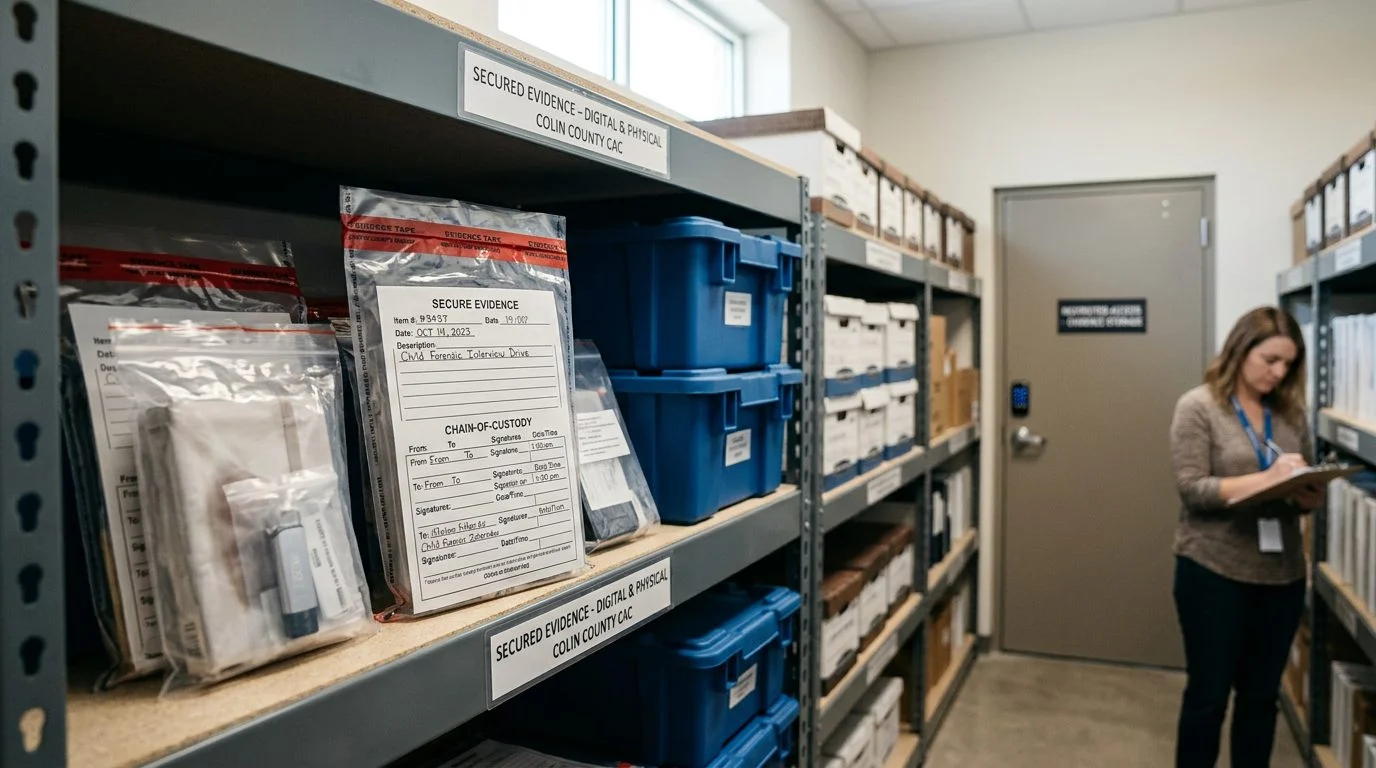
Forensic Interview Child Sexual Abuse Challenge in Texas
By Heather Barbieri · Published November 20, 2026
If a child is involved in your case, you should know what happened in the interview: a recorded conversation between a trained interviewer and a child who may have been harmed. A lawyer can review how a forensic interview was conducted and what it was used for in the case. The challenge can run through pretrial motions, cross-examination of the interviewer and review of the full recording.
What Is a Children’s Advocacy Center?
A Children’s Advocacy Center (CAC) is a child-focused place where a child who may have been abused is interviewed and linked to services, all in one location. Texas CACs coordinate forensic interviews within a multidisciplinary response and offer a child-friendly room for the child’s account (Children’s Advocacy Centers of Texas brochure).
The goal is to reduce how often a child must tell the story. Instead of repeating it to several agencies in several rooms, the child speaks with one trained interviewer. Professional guidance calls for avoiding repeated questioning of a child (OJJDP child forensic interview guidance).
Usually the investigating agency arranges the CAC interview. The accused may first hear about it from police, a CPS worker or a prosecutor, not from the center itself.

What Is a Forensic Interview?
A forensic interview is a structured, recorded conversation meant to gather information about possible abuse. It is led by a trained interviewer, not by the officer working the case.
The interview usually moves in stages. The interviewer builds rapport first, then asks open-ended prompts, such as asking the child to explain what happened in their own words. Follow-up questions come after that. The aim is neutral questioning. Suggestive questions put words or ideas into a child’s account, and that is one of the main things a review looks for.
The interview is typically video-recorded. Investigators or other case team members often watch from another room while it happens.
Who Takes Part in the Process?
Several agencies can have a role in a CAC case. Law enforcement, Child Protective Services (CPS), prosecutors and medical or mental health professionals may each take part. Who does what can differ from one case to another.
The interviewer is usually not the investigating officer. That separation matters because each role keeps its own records and decisions.
If a family also faces a parallel CPS inquiry, the two tracks run side by side. Our guide on what a CPS investigation involves covers that track in more detail.
Why the Forensic Interview Matters in a Criminal Case
The recording and any written summary can become central evidence in a criminal case. They can shape the charges, the investigation and the prosecutor’s decisions.
A child’s statement may also reach court in ways that go beyond live testimony. Texas Code of Criminal Procedure art. 7B.004 makes a statement by a child under 14 who is the victim of an offense under Section 21.02, 21.11, 22.011, 22.012, or 22.021, Penal Code, and that describes the offense committed against the child, admissible in certain protective-order hearings, in the same way Family Code § 104.006 treats a child’s statement in a parent-child suit (Texas Code of Criminal Procedure art. 7B.004). By its terms, that article covers protective-order hearings, not a criminal trial, so its wording should be read closely.
The stakes can be high. Indecency with a child under Texas Penal Code § 21.11 is a second-degree felony when it involves sexual contact and a third-degree felony for exposure (Texas Penal Code § 21.11). The interview is one piece of evidence. It is weighed alongside the rest of the file.
Can a Forensic Interview Be Challenged in Texas?
Yes. A defense team can raise a challenge through pretrial motions and hearings. It can also cross-examine the interviewer and examine the recording, notes and records.
Whether a child’s recorded statement describing alleged abuse can be used in a criminal case depends on the evidence rules that apply to that case, and we will review those rules with you. The question is whether the process was sound and whether the statement is reliable.
A challenge is not a claim that the child should not be believed. It looks at how the interview was done, what came before it and what the record shows. A lawyer reviews those facts and explains the options. No lawyer can promise how a case will turn out.
Common Points of Review in a Forensic Interview
Review usually focuses on five areas.
- Interview method. Did the interviewer use open-ended prompts, or suggestive, non-neutral questions? Did repeated questioning change the child’s account?
- Training and protocol. Did the interviewer follow a recognized structured protocol? Can the training and documentation be reviewed?
- Completeness of the record. Does the full recording exist? Are any segments missing? Were earlier talks with the child, family or others recorded or summarized?
- Contamination and exposure. What was the child told before the interview? Did others discuss the allegation with the child?
- Consistency with other evidence. How does the child’s account compare with medical findings, other statements and documents in the file?
Each point asks a factual question. The answers come from the recording and the file, not from assumptions.
What a Challenge Can and Cannot Do
A challenge can narrow what the jury hears. It can expose gaps in the process and shape how the State presents its case. It can also affect how the case is handled before trial.
It cannot control the outcome. The result depends on the particular record and on the court’s rulings. No lawyer can promise how a case will turn out.
Timing matters too. Texas Code of Criminal Procedure art. 12.01 lists indecency with a child among offenses with no limitation period (Texas Code of Criminal Procedure art. 12.01). Our guide on statute of limitations for Texas sex offenses explains other limits. Pretrial publicity in a county is a separate issue, covered in our change of venue guide.

If a Child Was Interviewed About an Allegation Against You
The first steps are practical. Do not contact the child or the family about the allegation. Keep a written record of any contact from investigators. Bring any notice or paperwork you received to a lawyer.
Early review helps. A lawyer can look at the interview recording, the referral and the investigative file. That review shows what the State has and which questions to raise.
If a child has just been interviewed about an allegation against you, you can ask for a free initial consultation. It is confidential and carries no obligation to continue. Call (972) 424-1902, or send your case details through our contact page.
Frequently asked questions
What is a Children’s Advocacy Center?
A Children’s Advocacy Center is a child-focused location where a child who may have been abused is interviewed and connected to services in one place.
How does our team review the forensic interview in your case?
A challenge can use pretrial motions, cross-examination of the interviewer and review of the recording and records.
Who usually conducts a child forensic interview?
A trained interviewer conducts it. Investigators or other team members often watch the recording live from another room.
Can a forensic interview challenge be raised before trial?
Yes. The court decides admissibility, so objections can be raised before the jury hears the statement.
Attorney responsible for this site:
Heather Barbieri, Barbieri Law Firm, Frisco, Texas.
Heather Jean Barbieri, Board Certified, Criminal Law — Texas Board of Legal Specialization.
Barbieri Law Firm is located in Frisco, Texas.
Ready to take the next step?
Related practice areas
- Child Sex Crime Charges in Texas
- How Long After an Alleged Abuse Can a Child Sex Crime Be Charged in Texas?
- Can a CPS Investigation and a Criminal Child Sex Charge Run at the Same Time in Texas?
Request a Consultation
Fill out the short form and we will take it from there.