

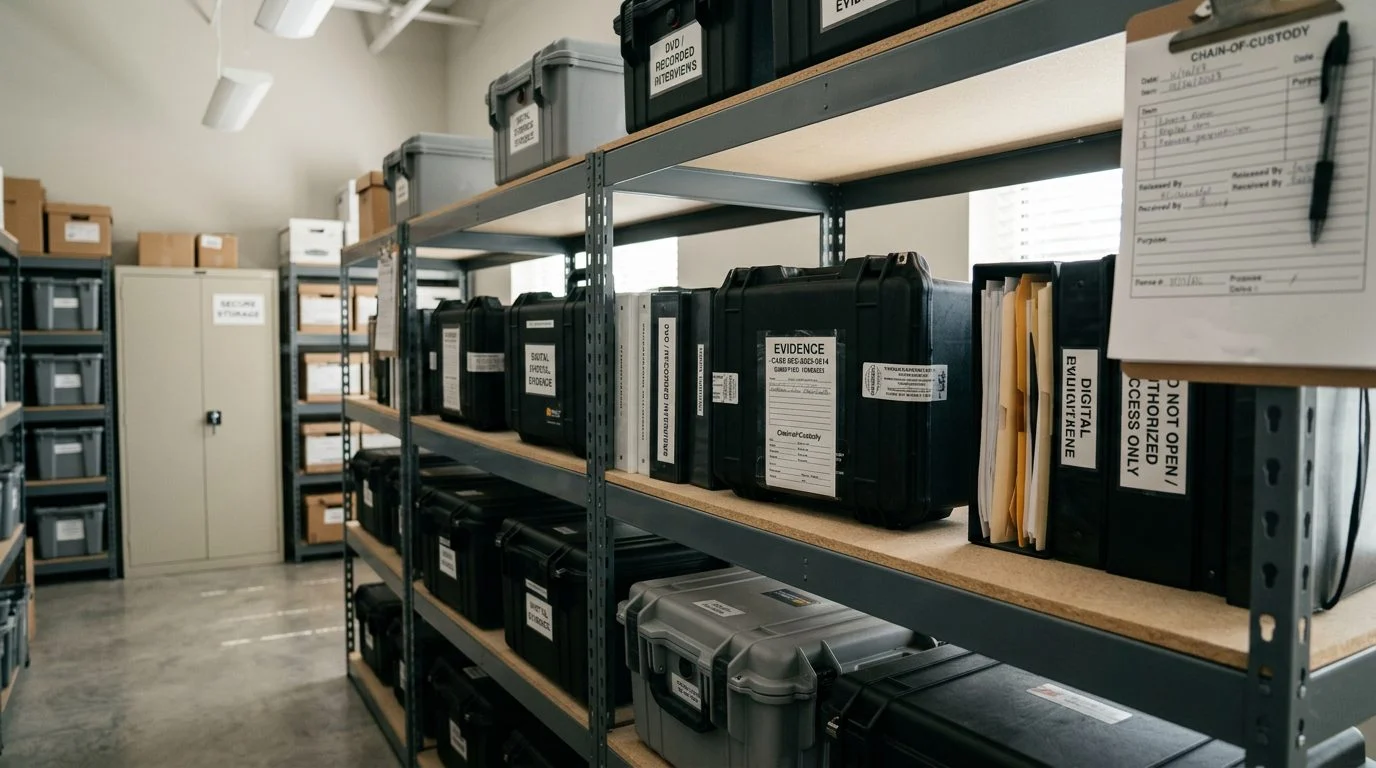
Collin County and Texas | Child Sex Crime Defense
What Happens to a Recorded Child Interview in Your Case
Many child sex crime cases turn on a recording made long before anyone was charged. Knowing what to ask about it early helps you plan.
By Heather Barbieri · Published November 17, 2026
Can the defense see a recorded child interview before trial? The defense can generally review it as part of discovery, which is the evidence the State shares before trial. Access is not the same as owning a copy, though. Texas law sets rules on how a recording of a child may be copied, viewed, and shared. This guide explains the basics of recorded child interview discovery Texas criminal case questions raise, in plain words.
Short answer: the defense can review the recording, but copies are restricted
The defense can generally review a recorded child interview as part of the case file. Seeing a recording and keeping a copy are two different things. Texas law sets rules on how a recording of a child may be copied, viewed, and shared. A court can also set terms in the case. The recording is one piece of a larger file, not the whole case. Your defense team will review it alongside police reports, the interviewer’s notes, and any other evidence the State plans to use. There is a difference between seeing a recording and holding one. Ask the lawyer early what applies in your case. That way, no one makes a copy or shares material the rules do not allow.
Not sure what your next step is?
Talk it through with our team — the first consultation is free, confidential, and carries no obligation.
What the State’s file can include in a Texas criminal case
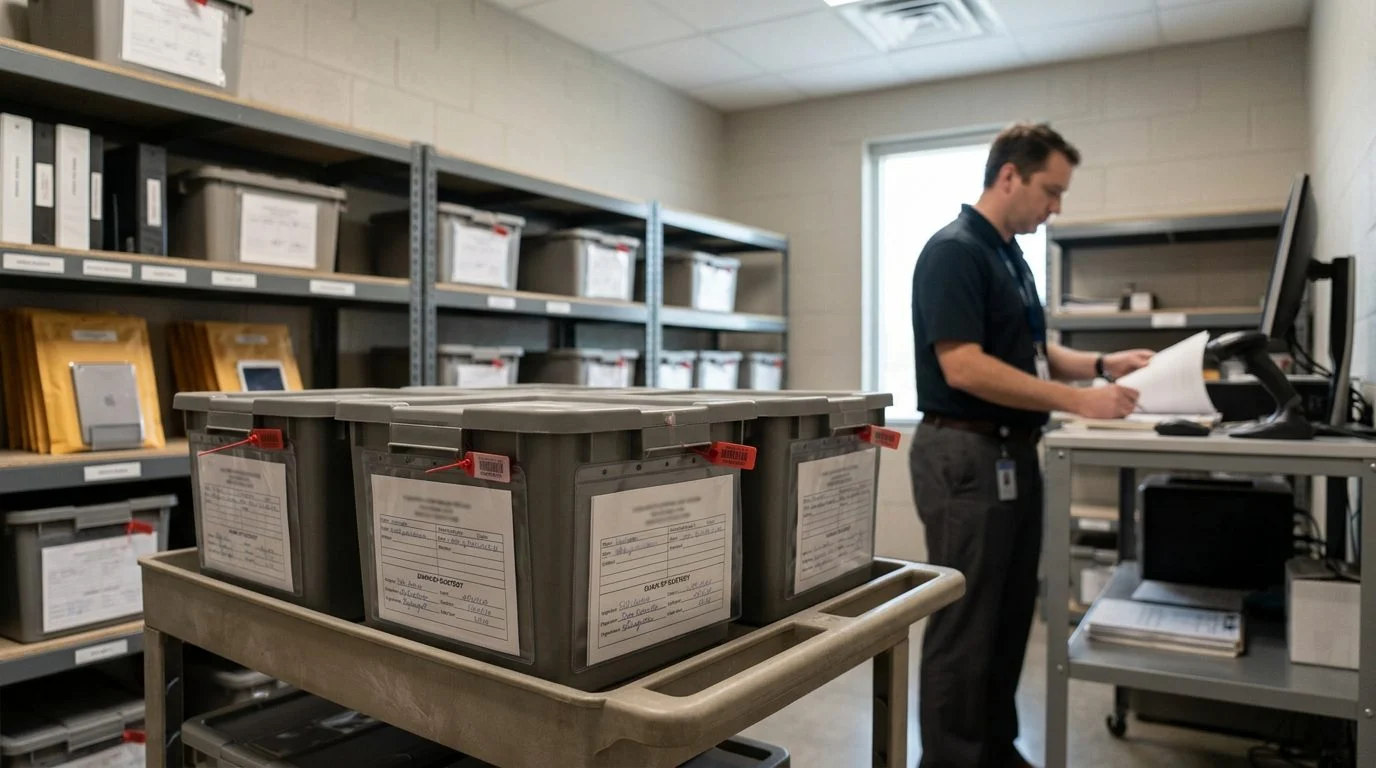
The State’s file can include the recording, the interviewer’s notes, written reports, and related police records. Texas court case records are governed by statutes and court rules. Many child interviews happen at a child advocacy center. These centers coordinate forensic interviews in a child-friendly setting, according to Children’s Advocacy Centers of Texas. Professional standards call for avoiding repeated questioning and using open-ended questions, according to OJJDP guidance. A forensic interview can also be part of a CPS investigation, which can run alongside the criminal case. The defense usually gets this material through the case process. It does not come from the child, the family, or the interviewer.
How Texas law limits copying and sharing a child’s recorded interview
Texas law limits who may copy, view, and share a recording of a child. A court can also set terms in the case. The exact limits depend on the current statute and any order in the case, so the defense lawyer should confirm them first. In practice, the defense may face limits on copies even when it can review the material. Do not copy, forward, post, or describe the recording to anyone. Sharing can hurt the case, even when the intent is good. Keep any discovery papers in a safe place. Do not show them to friends, coworkers, or other relatives. If a question comes up about who may see something, send it to the defense team and wait for an answer.
What a defense review can cover in the recording and related files
A defense review can cover the full recording, how the interview began and ended, the questions asked, and whether the interview finished. The lawyer can compare the recording with the written report, so the two can be checked against each other. The review also covers related items in the file. These include police reports and any device, message, or video chat evidence the State plans to use. Those items help place the interview in context. Questions about the interview method also come up, since professional guidance focuses on how a child is questioned. If the charge involves an online video chat, see our guide on indecency with a child by video chat. Each recording turns on its own facts, so the review is specific to your case.
Why a child’s recorded statement raises hard questions at trial
A child’s recorded statement can raise hearsay and confrontation questions. Whether a recording can be used at trial is not decided by the recording alone. Hearsay means a statement made outside court and offered to prove what it says. Confrontation questions ask whether the accused had a fair chance to question the person who made the statement. Whether a recording can be used at trial depends on the charge, the statute that applies, and how the statement was made. Courts decide that question case by case. These questions matter before trial. They shape what the State can present and what the defense must challenge. A lawyer who identifies these questions early can raise them at the right time.
Why the defense lawyer reviews the recording before any plea talk
The defense lawyer should review the recording and the full file before anyone discusses a plea. In Texas, a criminal case moves through arrest, indictment, plea bargaining, trial, and post-trial proceedings, according to the Texas court system overview. Plea talks can come up before trial, so the recording can matter early. The lawyer compares the recording to the report, checks how the interview was done, and identifies what the State must prove. Then the lawyer explains the options and what each could mean for you. No lawyer can promise how a case will end. A plea decision should rest on the full review, not on a short summary. Take time with the file, and keep asking questions until each option is clear.
Not sure what your next step is?
Talk it through with our team — the first consultation is free, confidential, and carries no obligation.
What you should do with discovery questions
Keep discovery private, keep a written list of questions, and follow every bond or court term. Under Texas Penal Code § 25.07, a person commits an offense only if, in violation of a bond condition related to the safety of a victim or the safety of the community in a family violence, sexual assault or abuse, indecent assault, stalking, or trafficking case, or in violation of one of the protective orders the statute lists, the person knowingly or intentionally commits one of the specific acts listed in the statute. Those acts include committing family violence, communicating with a protected individual in ways the statute prohibits, or going to or near a place specifically described in the order or condition of bond. The offense can include communicating with a protected person in any manner, except through the person’s attorney or a court-appointed person, when the order bars all communication. If an order prohibits any communication with a protected person, a message you knowingly or intentionally send in violation of that order can be a crime. Keep a dated, private list of questions and bond terms. Bring that list to the defense team. Send questions to the lawyer rather than posting them online. Details of a pending case are confidential, and public posts can hurt the defense.
Talk with Barbieri Law Firm about the recording in your case
You can ask Barbieri Law Firm what the defense can review in a recorded child interview. If a recording is part of your case and you’re unsure what you can see or keep, you don’t have to sort it out alone. Heather Jean Barbieri, Board Certified, Criminal Law — Texas Board of Legal Specialization, leads the firm, which is based in Frisco, Texas. The firm handles child sex crimes defense and online sex crimes matters across Collin County, Dallas-Fort Worth and Texas. Call (972) 424-1902 or send your case details through the contact page. The firm offers a free, confidential initial consultation with no obligation to continue. Bring your list of questions to that first talk.
Quick answers
Can the defense get a copy of a recorded child interview in Texas?
Access and copying are different things. Texas law limits how a recording of a child may be copied, so ask the lawyer what applies in your case.
Does a recorded interview always get played at trial?
It depends on the charge, the statute that applies, and how the statement was made.
Attorney responsible for this site: Heather Barbieri, Barbieri Law Firm, Frisco, Texas.
How our team approaches the recording
We review the full recording
We look at the complete interview, not only the portions a summary describes, and note how it was conducted.
We examine how the statement was made
Who was present, how questions were asked and what was said before recording began all matter to the defense review.
We explain what access may be available
We identify the rules that may apply to obtaining, copying and viewing the recording in your case, and explain them in plain language.
We keep you informed
We walk you through each step and what it may mean for your options, so you are never left guessing.
Talk to a lawyer before discussing the recording
Statements about a recorded interview, to family, friends or anyone else, can be repeated and used in your case. Speak with a criminal defense lawyer first.
Questions to raise early
Who holds the recording?
Knowing which agency or office has the recording tells us where to begin the review.
How was the interview conducted?
The setting, the interviewer's training and the questions asked all bear on how the statement is evaluated.
Who may view or copy it?
Access and copying are different questions. We explain what limits may apply to your case.
Does it come up at trial?
We explain how this applies to you.
Send us your case details or call (972) 424-1902. The first consultation is free, confidential and carries no obligation to continue.
Related practice areas
- Child Sex Crime Charges in Texas
- Is Physical Evidence Required to Prove a Child Sexual Abuse Case in Texas?
Request a Consultation
Fill out the short form and we will take it from there.