

Child sex crimes defense | Collin County and Texas
Physical Evidence in a Texas Child Sexual Abuse Case
Our team reviews it with you in plain language. Your first consultation is free, confidential and comes with no obligation to continue.
By Heather Barbieri · Published November 4, 2026
The Short Answer: Physical Evidence Is Not an Element of the Charge
Penal Code § 22.011 defines the offense by the conduct itself.
That doesn’t make the State’s job easy. Sexual contact, for example, requires intent to arouse or gratify sexual desire under Penal Code § 21.01. Intent is part of the definition, so the statements and context around the act get close review.
The stakes can be high. Aggravated sexual assault is a first-degree felony.
A case can rest on one witness’s account. When it does, the details of that account carry the weight. Who heard it, what was said, when, and how the account changed over time all matter. For background on these charges, read our child sex crime charges guide.
If your loved one's case seems to rest on a child's words or on an interview you haven't seen, we can review that evidence with you. Talk it through with our team — the first consultation is free, confidential, and carries no obligation.

What the State Usually Builds the Case On
The State usually builds these cases from a child’s statements, the outcry witness, a recorded forensic interview, and police or child protective reports. Each piece can come at a different date, so the order of events becomes central.
Child protective reports can start early. When a report reaches the Texas Department of Family and Protective Services (DFPS), an investigation may open. That means statements may exist long before any criminal filing.
Typical pieces include:
- Statements the child made to family, friends, teachers, or others
- The outcry witness, the first person the child told
- A recorded forensic interview
- Police and DFPS reports
- School or family observations that were written down
The defense starts by requesting every report, recording, and prior statement the State holds. Then we place them side by side. Gaps, shifts in wording, and missing pieces are far easier to see on one page than spread across many files.
The Outcry Witness and Why the First Disclosure Matters
The outcry witness is usually the first person a child told about the abuse. That first account can matter a great deal to the State’s case, so it gets close attention.
The defense looks at what the child said, to whom, when, and under what circumstances. Was the child asked questions first? Who else was present? Did the words come up in a conversation about something else?
Well-meaning follow-up questions from family can become part of the record. The exact words of the first talk, and what came after, matter for that reason. A short summary in a report can also leave out words that matter. So the defense looks for original notes or a recording where one exists.
The review then compares the first account to every later statement. The defense checks whether the State has identified the outcry witness and what that person heard. Matching details matter. So do differences in dates, places, and sequence.
Medical Findings: What an Exam Can and Cannot Show
A medical exam may or may not find physical signs. A normal result doesn’t, by itself, settle what happened. That’s why the exam record matters as much as the result.
The defense reviews the examiner’s training, the exam notes and photographs, and any other explanations the records mention. The time between the alleged event and the exam is part of the timeline, so it goes into the review.
The setting and the protocol used for the exam are also part of what gets reviewed. Medical records can be long and technical. We read the exact words used, including what the examiner wrote down and what was left out. The goal is to know what the records say and what they don’t say.
DNA and Other Physical Traces: What the State May or May Not Have
DNA and other trace evidence may be absent, inconclusive, or not linked to the accused. Each of those outcomes is a fact the defense examines. None of them is assumed.
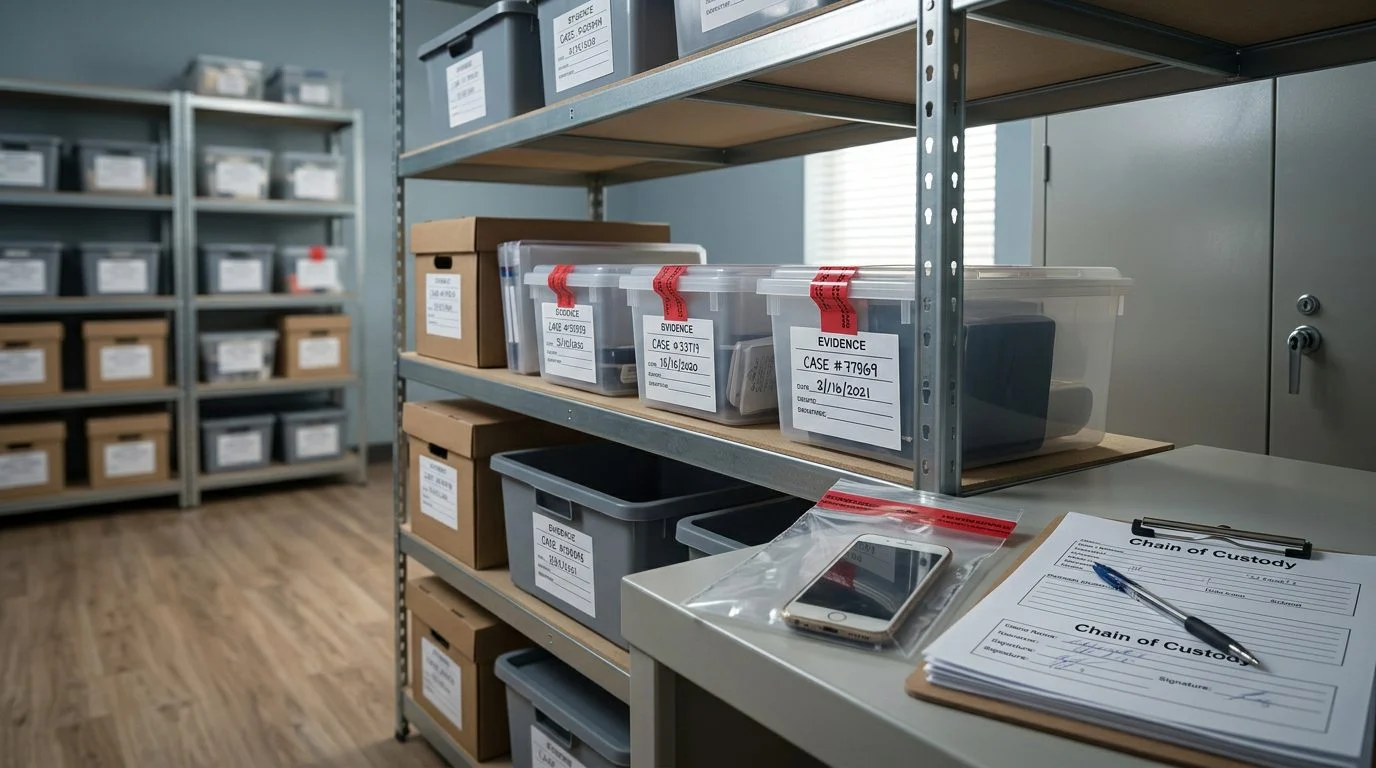
The defense asks for lab reports, collection records, and chain-of-custody documents. Chain of custody is the written trail showing who handled an item, when, and where it was kept. A gap in that trail can weaken what an item shows.
Testing itself is part of the review. The defense checks whether any testing was done at all, and what was tested and why. If an item was never collected, the file should show who made that choice and when.
The State’s decision not to collect certain evidence also belongs in the timeline. It’s one more fact that shapes what the case can and cannot show.
Digital Records: Phones, Messages, and Accounts
The State may look for phones, text or app messages, social media accounts, photos, and location or timestamp data. In some cases, these records become central to the case.
Online solicitation shows why. Texas law makes it an offense to knowingly solicit a minor to meet, over the Internet or through other electronic messaging, with the intent that the minor will engage in sexual contact, sexual intercourse, or deviate sexual intercourse. It’s not a defense that the meeting didn’t occur. The messages themselves can become the center of the case.
Image cases follow their own grading rules. Under Penal Code § 43.26, the level of the offense depends on factors such as prior convictions and the content depicted.
The defense review covers several points. We ask how each record was collected, including whether a warrant or consent was involved. We check time stamps, device ownership, and whether the records match the timeline the State describes. A record can support a timeline, or it can undercut one. The defense compares each record directly to the statement it is meant to support.
Not sure what your next step is?
Talk it through with our team — the first consultation is free, confidential, and carries no obligation.
Testing the Timeline and the Interviews
The defense builds a detailed timeline from every statement, report, and record. Then it looks for places where the sources disagree. That comparison shows where the accounts match and where they don’t.
The forensic interview deserves its own review. We watch the recording itself. We look at how questions were asked, whether they were open or leading, and whether any question was repeated. The wording and repetition of questions are part of the record, so they get close review.
Continuous abuse charges work differently. Under Penal Code § 21.02, jurors need not agree unanimously on specific acts or exact dates. They must agree that two or more acts occurred during a period of 30 or more days.
The State may also try to introduce evidence of other alleged acts.
Frequently asked questions
What is an outcry witness?
The outcry witness is usually the first person a child told about the abuse.
If your loved one has been told that a child made an accusation, and the case seems to rest on words alone or on an interview you haven’t seen, you don’t have to sort through it alone. Our firm offers a free, confidential initial consultation with no obligation to continue. Call (972) 424-1902 or send us your case details.
Attorney responsible for this site: Heather Barbieri, Barbieri Law Firm, Frisco, Texas.
How we review the physical evidence
Reviewing the records
We review reports, medical and forensic findings, lab documentation and chain-of-custody paperwork, and explain what each item does and does not show.
Testing the State's conclusions
We examine how evidence was collected, stored and analyzed, and whether the findings support the charge as written.
Identifying gaps and questions
We look for missing records, unexplained results and inconsistencies that deserve follow-up before any decisions are made.
Explaining your options
We walk through the evidence with you and explain the choices available at each stage of the case, so you can make informed decisions.
Keep your case details private
Do not discuss the allegations, the evidence or the investigation with anyone other than your lawyer, including in text messages, emails or social media posts. Statements made outside of privileged conversations can later become part of the record.
Types of physical evidence we review
Medical and forensic examinations
Exam notes, photographs, swab results and the reports that explain how the findings were interpreted.
Collected items
Clothing, bedding and other items, including how they were logged, packaged, stored and tested.
Digital and device evidence
Phones, computers and accounts, including extraction reports, timelines and what the data does and does not establish.
Photographs and recordings
Images, video and audio, including their origin, metadata and whether they have been edited or altered.
Talk with Barbieri Law Firm about the evidence in your case
Request a Consultation
Fill out the short form and we will take it from there.