

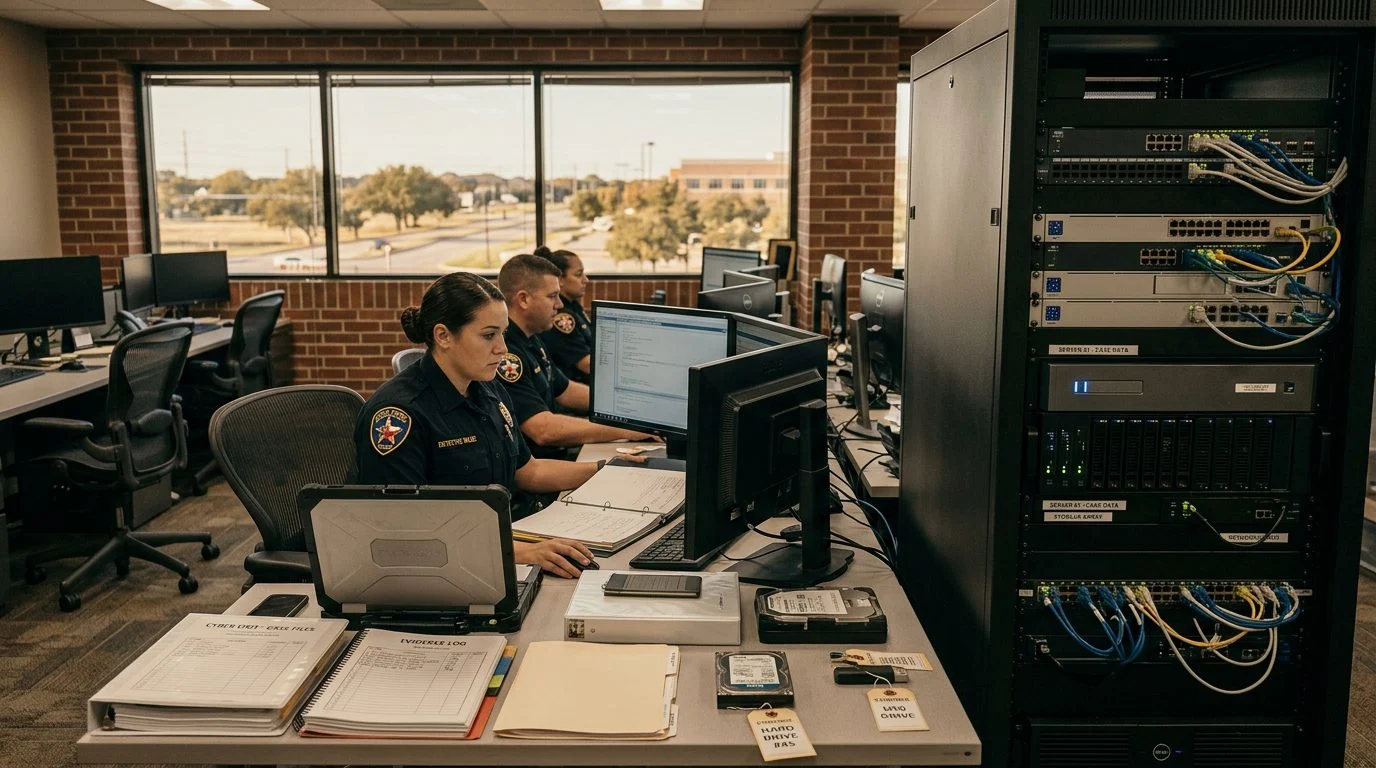
Online Sex Crimes Defense | Collin County and Dallas-Fort Worth
Online Sting Arrest? Start With What the Chat Logs Actually Prove
A sting case rests on a transcript, a timeline and the officer's account of both. Each piece can be tested, and the gaps often matter as much as the messages.
By Heather Barbieri · Published November 19, 2026
If you were arrested after chat messages were exchanged online, you may be trying to figure out what that record proves. Each question about your charge can be checked against the evidence in your case.
This guide explains what to expect, in plain language. It also explains where the proof can be examined, and what to ask about before you answer anyone’s questions.
Why the Chat Logs Sit at the Center of an Online Sting Case
In an online sting, the chat record is often the main thing the state has to show. The messages are the written trail of what was said, and they usually become the core of the file.
Texas investigations of online child exploitation often involve Internet Crimes Against Children (ICAC) task forces. The Texas Attorney General’s ICAC grants page states that the Southern Texas ICAC Task Force investigates online child exploitation, including sexual solicitation. The federal ICAC task force program describes the same kind of investigation at the national level.
Because the record is so central, it deserves a close look early. Some of the most useful questions are about how the messages were captured, who was typing them, and what the other side was presented as. This guide covers what the state must be able to show, and where that proof can be checked.
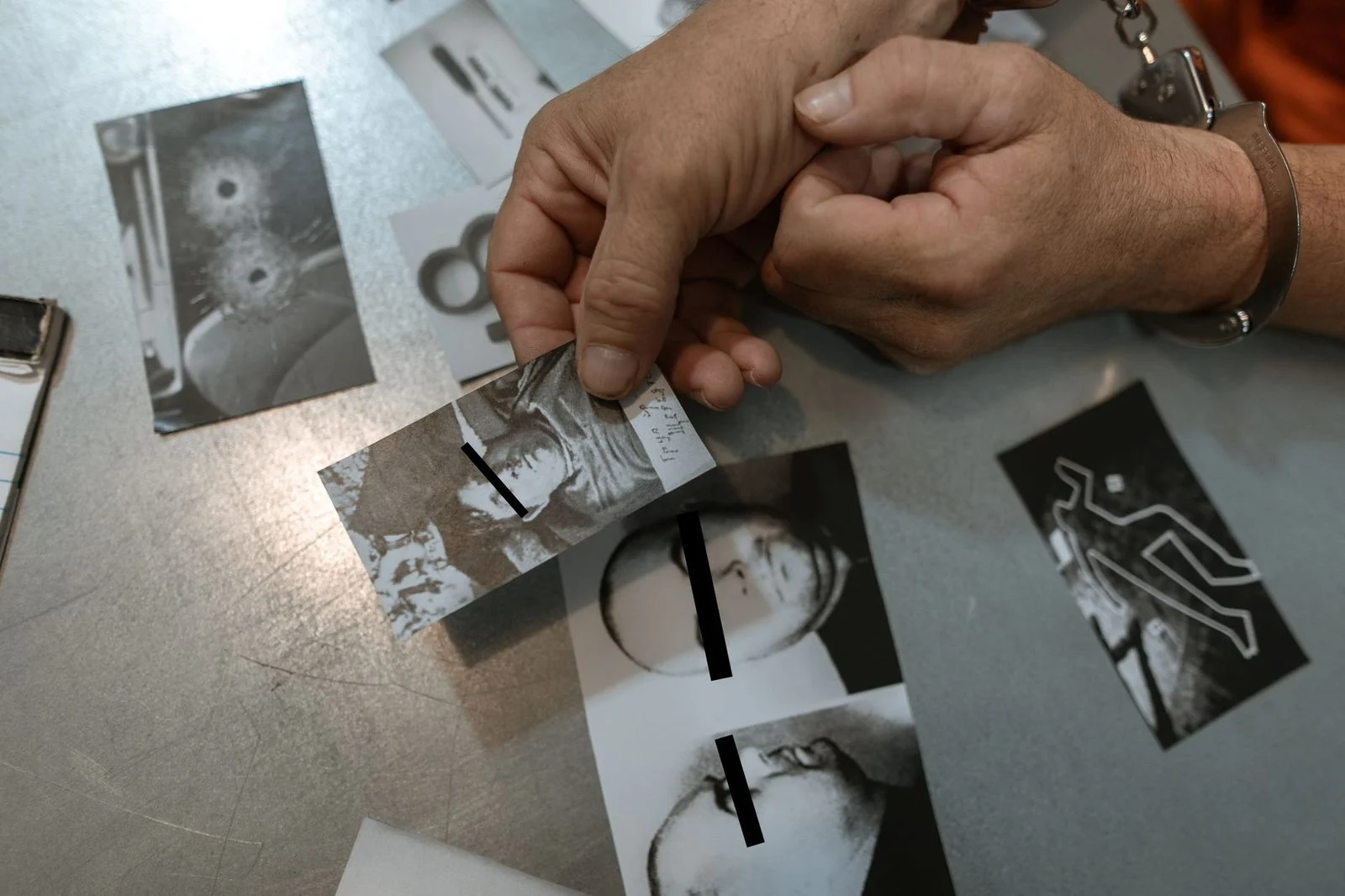
The Short Answer: What the State Must Tie Together
The state generally must tie together the messages, the sender, the account, the age belief, and the intent. Each link is a separate question the evidence has to answer.
Under Texas Penal Code § 33.021, a person commits an offense by knowingly soliciting a minor to meet another person. The solicitation must be made over the internet or by other electronic message, with intent that the minor engage in sexual contact, sexual intercourse, or deviate sexual intercourse. That subsection is a second-degree felony.
The statute defines a minor as someone younger than 17. It also covers someone the actor believes to be younger than 17. So what you believed about age matters under the law.
The statute also lists a defense for that conduct. It applies if the actor was married to the minor, or was not more than three years older than the minor and the minor consented. The statute adds that it is not a defense that the meeting did not occur.
A gap in any one link is a point the defense can test. For the wider Texas framework, read the firm’s Texas child sex crimes guide.
How Chat Logs, Texts, and Device Data Become Evidence
Messages move from a phone, computer, or online account into a case file through several steps. Each step is a point to check.
Start with the device. Under Texas Code of Criminal Procedure art. 18.0215, a peace officer may not search a person’s cellular telephone pursuant to a lawful arrest without first obtaining a warrant under that article. The article lists exceptions. They include consent from the owner or possessor, a phone reported stolen, a fugitive situation, and an immediate life-threatening situation.
The U.S. Supreme Court reached a similar view in Riley v. California. Police generally need a warrant before searching digital information on a cell phone, even one taken during an arrest. “Our holding, of course, is not that the information on a cell phone is immune from search; it is instead that a warrant is generally required before such a search, even when a cell phone is seized incident to arrest.” Riley v. California, 573 U.S. 373, 401 (2014)
Ask how the state got each item. Was there a warrant, a consent, or a claimed emergency? Under art. 18.0215, if a judge finds that a claimed emergency did not occur and declines to issue the warrant, any evidence obtained is not admissible in a criminal action.
A message on a screen is not the same as the original data on a device. Each conversion step, from phone to export to report, can change or leave out part of the exchange.
Proving Who Was Typing: Account Ownership and Attribution
Showing that an account belongs to you is a separate question from what the messages say. Attribution asks who was actually typing.
Gaps can come from:
- shared devices in a home or office
- a shared household internet connection
- saved passwords or browsers that stay logged in
- accounts that other people could reach
Location records can add another layer. In Carpenter v. United States, the Supreme Court held that the government must generally obtain a warrant supported by probable cause before acquiring historical cell-site location records from a phone company.
Your living arrangements, device access, and who else used a shared login are facts to review with counsel. They are not assumptions the state gets to make for you. Write down who had access to each device and account, and when.
Age Statements, Profile Details, and What the Messages Actually Say
The age question turns on what you believed, and the words must be read in context. A single line can look different once the full exchange is in view.
In a sting, the person on the other end may be an adult posing as a minor. The record of the profile, the screen name, and any age statements is part of what gets examined. Ask who wrote each age statement and when it appeared.
Read every message in order. Include what came before and after the lines the state highlights. A short quote pulled from a longer conversation can carry a different meaning than the full exchange.
Entrapment is a separate question. Under Texas Penal Code § 8.06, it is a defense that the actor was induced to commit the charged conduct by a law enforcement agent using persuasion or other means likely to cause persons to commit the offense. The section also says that conduct merely affording a person an opportunity to commit an offense does not constitute entrapment. The section covers state and local personnel, federal personnel, and any person acting on their instructions. Whether that defense fits depends on the facts.
Transcripts, Detective Summaries, and Screenshots: Checking the Record
A transcript, a screenshot, and a detective’s summary are three different records. Each can leave things out.
Compare the original export with the screenshots. Check the summary against the messages it describes. Line up the timestamps with the time of the arrest and the time the device was seized. A summary that drops context or paraphrases words can change the meaning of the exchange. For more on screenshot records, see the firm’s chat log screenshot evidence guide.
Discovery is how you see what the state has. Under Texas Code of Criminal Procedure art. 39.14, on a timely defense request, the state must produce offense reports, designated documents, and written or recorded statements. It must do so as soon as practicable.
Your attorney may let you view that material.
Some material in these cases falls under Texas Code of Criminal Procedure art. 39.15. For that kind of material, a court must deny a request to copy it if the state makes it reasonably available to inspect at a facility under state control. Ask where and how you will be able to review it.
Preservation: Hash Values and Chain of Custody
Preservation asks whether a digital copy matches the original. It also asks who handled the data on the way to the case file.
A hash value is a code calculated from a file’s contents. If the file changes, the code changes. A recorded hash value lets someone compare a copy to the original. Ask whether one was recorded for each export or image.
Chain of custody is the written trail of the evidence. Ask who collected the data, when they collected it, how it was stored, and who had access before it reached the file.
Gaps in these records are questions the defense can raise. Missing dates, unnamed collectors, and unlogged access are all points to examine. The firm’s chat transcript evidence guide covers how transcripts are tested in more detail.
Practical Steps While You Are Still Researching
Keep the paperwork you have in one place. Do not delete messages, accounts, or devices.
Deleting material can make the record harder to test. It can also create new problems. Write down the dates and the names of the officers you dealt with while you still remember them.
Think carefully before you answer investigators’ questions about the chats or sign a statement. In Dickerson v. United States, the U.S. Supreme Court held that Miranda warnings are constitutionally required before custodial interrogation, so Congress cannot replace them with a statute of its own. Those warnings include the right to remain silent and the right to have a lawyer present.
Under Texas Code of Criminal Procedure art. 1.051, a defendant is entitled to consult in private with counsel sufficiently in advance of a proceeding to allow adequate preparation.
If you hold a professional license or work in a field with reporting duties, read the firm’s professional license reporting guide. Work and license questions can come up before a case ends.

Talk With Barbieri Law Firm About Your Chat Evidence
If you are trying to make sense of chat messages you did not expect to see in a file, you are not alone in that. A lawyer can review the record with you, line by line.
The chat record may matter in those matters too. Keep both sets of papers together so nothing gets lost.
Common Questions
What must the state prove in a Texas online solicitation of a minor case?
The state generally must show the messages were sent online, the intent the statute requires, and that the other person was a minor or was believed to be one.
Is entrapment a defense?
It can be, but only if an officer’s persuasion was likely to cause the offense.
Barbieri Law Firm is an all-women criminal defense firm in Frisco, Texas. Our team reviews chat logs, screenshots, device records, and the reports you have been given. The initial consultation is free, confidential, and carries no obligation to continue. Call (972) 424-1902 or send your case details at our contact page. No lawyer can promise how a case will end.
Attorney responsible for this site: Heather Barbieri, Barbieri Law Firm, Frisco, Texas.
How we review a chat-log case
Every message, in full context
We read the complete conversation, not isolated excerpts, including who started it, what was said before and after, and what was left out of the report.
Timestamps and sequence
We compare message times, account activity and the order of events against the arrest timeline to see whether the record holds together.
How the conversation was steered
We examine whether an officer's words or suggestions shaped the exchange, and whether that conduct bears on any entrapment question.
What the state must still prove
We break down each element the charge requires and identify which ones the chat logs do not establish on their own.
Before you speak to anyone about the messages
Do not delete messages, accounts or devices, and do not explain the conversation to investigators, family members or anyone online before you have spoken with a lawyer. Anything you say or post can become evidence.
Questions we examine in every sting case
Who was actually writing
We look at account ownership, shared devices, login records and whether the identity behind the messages can be tied to you.
What the words meant
We look at the full exchange to determine whether the language, context and stated intent match what the charge requires.
Who was on the other end
We review what the officer represented about age, identity and location, and what the records show about how that was presented.
Who drove the conversation
We examine whether the messages began with you, or whether the officer's prompts and pressure shaped what was said.
The initial consultation is free, confidential and carries no obligation to continue. Send us your case details or call (972) 424-1902.
Related practice areas
Request a Consultation
Fill out the short form and we will take it from there.