

When a CPS Investigation Runs Alongside Criminal Charges, Take Your First Step Now
By Heather Barbieri · Published November 15, 2026
CPS and criminal charges run on separate tracks, and one allegation can start both. If a caseworker has called, or a detective wants to talk after a child made an accusation, you may be facing two proceedings at once. This page explains how they fit together in Collin County and what the defense reviews.
When a CPS Report Becomes a Criminal Case
A CPS investigation and a criminal case are separate, and either one can start without the other.
- CPS asks whether a child is safe now and what the family needs.
- Criminal charges come from the State.
- A CPS file can close while a criminal case stays open. The reverse can happen too.
The biggest risk is what you say early. People often answer caseworker questions in a calm conversation without realizing those words can end up in a criminal file. You can speak with a lawyer before you answer questions about the allegation.
If a CPS caseworker or detective has already reached you, you don't have to face what comes next alone, and our team can review it with you. Talk it through with our team — the first consultation is free, confidential, and carries no obligation.
What the Defense Reviews in a Child Sex Crime Case
The defense tests the accusation against every record the State holds, not just the summary. Each record can change the timeline, the details or the charge.
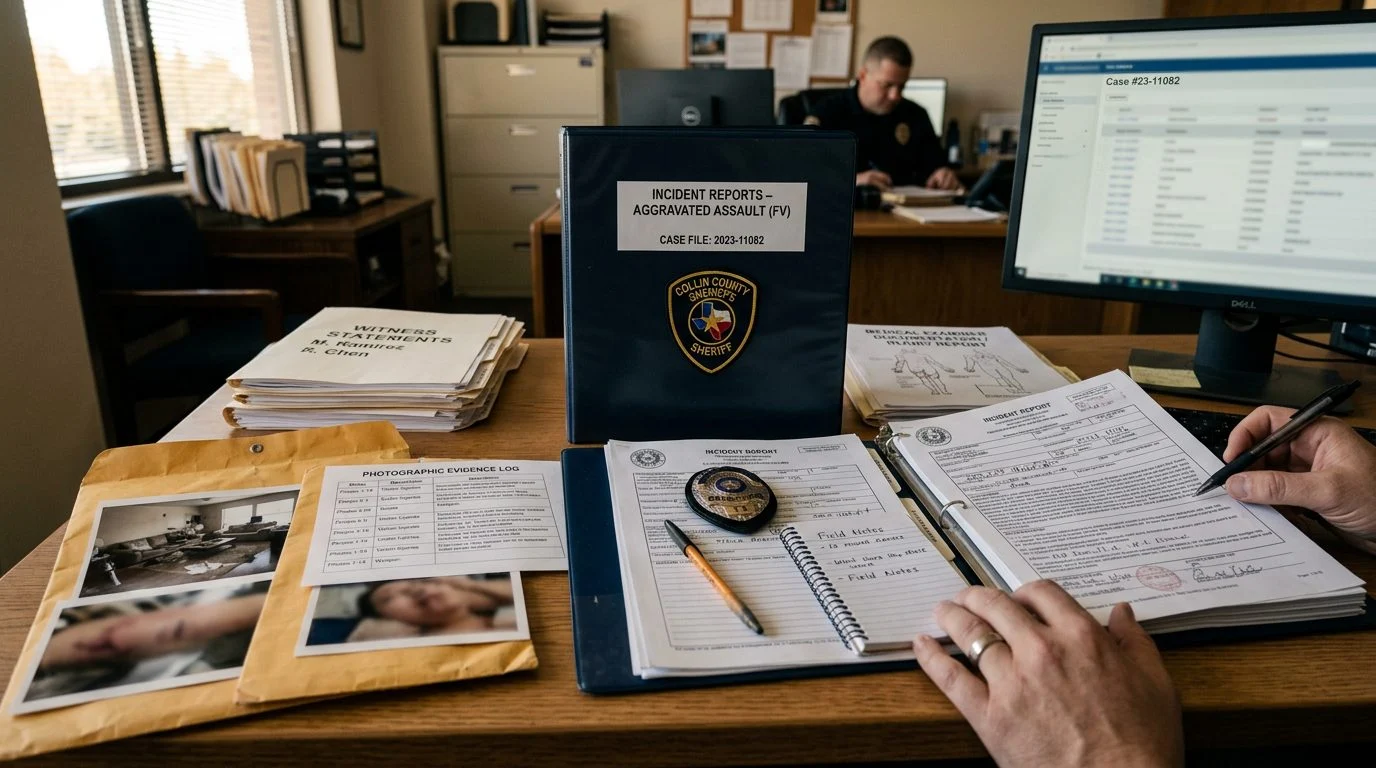
- The CPS file and police reports. The defense compares each account for timing, detail and changes over time.
- Forensic interview recordings. The defense reviews how the interview was conducted, including how questions were asked and whether they were repeated.
- Children’s Advocacy Center materials and medical records. These show what was asked, what was examined and what was documented.
- School, daycare, phone and message records. These can confirm or challenge when and where events could have happened.
- The exact charge. The first step is reading the exact charge in your paperwork, because the specific offense shapes the options that follow. Penal Code § 21.11 covers sexual contact or exposure involving a child younger than 17.
- Affirmative defenses. Some statutes list defenses with conditions. Section 21.11(b) is one example, and the defense checks each condition against the facts.
- Family court and bond terms. Statements in one case can affect the other. Penal Code § 25.07 makes it a crime to knowingly or intentionally violate, in a family violence, sexual assault or abuse, indecent assault, stalking, or trafficking case, a bond condition related to the safety of a victim or the safety of the community, or certain protective orders, by committing listed acts such as prohibited communication or possessing a firearm, and reconciliatory actions or agreements made by persons affected by an order do not affect the validity of the order.
How the Process Typically Unfolds in Collin County
Most cases move through the same stages, but timing varies widely from case to case. Knowing the stages helps you plan your next move.
- Free initial consultation. You describe the allegation, what you were told, and anything you signed or said. The initial consultation is free, confidential, and carries no obligation to continue.
- Early protective steps. The defense advises you on talking with CPS or police. It also helps you keep records and avoid contact that could look like pressure on a child or family member.
- Arrest or warrant, then bond. Bond terms often address contact with children. The defense works on those terms first.
- Discovery. The State shares its evidence. The defense tests the interview, the timeline and any physical evidence.
- Pretrial motions and negotiation. The defense can challenge evidence before trial and discuss options with the State.
- Trial or plea decision. You choose between trial and a plea only after you have the facts in hand.
No lawyer can say in advance how long any step will take or how a case will end.
What You Could Face and How the Charge Sets It
The exact charge sets the punishment range and decides whether registration lasts for life. Knowing the charge is the first real step toward understanding your exposure.
- Prison range. A first-degree felony carries life, or any term from 5 to 99 years, plus a fine up to $10,000, under Penal Code § 12.32.
- Lower felony levels. Indecency with a child by sexual contact is a second-degree felony. Exposure-based conduct is a third-degree felony, under Penal Code § 21.11. Online solicitation of a minor to meet for sexual contact is a second-degree felony under Penal Code § 33.021.
Public attention is a real concern too. The defense advises you on what not to post or say about the case while it is pending.
Why Barbieri Law Firm for an Accused Man in Collin County
Barbieri Law Firm is an all-women criminal defense firm based in Frisco, Texas. It defends people accused of sex crimes and assaultive offenses across Collin County, Dallas-Fort Worth and Texas.
- Heather Jean Barbieri, Board Certified, Criminal Law — Texas Board of Legal Specialization.
- The firm is led by her. Carrie Thomas is also a lawyer at the firm.
- Our team reviews the CPS file, the police file and the family court file as separate records, then reads them together.
- We explain what we do and how we review the evidence, step by step.
No lawyer can say in advance how a case will end. We will tell you what we see in your file and what your options are.
Questions Accused Men Ask Before Calling a Lawyer
Here are short answers to the questions this situation raises first.
Do I have to answer a CPS caseworker’s questions?
You can speak with a lawyer before you answer questions about the allegation.
Can CPS material reach my criminal case?
Whether it does depends on the facts. The defense reviews what CPS has and what it has shared.
Will I see my children while the case is pending?
Bond conditions, protective orders and family court orders control contact. Under § 25.07, knowingly or intentionally violating a bond condition set in a family violence, sexual assault or abuse, indecent assault, stalking, or trafficking case that relates to the safety of a victim or the community, or violating a protective order the statute covers, may amount to a separate offense, but only for the specific acts the statute lists.
What if the accusation came up during my divorce?
The defense examines timing and motive as part of the evidence. No lawyer can say how a court will rule.
How long does registration last?
The length of any registration requirement depends on the specific offense charged and the outcome; the defense reviews this with you based on your exact charge.
Not sure what your next step is?
Talk it through with our team — the first consultation is free, confidential, and carries no obligation.
Talk to a Lawyer Before You Answer Another Question
If a caseworker, a detective or a family court date is already in front of you, you don’t have to work out the next step alone. Call (972) 424-1902 or send your case details through our contact page.
Attorney responsible for this site: Heather Jean Barbieri, Barbieri Law Firm, Frisco, Texas.
How our team approaches these cases
We review both files
We look at what CPS has gathered, what it has shared with law enforcement or prosecutors, and how those records may affect the criminal case.
We protect your statements
Anything you say to a caseworker, detective or prosecutor can become part of the record, so we help you decide what to say and when.
We move quickly
Early review of the allegations, the evidence and the deadlines set by the court or agency helps us prepare your defense from the start.
Talk to a lawyer before you answer questions
If a CPS caseworker or police officer asks you about the allegation, speak with a criminal defense lawyer first. A short conversation before you respond can protect both your criminal case and your family.
Questions to bring to your consultation
Is the CPS case connected to the criminal charge?
We explain how the investigations overlap, which records each agency holds, and what the defense needs to review.
What should I do about my children?
We talk through safety, contact and communication issues so you understand the options before making decisions.
What evidence is being used?
We review interviews, forensic reports, messages, medical records and other evidence, and explain what it shows and what it does not.
How will this affect my job and home life?
We discuss the practical effects of a pending case, including employment, housing and school matters, so you can plan ahead.
Your first consultation is free, confidential and carries no obligation to continue.
Related practice areas
- Child Sex Crime Charges in Texas
- Arrest Warrant for a Child Sex Crime in Texas
- Child Sexual Assault Charges Filed Years Later in Texas
Request a Consultation
Fill out the short form and we will take it from there.