

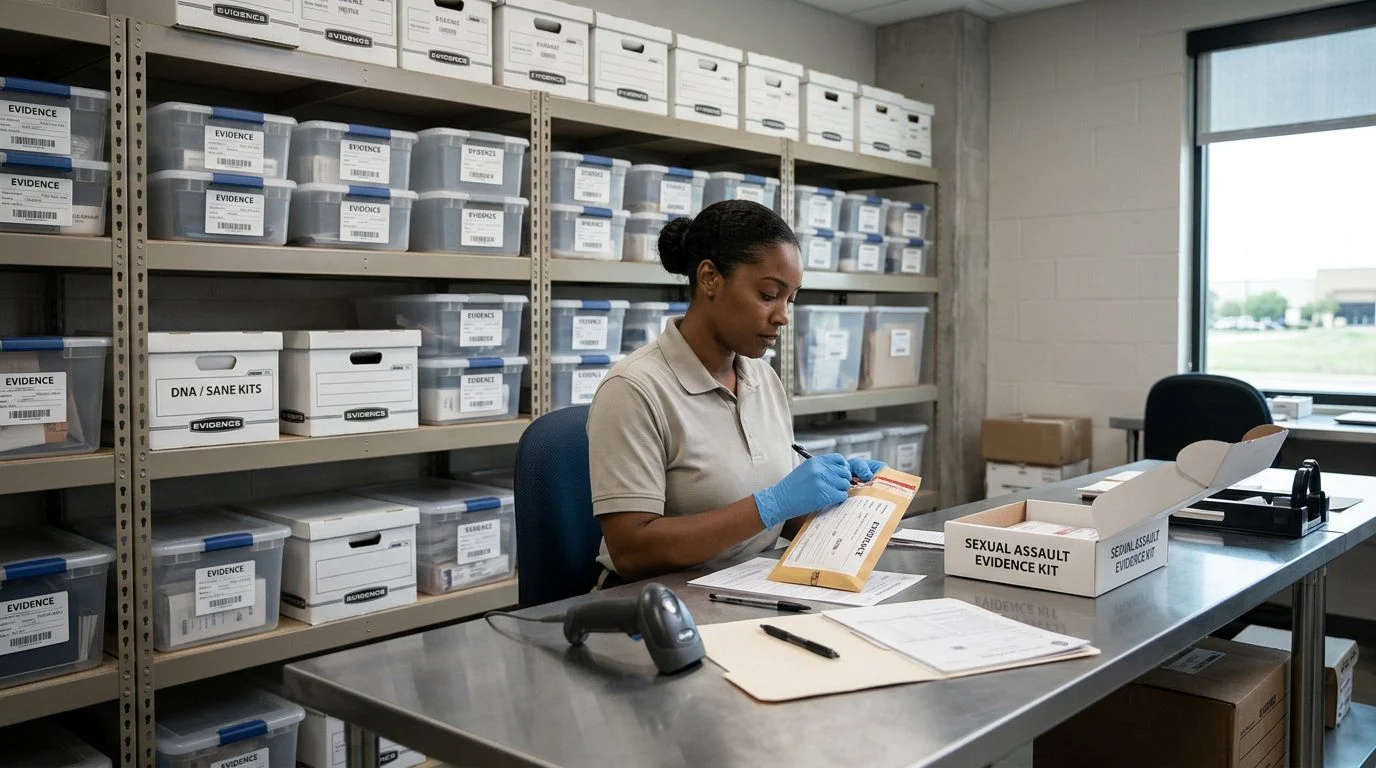
Sex Crimes Defense · Collin County and Dallas-Fort Worth, Texas
Facing a CPS Sexual Abuse Allegation? Start With a Confidential Conversation
A caseworker's visit can feel overwhelming. Knowing how the process is organized helps you decide what to do next.
By Heather Barbieri · Published November 19, 2026
If a caseworker has called your family about a sexual abuse allegation involving a child, you likely have many questions at once. Here is the short answer: a CPS report starts a child-safety investigation run by the Texas Department of Family and Protective Services (DFPS). A separate criminal case may or may not follow, and the two move on different tracks.
It is written for you, the person named in a report and facing a possible criminal investigation in Texas.
What a CPS Sexual Abuse Allegation Means
A CPS sexual abuse allegation is a report that a child may have been harmed. DFPS decides whether to investigate it.
Texas Child Protective Services is part of DFPS. The agency receives and investigates reports of abuse and neglect. DFPS reporting guidance covers how reports are made to DFPS. The reporter’s identity is generally kept confidential.
Reports come from many places, including school staff, doctors and nurses, relatives, and neighbors. Some people, such as school employees, have a legal duty to report suspected abuse. The Texas Children’s Advocacy Centers guide explains those duties and what happens after a report.
A report is not a finding. DFPS screens each report and decides whether to assign it for investigation. Nothing has been decided about what happened when a case is opened.
The same allegation can lead to a CPS case, a police report, or both. At first, you may not know which agency is involved or why.
If a caseworker or detective has asked your family about a sexual abuse allegation, you don't have to work through it alone. Call or send your case details for a free, confidential consultation. Talk it through with our team — the first consultation is free, confidential, and carries no obligation.

How CPS and Criminal Investigations Run Side by Side
CPS asks whether a child is safe. Law enforcement asks whether a crime happened.
DFPS guidance on reporting abuse draws this line. Criminal investigations belong to law enforcement.
CPS investigators look at whether the child is safe. They also look at whether the family needs services or court involvement. Detectives and prosecutors look at whether a crime was committed and whether charges are supported.
The two agencies can share information and talk to the same child. That overlap is why families often feel unsure which agency wants what. A request from one agency can affect the other.
Each track moves on its own schedule. A CPS case can close without any criminal charge. A criminal charge can also follow a CPS case. Keep both possibilities in mind.
What Happens Next: The Investigation Timeline
A CPS investigation usually moves through first contact, interviews, a safety review, and a written finding.
The time can run longer, depending on the facts of the case.
Here are the usual steps:
- First contact. A caseworker may visit the home or call the family.
- Interviews. The caseworker talks with the child and with family members.
- Safety assessment. CPS’s basic investigation process describes an ongoing child-safety assessment.
- Records review. The caseworker may look at records connected to the case.
- Finding. The agency issues a written result.
If the agency finds a risk to the child, it may ask the family to agree to a safety plan. Read every paper before you sign it, and keep a copy.
Interviews, Forensic Interviews, and Child Advocacy Centers
A child alleged to have been sexually abused is often interviewed by a trained forensic interviewer at a Child Advocacy Center. This is a setting built for these interviews, not an ordinary office visit.
Investigators may observe the interview. Professional standards call for avoiding repeated questioning and using open-ended questions. The OJJDP child abuse investigations guide describes these standards.
Adults may be asked for interviews too. An adult who gets an interview request can ask what the interview is about and when it would happen. Many adults talk with a lawyer before agreeing to an interview. A lawyer can advise on whether and how to respond.
Anything said in an interview can matter later. A statement to a caseworker or detective can become part of a criminal case. That is why the timing and content of any interview matter.
Understanding the Findings: Reason to Believe Versus Ruled Out
At the end of an investigation, DFPS issues a disposition, such as “reason to believe” or “ruled out.” The DFPS investigation page confirms that the agency issues investigation dispositions.
A disposition is a finding made in a civil child-welfare process.
Ask the caseworker, in writing, what the finding is and how it can be reviewed. Keep the answer with your other papers. Do not assume the finding will be the last word on the matter.
Protecting Your Family’s Rights While Both Tracks Are Open
While both tracks are open, keep written records of every contact. A simple notebook works well.
Write down the date, the person you spoke with, and what was said. Keep copies of every letter, safety plan, and court notice.
Avoid questioning the child about the allegation at home. As noted above, professional standards call for avoiding repeated questioning. Extra questions at home can make later interviews harder to manage.
Adults do not have to settle an interview request on the spot. Many families speak with a lawyer first. A lawyer can advise whether and how to respond to a request.
If a case moves to court, the agency and the court set the procedures and deadlines for that case. A lawyer can explain how those rules apply to your family.
Not sure what your next step is?
Talk it through with our team — the first consultation is free, confidential, and carries no obligation.
When a Criminal Child Sex Crime Case Follows a CPS Investigation
A police report can lead to a criminal case. That case has its own charges, deadlines, and defenses, separate from the CPS finding.
Texas statutes cover several kinds of charges. A few examples:
- Indecency with a child. Penal Code § 21.11 covers sexual contact with a child younger than 17. Sexual contact under subsection (a)(1) is a second-degree felony. Under Texas Penal Code § 21.11, an offense under Subsection (a)(2) is a felony of the third degree.
- Continuous sexual abuse. Penal Code § 21.02 requires two or more acts of sexual abuse over a period of 30 or more days, where the actor is 17 years of age or older at the time of each act and the victim is a young child or a disabled individual. It is a first-degree felony.
- Aggravated sexual assault. Penal Code § 22.021 is a first-degree felony. The minimum prison term rises to 25 years in certain cases, including when the victim is younger than 10.
- Online solicitation of a minor. Penal Code § 33.021 makes it a second-degree felony to knowingly solicit a minor to meet for sexual contact.
Time limits also matter. Code of Criminal Procedure art. 12.01 lists indecency with a child and continuous sexual abuse among felonies with no limitation period. Felonies not listed in a separate subdivision of Article 12.01 carry a three-year limit under subdivision (11), counted from the date the offense was committed.
Expunction of arrest records follows its own rules. Under Code of Criminal Procedure art. 55A.052, the question turns on whether an indictment or information was presented and on set waiting periods, or on whether the state’s attorney certifies that the records are not needed for any criminal investigation or prosecution. The CPS finding is a separate question.
Our child sex crimes and online sex crimes pages cover these charges in more detail.
Talk With Heather Barbieri About Your Family’s Situation
A lawyer can review the CPS side and the criminal side together. That helps your family see how one decision may affect the other.
Barbieri Law Firm is in Frisco, Texas. The firm defends people accused of sex crimes and assaultive offenses across Collin County, Dallas-Fort Worth and Texas. Heather Jean Barbieri, Board Certified, Criminal Law — Texas Board of Legal Specialization.
Common Questions
Can CPS and the police investigate at the same time?
Yes. The two tracks are separate, and each moves on its own schedule.
Do I have to talk to a caseworker?
A lawyer can advise you on whether and how to respond to an interview request.
If a caseworker has asked to interview your child, or a detective has called about the same allegation, you don’t have to sort it out alone. Call (972) 424-1902 or send your case details for a free, confidential initial consultation with no obligation to continue.
Attorney responsible for this site: Heather Barbieri, Barbieri Law Firm, Frisco, Texas.
How Barbieri Law Firm Helps
Confidential first consultation
Your initial consultation is free, confidential and comes with no obligation to continue.
Protecting your rights
We review the allegation, the timeline and any interview requests, and explain the options available to you.
Coordinated defense
Our team, led by Heather Barbieri, coordinates the criminal and child-welfare sides of the matter so your choices are made with the full picture in view.
Direct access to your lawyers
Call (972) 424-1902 to speak with someone at our Frisco office about your situation.
Consider Legal Advice Before Answering Questions
Caseworker and police interviews can feel routine, but anything you say may be used later. Before you answer questions or sign anything, you may want to talk with a lawyer about your options.
Questions to Bring to Your Consultation
Two separate tracks
How the CPS case and any police or prosecutor investigation are moving, and how each one may affect the other.
Interviews and requests
Whether, when and how to respond to a caseworker's request for an interview, a home visit or documents.
Your family and daily life
How the allegation may affect your household, your work, your children's routines and your communications.
Talk With Barbieri Law Firm Confidentially
Related practice areas
Request a Consultation
Fill out the short form and we will take it from there.