

Child Sex Crimes Defense | Collin County and Dallas-Fort Worth, Texas
When a Child's Statement Sits at the Center of the Case
Learn how these statements are gathered, recorded and tested, and what questions to raise early with your defense team.
By Heather Barbieri · Published November 18, 2026
Can a child’s statement support a child sex crime charge in Texas? A child’s statement can be an important part of the evidence, but it is not the whole case. This page explains how a Texas criminal case typically moves forward, one piece at a time. If you have just learned about an accusation, the amount of information can feel overwhelming. Take it slowly.
The Short Answer: What Texas Law Says About a Child’s Statement
A child’s statement can support a child sex crime charge when it describes facts that match the offense the state charges. Each offense has elements, which are the specific facts the state must prove. The statutes list those elements, and they differ from one offense to another.
Take indecency with a child. The statute covers sexual contact with a child younger than 17. Sexual contact means touching certain body parts with intent to arouse or gratify sexual desire (Texas Penal Code § 21.11). Each element needs proof. A child’s account is one source of that proof, and prosecutors and courts look at the whole record.
A statement is not automatically proof of every element. Investigators and courts test it against recordings, reports and other evidence. How it holds up depends on the facts of each case.
If you are facing an accusation, you may feel shock, anger or confusion. Those feelings are common. A clear explanation of the process can help you think more steadily.
If someone you love has just learned of an accusation like this, you don't have to work out the next steps alone. Reach out for a free, confidential initial consultation, with no obligation to continue. Talk it through with our team — the first consultation is free, confidential, and carries no obligation.
Who Counts as a Child Under Texas Law
For sexual assault and indecency offenses, a child is generally a person younger than 17. Texas Penal Code § 22.011 defines “child” as a person younger than 17 years of age. Indecency under § 21.11 also uses that age limit.
The age threshold changes by offense. Under Texas Penal Code § 22.021, a sexual assault can be aggravated when, among other conditions, the victim is a child younger than 14. The minimum prison term rises to 25 years when the victim is younger than 10, or when the victim is younger than 14 and the conduct falls within a listed manner (Texas Penal Code § 22.021). Continuous sexual abuse requires a victim younger than 14 or a disabled individual, two or more qualifying acts over at least 30 days, and an actor who is 17 or older (Texas Penal Code § 21.02).
Under Penal Code § 21.11(b), a defense to indecency with a child applies to an actor not more than three years older than the victim, but only when the other listed conditions are met, including that the actor and victim were of the opposite sex. The statute measures many of these conditions at the time of the offense.
For a broader overview, read our child sex crimes overview.
How a Child’s Outcry Reaches the Courtroom
Often, the first adult a child tells is later the person who repeats what the child said. That repeated account is judged under specific rules. Those rules depend on the type of hearing and the facts of the case.
One rule is easy to confuse with trial evidence. Texas Code of Criminal Procedure art. 7B.004 makes a child’s statement admissible in a hearing on an application for a protective order. The child must be younger than 14, and the statement must describe the offense. Under Texas Code of Criminal Procedure Art. 7B.004 (https://statutes.capitol.texas.gov/Docs/CR/htm/CR.7B.htm#7B.004), the statements it covers are admissible as evidence in the same manner that a child’s statement regarding alleged abuse against the child is admissible under Section 104.006, Family Code, in a suit affecting the parent-child relationship. It does not, by itself, decide what a criminal jury may hear.
The first telling matters. Reviewers ask when it happened, who was present, what questions were asked and which words the child used. That adult’s account is not the final word on what the child said. The child’s own words, the recordings and other records all remain part of the picture. The outcry is one piece of evidence, and a court weighs it with the rest of the record.
Corroboration and the Child’s Own Testimony
At trial, the court and jury consider the evidence presented about the charge against you. A child’s own testimony can be part of that proof. Whether a jury believes it is a separate question.
Elements matter here. Sexual contact requires touching of the anus, breast, or any part of the genitals of another person, with intent to arouse or gratify the sexual desire of any person, except as provided in Sections 21.11 or 21.12 (Texas Penal Code § 21.01). Aggravated sexual assault requires conduct described in its statute, and the child’s age can change the charge (§ 22.021). A statement that describes an act may not, by itself, show the intent or age element.
You may wonder whether a child’s word alone can carry a case. That question depends on the charge and the record. It is reviewed against the actual file. Counsel can examine consistency, detail and context, but the jury decides how much weight to give the testimony.
What Else Prosecutors Often Offer Alongside a Statement
Many cases include more than the child’s account, but not every case has every item. Common types of evidence include:
- Forensic interview. A trained interviewer talks with the child, often on recording. How the interview was done is a common subject of review.
- Medical examination. A sexual assault nurse examiner (SANE) exam may occur. Texas guidance says sexual-assault victims have a right to advocacy during forensic examinations and interviews (Texas Crime Victim Rights).
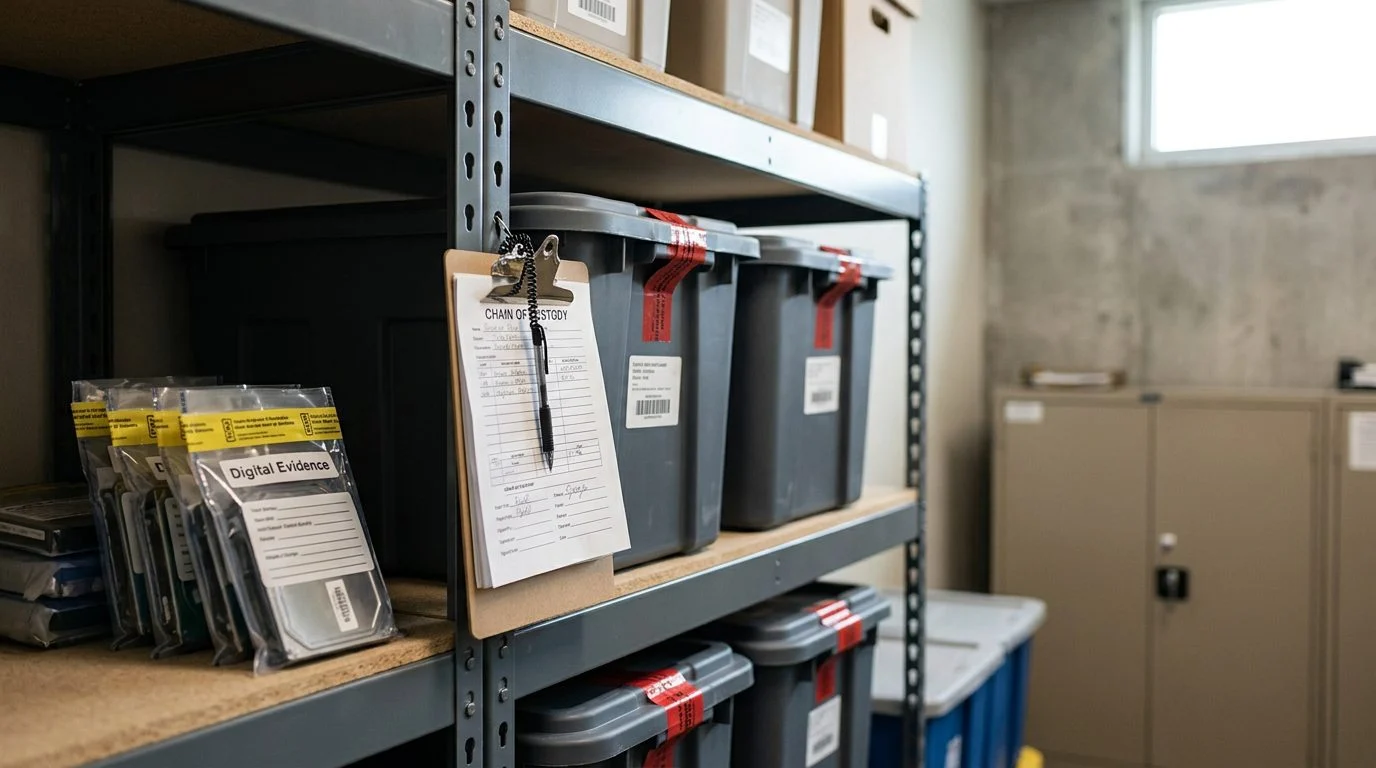
- Digital evidence. Messages, device data and online records can matter.
- Witness statements. Family members, teachers or others may have spoken about the allegation.
Each of these may or may not exist in a given case. Reviewers read each item for context and accuracy.
How the Defense Examines a Child’s Account
The defense reviews how a child’s account was gathered and how it changed over time. Counsel looks at consistency across each retelling. Were the questions open or leading? Did anyone else talk with the child about the allegation? When was the first disclosure, and to whom?
Counsel also looks at context. What was happening at home, at school or in relationships at that time? Recordings, reports and other discovery are reviewed in full. If the account has changed, counsel examines when and why it changed, and what was said each time.
This review is about the record. It doesn’t predict what the record will show. The defense does not assume the child’s account is false, and it does not assume it is true. It checks the account against the evidence.
Not sure what your next step is?
Talk it through with our team — the first consultation is free, confidential, and carries no obligation.
When the Accusation Affects the Whole Family
A child sex crime accusation can change family life quickly, even before any charge is filed. Relationships strain, routines shift, and work or school can feel the pressure.
Custody can be part of the picture.
Texas also uses the term “sexually violent offense” for listed offenses committed by a person 17 or older. Indecency with a child under § 21.11(a)(1) and sexual assault are on that list (Texas Code of Criminal Procedure art. 62.001).
You can speak with a lawyer before answering investigators’ questions. Write down dates, names of people contacted and questions as they come up. Those notes are useful in a consultation.
Talk Through Your Situation with Barbieri Law Firm
If you have just learned of an accusation, or are waiting to hear whether a charge will be filed, the questions can pile up fast. A conversation with a lawyer can help you sort through what comes next.
Common Questions
Can a child’s statement support a child sex crime charge in Texas?
It can be part of the evidence. Whether it supports a charge depends on the offense and the full record.
Is a child’s statement automatically admissible at trial?
No. Article 7B.004 covers protective-order hearings, and criminal trial rules are separate.
What age makes a child for these offenses?
For sexual assault and indecency, Texas generally uses younger than 17. Continuous sexual abuse requires a victim younger than 14 or a disabled individual.
Barbieri Law Firm offers a free, confidential initial consultation with no obligation to continue. Call (972) 424-1902 or send your case details to start the conversation.
Attorney responsible for this site: Heather Barbieri, Barbieri Law Firm, Frisco, Texas.
How we approach a case built on a child's statement
Full review of the record
We review the police report, the recorded interview, any forensic interview, medical findings and the charging documents to see what the statement actually says.
Context and consistency
We examine how the account changed over time, who heard it first, and what was said to the child before it was recorded.
Protecting your rights
We advise you on contact with police, schools and family members while the allegation is pending.
Clear explanation of your options
We explain the evidence, the strengths and weaknesses of the State's case, and the choices available to you at each stage.
Be careful before you answer questions
Statements made to police, school staff, family members or on social media can become part of the record. Talk with a criminal defense lawyer before you answer questions about an accusation.
Where a child's statement appears in these cases
Outcry and first disclosure
Who the child told first, when, and in what words often shapes how the rest of the case develops.
Forensic interviews
Interview setting, questioning style and recording quality all matter when the statement is later reviewed.
Corroborating evidence
We look at whether physical, digital or witness evidence supports the account, or whether it leaves gaps.
Testing the account
We identify inconsistencies, outside influences and alternative explanations so they can be addressed with the court.
Talk with Heather Barbieri about your case. The first consultation is free, confidential and comes with no obligation to continue.
Related practice areas
- Child Sex Crime Charges in Texas
- Will I Lose My Kids If I Am Charged With a Child Sex Crime in Texas?
Request a Consultation
Fill out the short form and we will take it from there.