

Child Sex Crimes Defense | Collin County and Dallas-Fort Worth
A CPS Sexual Abuse Allegation in Texas: Understanding What Happens Next
A Child Protective Services investigation and a criminal case are separate processes. Learn how they work and why it helps to speak with a defense lawyer early.
By Heather Barbieri · Published November 7, 2026
If you face a CPS sexual abuse allegation in Texas, two tracks can open at once. CPS looks at child safety. Police and prosecutors look at whether a crime can be proven. The two tracks run side by side, and what you say in one can matter in the other.
If a caseworker has called, or a police report already exists, you may be trying to understand both at once. That is a hard place to be. This page explains each track, the records that matter, and the questions to ask first.
When a CPS Allegation Lands on Top of a Criminal Accusation
A CPS case and a criminal case can both open on the same allegation. Each one follows its own process. Right now, your job is to slow down and write things down.
You may have a caseworker on the phone, a custody hearing on the calendar, or an officer who wants to talk. Every contact feels urgent. Write down dates, names, and exactly what each person asked you. Those notes help you and your lawyer later.
The Texas Department of Family and Protective Services (DFPS) handles child abuse reports on the child-welfare side. Because the tracks are separate, a result in one does not decide the other.
If a caseworker and a criminal investigation both have your name, you do not have to sort out both tracks alone. We can review your case with you. Talk it through with our team — the first consultation is free, confidential, and carries no obligation.

Two Separate Tracks: The CPS Case and the Criminal Case
CPS asks whether a child is safe. A criminal case asks whether a charged offense can be proven.
Those questions lead to different results. CPS works toward child safety, family services, and a safety plan when one is needed. A criminal case moves through charges, court dates, and then a trial or a plea.
A CPS finding is not a criminal charge. A charge is not a conviction. Keep these three things separate in your mind, and keep them separate when you talk to anyone.
Information can travel between the two. Statements to a caseworker, texts, emails, and custody filings may reach a police officer or a prosecutor. Treat each interview and each written statement as something that could matter in both tracks.
What Happens During the CPS Investigation
A DFPS investigation follows a set series of steps.
The usual steps run in order. A report comes in, and a caseworker makes initial contact. A home visit may follow. The caseworker then interviews the child and family members and assesses safety. Each step creates notes, and those notes can be used later.
It can set rules about where people stay, who has contact, and who supervises time with the child. Read every line before you sign, and ask for a copy.
Ask what the plan requires of you. Ask how it affects your time with your children.
Interviews, Forensic Exams and Records That Shape Both Cases
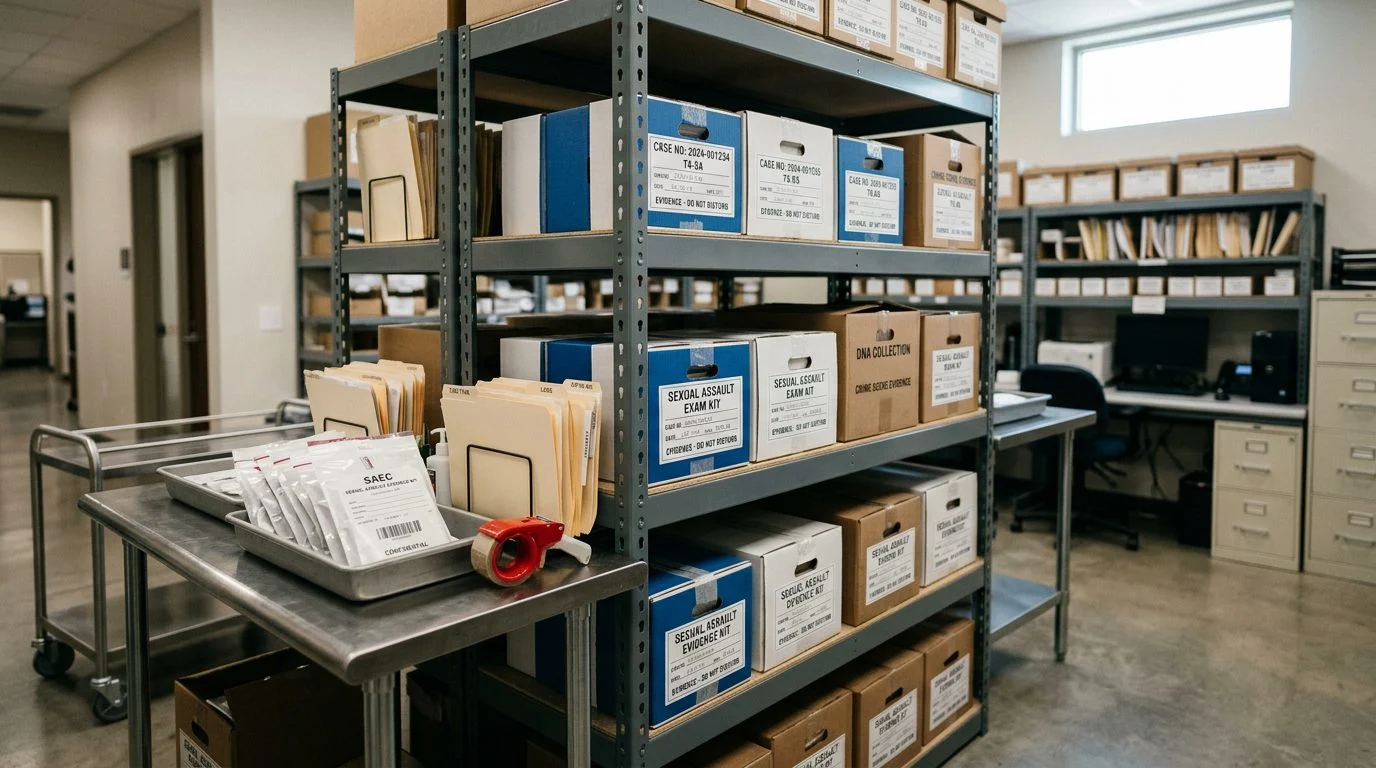
A child’s forensic interview and any medical or SANE exam records are often central evidence in both tracks. SANE means sexual assault nurse examiner.
A forensic interview is a recorded conversation with the child, run by a trained interviewer. Professional guidance on child abuse investigation practices calls for open-ended questions and avoiding repeated questioning. If an interview departed from those practices, the child’s account deserves a close look.
Ask for the recording and the interviewer’s notes. Medical and SANE records may also be in the file. These records show what was examined and what was found, and they can be read line by line.
A child’s own words carry weight. In a protective-order hearing, a child under 14 who is the victim of an offense under Section 21.02, 21.11, 22.011, 22.012, or 22.021 of the Texas Penal Code and describes the offense can have that statement admitted under Texas Code of Criminal Procedure Art. 7B.004. Test how the statement was obtained, what was asked, and whether the account changed over time.
When a Criminal Charge Is Also Possible or Already Filed
Some Texas child sexual offenses are first-degree felonies. A first-degree felony carries life, or any term from 5 to 99 years, under Texas Penal Code § 12.32. A fine of up to $10,000 may be added.
Other charges carry their own ranges. Aggravated sexual assault is a first-degree felony. The minimum term of imprisonment rises to 25 years when the child is younger than 10, or when the child is younger than 14 and the offense is committed in one of the manners the statute lists. Continuous sexual abuse of a young child is punishable by life or by 25 to 99 years, under Texas Penal Code § 21.02.
Indecency with a child involving sexual contact is a second-degree felony. Exposure is a third-degree felony, under Texas Penal Code § 21.11. Online solicitation of a minor can also be a second-degree felony, under Texas Penal Code § 33.021.
These are the ranges the law sets. No lawyer can promise how a case will end. What a defense can do is start early, while witnesses and records are still available.
Questions You Should Ask Before Speaking to Investigators
Before you answer a question, find out what is being asked and what is alleged. Ask these four things first.
- Am I the subject of a criminal investigation, or only of a CPS inquiry?
- What is this interview for, and what am I being asked to do?
- What does the allegation say in writing, and what evidence exists?
- How might my statements, texts, messages, and custody filings be used in both tracks?
Frequently asked questions
Can a CPS finding lead to a criminal charge?
A CPS finding and a criminal charge are separate. A finding is not a charge.
How long does a CPS investigation take in Texas?
The length of a DFPS investigation varies from case to case.
Is a first-degree felony charge possible for a child sexual abuse accusation?
Yes. Some Texas child sexual offenses are first-degree felonies, under Texas Penal Code § 22.021.
Does deferred adjudication still count for registration?
Yes. A deferred adjudication can be a reportable conviction under Texas Code of Criminal Procedure Chapter 62.
Can a protective order be issued before a hearing?
A judge may issue a temporary order without notice or a hearing if the application shows a clear and present danger, under Texas Code of Criminal Procedure Art. 7B.002.
Not sure what your next step is?
Talk it through with our team — the first consultation is free, confidential, and carries no obligation.
What You Are Trying to Protect and How a Defense Tests the Accusation
A defense tests each part of the accusation. No lawyer can promise how a case will end.
Your fears are real. You may fear years in prison, registration, losing time with your children, and seeing your name in the news. For offenses listed in Texas Code of Criminal Procedure Chapter 62, a deferred adjudication is generally still a reportable conviction or adjudication, so it does not by itself avoid registration; however, a second indecent exposure violation, or an out-of-state violation with substantially similar elements, that results in a deferred adjudication is not reportable.
Testing the accusation means checking it piece by piece. That includes the interview method, the medical findings, the timeline, the messages, and the records. We review the evidence and explain your options at each step.
Protective orders carry their own risks. Knowingly breaking certain protective orders, or a bond condition tied to the safety of a victim or the community in a family violence, sexual assault or abuse, indecent assault, stalking or trafficking case, is a separate crime. Examples include contacting a protected person or a member of their family or household in any way when the order bars all communication (contact through the person’s attorney or someone the court appoints is the exception), or going to or near a place the order or bond condition specifically describes, such as their home, under Texas Penal Code § 25.07. An agreement between the parents to ignore an order does not cancel it.

Your Next Step Toward a Full Review of Your Case
A full review of both tracks shows you what you face in each one. That is the most useful first step.
If a caseworker, a custody hearing, or a police contact is pending, you may be juggling every call and deadline. Our firm defends the criminal charge. We do not represent clients in CPS/DFPS or other child-welfare matters. Barbieri Law Firm defends sex crime and assault charges across Collin County, Dallas-Fort Worth, and Texas. Call (972) 424-1902 or send your case details. The first consultation is free, confidential, and carries no obligation to continue.
Attorney responsible for this site: Heather Barbieri, Barbieri Law Firm, Frisco, Texas.
How Barbieri Law Firm Can Help
A confidential first step
Your free initial consultation is confidential and comes with no obligation to continue.
Review of the allegation
We will review the allegation, the timeline, and any notices or records you have, and explain the questions that matter in your situation.
Coordinated defense
We explain how a CPS case and a possible criminal case may affect each other, so you can make informed decisions at each step.
Clear next steps
We explain your options in plain language.
Talk to a lawyer before giving a detailed statement
Speak with a defense lawyer before you give a detailed statement or sign documents.
Common Questions About the Process
A CPS finding is not a criminal charge
CPS (the Texas Department of Family and Protective Services) investigates child safety. A criminal charge comes from law enforcement and a prosecutor.
Investigations take time
The length of a DFPS investigation varies from case to case. Ask about the timeline in your situation so you can plan for each step.
Keep a record of what you receive
Write down dates, names of people you spoke with, and any notices or letters you receive. Bring these records to your consultation.
Talk through your case with us
Send us your case details or call (972) 424-1902 to schedule a free initial consultation with Barbieri Law Firm.
Talk with our team about your case in confidence
Related practice areas
- Child Sex Crime Charges in Texas: What the Accused Needs to Know Before Speaking to Police
- Will I Lose My Kids If I Am Charged With a Child Sex Crime in Texas?
Request a Consultation
Fill out the short form and we will take it from there.