

Collin County Child Pornography Lawyer | Barbieri Law Firm
By Heather Barbieri · Published October 17, 2026
A Collin County child pornography charge is a felony case, and early decisions matter. Texas charges possession and promotion of child pornography, and the felony grade depends on the facts. This guide explains how these cases start, what defense work covers, and how to reach a Collin County child pornography lawyer for a first talk.
What a Collin County Child Pornography Charge Involves
Possession and promotion are the core offenses. Possession generally means knowingly having material that shows a child engaged in sexual conduct, or accessing it with intent to view it. The state must also show that the accused knew the material depicted a child younger than 18. That knowledge question is central in many cases.
The statute also reaches computer-generated material that depicts a child engaging in sexual conduct. A charge can involve digital files made with software rather than a camera. Phones, tablets, computers and storage drives often hold the evidence in these cases.
The felony grade is not fixed. It turns on the number of depictions, prior convictions and whether a depicted child appeared younger than 10. Third-degree felonies carry 2 to 10 years under Texas Penal Code § 12.34. Penalties depend on the offense and its grade: a second-degree felony is punishable by 2 to 20 years under Texas Penal Code § 12.33, and some § 43.26 charges can be first-degree felonies, punishable by 5 to 99 years or life under Texas Penal Code § 12.32, depending on factors such as the number of depictions, prior convictions, or a child younger than 10. Each grade may also carry a fine up to $10,000.
Online contact with minors can fall under Texas Penal Code § 33.021. That statute covers people 17 or older who communicate sexually with someone under 17, or who solicit a minor to meet for sexual contact.
This page serves adults accused of possessing, receiving or sharing this material, people facing online sex crime charges, and families of a teen or young adult in this position. The firm defends these cases in Collin County, Dallas-Fort Worth and across Texas.

How These Cases Usually Begin
These cases often start with a tip, an online investigation, or a search of a home, phone or computer. Knowing the starting point shows what the defense review must test.
Online reports often reach police through NCMEC’s CyberTipline. The National Center for Missing & Exploited Children reviews these tips and refers them to law enforcement for possible investigation.
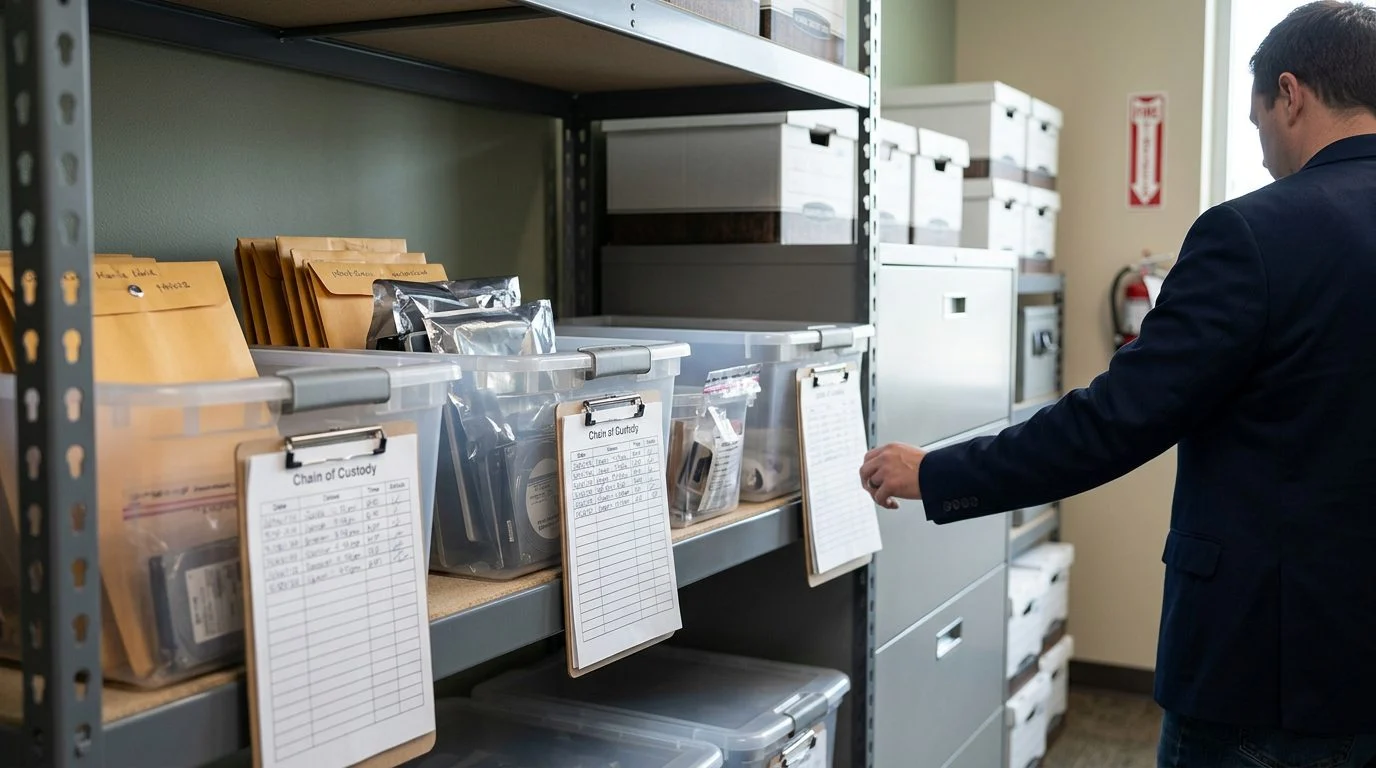
Investigators may then seek a search warrant for a home and its devices. Forensic examiners review phones, computers, storage media and cloud accounts. Those reports can take time to finish.
A defense review usually asks:
- Does the warrant match what was searched and seized?
- How was each device or account accessed?
- Who else had access to the device or account?
- How were the files tied to a specific user?
A review also asks whether the account holder knew the files were there, since knowledge is central to the offense.
Statements matter. Early conversations with investigators can shape a case, so a lawyer can advise on contact before it happens. Evidence gets tested in court, not accepted at face value.
What Defense Representation Covers
Defense representation covers the evidence review and every stage from bond through trial, if needed. The work includes:
- Review of charging papers, warrants, search materials and forensic reports.
- Advice on interviews and on what to say or avoid saying.
- Challenges to a search or warrant where the review supports them.
- Bond and release conditions, including limits on devices and internet use.
- Negotiation with the prosecutor, pretrial motions and trial preparation if the case goes that way.
Defense work also checks what the evidence shows and what it does not show, and explains each option in plain terms.
Registration is a long-term consequence that deserves a close look before any plea. Texas counts a deferred adjudication for this offense as reportable.
A judge may also place a defendant on deferred adjudication community supervision after a guilty or nolo contendere plea. The judge defers the finding of guilt, but registration law still reaches deferred adjudication.
How the Process Works, Step by Step
Your case starts with a first consultation, then a document review and a plan. The first consultation is free, confidential and carries no obligation to continue.
- First consultation. Call (972) 424-1902 or send your case details through the contact page.
- Document review. We review charging papers, warrants, device or forensic reports, and any statement you’ve already given.
- Options discussion. We explain what is known, what is still unknown, and the options that follow from the evidence.
- Representation. We handle arraignment, bond, discovery, pretrial motions and negotiation, with trial preparation if needed.
Bring any papers you have, including charging documents, bond paperwork and notices. A list of devices and online accounts involved also helps.
Timing varies with the facts, the evidence and court scheduling. No one can give a fixed date for each stage. No lawyer can ensure a particular outcome, but our review will explain the evidence and your options honestly.
Why Barbieri Law Firm for Collin County Cases
Barbieri Law Firm is an all-women criminal defense firm in Frisco, Texas, led by Heather Barbieri. The firm defends clients accused of sex crimes and assaultive offenses across Collin County, Dallas-Fort Worth and Texas.
The lead lawyer is Heather Jean Barbieri, Board Certified, Criminal Law — Texas Board of Legal Specialization.
Our team handles scheduling, intake and document organization, so the case stays organized from the first call.
Collin County cases move through local charging and court steps. The review focuses on the charges that apply where the case is filed. The firm takes cases from Plano, McKinney, Prosper and other nearby cities. Bring your questions to the first talk and ask how the review would apply to your facts.
Questions Families Ask Before Calling a Lawyer
Many answers turn on the details of each case.
Should I hire a Collin County child pornography lawyer before a charge is filed? You can talk with a lawyer before a charge. Advice on investigator contact can matter at this stage.
Should I talk to police about my phone or computer? Talk to a lawyer first. Statements to investigators can affect the case.
Can a parent call a lawyer for a teenager? Yes. Parents can call about a teen’s case, and the review covers the charges that apply.
Does deferred adjudication count for registration? Texas law reaches deferred adjudication for this offense, so the consultation explains how it applies to your charge.
Does the online solicitation statute cover texts? Yes. Texas Penal Code § 33.021 covers email, text messages and other electronic message services.
How long does a case take? Timing varies with the facts, the evidence and court scheduling.
Can a lawyer ensure the result? No lawyer can ensure a particular outcome. The review explains the evidence and your options honestly.

Talk to Heather Barbieri About Your Collin County Case
If an investigator has asked about your phone, computer or online account, or a search has already taken place, you don’t have to face it alone. Send your case details through the contact page or call (972) 424-1902 today.
Attorney responsible for this site: Heather Barbieri, Barbieri Law Firm, Frisco, Texas.
Ready to take the next step?
Related practice areas
Request a Consultation
Fill out the short form and we will take it from there.