

Online Sex Crimes Defense | Frisco, Texas
How Does an Online Sex Crime Investigation Start in Texas?
Most investigations begin with a platform report, a CyberTipline referral, an undercover chat, or a complaint from someone who was contacted online. Here is how each one works and what to do if you are under investigation.
By Heather Barbieri · Published October 29, 2026
If you just learned that someone is under investigation for an online sex crime in Texas, the start can feel sudden and confusing. Many people first hear about it from a police officer, a family member, or a notice they did not expect. This guide explains how these cases usually begin, one stage at a time.
Short Answer: Most Texas Online Sex Crime Investigations Begin With a Report or a Flagged Account
Most investigations start with a report, not an arrest. The report may come from an online platform, a national tip system, an undercover chat, or a person who believes they were contacted inappropriately. Often, the person under investigation does not know about it yet.
The path depends on the facts. The same kind of online conduct can reach police in different ways, so each case starts from its own set of details.
Texas law focuses heavily on the messages. Under Texas Penal Code § 33.021, a person 17 or older can commit an offense by intentionally communicating in a sexually explicit manner with a minor online, with the intent to commit an offense listed in Article 62.001(5)(A), (B), or (K), Code of Criminal Procedure. A “minor” includes anyone younger than 17. It also includes someone the adult believes is younger than 17. Investigators look closely at what was written, what was sent, and when.
If someone you love is under investigation, or you are worried about your own situation, you do not have to face it alone. Call (972) 424-1902 to talk with our team. Talk it through with our team — the first consultation is free, confidential, and carries no obligation.

Reports From Online Platforms and the NCMEC CyberTipline
A CyberTipline report starts with a suspicion, not proof. The National Center for Missing & Exploited Children (NCMEC) takes reports of suspected online child exploitation, including online enticement. NCMEC then refers those tips to law enforcement agencies that may investigate them.
A report usually identifies an account, an IP address, or an uploaded file. By itself, it does not show who used the account. It also does not show what that person knew or intended. Investigators must connect the report to a real person before they can build a case.
For a summary of the tactics investigators look for, see NCMEC’s online enticement guide. A report is only the start of an inquiry. It may or may not lead to charges.
Internet Crimes Against Children Task Forces and Undercover Stings
Internet Crimes Against Children (ICAC) task forces are law enforcement teams that investigate online crimes involving children. It investigates online child exploitation, including sexual solicitation.
In an undercover operation, an officer may pose as a minor in a chat or messaging app. The officer then watches to see whether an adult tries to arrange contact. The focus is on the conversation, its timing, and the identity tied to the account.
Entrapment is a separate question. Under Texas Penal Code § 8.06, entrapment is a defense when a law enforcement agent uses persuasion or other means likely to cause a person to commit the offense. Merely giving someone an opportunity to commit an offense is not entrapment. What was said in the chat matters most.
Complaints From Parents, Schools, and Other People
A complaint from a parent, school employee, relative, or other person can also start an investigation. The person may report messages, images, or contact they believe is inappropriate. Police then document the complaint, screen it, and assign it for follow-up.
A complaint describes one person’s concern. It may rest on partial information, such as a screenshot without the full conversation. The full exchange, its timing, and the surrounding context often matter more than the first report.
Reports like these can lead to the same follow-up steps as a platform tip. The next step is the same either way: find out who is behind the account and what was actually said.
From a Tip to Identifying the Account and Device
Investigators usually work to connect an online account, phone number, or IP address to a specific person. They often request account and subscriber records from service providers through formal legal process.
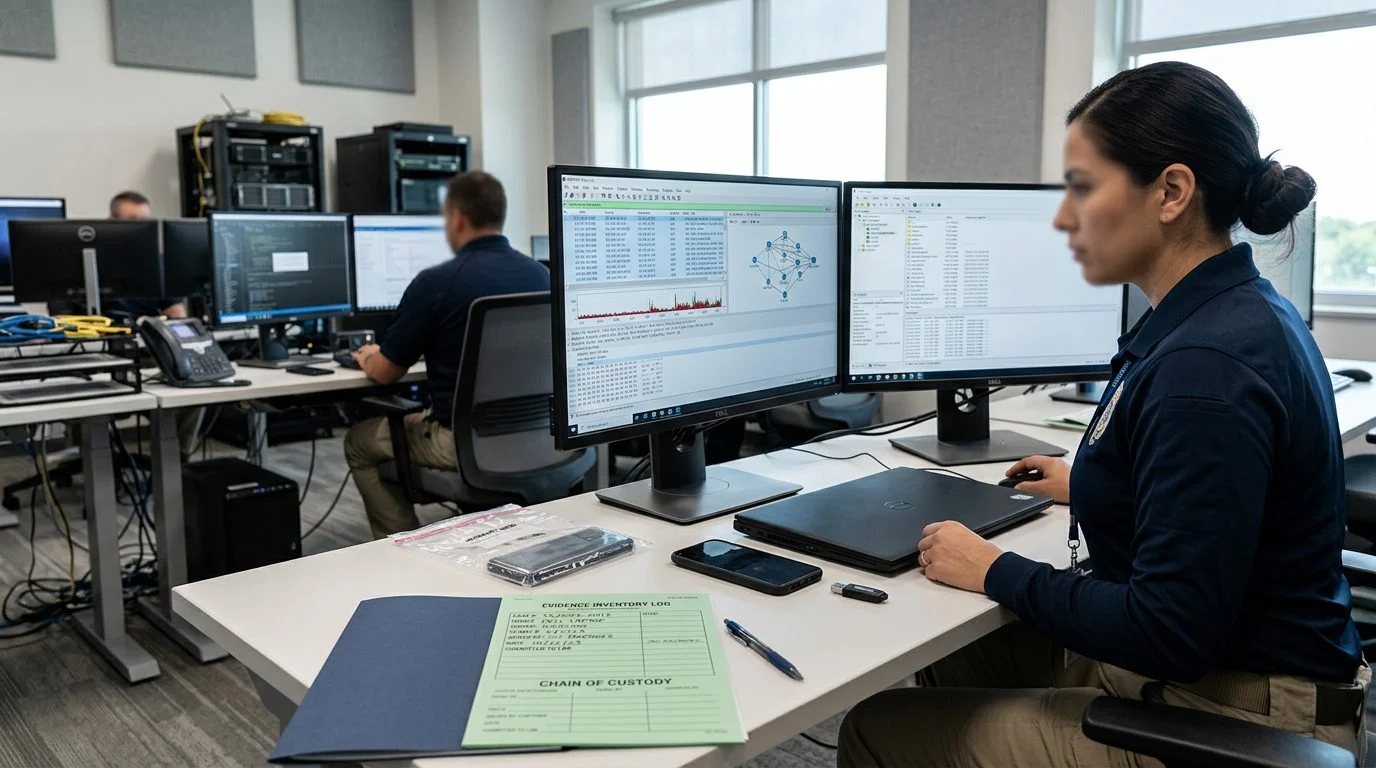
When investigators believe a phone, computer, or tablet holds evidence, they may seek a search warrant. A defense lawyer can review what the warrant allows officers to search and seize.
Investigators may also review the timeline of activity, linked accounts, and deleted files that can be recovered. A timeline can show when messages were sent and which device was used. Each of these steps can raise its own questions about accuracy.
Interviews, Device Seizure, and the Forensic Review
Officers may ask to interview you at home, at work, or at a police station.
Seized devices go to digital forensic examiners, and that review can take time. The gap between first contact and any charge can vary widely. Speak with a lawyer before answering detailed questions about messages, accounts, or contact with anyone under 18.
A lawyer may want to review the warrant, how devices were handled, which forensic methods were used, and how the conversations were captured. If children are involved, a separate Child Protective Services case may run alongside the criminal case. Our guide on CPS investigations and criminal child abuse charges in Texas explains how those two tracks differ.
Not sure what your next step is?
Talk it through with our team — the first consultation is free, confidential, and carries no obligation.
How an Investigation Can Lead to Arrest, Charges, and Bond
An investigation can end without charges, or it can lead to an arrest and formal charges. The outcome turns on what investigators gather.
After an arrest in Texas, a person is brought before a magistrate, and bond conditions may be set. Bond conditions can affect contact with children and access to devices. Read every condition carefully, and ask a lawyer to explain it. Our guide on how bail is set for online sex crime charges covers this stage in more detail.
The charge level matters. Under Texas Penal Code § 33.021, knowingly soliciting a minor online to meet with the intent that the minor will engage in sexual contact is a second-degree felony. The punishment is raised to the next higher level if the offense was committed during regular school hours and the actor knew or reasonably should have known the minor was enrolled in a primary or secondary school.
Registration can also follow a conviction or a deferred adjudication. Under Texas Code of Criminal Procedure art. 62.001, a reportable conviction can include a deferred adjudication for certain listed offenses.

Questions to Bring to a Lawyer Early and How Barbieri Law Firm Can Help
Bring a short list of questions to a lawyer early, before you answer more police questions. Useful questions include these:
- Is there a warrant, and what does it cover?
- Which accounts, phones, or devices are involved?
- Has anyone been charged, and when is the next court date?
- What do the bond conditions mean for contact with children?
Barbieri Law Firm is an all-women criminal defense firm in Frisco, Texas. It serves Collin County, Dallas-Fort Worth, and Texas. Heather Jean Barbieri, Board Certified, Criminal Law — Texas Board of Legal Specialization, leads the firm. Carrie Thomas is also a lawyer at the firm.
Common Questions
How does an online sex crime investigation start in Texas?
Most start with a platform report, a CyberTipline referral, an undercover chat, or a complaint from someone who was contacted.
Does a CyberTipline report mean someone is charged?
No. A report identifies an account or upload, and it may or may not lead to charges.
Is entrapment a defense to online solicitation in Texas?
Texas recognizes entrapment as a defense when a law enforcement agent induces the conduct using persuasion or other means likely to cause persons to commit the offense. Giving someone only an opportunity to offend is not entrapment.
If you are reading this because someone you care about is under investigation, or because you are worried about your own situation, you did not choose this. You do not have to face it alone. Call (972) 424-1902 or send your case details through our contact page for a free, confidential first consultation with no obligation to continue.
Attorney responsible for this site: Heather Barbieri, Barbieri Law Firm, Frisco, Texas.
How Barbieri Law Firm Approaches Your Case
We review the evidence
We look at the messages, account records, devices and reports in your file to understand what the State has and what it may not have.
We protect what you say
Early conversations with investigators can shape a case. We advise you before you answer questions or provide access to devices.
We explain your options
We walk you through the process in plain language, so you know what each step means for you and your family.
Confidential from the first call
Your free initial consultation is confidential and comes with no obligation to continue.
A report is not a charge
An online report or an investigation does not mean charges have been filed. Speak with a lawyer before you answer questions, send messages, or hand over a phone or computer.
Common Ways Online Investigations Begin
Platform reports
Social media, messaging and gaming companies may flag an account or upload and report it to law enforcement.
CyberTipline referrals
Reports made to the National Center for Missing & Exploited Children's CyberTipline are often forwarded to local agencies for review.
Undercover chats
Officers may pose as a minor or an adult online and communicate with a person through a website or app.
Complaints from the other person
A person who was contacted online may tell a parent, school, employer or police, which can start an investigation.
Talk with Heather Barbieri About Your Situation
Related practice areas
- Online Sex Crimes Defense Lawyer | Collin County & Texas
- Does Deleting Messages Help After an Online Sex Crime Investigation in Texas?
- How Bail Is Set for Online Sex Crime Charges in Texas
- Will an Arrest for an Online Sex Crime Show Up on a Background Check in Texas?
Request a Consultation
Fill out the short form and we will take it from there.