

Family Violence Defense | Collin County and Frisco, Texas
CPS Investigation and Family Violence Charges: Protect Your Case From the Start
Barbieri Law Firm defends Texas parents and family members facing family violence charges while a Child Protective Services investigation is open. Our free initial consultation is confidential and carries no obligation to continue.
By Heather Barbieri · Published October 19, 2026
Texas CPS Investigation and Criminal Child Abuse Charge
If a caseworker and a detective are both asking about your home, you do not have to sort out both cases alone. Call us, or reach out through our contact form, to talk them through. Talk it through with our team — the first consultation is free, confidential, and carries no obligation.

Short Answer: Yes, the CPS Case and the Criminal Case Can Run at the Same Time
Yes. CPS looks at whether a child is safe. The criminal side asks whether a Texas offense can be charged and proven. Facts, statements, and safety rules from one track can shape the other. This page explains how the tracks run side by side, what a CPS visit involves, where they collide, and what to write down early.
Two Separate Tracks: What CPS Does and What the Criminal Case Does
CPS and the criminal case are separate proceedings with separate jobs.
The criminal track starts with a police or sheriff’s inquiry. If the case moves forward, a prosecutor decides whether to file a charge. The State brings that charge, not the family or the agency.
The Texas Penal Code defines the offenses. Injury to a child is covered by § 22.04. Indecency with a child is covered by § 21.11, which applies to a child younger than 17.
One set of facts can fit more than one offense. Under § 22.04(h), a person subject to prosecution under both that section and another section may be prosecuted under either or both. Texas Penal Code § 22.04 reads: “Section 3.04 does not apply to criminal episodes prosecuted under both this section and another section of this code.”
Who Is Who: Caseworkers, Detectives, and Forensic Interviewers
A CPS investigator is the caseworker assigned to the report. CPS is the state agency behind that person. Families often mix these up, so ask for names and titles in writing.
The detective works for the police or sheriff’s office, not for CPS. The detective’s file can reach the prosecutor. That is why both tracks can end up looking at the same facts.
Children are often interviewed by a trained forensic interviewer, frequently at a child advocacy center. Both agencies may rely on that interview. Professional guidance from OJJDP calls for avoiding repeated questioning of the child and using open-ended questions (OJJDP guidance on child abuse investigations).
Practical point: ask which agency each person works for, and write down each name, office, and phone number.
What Happens During a CPS Visit
A CPS visit is a meeting where the caseworker checks on the children and the home and talks with the adults. The visit may be scheduled or unannounced.
The caseworker may interview parents and children, often separately. Questions often cover daily routines, discipline, and who lives in or visits the home. The caseworker also looks for present safety concerns.
If the agency sees a risk, it may discuss a safety plan. A safety plan can set rules about who may be in the home and who supervises the child. Ask for a written copy, and read every line before you sign.
Remember that what you say during a visit goes into the record. The caseworker’s notes and findings become part of the file. Answer carefully and truthfully. If you don’t know a date or detail, say so instead of guessing.
CPS Removal Guidelines in Texas and What Happens to a Newborn
Removal is when a child is taken out of the home.
Whether CPS takes steps about a newborn while a case is open depends on the facts. The answer turns on what the agency has found and what safety concerns remain.
Don’t assume that closing one case closes the other. Each track has its own decision-maker. A family may feel pressure to agree to everything quickly. Slow down, and ask for every term in writing.
Not sure what your next step is?
Talk it through with our team — the first consultation is free, confidential, and carries no obligation.
Where the Two Cases Collide
The two cases collide when something said or agreed in one track changes the other. The main collision points are statements, bond terms, and safety plans.
Statements. Anything said in a CPS interview can reach the criminal file. Treat every interview as possibly shared with the other track.
Bond terms. Under § 25.07, it is an offense, in violation of a bond condition in a family violence, sexual assault or abuse, indecent assault, stalking, or trafficking case, to knowingly or intentionally do certain listed things, such as committing family violence or an act in furtherance of certain offenses, or going to or near a protected person’s home, workplace, or business as specifically described in the condition. The condition must relate to the victim’s safety or the community’s safety. The offense can include communicating directly with a protected person or household member in a threatening or harassing manner.
Family agreements. Under the same section, reconciliatory actions or agreements made by affected persons do not affect the validity of a protective order. A private family deal does not change a court order.
Disclosure and recantation. What a child says, or later takes back, can affect both cases. Safety plan terms may also come up in the criminal case.
Different Standards of Proof
The two tracks ask different questions and have different decision-makers.
A CPS case looks at child safety and the family.
The Penal Code defines those parts. Outside indecency with a child, which has its own broader definition, sexual contact generally means touching the anus, breast, or genitals of another person with intent to arouse or gratify sexual desire. The intent part matters.
For continuous sexual abuse under § 21.02, jurors need not agree on each specific act or exact date. They must agree that two or more acts occurred during a period of 30 or more days.
Neither outcome should be read as the answer to the other.
What to Document From the First Contact
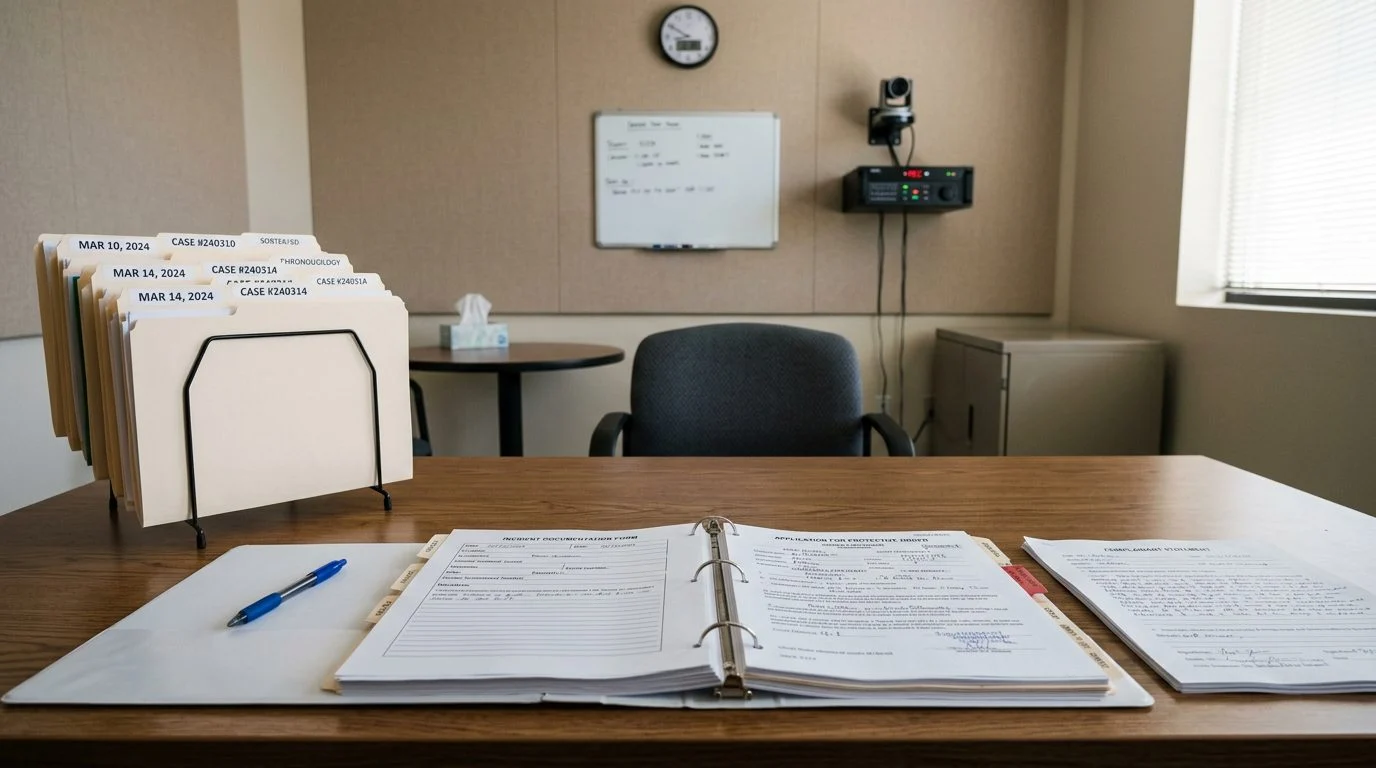
Start a dated written log today. Record every call, visit, text, and meeting with the caseworker or detective. Note the date, time, who was present, and what was said.
Keep copies of every safety plan, service plan, bond paperwork, and court notice you receive. Check each court date, hearing time, and deadline against the original notice. Keep them on one calendar.
List household members, daily schedules, and people who can speak to the home environment. Do not discuss the allegations with the child. Avoid writing about them in texts or on social media.
The National Registry of Exonerations tracks causes of wrongful conviction, including false accusations and mistaken identification. A clear, early record of events is one reason documentation matters from day one.
Talking With a Texas Criminal Defense Lawyer About Both Cases
A parent with a caseworker visit on the calendar and a detective asking questions can talk through both tracks in one conversation. Heather Jean Barbieri, Board Certified, Criminal Law — Texas Board of Legal Specialization, defends clients accused of child sex crimes and related offenses in Collin County, Dallas-Fort Worth, and Texas. Barbieri Law Firm is an all-women firm in Frisco, Texas.
Call (972) 424-1902 or send your case details through the Barbieri Law Firm contact page. The initial consultation is free, confidential, and carries no obligation to continue. No lawyer can promise how your case will turn out.
Common Questions
Is a CPS caseworker the same as a social worker?
The caseworker is the investigator assigned to the report. CPS is the state agency.
Can a family agreement alter a bond condition?
Section 25.07(d) provides that reconciliatory actions or agreements made by persons affected by an order do not affect the validity of that order or the duty of a peace officer to enforce this section. The section does not say that such an agreement changes a bond condition, so read any bond term and CPS plan together.
Attorney responsible for this site: Heather Barbieri, Barbieri Law Firm, Frisco, Texas.
How we approach these cases
Criminal defense first
A CPS investigation and a criminal charge follow separate processes, but what is said or signed in one may affect the other. We look at both with you.
We review the evidence
We will review the police report, any recorded statements, medical records, court papers and bond conditions, and explain your options in plain language.
Free, confidential consultation
Your first consultation is free, confidential and carries no obligation to continue.
Focused on criminal defense
Heather Barbieri focuses on criminal defense in Collin County, Dallas-Fort Worth and across Texas, including family violence and assaultive offense cases.
Care for the family
Our team handles these matters with discretion and care for the children and families involved.
Before you sign anything
Speak with a criminal defense lawyer before you sign a safety plan, agree to a family arrangement or give a written statement. These steps can affect a pending charge and any bond conditions.
Common questions
Is a CPS caseworker the same as a social worker?
The caseworker is the investigator assigned to the report.
Does a CPS case mean a criminal charge is coming?
Not necessarily. A CPS investigation and a criminal case are separate matters. We can explain how the two may interact in your situation.
What should I do first?
Call us to schedule a free consultation. Bring what has been filed, any bond paperwork and anything you have been asked to sign.
Facing a CPS investigation or a family violence charge? Talk to Barbieri Law Firm.
Related practice areas
Request a Consultation
Fill out the short form and we will take it from there.