

Sex Crimes Defense | Frisco, Texas
How a Texas Sexual Assault Investigation Unfolds, Step by Step
Investigations rarely follow one fixed path. Knowing the stages, and where early decisions matter most, helps you understand what may be coming next.
By Heather Barbieri · Published November 10, 2026
If someone you love has learned that a sexual assault report was made, you probably want to know how long this will take. Short answer: there is no set timeline for how long a sexual assault investigation takes in Texas. The length depends on the facts of each case.
Most matters move through the same general stages: a report, interviews, evidence collection, prosecutor review and, when an indictment is sought, a grand jury. Each stage can move fast or slow.
Is There a Set Timeline for a Texas Sexual Assault Investigation?
No. There is no set number of weeks or months for a sexual assault investigation in Texas. Investigations vary widely from case to case.
Several facts drive the pace. One is how the matter was reported. Another is how many people investigators must interview. A third is what evidence already exists and how much work is still needed. Under Texas law, sexual assault includes causing penetration of another person’s anus or sexual organ, or of their mouth by the actor’s sexual organ, without that person’s consent. Because consent is central, investigators often focus closely on what each person says happened.
A charging decision can come quickly in some matters. In others, it takes much longer. A single case can also move in uneven steps, with pauses between them.
If your loved one is waiting on an investigation with no clear end date, you do not have to face the next step alone. Our team is ready to talk. Talk it through with our team — the first consultation is free, confidential, and carries no obligation.

Stage One: What Happens at the Report and First Police Response?
The first stage starts when someone reports an assault to police. The first response usually focuses on safety and the initial account.
Officers may check on the complainant’s safety, take an early account, and identify the scene and any evidence that could be lost quickly. A report alone does not mean charges will be filed. Investigators first decide what work needs to happen next.
Your loved one may learn about the report through a phone call, a visit, or a later written notice. The timing of that contact differs from case to case. Victims in Texas also have rights, including safety measures and case updates. The Texas Attorney General’s crime victims’ rights page describes them.
Stage Two: How Do Interviews Affect the Timeline?
Investigators usually interview the complainant and any witnesses. They may also ask the accused person for a statement. This stage can stretch for weeks or months.
Scheduling is the main reason. People are busy, some witnesses are hard to reach, and investigators may need to speak with a person more than once.
Statements made in this stage can shape how a case develops. Before your loved one speaks with investigators, a short talk with our firm can help them understand what is being asked and what their options are. Speaking before understanding the situation can create problems that take time to fix.
Stage Three: How Long Does Evidence Collection Take?
Evidence collection can add weeks or months. Lab work and records requests run on their own schedules.
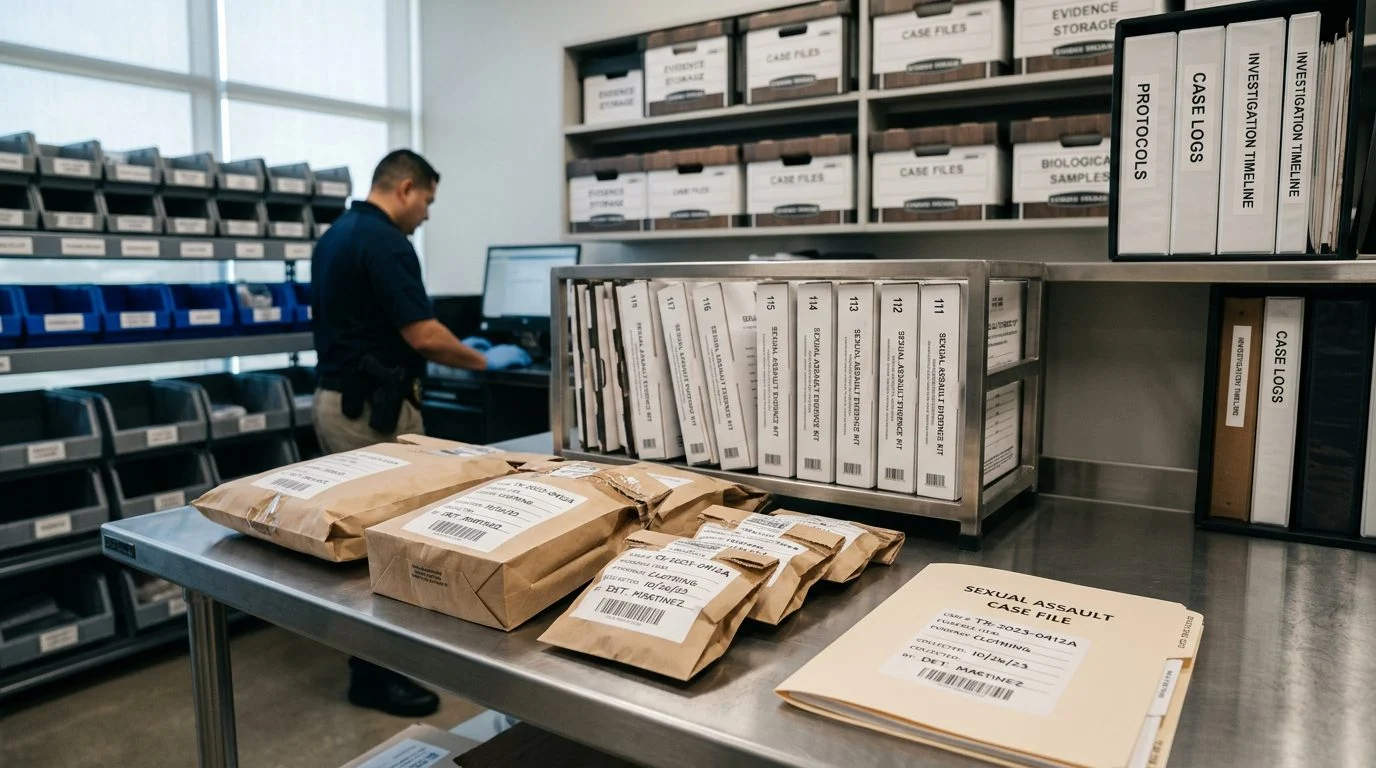
Investigators may gather medical or forensic exam records, text messages and other digital communications, phone records, photographs, and physical items from a scene. Each item comes from a different source. Some must go to a lab. Others must come from a third party, such as a medical provider or phone company.
Even when investigators already know the main facts, gathering records from other sources can extend the work.
Stage Four: What Does the Prosecutor Review Involve?
After police finish their work, a prosecutor reviews the file. The prosecutor decides whether to pursue charges, ask for more investigation, or decline.
This review can take time. The prosecutor may need to weigh the evidence, spot gaps, and send follow-up requests back to investigators. Each round adds time.
A prosecutor’s decision at this stage is a charging decision. It is not a finding of guilt.
Stage Five: Grand Jury Presentation and Indictment
A grand jury acts on an indictment, and it meets on its own schedule. Under Texas Code of Criminal Procedure art. 12.06, an indictment is “presented” when it has been duly acted upon by the grand jury and received by the court.
The grand jury hears the evidence the prosecutor presents. The grand jury calendar is set apart from the investigation itself. That separation can make the wait between a report and an indictment longer.
An arrest can also happen before a grand jury acts. So the stage may not be clear from the outside.
Not sure what your next step is?
Talk it through with our team — the first consultation is free, confidential, and carries no obligation.
How Long Does It Take to Indict Someone in Texas?
There is no fixed number of days or months to indict someone in Texas. Each stage depends on the facts. It also depends on the workload of the investigating agency, the prosecutor’s office, and the grand jury calendar.
Time can also affect the limitation period, which is the deadline to bring charges. Under Texas Code of Criminal Procedure art. 12.05, the time during the pendency of an indictment, information, or complaint is not computed in the period of limitation. That same article says time during which the accused is absent from the state is not computed in that period.
Your family can ask the investigating agency or the prosecutor’s office for case status. Answers may be limited while the investigation is still open.

Planning for the Stage Your Loved One Is In
If your loved one has been contacted about an investigation, the wait may have no clear end date. Start by identifying the stage. Is a statement being requested? Are records still being gathered? Does a prosecutor have the file?
Knowing the stage helps you plan the next step. If you want to talk through where the case stands, call Barbieri Law Firm at (972) 424-1902 or send your case details through our contact page. The first consultation is free, confidential, and carries no obligation.
Common Questions
How long does a sexual assault investigation take in Texas?
There is no set timeline. The length depends on the facts, including how the report came in and how much evidence must be gathered.
Does a report mean charges will be filed?
No. A report starts the process, but investigators and prosecutors decide what happens next.
Does an indictment mean the accused is guilty?
No. An indictment is not a verdict of guilt.
Attorney responsible for this site: Heather Barbieri, Barbieri Law Firm, Frisco, Texas.
How Barbieri Law Firm approaches the early stages
Review the evidence
We review the reports, recorded interviews and any physical or digital evidence available to us, then explain what it may mean for your situation.
Early attention
Many investigations change quickly at the start. The sooner we hear from you, the sooner we can review what has been gathered so far.
A confidential first call
Your initial consultation is free, confidential and carries no obligation to continue.
Plain-language updates
We explain each stage of the process in clear terms, so you always know what has happened and what your options are.
Talk to a lawyer before you give a statement
Investigators may ask for an interview at any stage, often without warning. Anything you say can become part of the record. Speaking with a defense lawyer first can help you understand your options before you decide how to respond.
The stages of a typical investigation
1. The report and first contact
An investigation usually begins when a report is made to police. Officers may contact the person named, collect initial statements and begin documenting the complaint.
2. Interviews and evidence collection
Investigators gather statements from the complainant, witnesses and the accused. They may also request texts, photos, social media records, phone data and other materials.
3. Forensic and digital review
Medical records, forensic exams, lab results and electronic data may be reviewed. This stage can take considerable time, depending on what must be obtained and analyzed.
4. Charging decision and prosecution review
Once the investigation is complete, the case is presented to a prosecutor, who decides whether charges will be filed. A report by itself does not mean charges will follow.
Have questions about an investigation involving you or someone you love?
Related practice areas
- Online Sex Crimes Defense Lawyer
- Can Sexual Assault Charges Affect a Texas Professional License? Board Reporting Questions
- Texas Sexual Assault Laws and Expunging a Dismissed Case
Request a Consultation
Fill out the short form and we will take it from there.