

Sex Crimes Defense | Frisco, Texas
When Alcohol Is Part of the Story, the Facts Matter Most
Intoxication raises questions that no single detail can answer. Here is how Texas law approaches them, and how our team looks at each case.
By Heather Barbieri · Published November 23, 2026
If someone has accused you of sexual assault and alcohol was involved, you are probably trying to make sense of the night and the process at the same time.
Here is the short answer. Alcohol is often part of these cases, and Texas law treats it as a factor in the consent question. Drinking does not cause a sexual assault, and it does not prove guilt or innocence. What decides the matter is what each person knew, said and did.
Is there a connection between alcohol and sexual assault?
Yes. Research links alcohol to many sexual assaults, but that link is an association, not proof of cause.
Researchers treat alcohol as a risk factor. That means it is connected to an outcome without being the only reason it happens.
Alcohol involvement can mean the accused had been drinking, the other person had been drinking, or both. Some studies look at one person, some at the other, and some at both. Studies don’t always define involvement the same way, so their results may not line up.
Research describes patterns across groups of people. It does not tell anyone what happened on one specific night. The facts of your case do that.
For a broader look at these allegations, read our online and sex crimes defense overview.
If an alcohol-related allegation has you trying to understand what comes next, you do not have to face it alone. Reach out, and we will talk it through with you. Talk it through with our team — the first consultation is free, confidential, and carries no obligation.
What percent of sexual assaults involve alcohol?
No single percentage is settled. Treat any figure you read as an estimate, not a fact about your case.
Estimates differ for practical reasons. Some studies sample college students, some sample members of the military, and some sample the general community. Results from one group don’t transfer neatly to another.
Studies also ask about alcohol in different ways. Some ask about the victim’s drinking, some ask about the accused’s, and some ask about the incident as a whole. A number built on one question can’t answer the others.
Many estimates also rely on self-report. People describe their own past, and recall of a night involving drinking can be uncertain. That makes each figure a rough estimate.
When you see a number, ask two things: who was studied, and what was asked. Those answers show how much weight it can carry.
How does alcohol affect judgment, memory and communication?
Under Texas Penal Code § 1.07, consent means assent in fact, whether express or apparent.
Both forms are judged from what actually happened.
That is why messages and conduct from before, during and after the night often become central. No single text or photo usually settles the question on its own. Context matters.
Accounts of the same night often differ. When a case turns on what was said or done, each version has to be checked against the other evidence. A careful review looks at the order of events and the timing of each message.
Does alcohol cause sexual assault?
No. Alcohol is treated as a risk factor, not as the cause of an assault. The National Sexual Violence Resource Center states that alcohol does not excuse sexual violence, and that a person incapacitated by alcohol cannot give consent.
That distinction matters for you. A claim that alcohol was involved does not, by itself, show what either person intended or knew.
In some sexual assault cases, what the accused knew about the other person’s condition can be central to the charge. The statute turns on the actor’s knowledge, not only on how much someone drank.
Here is a practical point. In a drinking-related case, the State has to show what the accused knew, not only how much the other person had drunk.
How does Texas law treat consent when someone has been drinking?
Under Texas law, having a drink is not the same as being incapable of consenting.
Under Section 1.07, consent is not effective when the actor knows the other person, because of intoxication, is unable to make reasonable decisions.
Section 1.07 defines a felony as “an offense so designated by law or punishable by death or confinement in a penitentiary”; it does not set the degree of sexual assault or list exceptions.
Whether a particular night meets that test depends on the facts. The timeline, what was consumed, what was communicated and what the accused knew are all central. For how these questions are examined in a drinking-related allegation, see our drinking-related allegation guide.
What evidence is usually examined in an alcohol-related allegation?
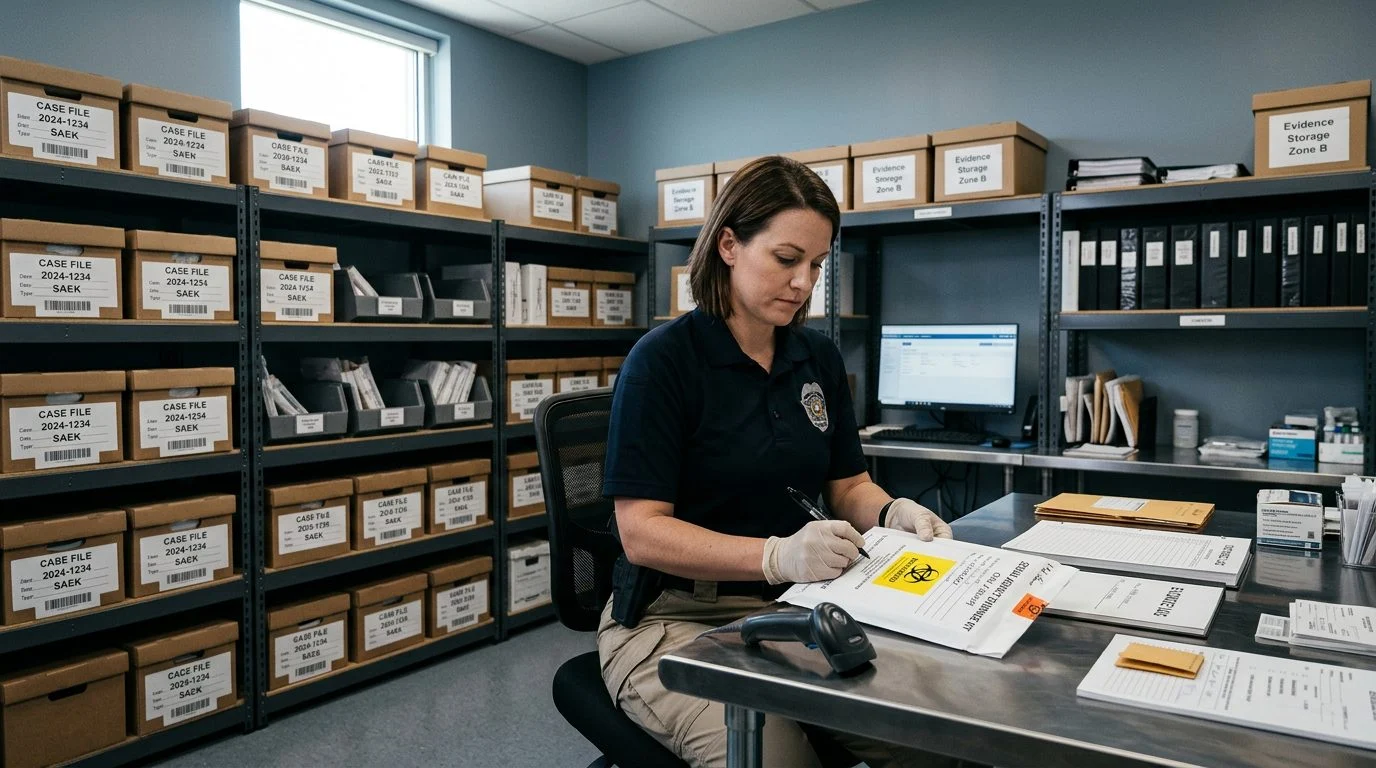
Messages, video, receipts, witness accounts and recorded statements are the kinds of evidence these cases often involve.
- Messages and posts can show what was said, and when, before and after the night.
- Video from a venue or home can show who was present and the order of events.
- Receipts and tabs can show purchases and timing.
- Witness accounts can differ, and each one needs to be read in context.
Each item must be read in context: when it was made, who made it, and what it does and doesn’t show about consent or condition.
Police generally need a warrant to search a phone after an arrest. A peace officer generally may not search a person’s cellular telephone after a lawful arrest without first obtaining a warrant, subject to limited exceptions. Riley v. California says a warrant is generally required even when a phone is seized during an arrest.
If police recorded a custodial interview, Texas Code of Criminal Procedure art. 38.22 requires that recording be preserved until the conviction is final, direct appeals are exhausted, or prosecution is barred by law.
If the matter started at work, an internal HR process can run alongside a police inquiry. See workplace accusations in Texas. Texas statutes apply in Collin County and across the Dallas-Fort Worth area alike. Our Collin County page covers matters in that county.
Not sure what your next step is?
Talk it through with our team — the first consultation is free, confidential, and carries no obligation.

If you are the one being accused, what can you do next?
The earliest choices, including whether to give a statement to police, can shape what the record shows.
Keeping what you already have, such as messages, photos and receipts, gives a lawyer more to review. A lawyer can also go over the timeline with you before you make any statement, so the record reflects what actually happened.
Can someone who has been drinking give consent in Texas?
Drinking alone does not automatically mean a person cannot consent. In some sexual assault cases, the central question is whether the other person was incapable of consenting.
Do police need a warrant to search my phone?
Generally, yes. As the Court explained in Riley v. California: “Our holding, of course, is not that the information on a cell phone is immune from search; it is instead that a warrant is generally required before such a search, even when a cell phone is seized incident to arrest.”
If you’re trying to understand an allegation involving alcohol right now, you don’t have to face the questions alone. Share what happened in your own words through our case-details form, or call (972) 424-1902. The initial consultation is free, confidential, and carries no obligation to continue.
Attorney responsible for this site: Heather Barbieri, Barbieri Law Firm, Frisco, Texas.
Heather Jean Barbieri, Board Certified, Criminal Law — Texas Board of Legal Specialization.
How We Approach an Alcohol-Related Case
We Review the Evidence
We look at police reports, medical records, text messages, video and witness accounts to understand what the State can and cannot prove.
We Examine Consent Closely
Where consent is in question, we examine the specific circumstances of the case rather than relying on assumptions about alcohol.
We Protect Your Position
We explain what to expect from investigators and prosecutors and help you decide what to say, and what not to say, before you speak with anyone.
An All-Women Criminal Defense Firm
Barbieri Law Firm focuses on criminal defense in Frisco, Collin County and across Texas, including sex crimes and assaultive offenses.
A Confidential Conversation
Reach out through our contact form or by calling (972) 424-1902. We will listen, review your situation and explain your options.
Important
Being intoxicated does not automatically answer the question of consent. Each case turns on its own facts, so avoid drawing conclusions from general information alone.
Details We Look at Early
The Timeline of the Evening
Where everyone was, when they arrived, when they left and who was with them can shape how the events are understood.
Statements to Investigators
We review what was said, how it was recorded and whether the account changed over time.
Messages and Social Media
Texts, photos and posts from before and after an event can add context that is often overlooked.
Medical and Forensic Records
Toxicology, medical exams and other records are reviewed carefully for what they do and do not show.
Have Questions About an Alcohol-Related Accusation? Talk With Our Team.
Request a Consultation
Fill out the short form and we will take it from there.