

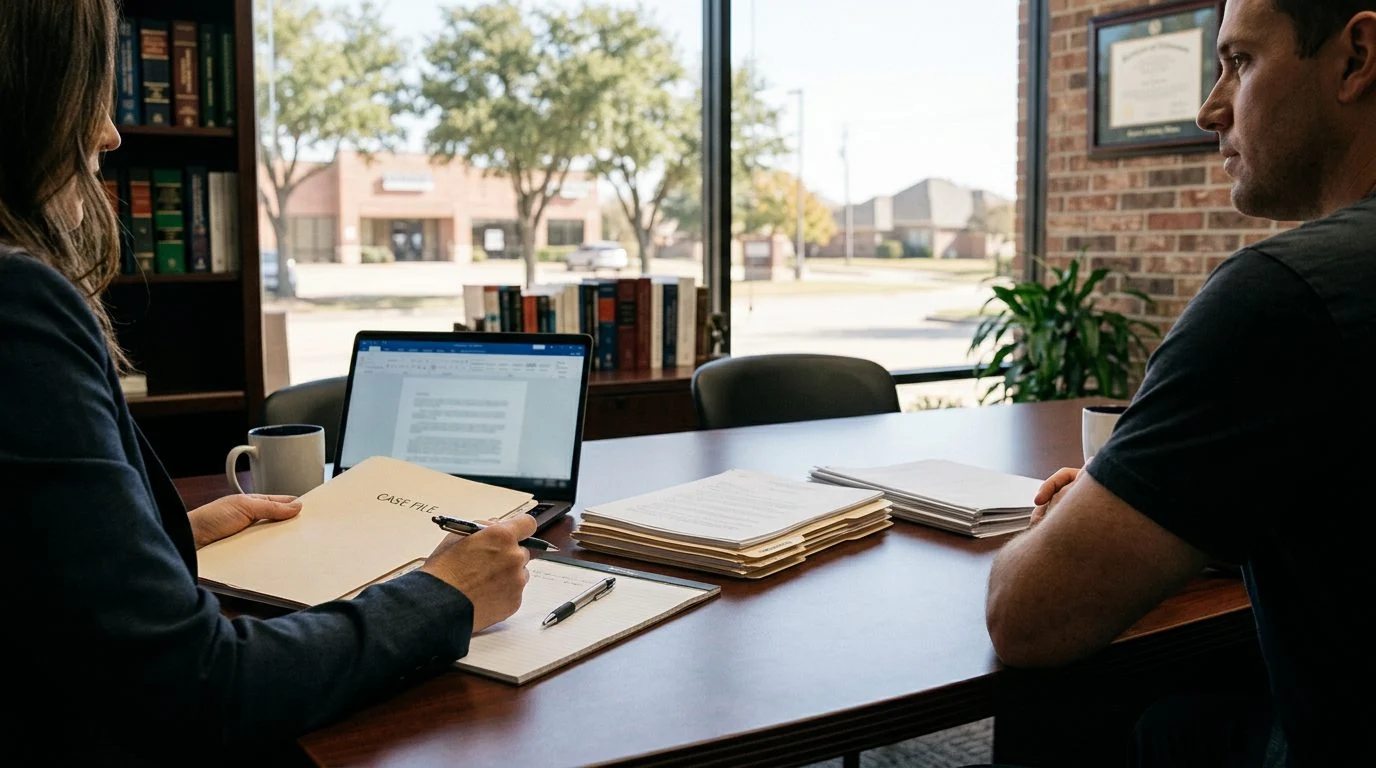
Sex Crimes Defense | Frisco, Texas
Charged With Rape in Texas? Get a Criminal Defense Lawyer on Your Side Early
Barbieri Law Firm is an all-women criminal defense firm that represents people accused of sexual offenses and assaultive crimes in Collin County, Dallas-Fort Worth and across Texas.
Why Clients Contact Barbieri Law Firm
Board Certification
Heather Jean Barbieri, Board Certified, Criminal Law — Texas Board of Legal Specialization
An All-Women Firm
Our lawyers, Heather Barbieri and Carrie Thomas, and our team handle every case with careful attention to the facts and to each client's concerns.
A Confidential First Step
The initial consultation is free, confidential and carries no obligation to continue.
Based in Frisco, Texas
We represent clients in Collin County, Dallas-Fort Worth and throughout Texas.
By Heather Barbieri · Published November 15, 2026
Being accused of rape in Texas can leave you feeling like the ground has shifted under your feet. A rape charge defense lawyer in Texas starts by making sure you understand exactly what the State must prove. This page explains the charge, what is at stake and how a defense is built. It does not predict how any case will end.
What a “rape” charge is under Texas law
“Rape” is the everyday word. Texas law names several sexual offenses, including sexual assault and aggravated sexual assault. The “sexually violent offense” definition in Article 62.001 also lists continuous sexual abuse and indecency with a child under Section 21.11(a)(1), when committed by a person 17 years of age or older. Texas Penal Code § 22.011 covers sexual assault. It applies when someone causes penetration of another person’s anus or sexual organ, or the mouth, without that person’s consent.
Consent is the central question. For sexual assault under Subsection (a)(1), the statute lists situations where consent is missing. These include force, violence or coercion. They also include a threat the other person believes the accused can carry out. Another is when the other person has not consented and the accused knows the other person is unconscious or physically unable to resist, or is unaware the act is happening.
Texas defines aggravated sexual assault in Section 22.021 of the Penal Code. Examples include serious bodily injury, a deadly weapon, or a victim who is younger than 14, elderly or disabled. Texas defines serious bodily injury and deadly weapon in Penal Code § 1.07.
The label on a charge matters less than the facts behind it. Two cases with the same label can look very different once the evidence is reviewed.
If a detective has called about an accusation, you do not have to face it alone; we offer a confidential first consultation to talk through your options before you say anything more. Talk it through with our team — the first consultation is free, confidential, and carries no obligation.
Who is accused and what usually starts the case
A case often starts with a phone call from a detective. It can also start with a protective order, an arrest warrant or a report made to police. For a professional, that first contact can come without warning, at work or at home.
A detective’s call is the start of an investigation, not a finding of guilt. Before you agree to an interview, talk with a lawyer about what to say. In the first hours after an accusation, it is easy to say things you later wish you had handled differently.
A protective order is a separate proceeding. Under Texas Code of Criminal Procedure art. 7B.001, a victim of sexual assault or aggravated sexual assault may apply for one. Under art. 7B.002, if the court finds from the application that there is a clear and present danger of the conduct described or other harm to the applicant, it may issue a temporary ex parte order without notice to the accused and without a hearing. That order can arrive before you have had any chance to respond.
Your job, colleagues and community can feel the effects long before a case is resolved. People in this situation often worry about an arrest at work, in front of colleagues. Others fear their spouse or children will hear about the accusation from someone else.
What is at stake: penalties, registration and collateral consequences
Sexual assault is generally a second-degree felony, but Section 22.011 makes it a first-degree felony in certain listed circumstances, such as when the victim is a person the actor was prohibited from having sexual intercourse with under Section 25.02. Prohibited sexual conduct under Section 25.02 is a third-degree felony, or a second-degree felony when committed with the actor’s ancestor or descendant by blood or adoption. The first-degree felony range allows life or a term of 5 to 99 years, plus a fine of up to $10,000. A second-degree felony allows 2 to 20 years, plus a fine of up to $10,000.
Registration is another serious consequence. Article 62.001 of the Texas Code of Criminal Procedure sets out the definitions used in that chapter. Chapter 62 then sets the registration rules that apply to it.
Collateral effects reach beyond the courtroom. These can include licensing boards, employers, professional credentialing, child custody and family court matters, and court records that are public. No lawyer can say in advance how a case will end.
How these cases are defended
A rape charge defense lawyer in Texas starts with the State’s file and the elements the State must prove. A careful review usually covers these areas:
- The charging papers and sworn affidavit. These are checked against the timeline and the account the complainant gives.
- Consent evidence. Texts, emails, social media posts and witness accounts can show what was said and done before and after the event.
- Forensic evidence. DNA results, medical records and lab reports are reviewed to see whether testing supports the State’s account.
- Identity, timeline and credibility. Each account is compared with records, locations and prior statements.
After review, options include negotiation or trial. The choice belongs to you, made after you get full advice.
What to expect: from the first call to resolution
The process starts with a first meeting, not a courtroom date. Here is the usual path:
- First consultation. You describe the allegation, any police contact and any protective order or warrant.
- Advice on communication. You learn what to say and what to hold back from police, coworkers and family until counsel reviews the facts.
- Evidence review. The lawyer reviews the State’s file, the complainant’s statements and any digital or forensic material.
- Pretrial work. This can include bond questions, protective order matters and communication with the prosecutor when appropriate.
- Resolution. A case can end by dismissal, negotiation or trial. Timing turns on the facts and the court’s schedule.
Why Barbieri Law Firm for this charge
Barbieri Law Firm is an all-women criminal defense firm based in Frisco, Texas. Our lawyers include Heather Barbieri and Carrie Thomas. Heather Jean Barbieri, Board Certified, Criminal Law — Texas Board of Legal Specialization, leads the firm.
We defend professionals accused of sex crimes and assaultive offenses across Collin County, Dallas-Fort Worth and Texas. Our approach is simple. We review the evidence, including the State’s file, the timeline and any recorded statements. Then we explain your options in plain language. Our support staff help keep office and case logistics organized.
Not sure what your next step is?
Talk it through with our team — the first consultation is free, confidential, and carries no obligation.
Frequently asked questions
Is “rape” a separate crime from sexual assault in Texas?
Texas statutes use the names sexual assault and aggravated sexual assault. “Rape” is the common word people use for them.
Should I talk to a detective before I speak with a lawyer?
Get advice first. Ask a lawyer what to say, and what to hold back, before you answer questions.
Can my employer or licensing board learn about this before a case is resolved?
It can happen. These questions turn on the specific facts and each institution’s own rules, and a lawyer can help you plan for them.
Do I have to pay for a first consultation?
The first consultation is free, confidential and without obligation to continue.
Next step: a confidential conversation before you say anything
If a detective has called, or a protective order or warrant has reached you, the next step is a conversation before you make any statement. You can reach the firm in three ways. Call (972) 424-1902, schedule a consultation, or send your case details through the same page.
Attorney responsible for this site: Heather Barbieri, Barbieri Law Firm, Frisco, Texas.
Before You Speak With Investigators
Consider speaking with a criminal defense lawyer before you answer questions about the allegation.
Charges We Defend
Sex Crimes Defense
We defend clients facing sexual assault and other sex crime charges, reviewing the allegations, the evidence and the timeline with you from the start.
Aggravated Sexual Assault
Aggravated sexual assault charges carry serious penalties under Texas law. We review the evidence, including forensic and digital records, and explain your options.
Child and Online Sex Crimes
We handle child sex crimes and online sex crimes cases, including allegations involving electronic messages, images and devices.
Aggravated Assault and Family Violence
We also defend assaultive offense charges, including aggravated assault and family violence, across Collin County and Dallas-Fort Worth.
Talk With a Frisco Criminal Defense Lawyer About Your Case.
Related practice areas
Request a Consultation
Fill out the short form and we will take it from there.