

Online Sex Crimes Defense | Frisco, Texas
Charged Over Intimate Visual Material? Talk Privately With a Criminal Defense Lawyer Who Focuses on Sex Crimes Defense
Barbieri Law Firm is an all-women criminal defense firm in Frisco, Texas. We defend people accused of intimate visual material offenses across Collin County, Dallas-Fort Worth and Texas. Your first consultation is free, confidential and carries no obligation to continue.
By Heather Barbieri · Published October 19, 2026
Unlawful disclosure or promotion of intimate visual material is a state jail felony in Texas. The offense involves sharing another person’s intimate images without consent, with intent to harm. If you are accused, or you learned an investigation is open, this page explains the law and what comes next. Barbieri Law Firm serves people across Collin County, Dallas-Fort Worth and Texas. This page is for anyone looking for an unlawful disclosure of intimate visual material defense lawyer Texas.
What Unlawful Disclosure of Intimate Visual Material Means in Texas
Unlawful disclosure of intimate visual material is a crime when someone, without the depicted person’s effective consent and with intent to harm that person, discloses intimate images of another person, knowing or having reason to believe they were obtained by the sharer or made under a reasonable expectation of privacy, where the disclosure causes harm and reveals the depicted person’s identity. The offense is set out in Texas Penal Code § 21.16.
“Intimate parts” means the naked genitals, pubic area, anus, buttocks, or female nipple of a person. “Visual material” includes files in any digital format that show an image on a screen.
The statute covers more than sharing. “Promote” includes sending, giving, posting, publishing, distributing, selling and offering to do any of these. Promoting intimate visual material described in Subsection (b) on a website or forum the person owns or runs is a separate offense when the person knows its character and content. Intentionally threatening to disclose, without the depicted person’s consent, intimate material to get a benefit is also an offense.
For a disclosure charge, the state must address several elements. The sharer must lack effective consent and intend harm. The sharer must know, or have reason to believe at the time of the disclosure, that the material was obtained by the sharer or created under circumstances in which the depicted person had a reasonable expectation that it would remain private. The disclosure must cause harm and reveal the person’s identity.
The offense is a state jail felony. Under Texas law for a state jail felony, that means confinement in a state jail for any term of not more than two years or less than 180 days, plus a possible fine not to exceed $10,000. The offense is punished as a third-degree felony instead if a deadly weapon was used or exhibited, or if certain prior felony convictions apply. A court may instead impose Class A misdemeanor confinement if it finds that serves the ends of justice, under Texas Penal Code § 12.44.
If a message, a post or a call from police has put you in a spot you did not choose, our team can review the charge with you in a confidential first meeting. Talk it through with our team — the first consultation is free, confidential, and carries no obligation.

Defenses and What Gets Examined in These Cases
Defenses in these cases start with the statute’s elements and the digital evidence behind them. An unlawful disclosure of intimate visual material defense lawyer in Texas reviews each element separately.
Consent to making an image is not a defense. Section 21.16 says it is not a defense that the depicted person created the material, consented to its creation, or sent it to the accused. The real question is what the depicted person agreed to about sharing it with others. The Penal Code defines consent as assent in fact, whether express or apparent, under Texas Penal Code § 1.07.
The statute also lists affirmative defenses. These include disclosure made while reporting unlawful activity, disclosure made in a legal proceeding when the law permits or requires it, and images showing only a person’s voluntary exposure in a public or commercial setting.
Access and identity often matter. Phones, accounts and cloud logins are often shared. Who could reach a device or account, and whether someone else sent the material, can be central. See access and identity defenses.
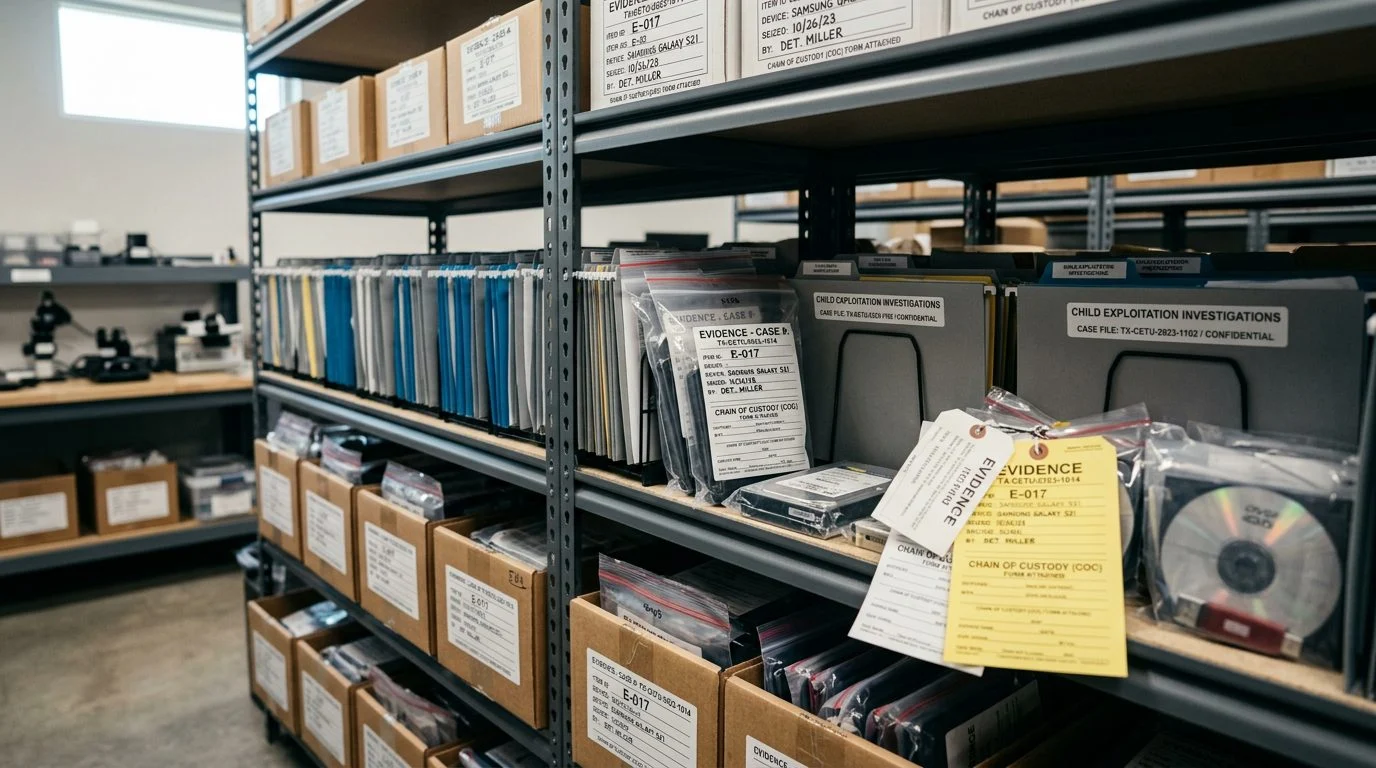
Digital evidence is reviewed piece by piece. That includes device extractions, message data, upload logs and timestamps. For what the state must produce, see discovery in online sex crime cases.
Why Accused Professionals Face Added Pressure
For an accused professional, the case can affect work long before any court date. Employers, licensing concerns and colleagues may learn of an arrest or investigation. Reputation worries often arrive in the first days, when decisions feel urgent.
Statements matter. Messages, posts and comments to coworkers, employers or online platforms can become evidence. Talking with a lawyer before giving a statement helps you understand the charge first.
Bond conditions can limit contact with a person, a device or online activity. Check each condition against the charging document so you know exactly what applies to you.
An early review also gives you a clearer timeline. Knowing the next steps helps you plan time away from work, family duties and document gathering. Early planning does not change the statute, but it gives you time to make informed choices. Our team can arrange meetings and document review around your schedule.
How the Defense Process Works: Steps and What to Expect
Working with an unlawful disclosure of intimate visual material defense lawyer Texas starts with a conversation about the charge. The process moves in stages.
- First contact. We schedule a free, confidential initial consultation, with no obligation to continue.
- Charge review. We review the arrest report, the charging document, bond terms and any protective orders.
- Preservation and discovery. We request the state’s evidence and ask that devices, accounts and records be preserved.
- Evidence review. We go through the digital material and witness statements with you.
- Options. We explain negotiation, pretrial motions or trial preparation at each stage, so you can decide with the facts in front of you.
Timelines vary with the county court calendar and the complexity of the digital evidence. The first meeting sets expectations for your specific case. We review the evidence and explain your options at every step.
Why Barbieri Law Firm for This Defense
Barbieri Law Firm is an all-women criminal defense firm in Frisco, Texas, led by Heather Barbieri. The firm defends people accused of sex crimes and assaultive offenses. That includes online sex crimes, aggravated sexual assault, aggravated assault and family violence. The firm works across Collin County, Dallas-Fort Worth and Texas.
Heather Jean Barbieri, Board Certified, Criminal Law — Texas Board of Legal Specialization. That certification is Ms. Barbieri’s own.
Our support staff handles scheduling, records and document organization. The firm’s approach is to review the evidence closely and explain each option in plain terms.
Common Questions About Intimate Visual Material Charges in Texas
Short answers to the questions people ask most often.
Can I be charged if I only received the images?
The statute’s list of promoting actions includes sending, giving, posting and distributing. How a charge applies depends on the facts of each case.
Do I need a lawyer before I talk to police?
Many people speak with a lawyer before giving a statement. An early review helps you understand the charge before you decide what to say.
What happens at a first consultation?
We talk about what you know, your bond terms and your questions. We then review the charge and explain what comes next.
Is this a sex crime?
The offense is in Penal Code § 21.16 and is a state jail felony. The firm handles it as part of its online sex crimes defense work.
Can a lawyer make the charge go away?
No lawyer can ensure a particular outcome, including dismissal. We review the evidence and explain your options.
Not sure what your next step is?
Talk it through with our team — the first consultation is free, confidential, and carries no obligation.
Talk With Barbieri Law Firm About Your Situation
You can talk with Barbieri Law Firm about your situation before you decide anything. A message, an accusation or a call from police can change your week in a moment. You may be deciding what to say, who to tell and how to handle bond terms. You don’t have to sort that out alone.
To start, schedule a free consultation, call (972) 424-1902, or send your case details through the same contact form. We will review the evidence and explain your options. No outcome is promised.
Attorney responsible for this site: Heather Barbieri, Barbieri Law Firm, Frisco, Texas.
How We Approach These Cases
We review the evidence
We examine the messages, images, device data and account records in your case, and we explain what the State has and what it must prove.
We protect your privacy
These charges are sensitive. We keep your case details confidential and communicate with you in a way that respects your privacy.
We explain your options
Every case is different. We walk you through the charge, the possible paths forward and the decisions you will need to make, so you can choose with clear information.
A women-led team
Barbieri Law Firm is an all-women firm. Our team, including our office staff, works with you from your first call through the end of your case.
Before You Speak With Investigators
Anything you say to police, or post or send online, can be used in your case. Avoid discussing the allegation with anyone other than your lawyer, and do not contact the other person about the matter.
Questions We Help You Answer
What does the charge mean?
Texas law addresses the unlawful disclosure or promotion of intimate visual material. We explain which actions the statute covers and how the facts of your situation may fit or not fit the charge.
Do I need a lawyer before I give a statement?
Many people speak with a lawyer before they answer questions from police. An early review helps you understand the charge before you decide what to say.
What happens at a consultation?
We listen to what happened, review any paperwork or court documents you bring, and explain the process in plain language. Your consultation is confidential and has no obligation to continue.
What should I bring?
Bring any charging papers, bond or court paperwork, and a list of the dates, platforms and people involved. Do not delete anything without first speaking with your lawyer.
Talk With Barbieri Law Firm in Confidence
Related practice areas
- Online Sex Crimes Defense Lawyer | Collin County & Texas
Request a Consultation
Fill out the short form and we will take it from there.