

Online Sex Crimes Defense | Frisco, Texas
Facing an Online Sex Crime Charge in Texas?
Barbieri Law Firm, an all-women criminal defense firm in Frisco, represents people accused of online offenses across Collin County and Dallas-Fort Worth. Your first conversation is free and confidential.
By Heather Barbieri · Published November 12, 2026
If police have contacted you about online messages, you may wonder whether a charge can exist without meeting anyone.
This page explains how these charges work, what evidence matters, and what the process looks like from the first call. It is general information about Texas law, not advice about your own case.
Can You Be Charged in Texas Without Meeting Anyone?
Yes. Texas law makes online solicitation of a minor a crime even when no meeting ever happens.
The offense is in Texas Penal Code § 33.021. It covers messages sent over the internet, by text or through an online service. For a solicitation to meet, the statute says it is not a defense that the meeting did not occur.
Being contacted by police is not the same as being charged. Police may ask you to come in, answer questions or hand over a device. A charge is a formal accusation filed in court. Each stage brings different steps, so early choices matter.
Many of these cases start with a police sting. An officer posts a decoy profile and waits for a reply. Others start with a report from a parent, an ex-partner or an online platform. Some come to light during a divorce, custody fight or CPS case, when messages turn up on a shared phone or computer.
The National Center for Missing & Exploited Children describes online enticement and the grooming tactics often linked to it.
If police have contacted you about online messages, or a charge has been filed, you do not have to face it alone. Call (972) 424-1902 to talk through your papers and your options. Talk it through with our team — the first consultation is free, confidential, and carries no obligation.

What Evidence Matters Most in an Online Sex Crime Case?
The evidence that matters most is the full message record, the account behind it, and what the accused believed about age.
- The complete message thread with dates and times, not only the parts someone chose to show.
- Account and profile details, including whether the messages came from your account or device.
- Device and login records, where they are available.
- If a decoy profile was used, how it was created, what age and photos it showed, and who controlled it.
Belief about age is a central question. Under Penal Code § 33.021, a minor includes a person the accused believes is younger than 17. So the evidence of what was believed gets close review. Our guide on the belief about age question covers that issue in more detail.
The same section lists two defenses for conduct under subsection (c). One applies when the accused was married to the minor. The other applies when the accused was not more than three years older and the minor consented.
Entrapment is a separate issue. Under Texas Penal Code § 8.06, it is a defense when a law enforcement agent induces the conduct using persuasion or other means likely to cause a person to commit the offense. Giving someone a chance to offend is not entrapment. We review who started the conversation, what the officer said and the timeline.
Your bond order may also set conditions that affect your online and device use. We review those terms with you line by line.
What Happens From First Call to Resolution?
The process moves in steps: a first review of your papers, a close look at the evidence, pretrial work, and then a decision about your options.
- First review. Share the charging papers, the bond order and a list of questions police asked you.
- Protect what you say. Anything you already told police matters. Do not delete, change or forward messages, and do not contact the other person about the case.
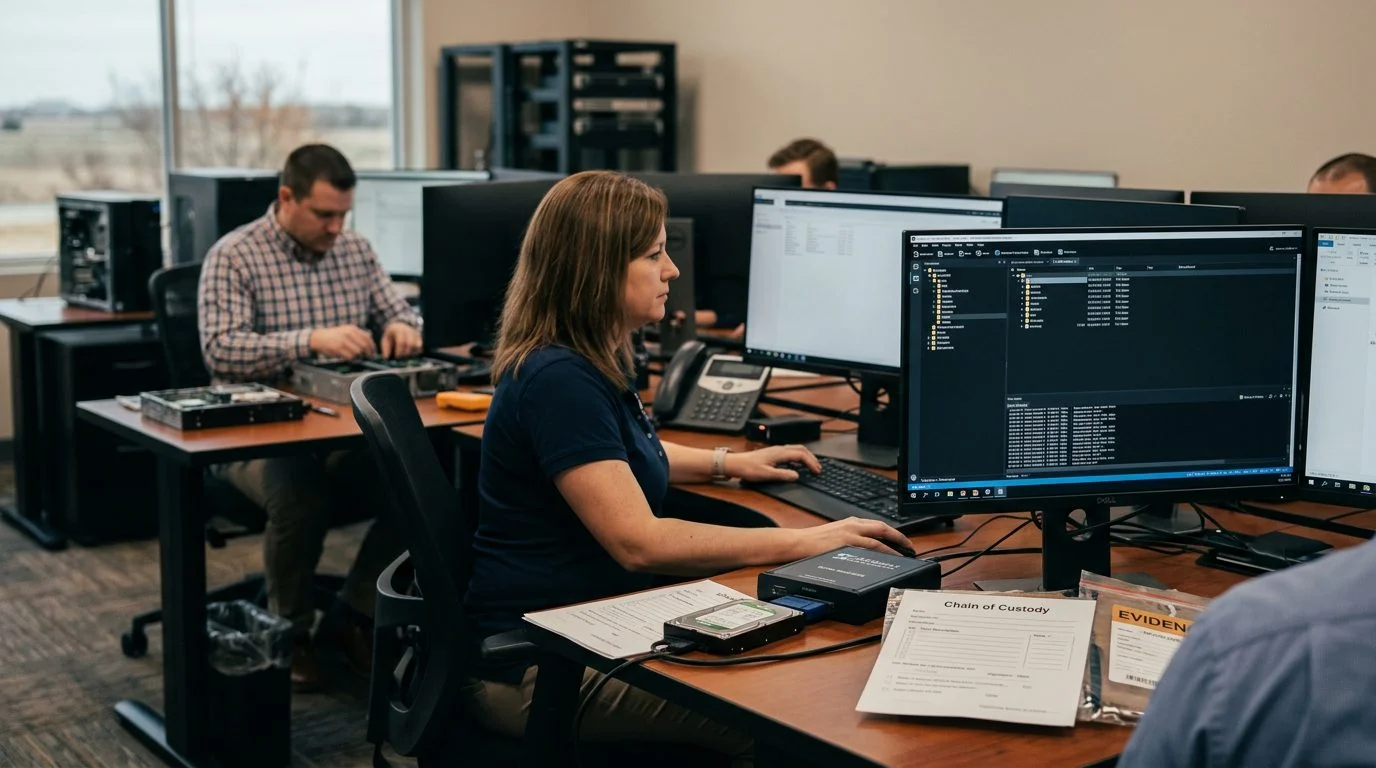
- Evidence review. We request chat logs, device extractions and sting records. We look for gaps, errors and conflicts in the timeline.
- Pretrial work. We address motions and bond changes, and coordinate with any family court or CPS proceeding.
- Options. We explain each option and its consequences. The timeline depends on the facts and the court’s schedule.
Some cases involve deferred adjudication. Under Texas Code of Criminal Procedure art. 42A.101, except as provided by Article 42A.102(b), if in the judge’s opinion the best interest of society and the defendant will be served, a judge may, after a guilty or nolo contendere plea, hearing the evidence and finding that it substantiates guilt, defer further proceedings without entering an adjudication of guilt. Deferred adjudication for offenses under Penal Code §§ 21.11, 22.011 and 22.021 is governed by Article 42A.102 of the Texas Code of Criminal Procedure, so whether a judge may grant it depends on that statute’s conditions. Before any plea, we check reporting duties. Art. 62.001 lists a § 33.021 violation as a reportable conviction or adjudication, and that definition includes deferred adjudication.
What Are the Biggest Fears, and What Does the Law Say?
The biggest fears are prison, registration, losing time with children, and public exposure. Each one depends on facts that must be reviewed.
Prison. The range of punishment turns on the degree of the offense and any prior record, and under Penal Code § 33.021(f-1) the punishment is increased to that of the next higher category of offense if it is shown on the trial of the offense that the actor committed it during regular public or private primary or secondary school hours and knew or reasonably should have known that the minor was enrolled in a public or private primary or secondary school at the time of the offense. Under § 33.021(f), the subsection (c) offense of knowingly soliciting a minor to meet another person for sexual contact, sexual intercourse or deviate sexual intercourse is a felony of the second degree, separate from the subsection (b) offense. Under § 33.021, a person who is 17 or older commits an offense if, with the intent to commit an offense listed in Article 62.001(5)(A), (B), or (K), Code of Criminal Procedure, the person intentionally communicates in a sexually explicit manner with a minor or distributes sexually explicit material to a minor over the Internet, by electronic mail or text message or other electronic message service or system, or through a commercial online service; subsection (f) sets the felony level as the third degree or, if the minor is younger than 14 years of age or the actor believes the minor is, the second degree, and subsection (f-1) increases the punishment to the next higher category if the offense occurred during regular public or private primary or secondary school hours and the actor knew or reasonably should have known the minor was enrolled in a public or private primary or secondary school. If your papers list a first-degree felony, that needs review.
A second-degree felony carries 2 to 20 years in prison and a fine of up to $10,000 under § 12.33. If it is shown at trial that you have previously been finally convicted of a felony other than a state jail felony punishable under § 12.35(a), then, except as provided by § 12.42(c)(2), a third-degree felony is punished as a second-degree felony under § 12.42(a), and, except as provided by § 12.42(c)(2) or (c)(4), a second-degree felony is punished as a first-degree felony under § 12.42(b). No one can predict a sentence from those numbers alone.
Registration. Under Article 62.001(5)(J), Code of Criminal Procedure, a violation of Penal Code § 33.021 is a reportable conviction or adjudication for sex offender registration, so a conviction or adjudication under that section is subject to registration. We review those duties against your exact charge.
Children and family. A criminal case and a divorce, custody or CPS matter run on separate tracks. What is said or filed in one can affect the other. We coordinate those issues so one case does not undercut the other.
Public exposure. Charges can become public, and news outlets may report them. We discuss what can be filed and said, but no lawyer controls what the news reports.
Why Barbieri Law Firm Handles These Charges
Barbieri Law Firm is an all-women criminal defense firm in Frisco, Texas. It defends people accused of sex crimes and assaultive offenses.
We represent clients across Collin County, Dallas-Fort Worth and Texas. Our practice areas include sex crimes defense, aggravated sexual assault defense, child sex crimes defense, online sex crimes defense, aggravated assault defense, family violence defense, and theft defense for students and non-citizens.
Heather Jean Barbieri, Board Certified, Criminal Law — Texas Board of Legal Specialization, leads the firm. Carrie Thomas is also one of our lawyers.
Our approach is straightforward. We review the evidence first, check the charging papers closely, and explain your options in plain terms. No lawyer can know how a case will end, so we focus on what the evidence shows and what each option means for you.
Frequently Asked Questions About Online Sex Crime Charges in Texas
Short answers to common questions about these charges.
Can I be charged in Texas if we never met?
Yes. Under Penal Code § 33.021(d), for the offense of soliciting a minor to meet under subsection (c), it is not a defense that the meeting did not occur.
Does it matter that I believed the other person was an adult?
It can. Under Texas Penal Code § 33.021, a “minor” is an individual younger than 17 or an individual the actor believes to be younger than 17. The section also provides a defense to prosecution for certain conduct described in subsection (c), including where the actor was married to the minor, or was not more than three years older than the minor and the minor consented.
What should I do if police want to question me?
Speak with a lawyer before answering questions. Do not delete, change or send anything about the messages.
What does the first consultation cost?
The first consultation is free, confidential and comes with no obligation to continue.
Not sure what your next step is?
Talk it through with our team — the first consultation is free, confidential, and carries no obligation.

Take the Next Step With Your Case Details
A police contact over online messages, or a new charge, can feel like your whole future is on the line. The charging papers, the bond order and the message record are where your case starts.
Call (972) 424-1902 or send your case details through our contact form. We will review what you have and explain your options.
Attorney responsible for this site: Heather Barbieri, Barbieri Law Firm, Frisco, Texas.
Types of Online Charges We Review
Messages and Chats
We review the full message history, including who started the conversation, what was said, and the platform used, so the context is clear.
Devices and Accounts
We examine how devices and accounts were accessed, shared, or stored, and whether the evidence supports the charge as written.
Age and Identity Questions
We look at what was known about the other person's age or identity at the time, and how that knowledge is shown in the record.
Investigations and Stings
We review how an online investigation was set up and carried out, including the procedures used and the records that were kept.
How Our Team Approaches Your Case
Confidential From the Start
What you tell us in your free consultation stays between you and our firm.
Clear Options
We explain the options available in your situation, along with the possible risks and costs of each, so you can decide with full information.
Direct Communication
You will know who is handling your case and how to reach us, with honest answers to your questions at every stage.
Before You Speak With Investigators
Talk with a lawyer before answering questions or giving a statement.
Talk With Barbieri Law Firm About Your Online Charge
Related practice areas
Request a Consultation
Fill out the short form and we will take it from there.