

Online Sex Crimes Defense | Frisco, Texas
Facing an Online Sex Crime Charge in Texas? Understand Your Options
Barbieri Law Firm defends clients accused of online sex crimes in Collin County, Dallas-Fort Worth and across Texas. We review the evidence and explain your options. No lawyer can assure a particular result.
By Heather Barbieri · Published October 28, 2026
Can an Online Sex Crime Charge Be Dropped in Texas?
If a charge like this has you searching for answers, our team can review the charging papers and evidence with you in a free, confidential first consultation. Talk it through with our team — the first consultation is free, confidential, and carries no obligation.

What an Online Sex Crime Charge Is and the Short Answer
An online sex crime charge can sometimes be dismissed, not returned by a grand jury, or reduced in Texas. Whether that happens depends on the facts, and no lawyer can promise a particular outcome.
Online sex crime charges cover several kinds of accusations. Texas Penal Code § 33.021 covers online solicitation of a minor, including efforts to arrange a meeting for sexual contact, and sexually explicit communications with a minor by a person 17 or older, made with the intent to commit a listed sex offense. Other charges involve sexual images, such as Texas Penal Code § 21.19, which covers sending sexual material electronically without the recipient’s request or consent.
Different people make different decisions. Every criminal case follows its own path, and the facts of each case shape the available options. A grand jury decides whether to indict. Some cases also involve the Texas Attorney General’s Internet Crimes Against Children program, which investigates online child exploitation.
If you are a parent, partner or relative, you can reach out on behalf of the accused. The first questions are usually what the charging papers say and what evidence exists.
Dismissal: How a Prosecutor Drops an Online Sex Crime Charge
A prosecutor may dismiss a charge when the evidence does not support it or the case cannot be proven as filed.
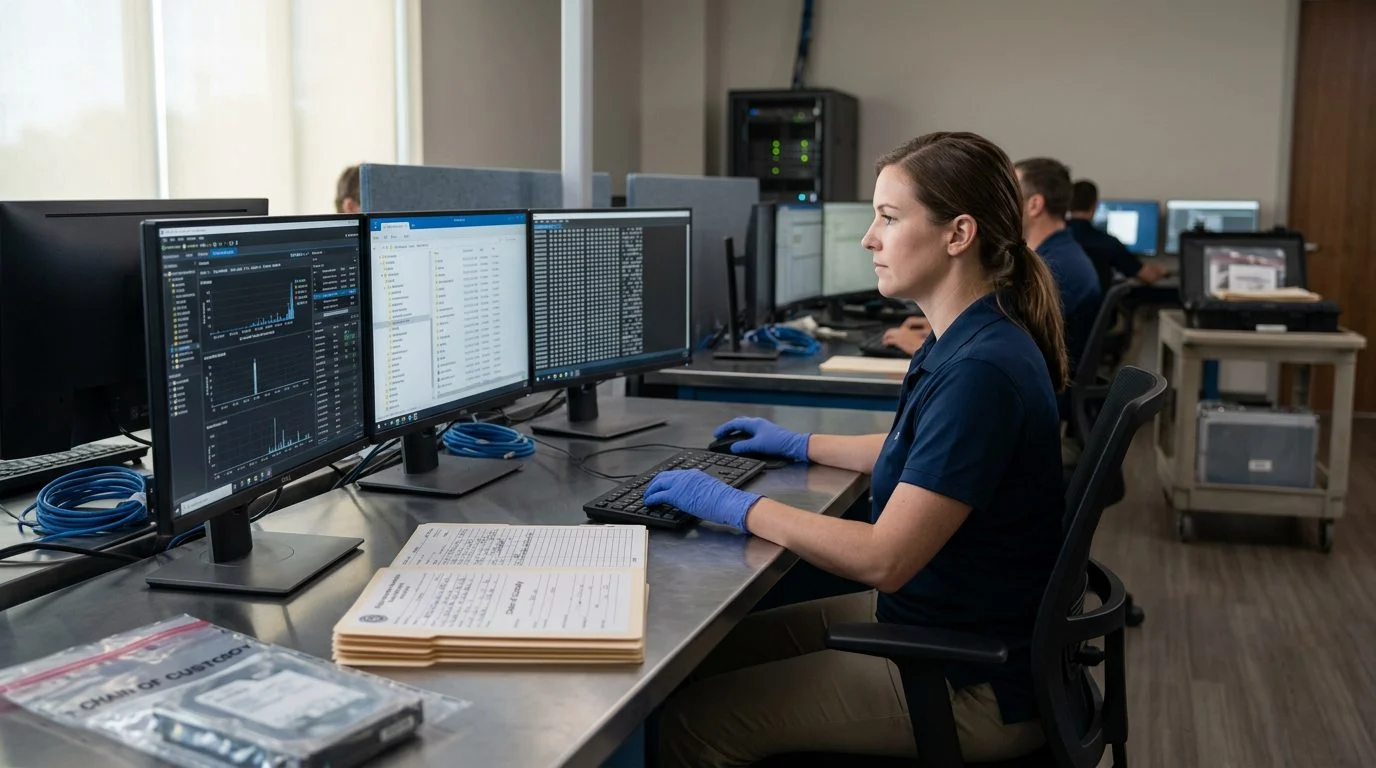
A defense lawyer looks closely at the digital evidence. Common questions include:
- Who controlled the device or account when the messages were sent?
- What do the messages say, in full and in context?
- What do the timestamps and metadata show?
- Is there reliable proof of the person’s age and identity?
- Was the phone or computer data extracted and recorded correctly?
A short excerpt in a police report can leave out context that changes its meaning. Reviewing the full thread is often where the picture changes.
Dismissal can also follow procedural problems. An error in the charging papers can be raised with the prosecutor. Asking the State to review the file is a request. It is not a promise of any result.
No-Bill: When a Grand Jury Declines to Indict
A no-bill happens when a grand jury votes not to indict. The charge does not move forward on that presentation.
In many felony cases, the prosecutor presents evidence to a grand jury. A no-bill means the jurors did not find enough support as the case was presented.
A no-bill is not always the end of the matter. The State may present the case again or pursue a different charge. That is why the evidence still needs review after a no-bill.
Before the grand jury stage, a defense lawyer can share the defense position with the prosecutor. The lawyer can also prepare written reasons the charge is not supported. Keep notes of every court date, notice and message from the prosecutor’s office. Those notes help track what has happened and what is still open.
Reduction Options and Negotiated Resolutions
A reduction means the State agrees to change the charge to a less serious offense. A lower charge can change the penalty range, registration duties and other consequences.
Whether a negotiated resolution is possible depends on the offense, the evidence and the accused person’s record. Texas law sets eligibility rules for some options. A judge may grant deferred adjudication community supervision in many cases. Under Texas Code of Criminal Procedure Art. 42A.102(b), in all other cases the judge may grant deferred adjudication community supervision unless one of the conditions listed in the statute applies, including certain specified offenses, prior community supervision for certain offenses, and certain murder charges. Certain sexual offenses have limits, and some require a finding in open court that deferred adjudication serves the victim’s interest.
Deferred adjudication has an end point too. If the period ends without a finding of guilt, the judge must dismiss the case and discharge the defendant, under Texas Code of Criminal Procedure art. 42A.111. That same article bars early discharge for an offense that requires sex offender registration.
Each proposed term should be reviewed before any decision. Every accused person can discuss the available options with a lawyer before deciding how to respond to a charge. A lawyer explains each option and its consequences so the decision is informed.
Limitations, Registration and Records After a Charge Is Dropped
A dropped charge does not automatically clear every record or end every duty. Time limits, expunction, nondisclosure and registration each depend on the offense and the outcome.
Time limits depend on the offense and the dates involved, so check them early. Read our statute of limitations guide for online sex crimes in Texas.
Expunction is a separate process. Under art. 55A.053, a person may be entitled to expunction when an indictment was dismissed for reasons such as mistake or absence of probable cause, or when it was void. For a felony arrest with no indictment presented, art. 55A.052 sets a three-year wait from the arrest. A different ground applies if the state’s attorney certifies the records are not needed.
Nondisclosure is different again. Texas Government Code § 411.074 bars a person from receiving a nondisclosure order for an offense requiring registration as a sex offender under Chapter 62, Code of Criminal Procedure.
Registration has its own rules.
Bond conditions can also continue while a case is pending. Under Texas Penal Code § 25.07, violating certain bond conditions in family violence, sexual assault or abuse, indecent assault, stalking, or trafficking cases, when the conditions relate to the safety of a victim or the community, is a separate offense. Confirm your conditions with your lawyer rather than assuming they end when a charge is dropped.
Not sure what your next step is?
Talk it through with our team — the first consultation is free, confidential, and carries no obligation.
How Barbieri Law Firm Works Through an Online Sex Crime Charge
Barbieri Law Firm reviews the charging papers, the digital evidence and the bond conditions. Then it explains the options in writing and in person. The firm is an all-women criminal defense firm in Frisco, Texas, serving Collin County, Dallas-Fort Worth and Texas.
Lawyers Heather Barbieri and Carrie Thomas work with the firm’s support staff on these cases. Heather Jean Barbieri, Board Certified, Criminal Law — Texas Board of Legal Specialization.
The review includes:
- The charging papers and any bond paperwork.
- Digital records, such as devices, accounts, messages and extraction reports.
- Bond conditions and any release limits.
- A written explanation of each option, and why it is or is not available.
Before the first meeting, avoid discussing the case with police without advice. Keep notes of what you have been told. Bring the charging papers and bond paperwork to the consultation.
The first consultation is free, confidential and carries no obligation to continue.

Frequently Asked Questions About Dropping an Online Sex Crime Charge
Can I ask the judge to drop the charge?
A lawyer can request a review and present the defense position to the prosecutor. Outcomes depend on the facts of each case, and no lawyer can assure a particular result.
Will talking to police help get the charge dropped?
Statements can affect the case. Speak with a lawyer before answering questions.
Does a dismissal erase the arrest record?
Not always. Expunction and nondisclosure are separate processes with separate eligibility rules.
What happens to registration if the charge is reduced?
It depends on the offense and the final resolution. Registration is part of the case review.
Do I need a lawyer if the charge seems weak?
Weak-looking evidence still needs review. A free, confidential consultation is a good place to start that review.
If a charge like this has someone you love facing a difficult decision, you don’t have to sort it out alone. Schedule a free consultation, call (972) 424-1902, or send your case details through the same contact page.
Attorney responsible for this site: Heather Barbieri, Barbieri Law Firm, Frisco, Texas.
How We Approach These Cases
Review of the digital evidence
We review the messages, devices, accounts and how the evidence was obtained, including any search or warrant issues.
A clear explanation of your options
We explain the charge, the possible paths forward and what each could mean for you and your future.
A confidential first step
Your initial consultation is free, confidential and carries no obligation to continue.
An all-women firm
Led by Heather Barbieri, our firm defends professionals accused of sex crimes and assaultive offenses in Collin County and across Texas.
Talk to a lawyer before speaking with investigators
Statements made to police, prosecutors or investigators can affect your case. Contact a lawyer before answering questions or sending messages about the allegations.
Common Steps in an Online Sex Crime Case
Investigation
Law enforcement may gather devices, account records and messages. We help you understand what has been collected and why it matters.
Review of the evidence
We examine the digital evidence, the timeline and the reports to identify questions the defense needs to answer.
Discussions with prosecutors
A lawyer can ask prosecutors to review the evidence and present the defense position. Outcomes depend on the facts of each case.
Pretrial and trial options
If a case proceeds, we explain the available motions, negotiations and trial options so you can make informed decisions.
Talk with Barbieri Law Firm about your options
Related practice areas
- Online Sex Crimes Defense Lawyer | Collin County & Texas
- Someone Else Used My Phone or Account: Defending an Online Sex Crime Charge in Texas
Request a Consultation
Fill out the short form and we will take it from there.