

Sex Crimes Defense | Collin County and Dallas-Fort Worth
Can a Sex Offender Live in an Apartment in Texas?
The answer depends on your offense, your written conditions and the orders in your case. Here is what shapes the answer and how Barbieri Law Firm can review your situation.
By Heather Barbieri · Published October 24, 2026
Can a sex offender live in an apartment in Texas? No single statewide rule answers that for every person. Four sources decide the answer: registration duties, supervision conditions, city rules, and the lease. They can point in different directions, so each one needs a close look.
This page explains each source in plain terms. It also lists the documents to gather before a family makes a housing decision. For the wider picture of how these cases are handled, read our online sex crimes defense overview.
The Short Answer: Where a Registrant Can Live Turns on Several Facts
Whether a registered person can rent an apartment turns on several facts at once. Those facts include the offense, the registration status, any supervision terms, and the city where the apartment sits.
Texas registration rules sit in Chapter 62 of the Texas Code of Criminal Procedure. The chapter defines key terms, including “released” and “online identifier.” Those definitions decide who is covered and what counts as an online identity.
Federal law can apply too. Federal registration is generally conviction-based and applies alongside Texas law (Federal SORNA Requirements). So a person’s federal duties should be checked along with the state rules.
If someone you love has a registration duty and a move or lease is coming up, you don't have to sort out these rules alone. Our team can review the facts with you. Talk it through with our team — the first consultation is free, confidential, and carries no obligation.
What Registration Requires and What It Does Not Decide
Registration sets reporting duties.
How long the duty lasts depends on the offense. For certain listed offenses, and except as provided by Subsection (b) and Subchapter I, the duty to register ends when the person dies, if the person has a reportable conviction or adjudication other than an adjudication of delinquent conduct (Art. 62.101).
Some people can ask a court for relief. Under Art. 62.301, a person required to register only as a result of a single reportable conviction or adjudication, other than an adjudication of delinquent conduct, may petition the court for an order exempting the person from registration if the court entered an affirmative finding described by Article 42.017 or 42A.105(c) (a separate path applies to certain pre-September 1, 2011 cases). The court holds a hearing. It may issue an exemption order only if it finds that the exemption does not threaten public safety, that the conduct did not occur without the victim’s consent, that the exemption serves the interest of the victim, and that it serves the interest of justice. An exemption order does not expire. The court must withdraw it if the person later receives a new reportable conviction or adjudication.
Parole, Probation, and Supervision Conditions Can Limit Where a Person Lives
Supervision can add housing limits on top of registration.
Under Texas Penal Code § 22.011, a person commits sexual assault by, among other acts, intentionally or knowingly causing the penetration of another person’s anus or sexual organ by any means without that person’s consent. Under § 22.021, an aggravated sexual assault is without consent under the same circumstances listed in § 22.011(b).
Some cases carry a child safety zone. When a judge grants community supervision for certain listed offenses and finds a child was the victim, the judge must set one. If a judge grants community supervision for a listed offense and finds a child was the victim, the judge must require that the defendant not go in, on, or within 1,000 feet of premises where children commonly gather. That requirement does not apply while the defendant is in or going immediately to or from a community supervision and corrections department office, a premises where the defendant is required to participate in a program or activity, or a required residential facility that was in operation on June 1, 2003. The judge is not required to impose the condition if the defendant is a student at a primary or secondary school. Those premises include schools, day-care facilities, playgrounds, and public swimming pools (Art. 42A.453). The zone is not fixed forever. The defendant may ask the court to modify it at any time. A zone broader than necessary to protect the public is one reason to ask.
Two people with similar charges can have different terms. Those online terms can sit in the same paperwork as the housing terms.
City and Local Ordinances Can Add Limits That Vary by Location
Those rules can change the answer for one address and not another.
The question is which city’s code applies to the exact address. Whether Texas as a whole allows the move is a different question.
Checking the code for the specific city and address is the practical step. Do not assume that a rule in one city applies in the next town over.
Leases, Landlords, and Apartment Screening
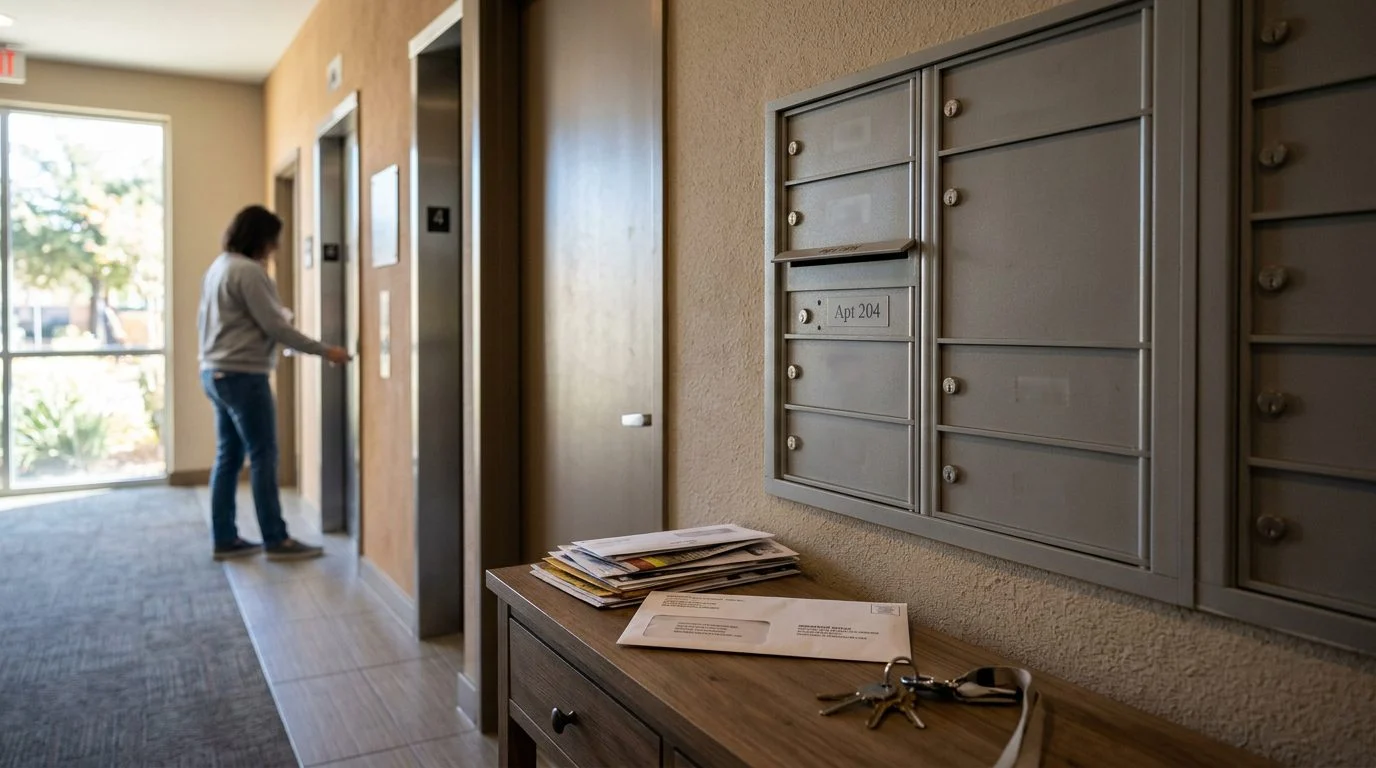
A lease is a private contract. A landlord’s screening rules are a separate question from criminal law.
The reverse can also happen.
Read the lease before signing. Compare it against the written supervision conditions, since a lease that is allowed can still conflict with those conditions. Keep copies of the signed lease and any approval papers with the registration file.
Checking Whether a Registrant Lives Nearby
A listing answers only part of the question.
A registry listing shows what the state publishes. It does not show the supervision terms, which come from a court order or a parole decision.
A listing is not proof that a person broke a rule. It is also not proof that a landlord did anything wrong. Keep facts separate from guesses when a neighbor’s listing raises concerns.
Not sure what your next step is?
Talk it through with our team — the first consultation is free, confidential, and carries no obligation.
Questions a Lawyer Would Review in Your Situation
A lawyer starts by sorting the facts behind each of the four sources. Those facts include the offense of conviction and the judgment. They also include the registration dates, the current supervision terms, and the city and address of the proposed home.
Household members matter too. Supervision terms can address who a person may be around, including children in the home. The lease terms belong in the same review.
Written messages can also be part of the review. Texts and online messages may bear on the facts of a case, and they should be gathered with the other papers.
Barbieri Law Firm reviews these documents with you and explains your options. No lawyer can predict the result of any case.
Can a sex offender live in an apartment in Texas while on parole?
The written conditions and the parole decision matter most for that answer.
Does a child safety zone apply to an apartment?
It can, if a judge sets a zone for a listed offense. Art. 42A.453(h) provides that, notwithstanding Subsection (c)(1)(B), a condition barring a defendant from going in, on, or within 1,000 feet of certain premises does not apply while the defendant is in or going immediately to or from the private residence where the defendant is required to reside as a condition of community supervision (statute text).
Can a registered person be exempt from registration in Texas?
Possibly, through a petition under Art. 62.301. The petition must meet the eligibility rules, and the court must make the required findings after a hearing.
If a Family Member Is Facing a Housing Decision Now
If someone you love has a registration duty and a move or lease is coming up, the decision can feel urgent and confusing. Many families face these questions while still trying to understand the paperwork.
Our team can go through the offense, the supervision terms, and the lease with you. Call (972) 424-1902 or send us your case details. Your first consultation is free, confidential, and comes with no obligation.
Attorney responsible for this site: Heather Barbieri, Barbieri Law Firm, Frisco, Texas.
What decides whether an apartment is allowed
The offense of conviction
The specific offense determines which statutes and possible restrictions apply to where you live.
Child safety zones
A judge may set a zone that limits certain locations, such as areas near schools or child-care facilities, when the offense allows it. Whether one applies to your apartment depends on the order and the address.
Your supervising officer
We review those requirements with you.
Review before you sign a lease
Do not sign a lease or move into a residence until your conditions have been reviewed. A housing decision that conflicts with a court order or supervision term can create a new violation, even if the apartment itself seems to be allowed.
What we review with you
Your court documents
We read your judgment, bond conditions or supervision agreement line by line to identify every residence-related term.
Your offense and records
We look at the charge, the statute and the record to understand which restrictions may apply to your case.
Your proposed housing
We compare the address, the property and any lease terms against your conditions before you commit.
Your options
We explain what the orders allow, what they do not, and what steps may be needed to request approval.
Get answers about your housing before you move. Our free, confidential first consultation carries no obligation to continue.
Related practice areas
- Discord Snapchat Chat Charges: Texas Online Sex Crime Case
Request a Consultation
Fill out the short form and we will take it from there.