

Sex Crimes Defense | Frisco, Texas
Sex Offender Contact With Kids in Texas: What Controls It
Contact limits can come from registration rules, child safety zones, bond conditions and court orders. Barbieri Law Firm helps clients understand which limits apply to their case.
By Heather Barbieri · Published October 23, 2026
Can a sex offender be around kids in Texas? The short answer
Texas has no single statewide rule that answers this question for every registrant. Contact with children is limited by several sources working together. Those sources are the offense itself, registration duties, child safety zones, court orders and bond conditions, and local ordinances.
A person can be restricted in one way and free in another. So one rule rarely settles the question. Think of each source as a separate layer. Each layer controls something different.
Most families who ask this question are not holding a clean rulebook. They hold a judge’s order, a bond sheet, or a notice from a supervising officer. They want to know what applies to their home, their child’s school, and church or family events.
If you want an overview of the practice area, start with our online sex crimes defense page. The sections below walk through each source in turn.
If someone you love now faces limits around children, you don't have to sort out the paperwork alone. Bring it to a free, confidential consultation with our team. Talk it through with our team — the first consultation is free, confidential, and carries no obligation.

Who must register in Texas, and why it matters for contact with children
Registration is a reporting duty. It is separate from any order about who a person may be around. Chapter 62 of the Texas Code of Criminal Procedure sets up the registration system.
The statute names the key agencies. They include the Texas Department of Public Safety and a local law enforcement authority. A local authority is a municipal police chief’s office, a county sheriff’s office, or a centralized registration authority (Tex. Code Crim. Proc. art. 62.001).
How long the duty lasts depends on the offense.
Being on the registry does not list every place or person a registrant must avoid. Those limits come from the other sources in this guide. Registration tells the state where to find the person. It does not, by itself, answer whether the person may attend a school event.
Keep a copy of every registration document. Ask your supervising officer or your attorney what each reporting duty requires. Write the answers down so you can check them later.
Child safety zones and residency limits in Texas
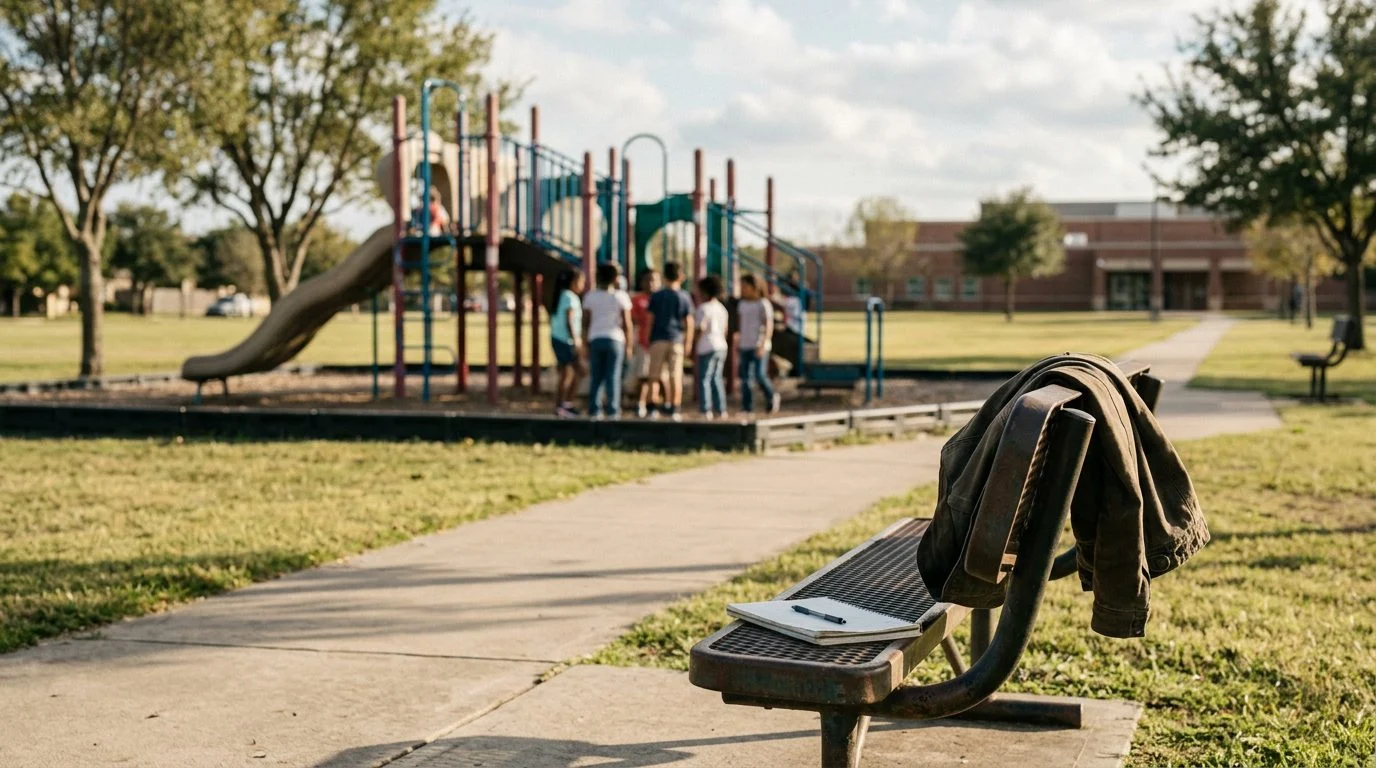
Child safety zones are the most common source of distance limits. Under art. 42A.453, a judge who grants community supervision for a listed offense, and who finds a child was the victim, sets a child safety zone. The defendant may not go in, on, or within 1,000 feet of a premises where children commonly gather, except that Subsection (h) does not apply this requirement while the defendant is in or going immediately to or from certain premises such as a required program, a required residence, or a community supervision office.
That list includes schools, day-care facilities, playgrounds, public or private youth centers, public swimming pools, and video arcade facilities.
Residency and contact are different limits. A zone controls where the person goes. Residency rules control where the person lives. Both can apply to the same person. Check which one the order names.
Local ordinances may add more. Check the rules for the city and county where the home is located.
The statute also gives relief valves. A judge is not required to impose the zone if the defendant is a student at a primary or secondary school. At any time after the condition is imposed, the defendant may ask the court to modify the zone because the zone as created by the court interferes with the defendant’s ability to attend school or hold a job and consequently constitutes an undue hardship for the defendant, or is broader than is necessary to protect the public, given the nature and circumstances of the offense. A supervision officer may also allow entry on an event-by-event basis. That requires that the defendant has served at least two years of community supervision, that the defendant enters the zone as part of a program to reunite with the defendant’s family, a written proposal to the supervision officer, the treatment provider’s agreement, and an agreed chaperon.
For more on penalty ranges and restrictions, read how much time a sex offender gets in Texas.
Court orders, bond conditions, and supervision rules that limit contact
The specific facts of each case shape the options available. Those conditions sit in the judgment, the bond paperwork, or the supervision documents. Read each document line by line. A summary can miss a named location, an age range, or a named family member.
Violating a bond condition is a separate matter from the original charge. Under Texas Penal Code § 25.07, a person commits an offense if, knowingly or intentionally and in violation of a condition of bond set in a family violence, sexual assault or abuse, indecent assault, stalking, or trafficking case and related to the safety of a victim or the safety of the community, the person goes to or near a child care facility, residence, or school where a child protected by the order or condition of bond normally resides or attends, as specifically described in that order or condition. The order must describe that place. Possessing a firearm in violation of such an order is also an offense under the statute.
Repeated violations carry more exposure. Under § 25.072, a person commits an offense if, within a period of 12 months or less, the person two or more times engages in conduct that is a § 25.07 offense. The repeated offense is a third-degree felony. Under § 25.072, it becomes a second-degree felony if at least one time the person engaged in conduct punishable as a state jail felony under Section 25.07(g)(1)(B), which covers violating the order or bond while possessing a deadly weapon.
Supervision length matters too. For a felony covered by the child safety zone statute, the minimum community supervision period is five years (art. 42A.053).
For bond terms in online and sex-related cases, read our bond conditions guide.
Child-related offenses and why the age 17 line matters
Texas law draws a clear line at age 17 in several child offenses. Under Tex. Penal Code § 21.11, indecency with a child covers a child younger than 17. Sexual contact is a second-degree felony. Exposure offenses are third-degree felonies. The statute includes a narrow affirmative defense for certain close-in-age cases, and that defense has several conditions.
Sexual assault of a child is a separate offense under § 22.011. It covers acts such as causing a child’s sexual organ to contact or penetrate another person’s mouth, anus, or sexual organ.
Online solicitation of a minor is another separate offense, under § 33.021. The statute treats a minor as someone younger than 17, or someone the actor believes to be younger than 17.
A child-related charge is not the same as a registration or residency issue. The offense listed on the judgment controls which rules follow from it. Confirm the exact charge and its classification from the court records. Don’t rely on memory or a summary from a friend.
When you are ready to read more, our child sex crimes defense page covers these charges in detail.
Juveniles who have been adjudicated: can a young person be required to register?
Some juvenile cases can carry registration duties. The answer depends on the offense and how the case was resolved. Don’t assume a juvenile is always exempt.
Section 33.021(e) provides a defense to prosecution if, at the time of the conduct described in Subsection (c), the actor was married to the minor, or the actor was not more than three years older than the minor and the minor consented to the conduct.
Juvenile restrictions around younger children, schools, or family members can differ from adult restrictions. Ask about each one directly.
Gather the adjudication order, any registration notice, and any conditions of probation or supervision. Those three documents show what applies.
Not sure what your next step is?
Talk it through with our team — the first consultation is free, confidential, and carries no obligation.
Documents to gather and questions to ask about contact with children
Start with the paperwork. Pull the judgment or adjudication order, the registration certificate, the bond or supervision conditions, any written instructions from the supervising officer, and any local residency notice. Keep them in one folder.
Then check each document against these questions:
- Does a condition name minors by age, such as under 17?
- Does a zone or residency rule apply at the current address?
- Are family members, schools, churches, or day-care settings named?
- Does a condition cover a school activity, a family event, or a shared household?
If a condition is unclear, get a written answer from the court or the supervising agency before you act. Don’t guess about a school pickup or a family event.
If a child protective investigation is open, the Texas DFPS parent’s guide to child abuse investigations explains the process and the rights of parents and alleged perpetrators.
Common questions
Can a child safety zone be changed?
Yes.
Is violating a bond condition a new offense?
It can be. Certain violations of bond conditions or court orders in a family violence, sexual assault or abuse, indecent assault, stalking, or trafficking case, related to the safety of a victim or the safety of the community, are an offense under Penal Code § 25.07.
Talk with Barbieri Law Firm about the limits on your case
If you are reading this, someone you care about may have just learned they cannot be around their own children. Or you may be planning family life around a registration order and a long list of conditions. Either way, the questions feel urgent, and the paperwork is hard to read alone.
Bring the judgment or adjudication order, the bond or supervision paperwork, and the registration certificate to a free initial consultation. The consultation is confidential and carries no obligation to continue. Call (972) 424-1902 or send your case details through our contact form.
We will review your documents and explain the options that apply to your situation. No lawyer can promise how a case will end.
Attorney responsible for this site: Heather Barbieri, Barbieri Law Firm, Frisco, Texas.
Where contact limits come from
Registration requirements
Registration duties can include reporting obligations and restrictions tied to the offense and the person's status.
Child safety zones
Some restrictions limit where a person may be, such as near schools, parks, daycare centers and other places where children gather.
Bond conditions
A judge may set conditions on contact with a minor, a victim or others as part of release on bond.
Court orders and supervision
Probation, deferred adjudication or other court orders may include terms about contact with children, including online contact.
How we review your situation
Reading the paperwork
We review the charging papers, bond order, registration records and any court orders so you know exactly what they say.
Checking the zone and the terms
We look at the location restrictions and the wording of each condition to identify what applies to you.
Explaining your options
We explain the practical effect of each limit and the options available in your case.
Protecting your position
We advise you on conduct that could create new problems while your case is pending.
Do not assume contact is allowed
Conditions depend on the charge, the court and the exact wording of your orders. Do not contact a minor, or send online messages to one, until you have read every term that applies to you and asked a lawyer about it.
Get clear answers about your conditions. Our team is ready to review your case.
Related practice areas
Request a Consultation
Fill out the short form and we will take it from there.