

Forensic Interview Video Discovery: Texas Child Sex Crimes
By Heather Barbieri · Published November 21, 2026
Forensic interview video can be part of the evidence in some Texas child sex crime cases. A forensic interview is a recorded conversation between a child and a trained interviewer about alleged abuse. This guide explains how the recording reaches the defense, what protective orders can restrict, and how a careful review works.
What a Forensic Interview Is and Why It Appears in Texas Child Sex Crime Cases
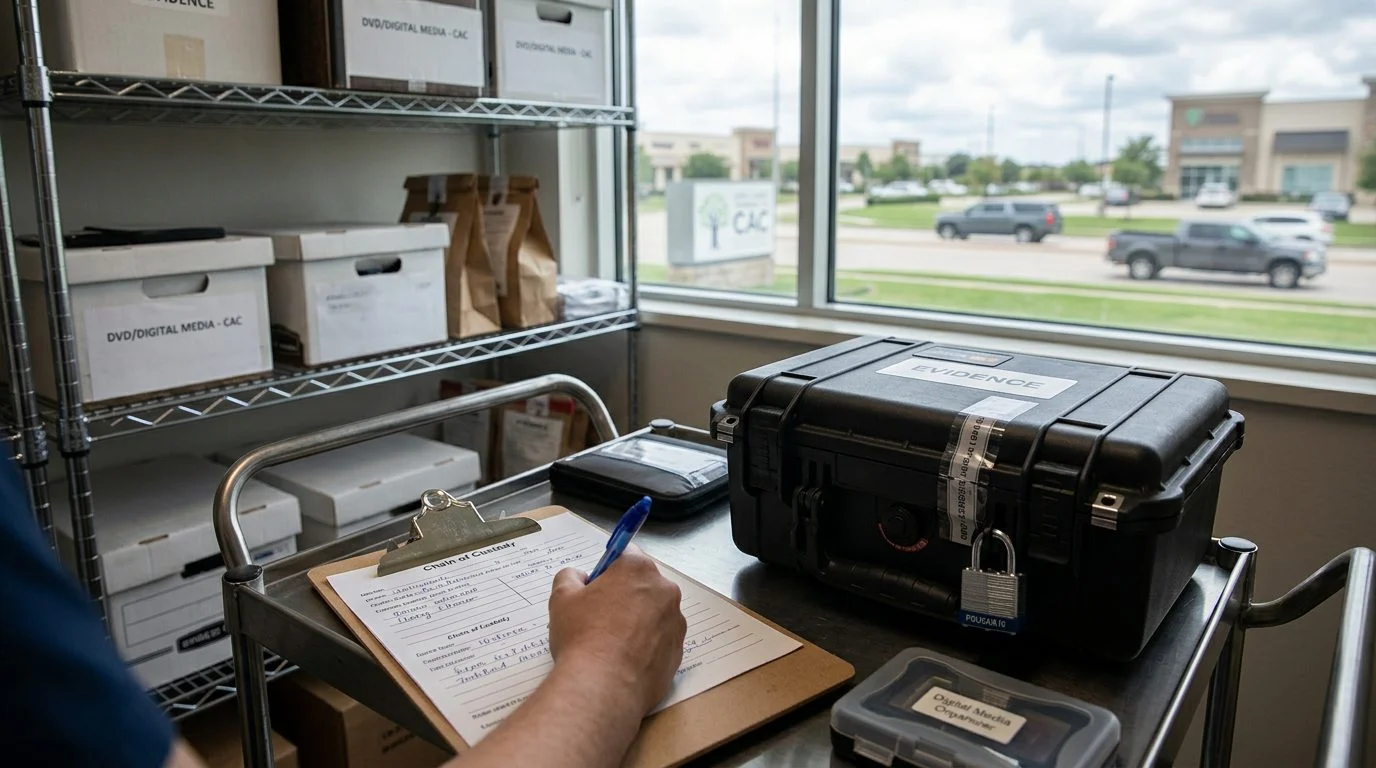
A forensic interview is a recorded, structured talk with a child about alleged abuse. It usually takes place at a child advocacy center.
The recording can become important to a case after an outcry. An outcry is the first time a child tells someone, such as a parent, teacher or counselor, that abuse happened. The interview then records the child’s account in the child’s own words.
The interview is one piece of the investigation. It does not decide what happened by itself. Police reports, medical records and other statements sit alongside it.
How the Interview Video Reaches the Defense Through Discovery
Interview video may be available to the defense through discovery from the prosecutor. The defense asks for the recording and related materials. When they arrive depends on where the case stands.
Don’t accept a clip, a summary or a partial copy. Ask for the full, unedited recording, including setup, breaks and the closing. In these cases, we review the complete file.
Rules differ at protective-order hearings. Under Texas Code of Criminal Procedure art. 7B.004, a statement by a child younger than 14 can be admissible at that hearing. The statement must describe a listed Penal Code offense, such as aggravated sexual assault or indecency with a child.
Protective Orders, Viewing Limits and Copying Restrictions
A protective order can restrict contact with the applicant and with members of the applicant’s family or household. A court may act quickly. Under Texas Code of Criminal Procedure art. 7B.002, a temporary order can issue without notice to the accused and without a hearing, if the court finds a clear and present danger.
Under art. 7B.005, a court can bar threatening or harassing contact. It can also bar going to or near the applicant’s home, workplace, child-care facility or school. Tracking property or a motor vehicle in the possession of the applicant or a family or household member, without the applicant’s effective consent, is another possible bar.
Under art. 7B.005, in a protective order the court may impose the listed conditions; every protective order under the subchapter, including a temporary ex parte order, must carry a prominently displayed warning that a violation may be punished for contempt of court by a fine of as much as $500 or by confinement in jail for as long as six months, or both, as set by art. 7B.006.
Whether an order limits viewing or copying of the recording depends on its wording. Read the order closely. Raise any unclear term with the court that issued it. Follow the order exactly while it is in effect. No one can give permission to ignore it.
What a Careful Review of the Recording Involves
A careful review starts with the whole recording, from setup through the closing. Each step below turns a general memory of the video into something you can check.
- Question style. Note whether questions were open-ended or suggestive.
- Gaps and contact. Look for pauses, breaks, and any contact with the child before or after recording.
- Each disclosure. Track the child’s exact wording and the time each detail first appears.
- Other statements. Compare the video with the written report, police reports, and earlier statements the child gave to family or school staff.
Each point shows what the recording actually contains. The review focuses on the evidence itself.
How the Interview Connects to Outcry Testimony and Other Evidence
The interview usually works alongside outcry testimony and other evidence. The outcry witness is the person the child first told. That witness’s account is read against the recording, including when the first disclosure was made.
Continuous sexual abuse is a serious charge. The victim must be a child younger than 14, whether or not the actor knows the victim’s age, or a disabled individual, and the actor must be 17 or older at the time of each act. It is a first-degree felony, punishable by life or 25 to 99 years.
If a jury is the trier of fact, its members are not required to agree unanimously on which specific acts of sexual abuse were committed or the exact dates when they occurred. The jury must agree unanimously that two or more acts of sexual abuse were committed during a period that is 30 or more days in duration.
Indecency with a child can be one of the acts of sexual abuse that count toward a continuous sexual abuse charge, if committed in a manner other than by touching, including touching through clothing, the breast of a child. The recording may be used at hearings or at trial, so the defense prepares its questions and objections with the video in mind.
Next Steps: Reviewing Your Discovery With the Firm
Barbieri Law Firm, in Frisco, defends people accused of child sex crimes in Collin County and across Texas. Heather Jean Barbieri, Board Certified, Criminal Law — Texas Board of Legal Specialization, leads the firm.
When a recording is in hand, the first steps are practical. We request the full discovery, review the terms of any protective order, and build a timeline of each disclosure. We then explain your options.
If you’ve just been served with a protective order or handed a copy of the interview video, call (972) 424-1902 or send your case details through our contact page. The initial consultation is free, confidential, and carries no obligation to continue.
Can the defense get a copy of a forensic interview video?
Yes, the defense asks the prosecutor for the recording as part of the case file. Ask for the complete, unedited copy.
Can a judge limit who sees the recording?
Whether an order limits viewing depends on its wording. Raise any unclear term with the court that issued the order.
Attorney responsible for this site: Heather Jean Barbieri, Barbieri Law Firm, Frisco, Texas.
Ready to take the next step?
Related practice areas
Request a Consultation
Fill out the short form and we will take it from there.