

Child Sex Crimes & Family Violence Defense | Frisco, Texas
Your Child Has Made an Accusation. Here Is What to Do Next.
Barbieri Law Firm defends parents and family members accused in Collin County, Dallas-Fort Worth and across Texas. Talk with a criminal defense lawyer before you speak with investigators or give a statement.
By Heather Barbieri · Published October 21, 2026
What do you do when your child falsely accuses you of abuse? Start by staying calm, avoiding any pressure on the child, keeping your records, and speaking with a criminal defense lawyer before you give a statement to CPS or police. This guide explains those first steps in Texas, in plain language, for a parent, relative or guardian who may face a CPS visit or police call within days.
Quick answer: what to do first
The first move is to stay calm and avoid anything that could look like pressure on your child or other witnesses. Then speak with a criminal defense lawyer before you talk with CPS or police about what happened.
Do not confront your child. Do not ask them to take the accusation back or explain it again. Repeated questions from a parent can make it harder to sort out what the child actually experienced.
Write down what you remember and when you remember it, and keep those notes for your lawyer. Save every record you already have, such as messages, photos and calendars. Follow any court order, safety plan or CPS direction exactly, even when you think the accusation is wrong.
Keep your emotions in check when you speak with anyone about the accusation. Short, calm answers protect you more than long explanations. If someone asks you to sign something, ask for time to have a lawyer review it first. The early days often shape everything that follows, so careful steps now matter.
If a CPS visit or police call is coming, you don't have to face it alone. We can talk through your options in a free, confidential first consultation. Talk it through with our team — the first consultation is free, confidential, and carries no obligation.

How one accusation can open two tracks in Texas
One accusation can start two separate investigations: a child-welfare review by CPS and a criminal investigation by law enforcement.
The Texas Department of Family and Protective Services investigates abuse allegations, evaluates child safety and issues investigation findings.
DFPS draws a line between its civil investigation of a child’s welfare and law-enforcement criminal investigations of the same allegation. Police or a sheriff’s office may open a criminal case on its own timeline. Investigators often arrange a forensic interview, a structured conversation with the child about what happened.
The two tracks can move at different speeds. That split means you may face questions from two different agencies. Track each contact separately, and write down who called, when, and what they asked. Keep both tracks in mind from day one.
Why children sometimes make accusations that are not true
Children sometimes make accusations that turn out to be untrue, and the reasons differ from case to case.
A child may misunderstand an ordinary event. A bath, a medical exam, a tickle game or a moment of discipline can be described in adult-sounding words that do not match what happened.
Other pressures can shape a child’s account. Stress, a custody dispute, pressure from peers or relatives, and repeated questioning by different adults can all affect what a child says.
The charge depends on the conduct alleged. Under Penal Code § 21.11, indecency with a child involves a child younger than 17. A sexual-contact offense is a second-degree felony, and an exposure offense is a third-degree felony.
Each case turns on its own facts. A parent should not decide in advance that the child is lying, and should not assume the accusation will fade on its own. Your lawyer can look at what was said, when, and by whom.
What not to do in the first days
Avoid any step that could look like pressure on the child, the accuser or other witnesses.
Do not question the child about details. Do not repeat the accusation to the child. Do not ask the child to write, draw or record a statement.
Do not discuss the allegation with other children, school staff or family members who may talk to the child. Do not post about it on social media.
Do not contact the accuser or other witnesses in any way that breaks a court order, a safety plan or CPS direction.
Breaking an order can bring a separate criminal charge. Under Penal Code § 25.07, a person commits an offense by violating a protective order or bond condition in certain family violence and sexual abuse cases. That includes going to or near the residence, place of employment or business of a protected person or a member of the family or household of a protected person, or any child-care facility, residence or school where a protected child normally resides or attends, when the order or bond condition specifically describes it.
A court can also act fast. Under art. 7B.002 temporary orders, a court that finds a clear and present danger may issue a temporary order without further notice to the alleged offender and without a hearing. Texas Code of Criminal Procedure Art. 7B.002 reads: “If the court finds from the information contained in an application for a protective order that there is a clear and present danger of conduct described by Article 7B.001(a)(1) or (2) or other harm to the applicant.”
Talking with CPS caseworkers, police and forensic interviewers
Speak with your lawyer before you answer detailed questions from CPS or police.
The DFPS parents guide to investigations explains how investigators identify themselves and what the investigation involves. It also covers the rights of parents and alleged perpetrators.
A caseworker’s request for a meeting or a safety plan is not a criminal charge. Still, assume anything you say may be written down and repeated later.
Ask for the names of each agency and each person involved, including the caseworker or detective. Write down names, phone numbers and dates for every contact.
If an interview is scheduled, ask your lawyer whether to speak with investigators before it happens. Stay polite and brief, and do not guess at dates or details you cannot confirm. Being brief is not the same as being uncooperative. If you feel pressure to answer on the spot, you can say you need to speak with your lawyer first.
Protecting evidence, records and witnesses
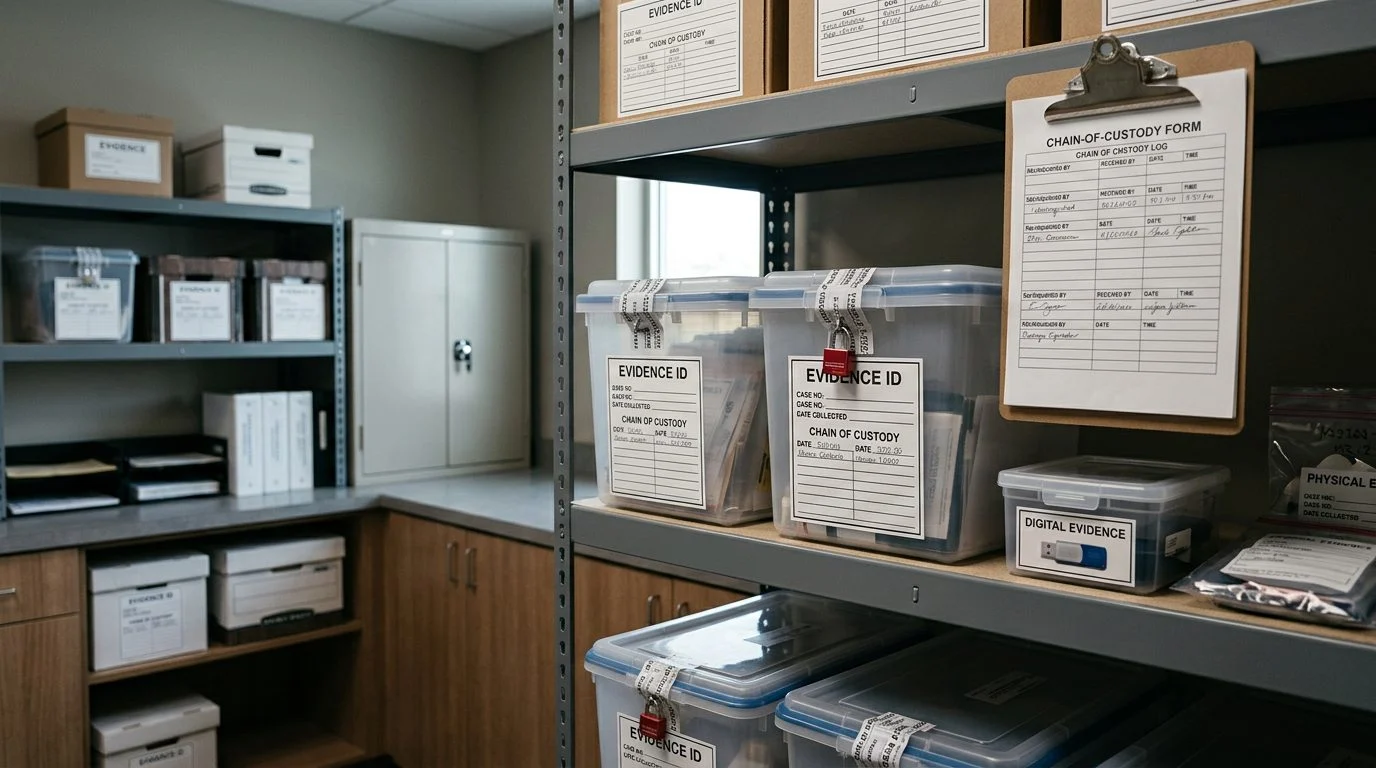
Keep every record that could show your routine, your whereabouts or what was said.
Save phone messages, texts, photos, calendars, travel records and receipts. Do not delete anything, even material that seems unhelpful. Deleted messages can look like concealment, even when you had a good reason.
Keep school, daycare, medical and activity records. These can show the child’s routine and any earlier statements about the event.
Write a private timeline for your lawyer and label it “for my lawyer.” Keep it out of group chats and shared folders.
List the people who saw the events, who know the child’s history, or who heard earlier statements. Give that list to your lawyer, not to friends or other parents. Do not contact these people to talk about the accusation. Your lawyer can decide how and when to speak with them.
Not sure what your next step is?
Talk it through with our team — the first consultation is free, confidential, and carries no obligation.
Family court, custody and protective orders while the allegation is open
A protective order can be requested while the allegation is still open, and a court may act quickly.
An adult, including a parent or guardian, may file for a protective order on behalf of a child younger than 18 who is a victim of certain sexual offenses. Code of Criminal Procedure art. 7B.001 sets out who may file.
The length varies. Unless the order states a different period, a protective order under Article 7B.007 generally lasts until the second anniversary of its issuance. However, Article 7B.007(a-1) requires a lifetime order when the offender is convicted of or placed on deferred adjudication for a listed offense and must register for life under Chapter 62. See art. 7B.007 duration rules. See art. 7B.007 duration rules.
Reconciliation does not end an order. Under Penal Code § 25.07, reconciliatory actions or agreements made by affected persons do not change the order’s validity.
Follow every temporary order exactly. Keep contact with the other parent in writing and limited to logistics. Ask your lawyer how any family court filing or CPS service plan could affect the criminal case before you sign anything.
How a defense lawyer reviews a false allegation
A defense lawyer reviews the accusation against the timeline, the child’s prior statements and the other evidence.
A review usually covers the timeline, any recorded interviews, medical or school records, prior statements, and witness accounts. Your lawyer will look for places where the account changes or conflicts with the records.
Your lawyer can then explain your options and the likely next steps. No lawyer can ensure how a case will end.
Some charges include affirmative defenses with strict conditions. Texas law provides an affirmative defense to a charge of indecency with a child when the accused was not more than three years older than the alleged victim and of the opposite sex, did not use duress, force or a threat against the alleged victim at the time of the offense, and, at that time, either was not required under Chapter 62 of the Code of Criminal Procedure to register for life as a sex offender or was not a person who had a reportable conviction or adjudication under Chapter 62 for indecency with a child.
What do you do when your child falsely accuses you of abuse?
Stay calm, avoid any pressure on the child, keep your records, and speak with a criminal defense lawyer before you give a statement to CPS or police.
Does a CPS finding decide whether criminal charges are filed?
Can a protective order be issued based on a child’s accusation?
A court can issue a temporary order without a hearing if it finds a clear and present danger.

Talk with a Frisco criminal defense lawyer before the next interview
If you keep asking yourself, “What do you do when your child falsely accuses you of abuse?”, the answer starts with a first conversation with a lawyer. That conversation can help you plan before the next CPS visit or police interview.
A CPS visit, a police call or a request for a forensic interview may be days away. The steps you take now can shape what happens next.
Barbieri Law Firm is based in Frisco and handles criminal defense matters across Collin County and Texas, including cases involving child-related allegations.
Heather Jean Barbieri, Board Certified, Criminal Law — Texas Board of Legal Specialization. She leads the firm’s criminal defense work.
The first consultation is free, confidential, and carries no obligation to continue.
Call (972) 424-1902 or send your case details to schedule your free consultation.
Attorney responsible for this site: Heather Barbieri, Barbieri Law Firm, Frisco, Texas.
Steps to take right now
Stay calm
A strong emotional reaction can lead to words you later regret. Take a breath before you respond to your child, the other parent or anyone else involved.
Avoid pressuring your child
Do not interrogate your child, repeat the accusation back to them or ask them to change their story. Let trained professionals handle any questions about what happened.
Keep your own records
Write down what you remember, including dates, messages and who was present. Keep these notes private and share them with your lawyer.
Think before you talk to investigators
Statements to police or Child Protective Services can affect your case. A lawyer can explain the process and help you decide how to respond.
Speak with a criminal defense lawyer
Barbieri Law Firm will review the accusation, the circumstances and any documents you have, and explain the options available to you.
Important: Do not question your child about the accusation
Pressing a child for details, offering rewards, or punishing them for what they said can make the situation harder to resolve and may be used against you. Let trained professionals speak with your child.
Questions parents ask most often
Protective orders
If a protective order is requested, a lawyer can review the request, explain what it could mean for your household and help you prepare for any hearing.
Investigations by police or CPS
Investigators may ask to interview you or your child. Our team will explain what to expect and help you decide how to communicate with them.
Your statements
Anything you say to police, CPS or others can become part of the record. Speaking with a lawyer first helps you understand your options before you respond.
Protecting your family
Our team focuses on the practical steps that can protect your relationship with your children and your standing at work and in your community while your matter is handled.
Talk with Barbieri Law Firm before you speak with investigators
Related practice areas
- Child Sexual Abuse Allegations in Texas: What Happens Next and How a Defense Lawyer Responds
- Child Pornography Distribution and Promotion Charges in Texas: Defense Lawyer
- Child Forensic Interview Accusations in Texas: Defense Lawyer for Accused Adults
Request a Consultation
Fill out the short form and we will take it from there.