

Child Sex Crimes Defense | Collin County, Dallas-Fort Worth and Texas
Charged with Child Pornography Distribution in Texas? Speak With a Defense Lawyer Before You Respond
Barbieri Law Firm defends people accused of online sex crimes. Your first consultation is free, confidential and without obligation, and we will review the evidence and explain your options.
By Heather Barbieri · Published October 20, 2026
A child pornography charge in Texas may involve possessing, accessing with intent to view, or promoting visual material that depicts a child engaging in sexual conduct. Penalty grading for this charge depends on the facts of each case. This page explains what the charge can involve, what the State must prove, and what to expect next. Barbieri Law Firm is based in Frisco, Texas, and serves Collin County, Dallas-Fort Worth, and Texas.
What a Texas Child Pornography Distribution or Promotion Charge Means
A distribution charge accuses a person of sharing or promoting child sexual abuse material. Texas calls the offense promotion in its statute, and that word matters for the case.
Charges often start online. They can involve messaging apps, file-sharing sites, cloud accounts, or a device on a home network that several people use. An investigation can also start from a report, a tip, or a search of devices.
A charge is an accusation, not a finding of guilt. Many people first learn of it from a police visit, a warrant, or a notice to appear. Each of those moments calls for fast, careful steps.
This page is for adults who have been arrested, charged, served with a warrant, or told they are under investigation. It is also for families worried about a loved one. We defend sex crimes and online sex crimes, including this offense, in Collin County, Dallas-Fort Worth, and across Texas.
If police have accused you of sharing or promoting images in Texas, the days ahead matter, and we will review the charge with you and explain your options. Talk it through with our team — the first consultation is free, confidential, and carries no obligation.

How Texas Defines Promotion and Distribution
Under Texas law, it is an offense to promote, or possess with intent to promote, visual material that contains a visual depiction of a child engaging in sexual conduct. The statute uses the term promotion, not distribution. See Texas Penal Code § 43.26.
The law reaches more than real photos and videos. It also covers computer-generated material. It covers material that used a real child’s image to create or change a file, including with artificial intelligence software.
Grading is a key issue. Grading depends on the facts, so we check the charge against the current statute text in every case.
The State’s choice of charge changes the grade and the punishment range. The first review looks closely at the exact wording of the charge.
Two definitions shape many cases. Under Texas law, “possession” means actual care, custody, control, or management. That wording becomes central when more than one person could reach a device or account. See Texas Penal Code § 1.07.
What the State Must Prove and Where Cases Are Often Contested
The State must prove that the material meets the statute, that the accused acted intentionally or knowingly, and that the accused promoted it or possessed it with intent to promote.
Common points of dispute include:
- Access: who controlled the device, account, or network.
- Knowledge: whether the accused knowingly saved, sent, or opened a file.
- Discovery: how investigators found the files and what the warrant allowed them to search.
- Age and origin: whether the person shown appears to be a child, and whether the image was computer-generated or altered.
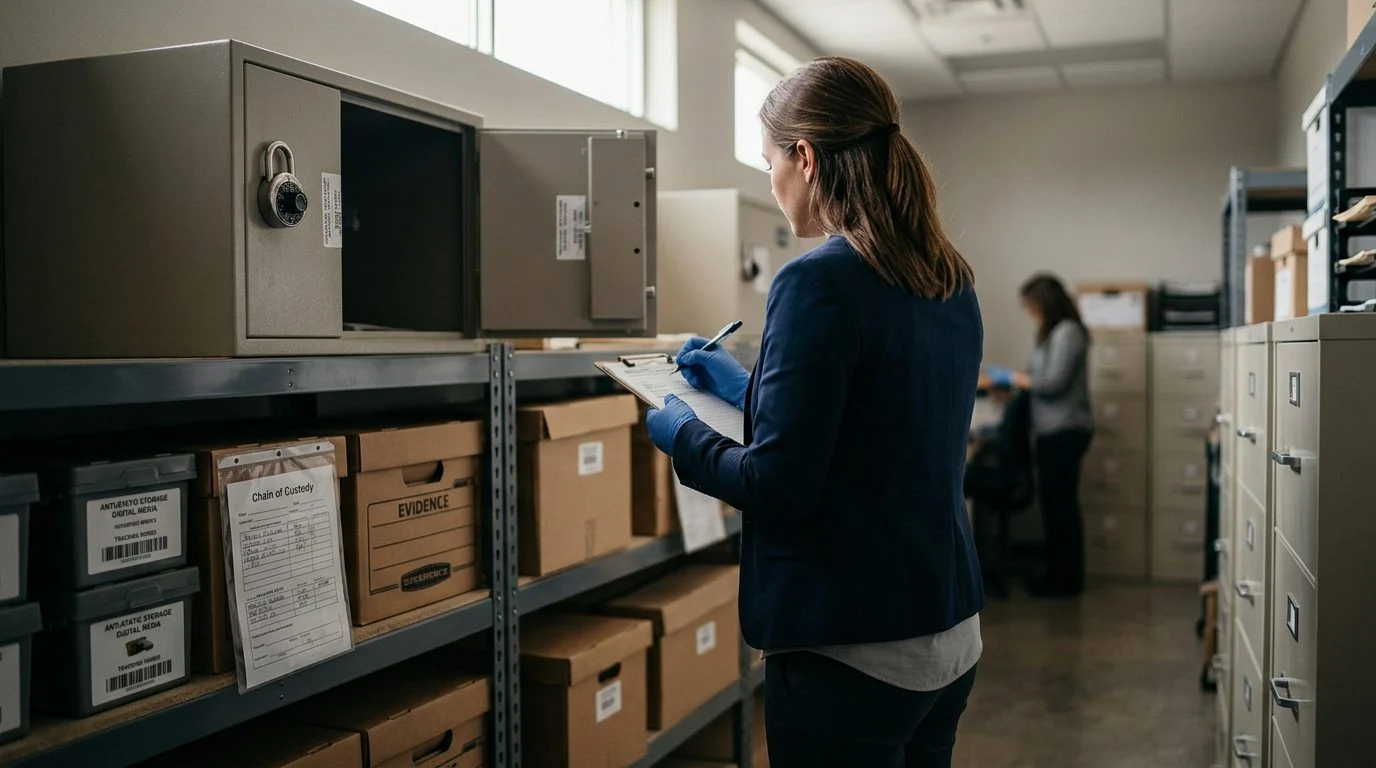
A defense review looks at the search warrant, the digital forensic report, and the chain of custody for each device. Problems in any of these can affect what evidence the State can use. We ask whether the device was shared and whether the account had other users.
We review the evidence and explain the options. Which defenses apply depends on the facts.
Federal and state issues can overlap, so both should be reviewed early. For context on federal cases, see the U.S. Sentencing Commission.
What to Expect: Step-by-Step Process
The process starts with a consultation, then moves through case review, investigation, and negotiation or trial preparation.
- Consultation. Call (972) 424-1902 or send your case details online. The first consultation is free, confidential, and carries no obligation to continue.
- Document review. We review charging papers, bond conditions, any warrant, and forensic materials you have.
- Immediate guidance. We explain how to handle police contact and why it’s wise to avoid discussing the case with others.
- Investigation and discovery. We request the State’s evidence and review the forensic findings with you.
- Negotiation, motions, and trial preparation. You receive updates at each stage, and we explain the options as the case moves.
Bring the paperwork you received, bond papers, any copy of a warrant, and a list of the devices and accounts you use. Timing varies with county court schedules and how complex the digital evidence is. We give an estimate once we know the facts.
Why Barbieri Law Firm
Barbieri Law Firm is an all-women criminal defense firm in Frisco, Texas, that defends people accused of sex crimes and assaultive offenses. The firm focuses on online sex crimes, aggravated sexual assault, aggravated assault, and family violence.
The founding attorney is Heather Jean Barbieri, Board Certified, Criminal Law — Texas Board of Legal Specialization. Our team includes support staff who keep the office running.
These cases carry a heavy personal cost. We discuss the accusation privately and explain how court records may affect your family and work. We serve clients in Collin County, Frisco, Plano, McKinney, Allen, and Dallas-Fort Worth.
We will review the evidence, including the device, the warrant, and the forensic report, and explain your options.
Questions People Ask Before Calling a Lawyer
The first rule is to avoid deleting, changing, or discussing anything tied to the accusation.
What should I avoid before I speak with a lawyer?
Do not delete, wipe, or change any device or account. Avoid discussing the accusation with the complainant, friends, or online.
Can I talk to police without a lawyer?
You can say you want a lawyer before answering questions. Call the firm before any interview so we can advise you on next steps.
Can you tell me how my case will end?
No lawyer can promise how a case will end. We review the evidence and explain the options that fit your facts.
Do I need to decide right away?
Not right away. A consultation lets you hear the options before you decide anything.
See the Texas Court Help criminal guide.
Will my case become public?
Court filings are often public records. We explain what that means for your case during the consultation.
Not sure what your next step is?
Talk it through with our team — the first consultation is free, confidential, and carries no obligation.

Talk to Barbieri Law Firm About Your Case Today
If you’re facing a child pornography distribution charge in Texas, the days after police contact matter. Have your paperwork, any warrant, bond papers, and key dates ready when you call.
Call (972) 424-1902 or send your case details to Barbieri Law Firm. We will review the evidence and explain your options. No lawyer can promise how a case will end, but we will be clear about what the evidence shows.
Attorney responsible for this site: Heather Jean Barbieri, Barbieri Law Firm, Frisco, Texas.
How We Approach a Distribution Charge
Protecting you from the first call
We advise you before any interview with investigators and explain how to protect your rights while the case is still developing.
Reviewing the digital evidence
We examine the search warrant papers, how files were found, who had access to devices and accounts, and how the files were shared or stored.
Plain-language communication
We explain the charge, the evidence and your options clearly, so you can make informed decisions at each step.
Personal attention with our team
Heather Jean Barbieri, Board Certified, Criminal Law — Texas Board of Legal Specialization, leads every matter, supported by our team of assistants and office staff.
Based in Frisco, serving Texas
We defend clients across Collin County, Dallas-Fort Worth and throughout Texas, including Plano, McKinney, Allen and Prosper.
Do not delete or change anything
Deleting files, wiping a phone or closing an account can create new problems for your case. Do not change any device or account, and avoid discussing the accusation with the complainant, friends or online. Call us before you answer questions about the matter.
Common Questions About These Charges
Can I talk to police without a lawyer?
You can say you want a lawyer before answering questions. Call the firm before any interview so we can advise you on next steps.
What should I bring to a consultation?
Bring any paperwork you received, including the charging papers, bond conditions and any warrant or notice. Do not bring or send images, files or other material to anyone else.
What happens at a first meeting?
We review the charge, the search or warrant papers, the digital evidence and the options available to you, and answer your questions in a confidential setting.
Your first consultation is free, confidential and without obligation. Talk to Barbieri Law Firm today.
Related practice areas
Request a Consultation
Fill out the short form and we will take it from there.