

Child Sex Crimes Defense | Frisco, Texas
Know What Comes Next in a Texas Child Sex Crime Case
A case can move through many stages, from the first report to a courtroom. Here is how each step works and where you can take action.
By Heather Barbieri · Published November 10, 2026
Texas Custody Case Child Abuse Allegation Timeline
If a report about a child has pulled you into a custody case, the dates can feel like they’re running ahead of you. You’re probably asking how long this will take and what happens at each step.
There’s no single length.

How long does a Texas criminal case involving a child sex crime allegation usually take, from the initial report to court?
There is no usual length. The case runs from the report to a final order through several stages. Those stages include an investigation, any early hearing, temporary orders, discovery, and either a trial or a settlement the court enters as a final order.
The case often runs on two tracks at once. The Texas Department of Family and Protective Services (DFPS) separates its civil child protective investigation, which concerns a child’s welfare, from the law-enforcement criminal investigation of the same allegation. Texas DFPS abuse reporting guidance explains that split.
A custody suit between parents is a third track. In Texas, it is called a suit affecting the parent-child relationship. Each track keeps its own dates, so write them down separately.
The length depends on the facts. That includes the allegation, the evidence, whether a child was taken into state custody, and whether the parties agree on a plan.
What happens between the initial report and the first court hearing?
The report starts an investigation. An allegation alone does not establish that abuse happened. The investigation exists to gather facts, and those facts shape what happens in court.
Each case involving a child and state custody turns on its own facts. Read every notice closely. Calendar the date and time the day you receive it.
Missing a hearing can change what the court decides that day. Courts act on the record in front of them, and a missed hearing leaves your side of that record empty.
How do temporary orders shape the timeline while the case is pending?
Temporary orders set who cares for the child, the contact schedule and any conditions while the case is open. They can stay in place until the case moves forward.
Courts can issue temporary or longer-term protective orders in child abuse or neglect cases.
Judicial guidance also covers safety-focused responses, supervised visitation, placement and service planning. Texas Children’s Commission custody guidance describes these in custody cases tied to abuse allegations. Evaluations and services take time, and each one can slow the next step.
Protective orders can limit contact. In a protective order, a court may prohibit a person found to have committed family violence from communicating with a protected person in a threatening or harassing manner. It may also bar going to or near the residence or school a protected child normally attends, if the order or condition of bond specifically describes that place.
Knowingly or intentionally violating a protective order, or a bond condition set in a family violence, sexual assault or abuse, indecent assault, stalking, or trafficking case that relates to the safety of a victim or the community, in one of the ways the law lists, can be a separate offense under Texas Penal Code § 25.07. Follow every order exactly while the case is open.
Why do discovery, forensic interviews and evidence review often set the pace?
Discovery, interviews and evidence review often set the pace, because each side needs the records before it can respond. Discovery means the exchange of records, reports, recordings and witness information between the two sides.
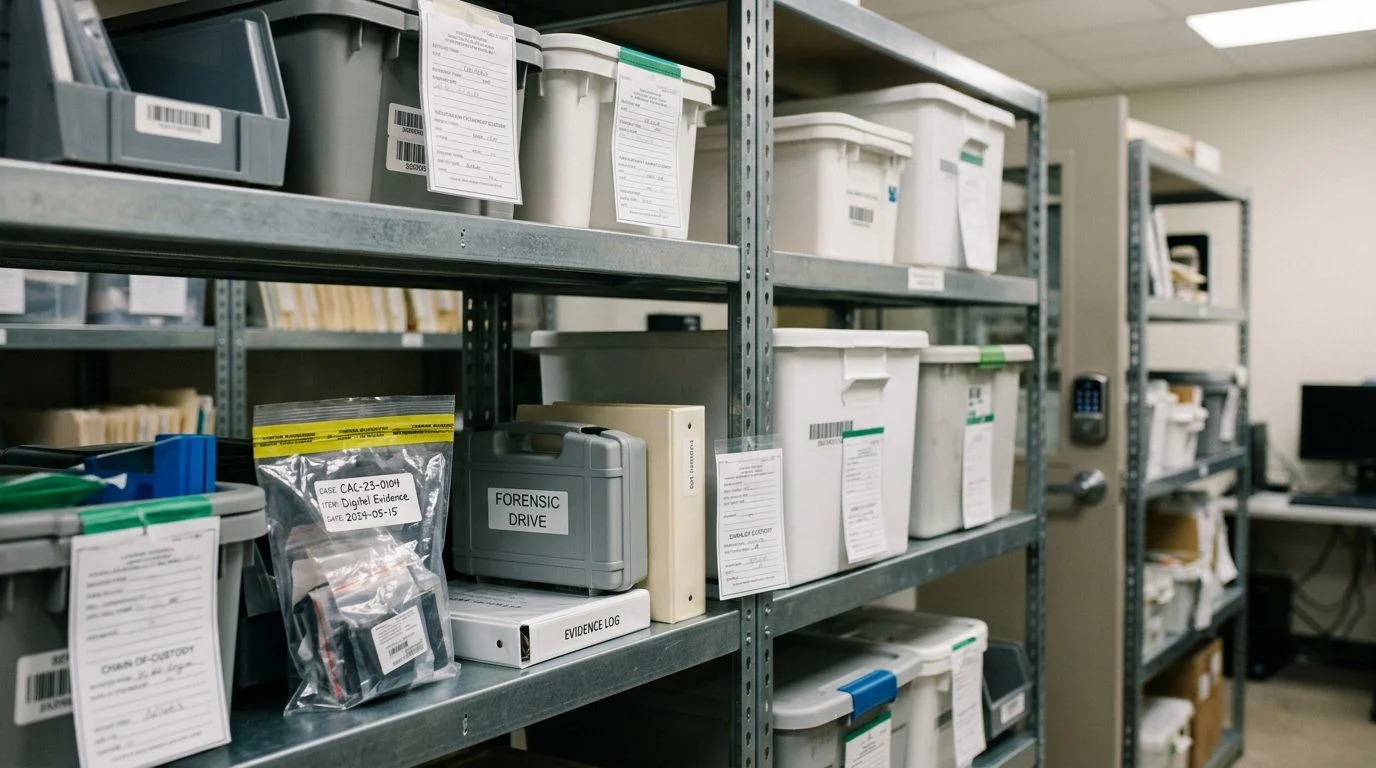
In an abuse-based custody case, the evidence often includes forensic interview recordings, medical records, school or childcare records, digital evidence and any evaluations the court orders. Scheduling interviews, requesting records and arranging evaluations all take time.
Texas law also lets a child’s statement reach a protective order hearing. Under Texas Code of Criminal Procedure Art. 7B.004, a statement by a child younger than 14 who is a victim of certain listed offenses, and that describes the offense, is admissible. It is admitted the same way a child’s statement is in a parent-child suit.
Start now. List the records and people who may matter. Write a timeline while your memory is fresh. A rushed review can leave gaps you will have to fill later.
Do statutory deadlines and investigation outcomes change the timeline in a Texas CPS case?
Yes. Texas child welfare cases run on dates set by statute and by court orders. The outcome of an investigation can also affect time with your child.
Some dates are fixed by law. Others come from the court’s own orders. Write down every date from every notice and order in your file, so none is missed.
An investigation can end without a finding of abuse or neglect.
Keep the orders and notices together in one folder. That makes each date easy to find when it matters.
Not sure what your next step is?
Talk it through with our team — the first consultation is free, confidential, and carries no obligation.
When is a final order entered, and what can still change after it?
A final order is the court’s decision on custody, possession and access. It can follow a trial or a negotiated agreement between the parties.
A final order is not always the end of every related matter. A later request to change an order is possible. Later requests start from its exact terms.
A criminal case runs on its own track. Even after the custody case closes, a criminal charge follows the Penal Code and the criminal courts.
Do not treat a signed agreement as harmless. Read what each term means for the custody case and for any criminal case before you sign.
What should you do with the time you have now?
Calendar every date. Follow every temporary order exactly. Keep every document you have been served.
Keep one folder with notices, orders and court papers. Check it each week so you don’t miss a setting.
Do not discuss the allegations with the child or with other witnesses. Those conversations can be repeated later and read in a way you did not intend.
Write a dated timeline of events as you recall them. Note what you saw, what you were told and when you were told it. Keep it private, and share it only with a lawyer you have chosen.
Do not sign statements about the allegations until you understand what they mean for custody and for any criminal case.

How can Barbieri Law Firm help you plan the next step?
Barbieri Law Firm defends people accused of child sex crimes and family violence across Texas. Heather Barbieri leads the firm, which is based in Frisco, Texas.
You may be dealing with a report you did not choose, a criminal case that moves on its own calendar, and a charge you now have to answer. That is a heavy load to carry while you read statutes and track dates.
Frequently asked questions
How long does a Texas custody case with a child abuse allegation take?
There is no set length. The stages and the court’s calendar set the pace.
Follow the order’s exact terms.
Can a child’s statement be used in a Texas protective order hearing?
Yes, under Texas law a child’s statement describing certain offenses can be admitted in a protective order hearing when the child is younger than 14.
Barbieri Law Firm offers a free first consultation that is confidential and carries no obligation to continue. Call (972) 424-1902 or send your case details through the contact page.
Attorney responsible for this site: Heather Barbieri, Barbieri Law Firm, Frisco, Texas.
The Stages of a Case, From Report to Court
1. The Report
A report to police, a school, or Child Protective Services can start a case. The allegation may come from a child, a parent, or another adult, and it often sets investigators in motion before the accused person knows about it.
2. The Investigation
Investigators may request interviews, records, devices, and forensic examinations. Early decisions made at this stage can shape the rest of the case, so it is important to understand what is being requested.
3. Interviews and Forensic Questioning
Children are often interviewed by trained forensic interviewers, and the recording of that interview can become important evidence. We review how the interview was conducted and what it does and does not show.
4. Charges and Bond
Prosecutors decide whether to file charges and what they will be. Bond conditions may limit contact with the complainant, residence, travel, or access to devices, and those conditions should be reviewed promptly.
5. Pretrial Proceedings
Pretrial work includes reviewing the discovery file, challenging evidence where appropriate, and evaluating protective order hearings. Each step can affect how the case is resolved.
6. Resolution or Trial
Some cases resolve through negotiation, while others go to a contested hearing or jury trial.
How We Approach Your Case
Review the Evidence
We will review the report, the interview recordings, the medical and digital evidence, and the charging documents to understand what the State must prove.
Explain Your Options
At every stage, we will explain the choices available to you and the likely consequences of each, in plain language.
Protect Your Position
From the first contact with investigators to bond conditions and court dates, we work to protect your rights and avoid statements that could hurt your defense.
Focused Criminal Defense
Led by Heather Jean Barbieri, Board Certified, Criminal Law — Texas Board of Legal Specialization, our all-women firm focuses on criminal defense across Collin County, Dallas-Fort Worth, and Texas.
Speak With a Lawyer Before You Answer Questions
Talk with a criminal defense lawyer before you give a statement or sign anything.
Your first step can be a free, confidential conversation with our team.
Related practice areas
- Child Sexual Abuse Allegations in Texas
- Child Pornography Distribution and Promotion Charges in Texas
Request a Consultation
Fill out the short form and we will take it from there.