

Sex Crimes Defense | Collin County and Dallas-Fort Worth
DNA Evidence After a Sex Crime Arrest? Talk to a Lawyer Before You Respond
Barbieri Law Firm in Frisco, Texas, looks at how a DNA sample was obtained, how it was tested, and what a result does and does not show.
By Heather Barbieri · Published November 14, 2026
If you were arrested for a sex crime in Texas, you may be asking whether police can take your DNA. How a DNA sample is taken from you depends on which collection provisions apply to your case, and a search warrant is only one of the possible routes. A sample you agree to give is a separate decision.
Can police take a DNA sample when you are arrested for a sex crime in Texas?
Texas law can require a DNA sample through a search warrant, and the warrant’s rules then matter. A warrant is a written order issued by a magistrate and directed to a peace officer (Texas warrant definition, art. 18.01). Texas Code of Criminal Procedure Art. 18.02 lists the grounds for issuing a search warrant. These include searching for and seizing property or items that constitute evidence of an offense or evidence tending to show that a particular person committed an offense, except personal writings by the accused.
Before a judge signs, a sworn affidavit must show probable cause (art. 18.01(b)); art. 18.02 separately lists the grounds on which a search warrant may be issued. A warrant issued by a district court judge to collect a DNA specimen from a person for the purpose of connecting that person to an offense may be executed in any county in Texas (art. 18.065). Whether police can take a sample after your arrest depends on the charge, the warrant and what you agree to. Ask to see the warrant first.
If police have asked you for a DNA swab after a sex crime arrest, you can talk with our team before you agree to anything. Talk it through with our team — the first consultation is free, confidential, and carries no obligation.

What a DNA warrant must show before a sample is taken
A DNA warrant needs a signed, dated form and a time limit for use.
A warrant issued only to collect a specific person’s DNA specimen generally runs 15 whole days. The magistrate can set a shorter period (art. 18.07). The sworn affidavit also becomes public information when the warrant is executed (art. 18.01).
Check the date, the signature, the name and the time limit on any paper you are shown. If something is missing, raise it with your lawyer right away.
What Texas law adds to DNA collection after an arrest
Texas law can make a DNA decision long-lasting. For purposes of its arrest-record provisions, a DNA record, the record of how the sample was collected and the record of its transfer to the Department of Public Safety count as records relating to an arrest (art. 55A.131).
The charge also matters. Sexual assault is generally a second-degree felony (Penal Code § 22.011). Under Penal Code § 22.011, sexual assault is a felony of the second degree, except that it is a first-degree felony in listed cases, such as when the victim was a person with whom the actor was prohibited from engaging in sexual intercourse or deviate sexual intercourse under Section 25.02. Subsection (f) generally makes the offense a second-degree felony, but it becomes a first-degree felony in certain circumstances, including when Section 25.02 barred the actor from engaging in sexual intercourse or deviate sexual intercourse with the victim. Indecency with a child is a second- or third-degree felony, depending on the conduct (Penal Code § 21.11).
Swab, warrant or voluntary sample: what police can and cannot do without your consent
A voluntary sample is a choice you make.
An officer’s request is not a court order. A voluntary sample is one you agree to give. Ask whether there is a warrant and what it authorizes before you agree to anything.
Texas law gives a defendant in a criminal matter the right to be represented by counsel in an adversarial judicial proceeding. That includes the right to consult in private with counsel sufficiently in advance of a proceeding (art. 1.051). That is why a decision about a voluntary sample belongs in a private conversation with a lawyer.
What happens to a DNA sample and profile after collection
A laboratory turns the sample into a DNA profile. It then compares that profile with biological material collected from the case.
A match means the profile is consistent with that material. It does not, by itself, show when the material was left, how it got there or who left it. Those answers come from the rest of the record.
Your lawyer can review the lab reports and the collection records. The question is what the match actually proves.
Why a DNA match is not the end of the question
A match is one piece of evidence. The questions about how it was collected and tested can change what it means.
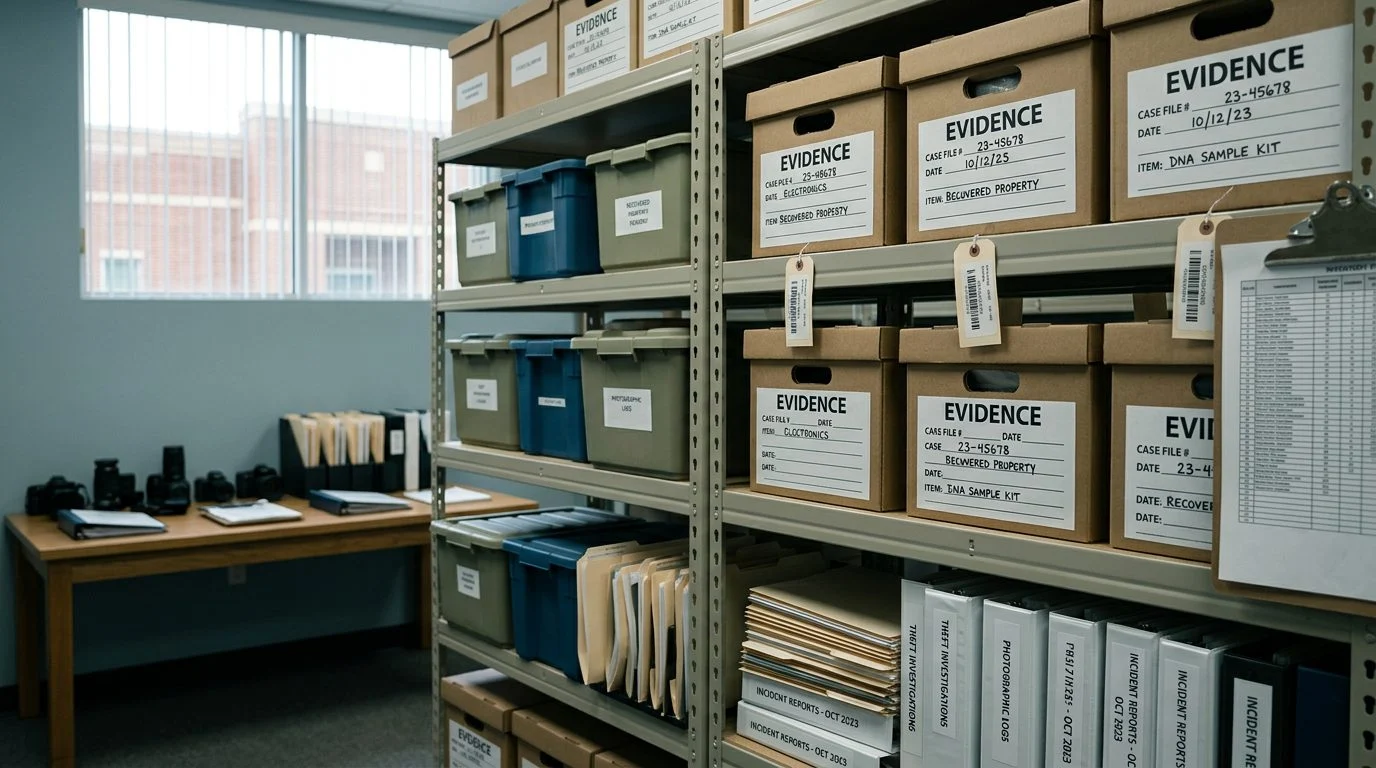
Look at the chain of custody. Who collected, labeled, stored and tested the sample, and do the records show it? Ask about the testing method, possible contamination and how a mixed or partial profile was read. Timing and access matter too. Was the item somewhere you could reach, and does the timeline fit the allegation? The National Registry of Exonerations publishes research on wrongful convictions, including causes such as false accusations and mistaken identification.
Evidence obtained in violation of the Texas or United States Constitution or laws is not admissible against the accused at trial (art. 38.23). The exclusion rule does not apply if the evidence was obtained by an officer acting in objective good faith reliance on a warrant issued by a neutral magistrate based on probable cause (art. 38.23). So excluding evidence is not automatic. The result turns on the warrant and the facts.
Not sure what your next step is?
Talk it through with our team — the first consultation is free, confidential, and carries no obligation.
If you have been arrested, a free consultation before any sample is given
If an officer has asked you for a cheek swab, the time to talk with a lawyer is before you agree. Barbieri Law Firm defends people accused of sex crimes and assaultive offenses across Collin County, Dallas-Fort Worth and Texas. The first consultation is free, confidential and carries no obligation to continue.
Do I have to give a DNA sample if police ask?
A sample you are required to give comes through a search warrant. A sample you agree to give is your own choice, and it is worth making with a lawyer.
Does a DNA match mean a conviction?
No. A match is not the same as a conviction, and it does not show how the material got there.
If you were arrested and police want your DNA, you do not have to face that decision alone. Call (972) 424-1902 or send your case details through our contact form.
Attorney responsible for this site: Heather Barbieri, Barbieri Law Firm, Frisco, Texas.
Before you agree to a DNA swab
Speak with a lawyer before you decide.
How we review DNA evidence in your case
Review the paperwork
We check whether a search warrant was used or whether a sample was requested, and we review what was signed and when.
Examine the collection
We look at how the sample was collected, stored and handled, and whether the chain of custody was documented.
Explain what a match means
We help you understand what a DNA result can show, what it cannot show, and what questions remain open.
Plan your next steps
We explain your options and talk through them with you before any decision is made.
Questions to bring to a consultation
How was the sample obtained?
Was it taken under a warrant, given voluntarily, or collected another way? The answer shapes what comes next.
What testing was done?
Ask who performed the analysis, which methods were used, and whether the results were reviewed independently.
What does the match actually show?
A match is not the same as a conviction. We look at where the material was found and how it may have gotten there.
What should I say to police?
Talk with a lawyer before answering questions about the case or the sample.
Call (972) 424-1902 to schedule a free, confidential consultation. It carries no obligation to continue.
Related practice areas
Request a Consultation
Fill out the short form and we will take it from there.