

Child Sex Crimes Defense | Frisco, Texas
Child Sex Crimes Defense in Texas: Understanding the Forensic Interview
Barbieri Law Firm reviews how a forensic interview was conducted, what it actually shows and what it leaves out. We defend clients in Collin County, Dallas-Fort Worth and across Texas.
By Heather Barbieri · Published October 22, 2026
Is a forensic interview enough to convict? A forensic interview is one piece of evidence. It is not a finding that abuse happened, and it is not a verdict. Whether a recorded interview can support a conviction depends on the facts of the case, the specific charge, and the rest of the evidence. If a child was interviewed, or you were told an interview is part of a case against you, this guide explains how these recordings are used in Texas and what a defense lawyer reviews first.
What a forensic interview is, and what it is not
A forensic interview is a structured conversation with a child, usually recorded, that gathers the child’s account of what happened. A trained interviewer conducts it, often at a child advocacy center. Children’s Advocacy Centers of Texas describes these centers as coordinating forensic interviews within a multidisciplinary response, in a child-friendly setting where children share their accounts.
The National Children’s Alliance describes the model as one in which interviews and decisions are coordinated among CPS, law enforcement, medical, mental-health, prosecution and victim-advocacy professionals. That coordination explains why police, child protective services, or both may request an interview. It also explains why the same recording can matter in more than one proceeding.
The interview does not decide whether abuse happened. It records what a child said. That account is then reviewed, tested, and compared with other evidence. The rest of this guide explains that work.
If a child was interviewed, or you received notice that an interview is part of a case against you, our team can talk through what happens next with you. Talk it through with our team — the first consultation is free, confidential, and carries no obligation.
Can a forensic interview alone support a conviction?
Is a forensic interview enough to convict? That turns on what the State must prove and what the jury hears. The State has to prove every part of the offense charged, and Texas statutes list those parts. Under Texas law, continuous sexual abuse of a young child or disabled individual is an offense when a person 17 years of age or older commits two or more acts of sexual abuse during a period of 30 or more days, against a child younger than 14 or a disabled individual.
The jury rule in that statute matters. If a jury decides the case, jurors need not agree on exactly which acts occurred or on the exact dates. They must still agree unanimously that two or more acts occurred during a 30-day or longer period.
Other charges have their own parts. Texas Penal Code § 21.11 covers indecency with a child under 17. Sexual contact under that section requires intent to arouse or gratify sexual desire, so that intent is one more part the State must show. Jurors weigh a child’s account for credibility and consistency, along with everything else admitted.
How the child’s statements reach the courtroom
Texas has its own rules about who may repeat what a child said and whether a recording can be played. Those rules are technical, and a lawyer checks them against the facts. Useful questions include who heard the child first, when, in what words, and in what setting.
Different proceedings use different rules. Code of Criminal Procedure art. 7B.004 says a statement that describes an offense, made by a child younger than 14 years of age who is the victim of an offense under Section 21.02, 21.11, 22.011, 22.012, or 22.021, Penal Code, is admissible in a protective-order hearing.
That setting is a protective-order hearing, not a criminal trial. The rule for one does not automatically decide the other. Keep that difference in mind when someone tells you what a child’s statement will mean in court.
What else prosecutors may offer besides the interview
Prosecutors may present other evidence alongside an interview. The categories can include testimony from people who heard the child describe events, observations from school or family, medical examination records, and records from online accounts. Each category is for the jury to weigh against the others.
Online cases bring their own proof. Texas Penal Code § 33.021 covers knowingly soliciting a minor over the Internet, by email, by text, or through a commercial online service to meet someone, with the intent that the minor will engage in sexual contact or intercourse. In those cases, messages and account data may become central, so how that digital material was collected and kept matters.
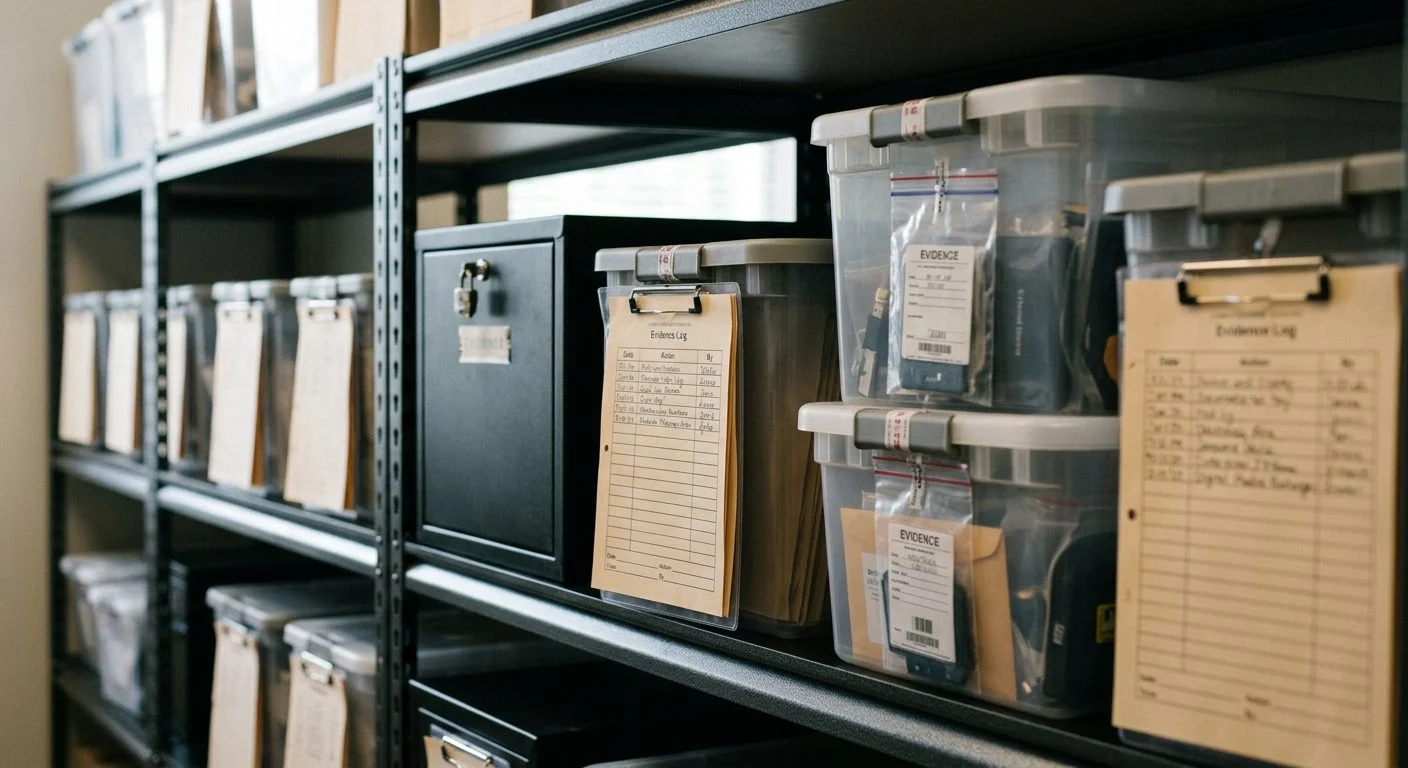
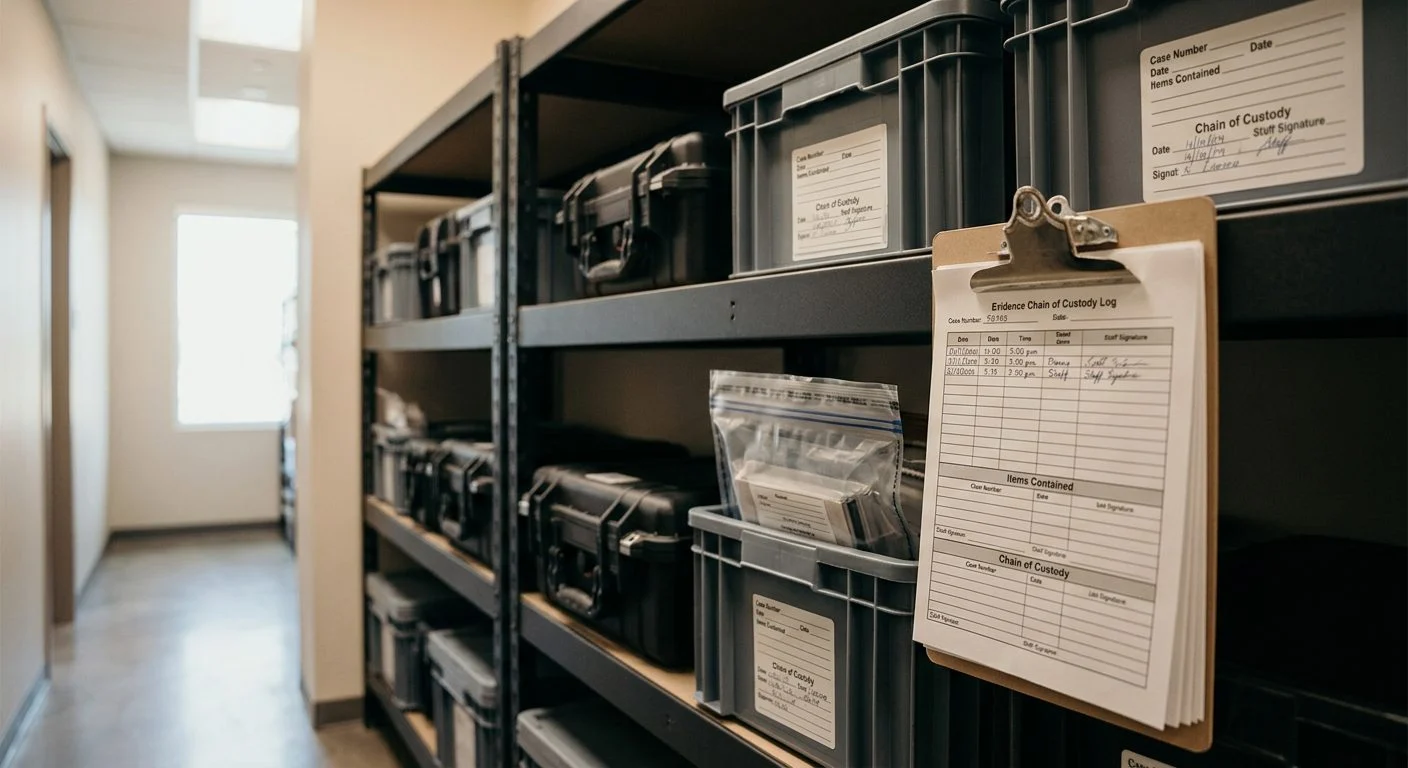
Preservation is one point of review. NIST evidence management guidance addresses preserving digital and forensic evidence, preventing degradation, and tracking chain of custody during criminal investigations. A defense lawyer asks whether each item was handled that way from start to finish.
What a defense lawyer reviews in a recorded interview
A defense lawyer reviews the complete recording, not a summary. The lawyer compares it with the written report and any notes from the interview. The review covers the setting, the timing, and how many times the child was interviewed.
The style of questioning gets close attention. OJJDP child interview guidance summarizes professional standards for child forensic interviews, including avoiding repeated questioning and using open-ended questions. A lawyer measures the recording against those standards. Did the interviewer ask the same thing again and again? Did the questions let the child describe events in the child’s own words?
Earlier statements matter too. A lawyer looks at what the child told family, friends, school staff, or investigators before and after the interview. If a custody or family dispute was in the picture at the time, that context is part of the review. This work helps a lawyer understand the evidence and explain the options. It does not predict any result.
Why the interview is one part of a larger record
A criminal case, a child protective services investigation, and a family court matter run on separate tracks. Each has its own procedures and standards, so the same interview can be used differently in each one. The DFPS CPS handbook, section 2200 describes Texas CPS investigation procedures, including ongoing child-safety assessment.
Statements made in one setting can affect later proceedings. A statement given to a caseworker may be read alongside a statement to police, and each one becomes part of the record. Questions about talking with investigators are worth raising with a lawyer before you answer further questions.
For that reason, the full record is what a lawyer evaluates before advising on options. One recording is only one part of it.
Not sure what your next step is?
Talk it through with our team — the first consultation is free, confidential, and carries no obligation.
If an interview has already happened, here is where to start
If an interview has already happened, start by gathering every notice and document you received. Write down the dates, the agency names, the names of any interviewers you know, and what you were told and by whom. Keep everything in one place so it is ready for a lawyer.
If you are the adult named in a notice, read it closely. Note which agency sent it, what date it refers to, and what it says the interview concerns. Bring the notice with you when you speak with a lawyer.
Common questions
Is a forensic interview enough to convict?
A forensic interview is one piece of evidence. Whether it can support a conviction turns on the charge and the rest of the proof.
Can a child’s statement alone lead to a conviction in Texas?
Jurors weigh a child’s account along with all other admitted evidence. Whether it is enough is a question for the full record.
Should I answer investigators’ questions before speaking with a lawyer?
Raise that question with a lawyer first, before you answer more questions.
If a child was interviewed, or you received notice that an interview is part of an accusation against you, you do not have to sort this out alone. Our free initial consultation is confidential and without obligation. Call (972) 424-1902 or send your case details through the contact form.
Attorney responsible for this site: Heather Barbieri, Barbieri Law Firm, Frisco, Texas.
Heather Jean Barbieri, Board Certified, Criminal Law — Texas Board of Legal Specialization.
How We Review the Forensic Interview
The full recording
We review the complete recording, including the setting, the introduction, the questions asked and the order in which topics came up.
The interview process
We examine whether the interviewer followed accepted protocol and whether any suggestive or repeated questioning shaped the account.
The rest of the evidence
We compare the interview with the police report, medical records, text messages and other proof to see how the pieces fit together.
Your options explained
We explain what the interview can and cannot establish, and walk you through the options available in your case.
Important: Be Careful About What You Say
Speaking with a defense lawyer early helps you understand the process before anything else is said.
Questions About Forensic Interviews
Is a forensic interview enough to convict?
A forensic interview is one piece of evidence. Whether it can support a conviction depends on the charge and the rest of the proof.
Can a child's statement alone lead to a conviction in Texas?
Jurors weigh a child's account along with all other admitted evidence. Whether it is enough is a question for the full record.
What does the defense review?
Our team reviews the recording, the setting, the questions asked and how the account developed over time, then explains what the record does and does not show.
Is the first consultation free?
Yes. The first consultation is free, confidential and comes with no obligation to continue.
Talk With Barbieri Law Firm About Your Case
Related practice areas
- Child Sex Crime Charges in Texas: What an Accused Professional Needs to Know First | Barbieri Law Firm
- CPS and Criminal Investigations After a Child Sexual Abuse Accusation: Defense for Accused Parents in Texas
- Teacher or Educator Charged With a Child Sex Crime in Texas: Certificate and SBEC Defense
- Jury Trial Defense for Child Sexual Assault Charges in Texas: What Happens at Trial
Request a Consultation
Fill out the short form and we will take it from there.