

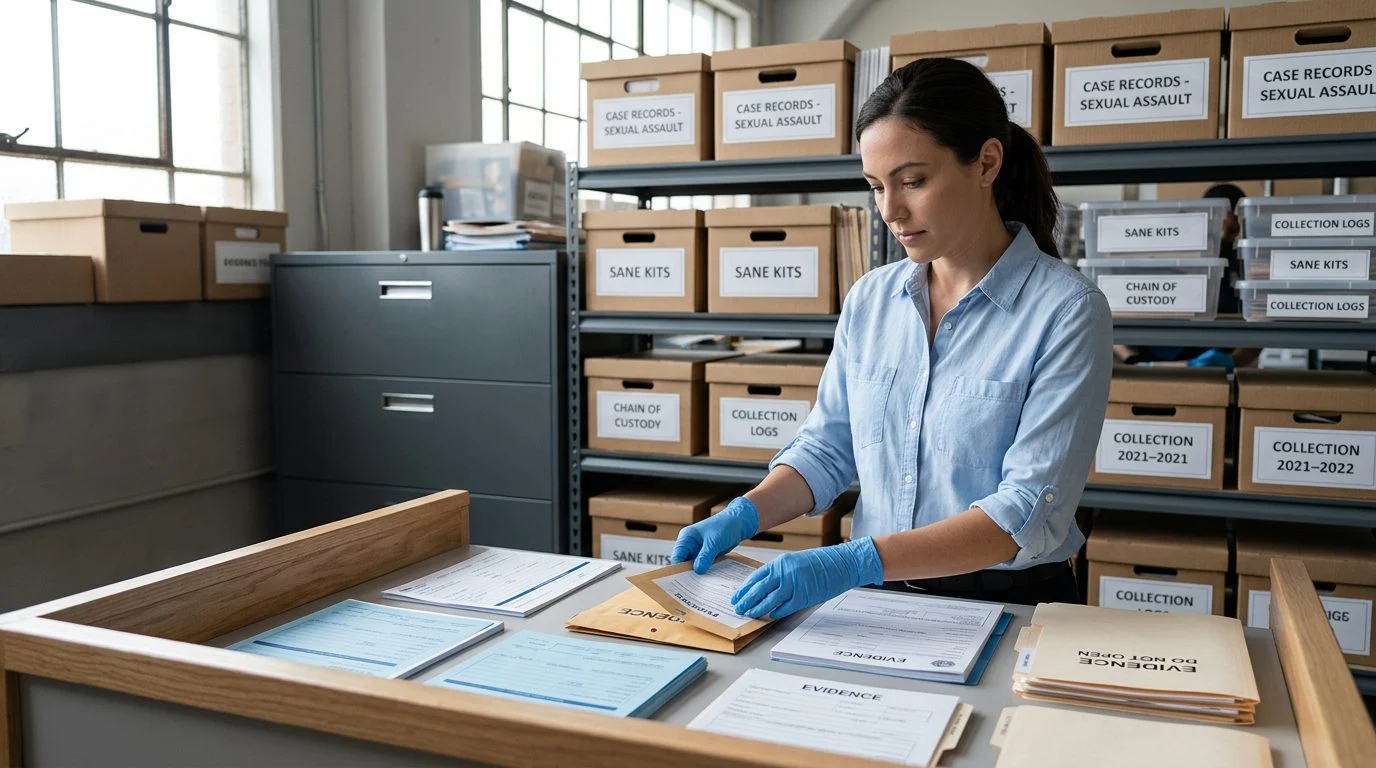
Sex Crimes Defense | Frisco, Texas
Reviewing SANE Exam Records in a Texas Child Sexual Assault Case
The medical file can shape how a child sexual assault case is built, and it deserves a careful, line-by-line review.
By Heather Barbieri · Published November 19, 2026
If investigators or prosecutors want your records, that request runs through legal channels, such as discovery, a subpoena, or a court order. If records like these could matter in your case, this guide explains what they usually hold and how defense counsel reviews them.
If you have been accused, you probably have many questions about the hospital exam. If a SANE exam record is part of your child sexual assault case in Texas, you may wonder whether your defense can see the chart. The answer depends on who holds the record and what the court decides.
What a SANE Exam Is and Why It Happens in a Child Case
A sexual assault nurse examiner (SANE) is a nurse trained to perform a forensic medical exam after a reported sexual assault. In a child case, the exam usually follows a disclosure. A child may tell a parent, a relative, a teacher, or a doctor. A hospital, clinic, or child advocacy center may then arrange the exam.
The exam is a medical evaluation first. The nurse checks for injuries, addresses health concerns, and plans follow-up care. Evidence collection happens during the same visit.
Family members often are not told the details of the exam when it happens. That gap is common. It is also why the records matter later.
The stakes are high. Under Texas Penal Code § 22.011, a “child” means a person younger than 17.
If your loved one faces a child sexual assault charge and a hospital exam is part of the case, we can talk through what medical evidence exists and how it may be requested. Talk it through with our team — the first consultation is free, confidential, and carries no obligation.

What the Forensic Nurse Records Usually Contain
The chart usually holds the history, the physical findings, any samples taken, and the follow-up plan. Each part can matter to the defense. Each part can also be checked against other statements in the case.
The history section records what the child or caregiver said. It notes how and when the disclosure was made. The nurse may quote the words the child used, so the wording matters.
The physical section lists the exam findings. Many charts include body diagrams and photographs, when they were taken. The record should show what was seen and when.
The collection section lists swabs or other samples. It should connect to chain-of-custody paperwork. That paperwork tracks who handled each sample, when, and where it went. Gaps in that paperwork are a point counsel checks.
The chart may also note testing for infections or pregnancy when medically indicated, along with the results. Last, it lists referrals and follow-up plans. Those notes show what the nurse believed the child needed.
Can the Defense Obtain SANE Records in Texas?
Access runs through legal channels, not a simple request. The State usually holds the forensic exam file when the exam is part of a police investigation. The hospital or clinic that performed the exam may keep its own copy.
The rules and the court decide what is produced. Counsel reviews each category of record separately. A complete file is rarely one document. It often comes from several places, each with its own paperwork.
Early work helps. Counsel can identify which records exist and where they are kept. Then counsel can decide what to request and when.
How Records Are Requested: Discovery, Subpoenas, and Court Orders
Each one works differently.
Discovery is the process by which the State shares its evidence with the defense. Records the State holds from the exam can come through this process.
It asks for the records themselves.
A court order may be needed when the records are private or when a judge must decide what gets produced. In some cases, the court reviews sensitive records first.
Timing and scope are not automatic. Each request has to fit the case and the record involved.
Why Privacy Rules Shape What the Defense Receives
Medical records carry privacy protections. A child’s chart is no exception, and those protections exist for the child. A hospital usually will not release a chart just because someone asks.
Counseling and therapy records raise their own questions. A child may have seen a counselor after the disclosure.
It shapes the timing and the scope of what is produced.
What a Normal or Inconclusive Exam Result Can and Cannot Show
A normal exam does not, by itself, confirm or rule out abuse. Many families hear the word “normal” and assume the case is over. That is a mistake. The exam is one piece of the evidence, not the whole case.
Timing matters. The nurse can document only what is present during the exam. The time between a reported event and the exam can change what the nurse finds. The record should show when the exam took place compared with the disclosure.
Wording matters too. An inconclusive or nonspecific finding means the physical signs do not point to one cause. The written narrative often matters as much as the physical findings. It shows what the nurse was told, what the nurse observed, and what the nurse recorded.
Not sure what your next step is?
Talk it through with our team — the first consultation is free, confidential, and carries no obligation.
How Defense Counsel Reviews Medical Evidence Against the Charges
Counsel compares the medical record with every other statement in the case. That includes the child’s account in the exam history, any statements to police, any child advocacy interview, and what family members have said.
Counsel also checks whether the report’s findings match what the State says the evidence shows. A summary in the file may describe the exam differently than the chart does. Those differences are worth reviewing.
Counsel reviews collection, labeling, and chain-of-custody steps for gaps. A missing signature or an unclear handoff can matter.
Recordings matter too. The National Association of Criminal Defense Lawyers summarizes those requirements. A recorded statement is itself evidence to review.
Some cases involve a continuous sexual abuse charge under Texas Penal Code § 21.02. Jurors must agree that the defendant committed two or more acts of sexual abuse within a period of 30 or more days. They do not have to agree on which specific acts occurred or on the exact dates. The TDCAA article on Jessica’s Law explains the offense, its punishment range, and its affirmative defense.
Early consultation helps counsel decide which records to request. Each case depends on its own record.
Next Steps for You
Write down what you remember. Include dates, the hospital or clinic name for any exam, and what you were told and by whom. Share those notes with counsel. Keep them private, and do not post them online.
Try not to discuss the child’s account with the child or with other witnesses. Those conversations can come up later in the case. Counsel can advise how to handle contact with the child and witnesses.
If you face a child sexual assault charge in Collin County, Prosper, or elsewhere in Texas, and an exam record is part of the case, Barbieri Law Firm offers a free, confidential, no-obligation first consultation. Call (972) 424-1902 or send your case details through our contact form.
Frequently asked questions
Can the defense get SANE exam records in a Texas child sexual assault case?
Yes. The defense can seek them through discovery, a subpoena, or a court order.
Does a normal exam mean abuse did not happen?
No. A normal exam does not, by itself, confirm or rule out abuse.
Attorney responsible for this site: Heather Barbieri, Barbieri Law Firm, Frisco, Texas.
What we review in a SANE file
The full written report
We read the history taken, the examiner's notes and the findings, not just the summary.
The timeline
We compare exam dates and reported events against the rest of the case file.
Collection and handling
We look at how specimens and documentation were collected, labeled and stored.
Questions for the medical witness
We identify the points that need explanation and prepare the questions to ask.
A normal exam does not settle the question
A normal SANE exam does not, by itself, confirm or rule out abuse. Its meaning depends on the history given, the timing and the other evidence in the case.
How the records come into a case
Discovery
Records may be produced by the prosecution through the discovery process.
Subpoena
The defense may request records from the medical provider by subpoena.
Facing a child sexual assault allegation? Talk with our team in confidence.
Related practice areas
Request a Consultation
Fill out the short form and we will take it from there.