

Child Sex Crimes Defense | Frisco, Texas
Forensic Interviews in a Child Sex Crimes Case
What these recorded interviews are, how they are used, and the questions a defense lawyer should ask about them.
About Barbieri Law Firm
All-women
Criminal defense firm based in Frisco, Texas
Collin County
Serving Dallas-Fort Worth and clients across Texas
Free
Confidential first consultation, no obligation to continue
By Heather Barbieri · Published November 13, 2026
If a child you love has been asked to talk with a forensic interviewer, you probably have many questions. Here is the short answer: a forensic interview is a neutral, trained conversation that records a child’s own account of possible abuse. It is one step in an investigation, not proof that abuse happened.
This page explains how forensic interviews of children work in Texas sex abuse cases. It also explains why the wording of each question matters later.
What Are Forensic Interviews of Children and Why Do They Happen?
A forensic interview of a child is a structured conversation about possible abuse. Its goal is to learn what the child remembers, in the child’s own words. It is not therapy, and it is not a casual talk at home. The information it collects can be used by child protection workers and police. If charges are filed, the same information may matter in court.
Children’s Advocacy Centers of Texas describes these interviews as part of a multidisciplinary response. Several agencies work together on one case, and the child’s needs come first.
If you just learned that an interview was scheduled, or that a report was made, you may feel frightened and unsure what comes next. That reaction makes sense. A report alone does not establish that abuse occurred. The interview is one part of a larger investigation.
If a forensic interview has been scheduled in a case involving someone you love, you don't have to sort it out alone. Our team offers a free, confidential consultation. Talk it through with our team — the first consultation is free, confidential, and carries no obligation.
Who Conducts the Interview and Where Does It Take Place?
A trained forensic interviewer leads the session with the child. In Texas, Children’s Advocacy Centers of Texas coordinate forensic interviews and provide a child-friendly setting for children to share what happened.
After a report is made, the Texas Department of Family and Protective Services (DFPS) and law enforcement may both become involved. The educators’ guide to child abuse reports describes this sequence. Its basic investigation handbook describes an ongoing assessment of the child’s safety during the investigation.
Other team members may observe the interview from another room. Defense lawyers want to know who was present, who asked each question, and what each person saw. Those details matter when the case record is reviewed.
How Is a Typical Forensic Interview Structured?
A typical session moves in clear steps, from building rapport to the topic of concern. The interviewer first introduces themselves and builds a comfortable connection with the child.
Next, the interviewer sets ground rules. A common rule is that the child can say so when a question is confusing or when they don’t know the answer. An “I don’t know” is a real answer, and it is allowed.
Then the interviewer moves from neutral subjects toward the matter at hand. Professional standards call for open-ended questions, such as asking the child to tell what happened in their own words. They also call for avoiding repeated questioning, as OJJDP guidance on forensic interviews explains.
Interviews are often audio or video recorded. A recording keeps the child’s exact words, tone, and pauses, so the session can be reviewed later. How long a session lasts, and how many sessions a child needs, depends on the facts.
Why Does the Wording of Questions Matter?
Question wording matters because a child’s answer can be shaped by how a question is asked. Open-ended prompts let the child use their own words. Suggestive questions do the opposite. They supply the answer or add a detail the child has not mentioned, such as a place, a time, or a body part.
Repeated questions create another risk. Asking about the same event several ways can change what a child says. That is why trained interviewers avoid it.
Defense lawyers review the wording closely. They look at the order of each question, whether a detail came from the interviewer or from the child, and how the answers changed over time.
Many parents ask how to talk with a child about inappropriate touching. The safer path is calm, brief listening. Don’t run a detailed interview at home, and don’t press the child for specifics. That work belongs to the trained interviewer.
What Happens to the Recording and the Findings?
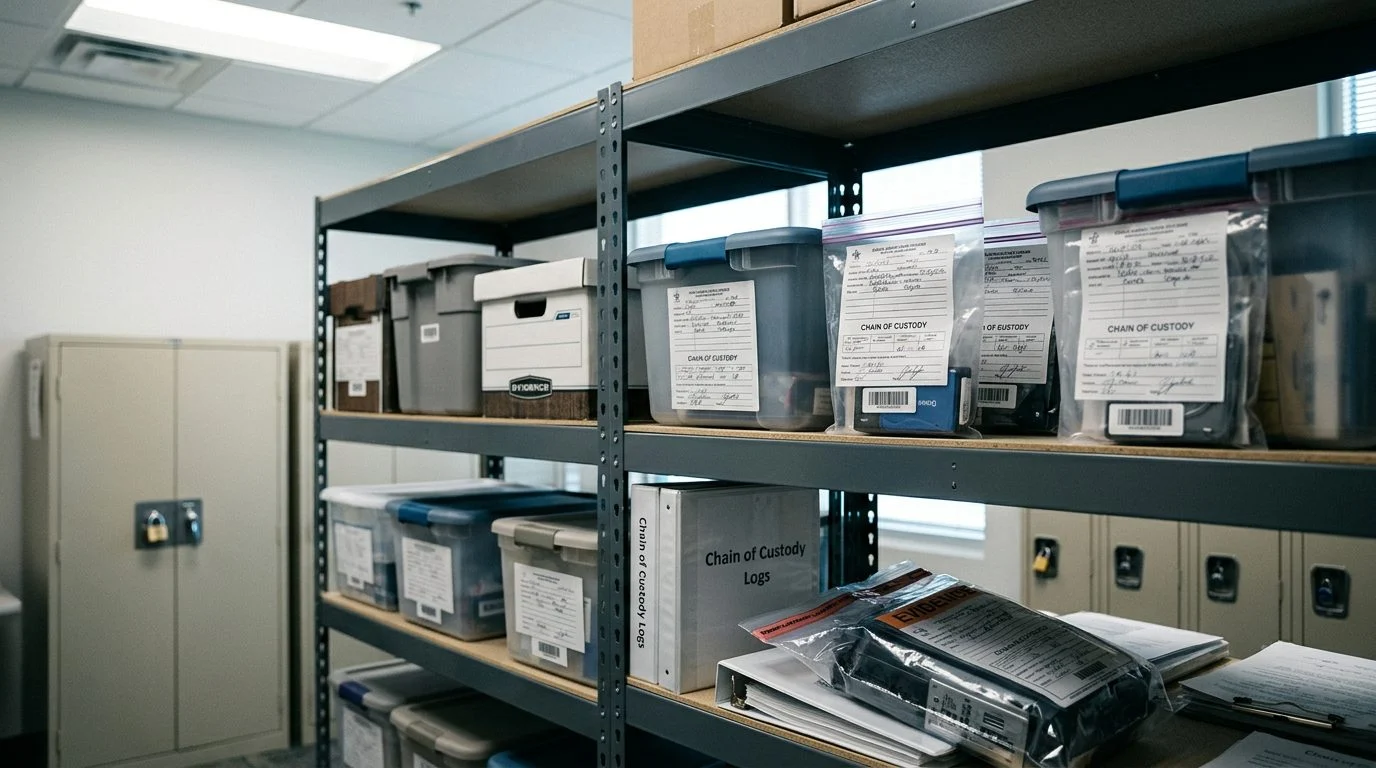
The recording and the interviewer’s notes become part of the case file. Investigators review them. A criminal defense lawyer can review them too.
Texas law also has a specific rule about a child’s statements. Under Texas Code of Criminal Procedure art. 7B.004, a statement made by a child younger than 14 years of age who is the victim of an offense under Section 21.02, 21.11, 22.011, 22.012, or 22.021, Penal Code, and that describes the offense committed against the child is admissible in a hearing on an application for a protective order. The statement must describe the offense. In a hearing on an application for a protective order, a statement made by a child younger than 14 years of age who is the victim of an offense under Section 21.02, 21.11, 22.011, 22.012, or 22.021, Penal Code, and that describes the offense committed against the child is admissible as evidence in the same manner that a child’s statement regarding alleged abuse is admissible under Section 104.006, Family Code, in a suit affecting the parent-child relationship (Texas Code of Criminal Procedure Art. 7B.004).
That rule covers protective-order hearings. It does not decide how every criminal case is tried.
A recording does not decide a case by itself. Other evidence, such as messages, records, and witness accounts, is weighed alongside it. A defense lawyer also checks whether the recording is complete, because a partial recording shows only part of the session.
What Can a Family Member Do, and What Should You Avoid?
Stay calm, reassure the child, and let them talk without pressing for details. Your calm presence helps the child feel safe, even when you feel anything but calm.
Tell the child they are not in trouble. Listen, and avoid asking for more than the child offers. If the child asks what is happening, answer simply and honestly, without describing the allegation in detail.
Write down the child’s exact words as soon as you can. Include the date, the time, and what prompted the conversation. Do not add your own interpretation.
Avoid repeated questioning. Don’t show the child photos or texts about the matter. Don’t discuss the child’s account with other children or relatives. Don’t confront the person accused, and don’t share the child’s statements on social media.
Anything you write or post can later become part of the case record. Treat your notes and messages as if someone else will read them, because they may.
Not sure what your next step is?
Talk it through with our team — the first consultation is free, confidential, and carries no obligation.

How Does a Criminal Defense Lawyer Review a Forensic Interview?
A defense lawyer reviews the full recording, the wording of the questions, and the documentation to understand the evidence. That review covers the order of the questions, the interviewer’s notes, any observations from team members, and how the child’s account compares with other records and the timeline.
Barbieri Law Firm defends people accused of child sex crimes across Texas. Our team reviews the evidence and explains your options. No lawyer can assure how any case will end.
Common Questions
Does a child’s statement always come into court?
No. The Texas rule described above applies in protective-order hearings, not in every criminal trial.
Does a forensic interview prove that abuse happened?
No. It is one part of an investigation, and other evidence is weighed alongside it.
If a forensic interview has been scheduled, or has already taken place, in a case involving someone you love, you don’t have to sort it out alone. Our team offers a free, confidential initial consultation with no obligation to continue. Call (972) 424-1902 or send your case details through our contact page.
Attorney responsible for this site: Heather Barbieri, Barbieri Law Firm, Frisco, Texas.
How we approach a forensic interview
Review of the recording
We review the full recording, transcript and any related reports so you understand exactly what was said and how the interview was conducted.
Questions about the process
We examine who conducted the interview, where it took place, and how it was set up and documented.
Clear explanations
We explain how a forensic interview fits into the wider investigation, in plain language, so you can make informed decisions.
Respectful, confidential support
Your family's situation is difficult. We listen carefully and handle every detail with discretion.
Be careful before you speak about the case
Avoid discussing the interview or the allegations with the people involved, and do not post about the case online. Speak with a lawyer before you make statements to anyone about what happened.
Questions to ask about a forensic interview
How was it recorded?
Find out whether the interview was video or audio recorded, and whether the full recording is available for review.
Who conducted it?
Consider the interviewer's training, the protocol used, and whether the interview was led by a neutral person.
What came before it?
Look at any earlier conversations, questions or prompts that may have shaped what the child said.
How will it be used?
Ask how the statement fits into the investigation and whether it may be used in court or in other proceedings.
Talk with our team about the interview in your case
Related practice areas
- Child Sex Crime Charges in Texas
- Failure to Register as a Sex Offender in Texas
Request a Consultation
Fill out the short form and we will take it from there.