

Child Sex Crimes Defense | Frisco, Texas
Facing a Child Sex Crime Allegation in Texas? Understand Your Options Before the Next Step
An early conversation with a criminal defense lawyer can help you understand what is happening and what questions to ask.
By Heather Barbieri · Published November 9, 2026
Child Sex Crime Charge Dropped Before Indictment in Texas
If someone you love has been reported to police or arrested in Texas over a child sex crime allegation, you may ask whether the charge can end before a grand jury acts. Sometimes it can. No lawyer can say how a case will end, and no outcome can be predicted or assured.
Not sure what your next step is?
Talk it through with our team — the first consultation is free, confidential, and carries no obligation.

What “Before Indictment” Means in a Texas Child Sex Crime Case
Before indictment means the period before a grand jury has formally charged the accused. Cases usually move through several stages first.
A report or investigation often comes first. Police may then seek an arrest. The person is brought before a magistrate, who sets bond. The prosecutor then decides what to file, and a grand jury may be asked to act.
Under Texas Code of Criminal Procedure Art. 12.06, an indictment is considered “presented” when it has been duly acted upon by the grand jury and received by the court. Under Texas law, an indictment is “presented” once the grand jury has acted on it and the court has received it (art. 12.06).
An arrest is an accusation. It is not a finding of guilt. Some cases move fast and others move slowly. A long wait does not, by itself, show how a case will end.
Who Can End or Stall a Charge Before Indictment
The prosecutor and the grand jury are the two main decision-makers before indictment.
A prosecutor decides whether to file a case or drop it. That decision belongs to the prosecuting office. It can happen when the office concludes the evidence does not support moving forward.
A grand jury decides whether to indict.
A pre-indictment result is not always final. Whether a set-aside case can be brought back depends on the specific facts and on the applicable time limits. Whether any of this happens depends on the facts, the evidence and the specific charge.
Many people also ask whether someone can be convicted on allegations alone. An allegation starts a process. It is not proof.
The Charges That Commonly Come Up: Continuous Sexual Abuse, Indecency and Sexual Assault
Three Texas statutes define the charges that most often come up in these cases. Each one sets its own elements, which are the facts the state must prove.
Continuous sexual abuse of a young child. Texas Penal Code § 21.02 requires two or more acts of sexual abuse during a period of 30 or more days, committed when the accused was 17 or older at the time of each act. The victim must be a child younger than 14 or a disabled individual. The offense is a first-degree felony, punishable by life or by 25 to 99 years in prison.
Under Texas Penal Code § 21.02, indecency with a child counts as an act of sexual abuse only when the actor committed the offense in a manner other than by touching, including touching through clothing, the breast of a child. Under Texas Penal Code § 21.02, continuous sexual abuse of a young child or disabled individual is a felony of the first degree. The statute also lists a defense based on age difference and other conditions.
Sexual assault. Texas Penal Code § 22.011 covers conduct involving a child’s sexual organ, anus or mouth. A child means a person younger than 17. The offense is a felony, and the statute makes it a first-degree felony in certain circumstances, such as when the victim was a person the actor was prohibited from engaging in sexual intercourse or deviate sexual intercourse with under Section 25.02.
How Reports, CPS Investigations and Evidence Shape the Charging Decision
A report often starts the process. A Child Protective Services (CPS) case and a criminal case, however, run on separate tracks.
Many cases begin when someone reports suspected abuse to police or to CPS. A CPS investigation has its own process and its own purpose. Its findings do not decide whether a criminal charge is filed or indicted.
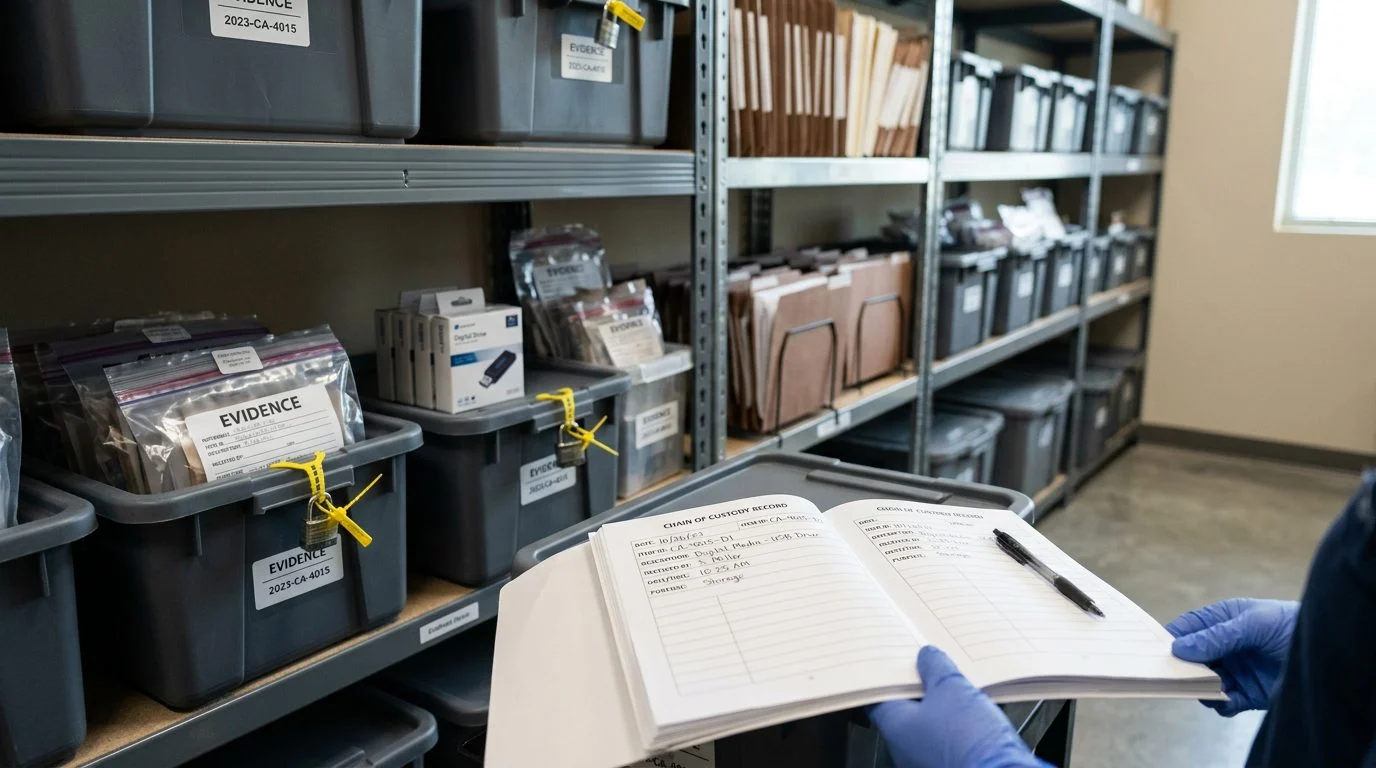
When a prosecutor reviews a case, the file may include forensic interviews with the child, medical findings, digital records, witness statements and anything the accused has said to investigators. The prosecutor weighs each item. The grand jury weighs the case later, if it reaches that stage.
Knowing which agency handles which step helps you follow the case without confusing the tracks.
Why Timing and a Delayed Outcry Matter to the Case
A child may disclose abuse long after it happened. The timing of that disclosure is a factual question in the case.
This is often called a delayed outcry. Prosecutors and defense lawyers both look at when a report was made, to whom, and what was said. The gap between the events and the first disclosure can matter to how the evidence is read.
A delay does not, by itself, show guilt or innocence. It is also not a sign of how a case will end. Each case turns on its own record, including the child’s words, the documents and the people who heard the first disclosure.
Families often feel pressure to explain the timing right away. Slow down. Write down the dates you know and keep them separate from your opinions. A criminal defense lawyer can review that timeline against the actual file.
Not sure what your next step is?
Talk it through with our team — the first consultation is free, confidential, and carries no obligation.
When a Divorce or Custody Dispute Overlaps With the Accusation
An accusation can surface during a divorce or custody case. The family court and the criminal court handle different questions.
The family court decides custody and parenting issues. The criminal court handles the charge. Both can move at the same time, and each has its own filings and dates.
What is said or filed in one case can matter in the other. That is why the overlap needs attention early, before anyone signs a statement or agreement.
Keep court dates, notices and orders from each case in separate folders. Label each folder with the court name and the date. Clear organization makes it easier to see which court is deciding what.

What Your Loved One Can Do Now, and Next Steps
Keep accurate records now, and review the actual facts with a criminal defense lawyer before any decision is made.
Keep these items in one place:
- Dates of the report, the arrest and each court setting
- Bond papers and any conditions of release
- Notices, letters and court papers
- A written list of questions for the lawyer
Expunction of arrest records may matter later. A person to whom this subchapter applies is entitled to have all records and files relating to the arrest expunged if an indictment or information charging the person with a misdemeanor offense based on the arrest, or with any felony offense arising out of the same transaction for which the person was arrested, has not been presented at any time following the arrest, subject to the conditions set out in Texas Code of Criminal Procedure Art. 55A.052. For a felony arrest, at least three years must pass from the date of arrest, unless the attorney representing the state certifies that the applicable arrest records and files are not needed for use in any criminal investigation or prosecution. Art. 55A.053 covers indictments that are dismissed or quashed for reasons such as mistake or lack of probable cause.
Common questions
Can a child sex crime charge be dropped before indictment in Texas?
It can happen, when a prosecutor declines or dismisses the case before a grand jury acts. No outcome can be predicted or assured.
If your loved one is facing a report or arrest that has not yet reached a grand jury, you may be deciding quickly what comes next. Call (972) 424-1902 or send your case details for a free, confidential initial consultation, with no obligation to continue.
Attorney responsible for this site: Heather Barbieri, Barbieri Law Firm, Frisco, Texas.
How Barbieri Law Firm Approaches Your Case
Review of the Charging Documents
We review the allegation, the charging paperwork and any notices you have received so you know exactly what the State is alleging.
Evidence Review
We will review the evidence, including police reports, interview recordings, forensic findings and digital records, and explain your options.
Clear, Honest Communication
We explain each stage of the process in plain language, so you can make informed decisions about your case.
Focused Criminal Defense
Our firm focuses on defending professionals accused of sex crimes and assaultive offenses across Collin County, Dallas-Fort Worth and Texas. Heather Jean Barbieri, Board Certified, Criminal Law — Texas Board of Legal Specialization, leads the defense.
Be Careful Before You Speak
Statements made to police, to investigators, to a child advocacy interviewer or on social media can become evidence in a case. Talk with a criminal defense lawyer before answering questions or posting about the allegation.
What an Early Consultation Can Cover
Your Situation
We listen to what has happened, what you have been told and what concerns you most.
The Evidence
We review the evidence against you and explain what it may mean for your case.
Your Options
We explain the options available in your situation and what each one would involve.
Next Steps
We outline a plan and answer your questions, so you know what to expect from here.
Have Questions About a Child Sex Crime Charge? Start With a Free Consultation
Related practice areas
Request a Consultation
Fill out the short form and we will take it from there.