

Child Sex Crimes Defense | Frisco, Texas
Facing a Child Sex Crimes Charge Built on SANE Exam Evidence?
Heather Barbieri reviews the medical findings, the interview record and the timeline together, so you understand what the evidence shows and what it does not.
About Barbieri Law Firm
All-women
Criminal defense firm in Frisco, Texas
Collin County
Serving Dallas-Fort Worth and clients across Texas
By Heather Barbieri · Published November 13, 2026
If a child in your family was examined after an abuse report, you may be holding medical papers you don’t understand. A SANE exam is a forensic medical visit by a Sexual Assault Nurse Examiner. It records the child’s history, physical findings, and any samples collected. Those records can become child sexual abuse evidence in a Texas case.
This guide explains what the exam records, how those records fit with other evidence, and what a defense review looks like.
What a SANE Exam Is and Why It Appears in Child Sex Crime Cases
A SANE exam is a medical and evidence visit performed by a trained nurse. For a child, the same kind of visit is often called a forensic medical exam. The Texas Attorney General guidance explains that a sexual assault medical exam may involve documenting injuries and findings and collecting forensic evidence.
The visit does two jobs. It gives the child medical care for injuries and health concerns. It also creates a written record that can be used later in a criminal case. That dual purpose is why prosecutors and defense lawyers both ask for it.
If you were not in the room, you are learning about the exam second-hand. Read the actual record, not just a summary. Small differences in wording can matter later.
If a medical or forensic record from a child's exam has left your family with questions, you don't have to sort through it alone, and we're glad to talk it through with you. Talk it through with our team — the first consultation is free, confidential, and carries no obligation.

How the Exam Fits Alongside a Forensic Interview and CPS Involvement
The medical exam and the forensic interview are separate events, and each leaves its own record. A forensic interview is a structured, recorded conversation with the child. It happens apart from the medical visit.
Child protective involvement runs on its own track. The Texas Department of Family and Protective Services investigations overview is a useful starting point for understanding how DFPS responds to child abuse allegations. The two tracks can move at different speeds.
A family may receive papers from several agencies. Start one folder. Keep every notice, appointment record, bond paper, and letter in it. The DFPS parents’ guide to investigation explains the investigation steps and the rights parents have during one. To see how a report starts, read the Children’s Advocacy Centers of Texas educators’ guide.
What the Exam Report Covers and What Is Included
An exam record is a set of documents, not one page. Each part can matter. A typical record can include:
- The date, the time, and who requested the exam
- Consent and intake forms, with signatures
- The child’s history, including the examiner’s notes on what the child said
- Physical exam notes, plus any photographs or diagrams
- A list of collected specimens
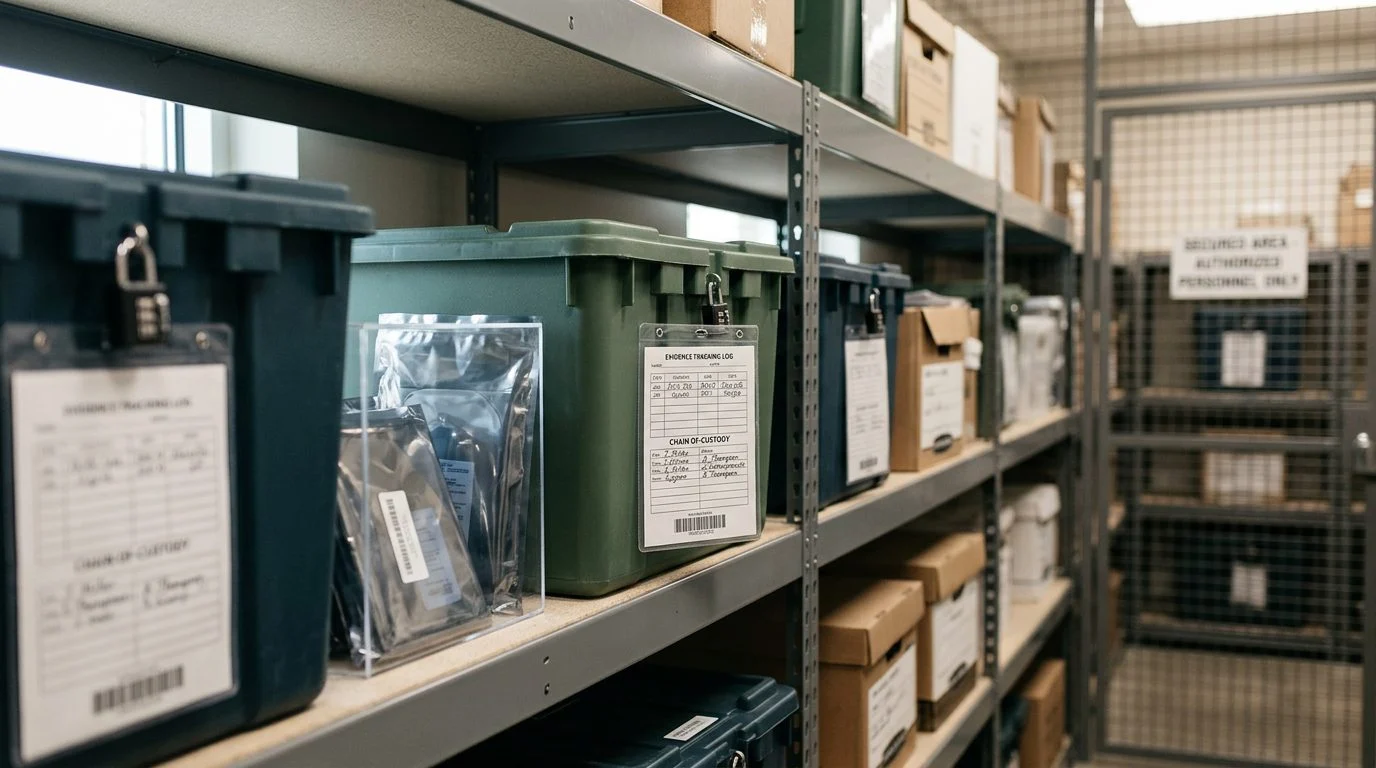
- Chain-of-custody paperwork that tracks each specimen
- Laboratory submissions and any results
Child-specific details matter. The notes may describe the child’s developmental stage. They may also show whether the examiner recorded the child’s words exactly or summarized them.
The consent and intake forms show who brought the child in and who authorized the exam. Medical records and forensic records are often produced separately. A careful review reads both sets.
What a Texas Defense Reviews in the Medical and Forensic Record
A defense review checks whether the exam record fits the rest of the evidence. It also looks at the exam’s purpose. Texas Penal Code § 22.011(d) provides a defense to prosecution under subsection (a)(2) if the conduct consisted of medical care for the child and did not include any contact between the anus or sexual organ of the child and the mouth, anus, or sexual organ of the actor or a third party.
In practice, a review typically tests six things:
- Consistency: the history in the exam compared with the forensic interview and earlier statements, in timing, details, and wording
- Timing: the exam date compared with the alleged event and any earlier medical visits the records document
- Physical findings: how they were described, measured, and photographed, and whether the conclusions match the written notes
- Specimens: the chain of custody and the lab reports actually issued
- Examiner and protocol: the examiner’s training and the protocol the exam followed
- Gaps: missing pages, incomplete entries, or documents not produced
What a Normal or Nonspecific Exam Result Can and Cannot Show
A normal or nonspecific exam result does not, by itself, show what did or did not happen. A normal finding means the examiner recorded no physical sign of injury. A nonspecific finding means it could have more than one cause.
Many people expect the exam to answer the whole question. It is one piece of the record, not the whole record. The defense reads a normal result beside the child’s history, the forensic interview, and the other evidence in the file.
Prosecutors and defense lawyers may use the same exam for different points. One side may focus on the history recorded. The other may focus on what the physical notes do not show. That is why the full record matters, not a single line from it.
What to Expect After a Child Sex Crime Charge: The Review Process
The review usually follows four steps. The timeline shifts with the case stage and how fast records arrive.
- Gather the charging papers, bond paperwork, and every exam or interview record the family has received.
- Request and review the complete medical, forensic interview, and lab records, including chain-of-custody papers.
- Review bond conditions, including any no-contact terms that affect the family’s contact with the child.
- Discuss what the records show, what they do not show, and the options that follow.
Bond terms can apply soon after an arrest. Under Texas Code of Criminal Procedure art. 17.292, a magistrate may issue an order for emergency protection at a defendant’s appearance after arrest. That applies to family violence and listed sex offenses, including sexual assault and aggravated sexual assault. The victim need not be present. Under subsection (a) or (b)(1), the order remains in effect up to the 91st day but not less than 61 days after it is issued.
Not sure what your next step is?
Talk it through with our team — the first consultation is free, confidential, and carries no obligation.
Why Barbieri Law Firm for This Review
Barbieri Law Firm is an all-women criminal defense firm in Frisco, Texas. It defends people facing sex crimes, aggravated sexual assault, online sex crimes, aggravated assault, and family violence charges across Collin County and Texas.
Heather Jean Barbieri, Board Certified, Criminal Law — Texas Board of Legal Specialization. She is the firm’s founding attorney. The firm’s lawyers include Heather Barbieri and Carrie Thomas.
Our team explains records in plain language. We walk through what the record shows, what it does not show, and what options follow from it. No lawyer can say in advance how a case will end. Each case depends on its own records.
Frequently Asked Questions About SANE Exams and Child Abuse Evidence in Texas
Who performs a SANE exam?
A Sexual Assault Nurse Examiner performs it. The examiner is a nurse trained for this kind of exam.
Does a normal exam mean the charge will be dropped?
No lawyer can say in advance how a case will end. A normal result is one piece of a larger record.
Is a forensic interview enough to convict?
A case is judged on the full evidence, not one piece of it. The defense reviews the interview alongside the exam, the lab work, and the other records.
Can a parent get a copy of the exam record?
Access depends on the facts and on who holds the file. A lawyer can explain how records are requested in your case.
What should the family do now?
Keep every record in one place and follow the bond conditions. Speak with a lawyer before discussing the case with others.

Talk Through Your Family’s Records With a Texas Defense Lawyer
If a relative has been charged, the papers can feel overwhelming. Medical forms, CPS letters, and a bond order can arrive close together. You don’t have to work through them alone.
To talk through your situation, call (972) 424-1902. You can also send your case details through the contact form or schedule a free consultation there. The initial consultation is free, confidential, and carries no obligation to continue.
Attorney responsible for this site: Heather Barbieri, Barbieri Law Firm, Frisco, Texas.
How We Review SANE Exam Evidence
We read the full exam record
We review the examiner's written report, the documented history and the findings, rather than relying on a summary.
We examine the interviews
We look at how any forensic interview was conducted, recorded and documented, and what was said along the way.
We map the timeline
We compare dates, reports and other records to see how the events fit together, and where gaps or conflicts appear.
We explain your options
We walk you through what the evidence can support, what it cannot, and the defense choices available in your case.
A Medical Result Is One Piece of the Record
A SANE report is evidence to be tested, not a verdict. No lawyer can predict how a case will end, so please do not assume the outcome from the exam results alone.
What to Bring to Your Consultation
Charging documents
Any complaint, indictment, warrant or notice you have received, including dates and the county where the case is pending.
Exam and medical records
Any SANE report, hospital or clinic paperwork, or related documents you have been given or can access.
Interview information
Recordings, transcripts or summaries of any forensic or police interviews, and notes on when each one took place.
Your questions
Write down what worries you most, so we can address your concerns first during the consultation.
Your first consultation is free, confidential and without obligation.
Related practice areas
- Child Sex Crime Charges in Texas
- Texas Child Abuse Accusation Defense: Outcry Witness
Request a Consultation
Fill out the short form and we will take it from there.