

Criminal Defense | Frisco, Texas | Collin County and Dallas-Fort Worth
Can a Defense Attorney Contact a Victim in Texas?
Barbieri Law Firm explains what a defense lawyer can do when an alleged victim is part of the case, and why you should not reach out on your own.
By Heather Barbieri · Published October 23, 2026
Can a defense attorney contact a victim? Texas law also sets strict limits on how that contact can happen, and a court order can block it completely. Here is how those rules work in plain terms.
Short answer: can a defense attorney talk to the alleged victim?
A defense attorney can ask, but the alleged victim decides whether to talk. The defense works for the accused. The prosecutor represents the State, not the alleged victim personally. That is why the defense usually reaches out to the victim directly.
Three questions control the answer. First, does the victim have their own lawyer? Second, has the victim already said no? Third, does a court order limit contact between the accused and the victim? A yes to any of these changes the rules, so check each one before any request goes out.
Many people assume a request is harmless because it is only a question. That view misses two things. A request can pressure someone who is already scared. And a request that ignores a court order can create a new criminal problem for the accused.
If someone has asked you to keep away from an alleged victim, or a lawyer wants to speak with that person, you don't have to sort it out alone. Contact us for a free, confidential first consultation. Talk it through with our team — the first consultation is free, confidential, and carries no obligation.
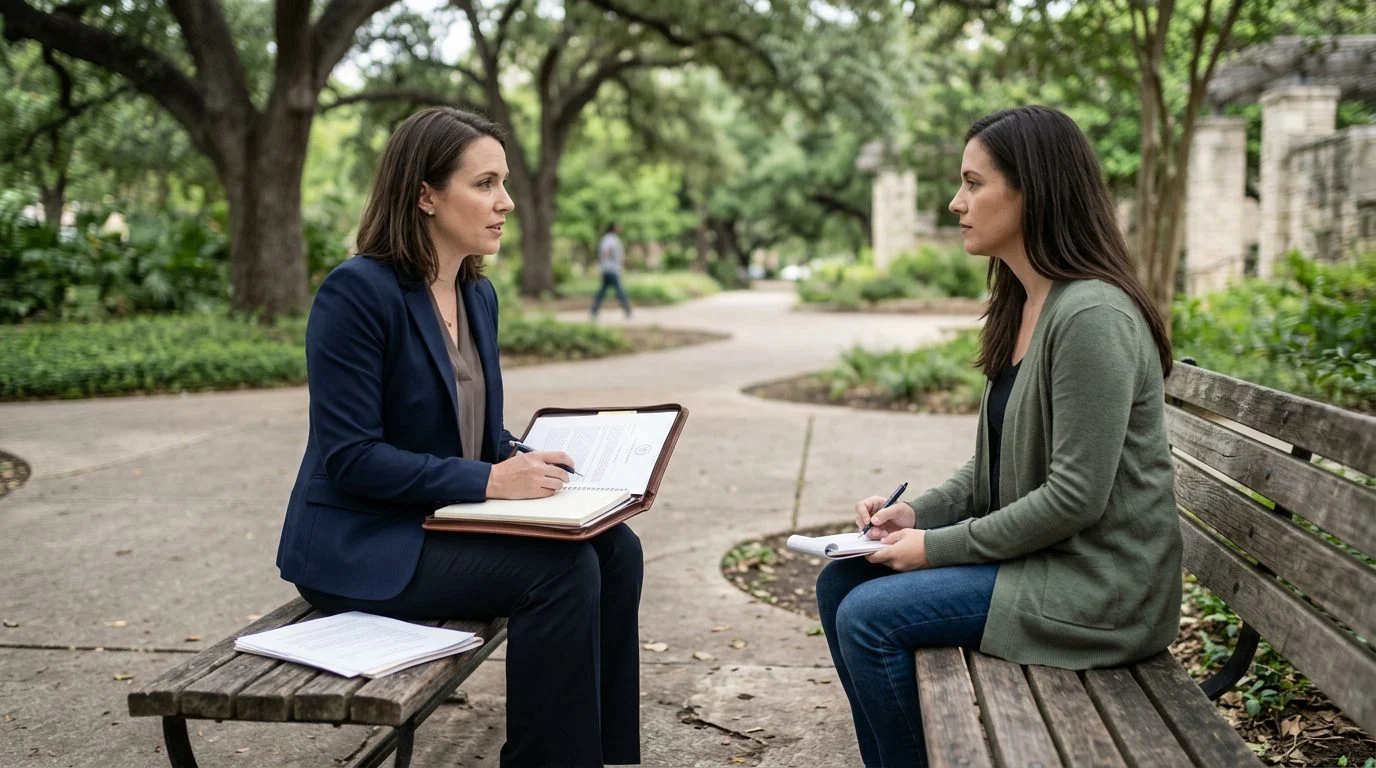
The alleged victim’s right to decline an interview
A refusal ends the request.
The defense should respect that answer. Repeating the request in person, by phone, by text, or through social media is not respectful. It can also look like pressure. Write down the refusal, the date, and how it was given, so the file shows the request ended.
When the alleged victim has a lawyer
If the alleged victim has a lawyer, the defense should contact that lawyer, not the victim. Generally, a lawyer does not contact a person the lawyer knows is represented on the same matter without that lawyer’s consent.
In practice, a request for an interview goes to counsel in writing. The request should say who the defense represents, what it wants to ask, and that counsel may respond. Counsel may agree, refuse, or set conditions.
Many readers do not know whether the alleged victim has a lawyer. That fact must be confirmed, not guessed. Whether the victim has counsel, and what that counsel allows, depends on the facts of the case.
A careful approach protects the accused, too. A contact made to the wrong person, or to a represented person, can cause problems the accused did not expect. Ask who represents the alleged victim before any request goes out, and send the request through that lawyer.
Protective orders, no-contact conditions and the accused’s own contact
A protective order or bond condition that bars contact stays in force even if the protected person wants to talk. The protected person’s permission does not lift it. Only the court can change it.
Texas requires a warning on these orders. It says no person, including the protected person, may give permission to ignore or violate any provision. It also says every provision stays in full force unless a court changes the order. See Texas Code of Criminal Procedure Chapter 7B.
Violating a bond condition can be a crime. Under Texas Penal Code § 25.07, a person commits an offense if, in violation of a bond condition or a protective order set in a family violence, sexual assault or abuse, indecent assault, stalking, or trafficking case and related to the safety of a victim or the safety of the community, the person knowingly or intentionally communicates in any manner with the protected person or a member of the family or household, except through the person’s attorney or a court-appointed person, where the order or condition prohibits any communication. Reconciliation does not change the order.
A court may also bar the accused from going to or near the residence or place of employment or business of a protected individual or a member of the family or household, or any child care facility, residence, or school where a child protected by the order normally resides or attends, as specifically described in the order.
Can I contact the person I have a protective order against?
Whether that person may communicate with you depends on the terms of the protective order or any bond conditions. Under Texas Penal Code § 25.07(a)(2), a person commits an offense if, in violation of a condition of bond or an order issued in a family violence, sexual assault or abuse, indecent assault, stalking, or trafficking case, and related to the safety of a victim or the community, the person knowingly or intentionally communicates directly with a protected individual or a member of the family or household in a threatening or harassing manner, or communicates in any manner with them when the order prohibits any communication, except through the person’s attorney or a person appointed by the court. Any message, even one sent through someone else, should be discussed with a lawyer before it is sent. Repeat violations are more serious.
What a defense attorney must not do
Any of these can create serious criminal exposure and can harm the accused’s case.
Pressure takes many forms. It also includes sending the same message through the accused’s family or friends. These limits apply even when the lawyer never speaks to the victim directly.
A family member who makes threats can create serious trouble too.
Other lines are just as firm. The defense may not make false statements to a victim.
How a defense attorney may lawfully approach the victim
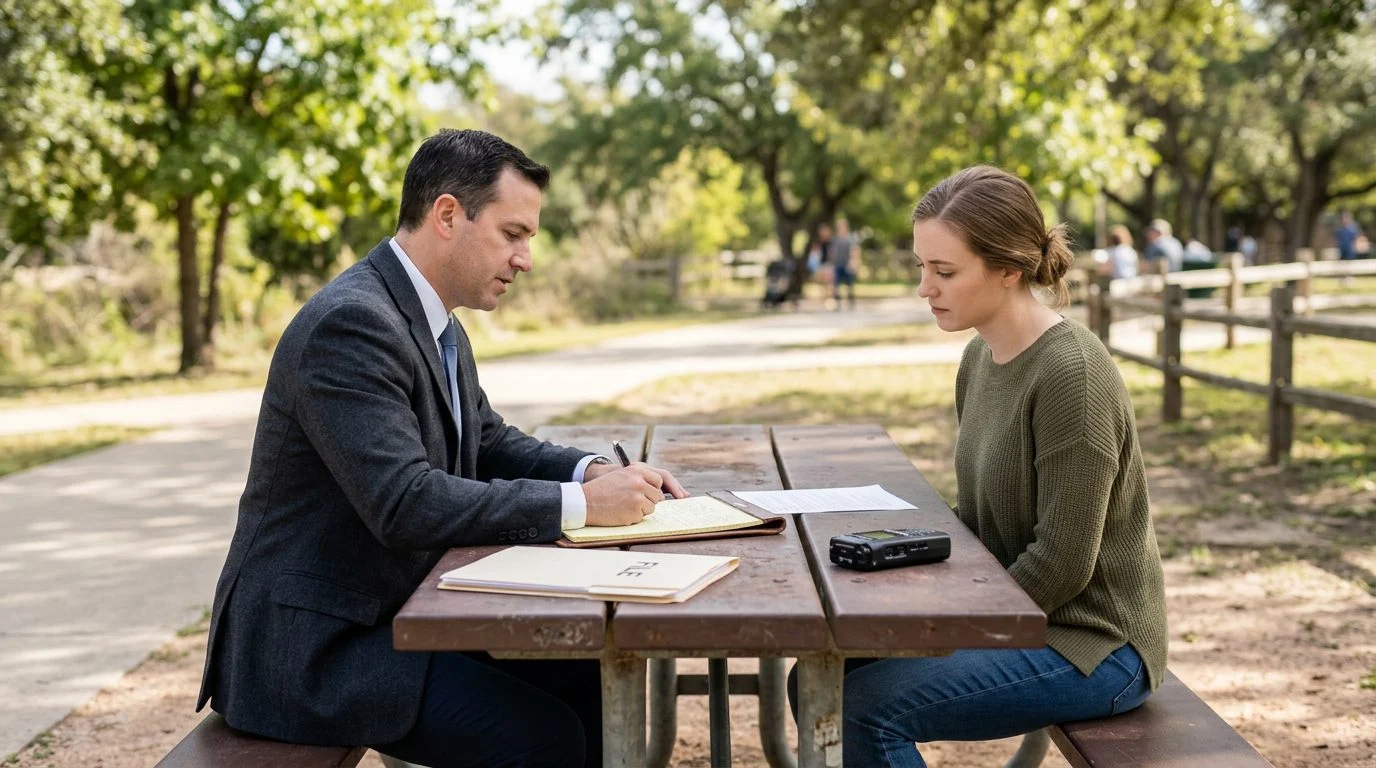
A lawful approach is a clear, honest, written request that the victim can easily decline. It names the lawyer, says who the lawyer represents, explains that the victim may say no, and gives a way to reply.
The defense may also gather records, police reports, and public court filings.
A defense lawyer’s job is to review the evidence, including reports and any recordings, and explain the options to the accused. A careful lawyer also explains what a protective order or bond condition means for each option.
No lawyer can ensure how a victim will respond or how a case will end. A responsible approach focuses on doing the process right, not on reaching a particular answer. The accused should know this before any contact is attempted.
Not sure what your next step is?
Talk it through with our team — the first consultation is free, confidential, and carries no obligation.
When the alleged victim is a child
Texas law lets an adult, such as a parent or guardian, act on a child victim’s behalf in seeking a protective order. See Texas Code of Criminal Procedure Chapter 7B.
That role matters to any approach. A request that might be harmless with an adult can be harmful when a child, a parent, and the court are all involved. Plan each step with those limits in mind.
For a child sex crime charge, read our guide to what happens next. Keep any child-related messages off social media and away from schools and child-care settings.
What to do now, and how to talk with Barbieri Law Firm
If a family member was told to stay away from someone, or you heard another side wants to talk with the complainant, you are likely worried about what comes next. Being in the middle of a case you did not choose is stressful, and the rules are easy to misread.
Bring any protective order, bond paperwork, or written messages you have. Those papers show exactly which contact is restricted. Our team can help you sort out the facts. Contact Barbieri Law Firm for a free, confidential first consultation, with no obligation to continue. Call (972) 424-1902 or send your case details through our contact form.
No lawyer can ensure how a case ends.
Attorney responsible for this site: Heather Barbieri, Barbieri Law Firm, Frisco, Texas.

Frequently Asked Questions
Can a defense attorney contact a victim?
Yes, a defense attorney can generally reach out to an alleged victim in a Texas criminal case. The victim, however, does not have to agree to speak with the attorney.
Does the alleged victim have to talk to the defense attorney?
What limits apply when a defense attorney contacts a victim?
A defense attorney may not harass, threaten, pressure, or offer anything of value to influence a witness’s testimony. Tampering with a witness is a crime, and a court order such as a protective order or no-contact bond condition can also restrict contact.
What can a victim do if a defense attorney contacts them?
How our team approaches a case with an alleged victim
Review the evidence first
We look at the reports, messages, recordings and other records before deciding how any contact should be handled.
Protect your rights at every step
Anything you say to an alleged victim, a witness or police can be used later. We help you understand those risks before you speak.
Respectful, lawful communication
When contact is appropriate, our attorneys communicate in a measured, professional way and keep within the limits of Texas law.
Clear options, explained plainly
We walk you through your options so you know what to expect and can make informed decisions.
Do not contact the alleged victim yourself
Even a well-meant apology, explanation or request to drop the matter can be misread and may create new problems. Speak with a criminal defense attorney before you communicate with anyone connected to the case.
Questions people ask us about victim contact
Who decides whether to talk?
Contact with an alleged victim is a choice that carries real consequences. We explain the options and the likely effects before anyone reaches out.
Can my family reach out for me?
Friends and family often mean well, but their messages can complicate a case. Bring them to us so we can advise on what is helpful and what is not.
What if the other side contacts me?
Do not respond or discuss the matter. Write down what happened and call our office so we can plan your next steps.
How do I start?
Our first consultation is free, confidential and without obligation. We will listen to your situation and explain how we can help.
Facing an allegation? Talk to Barbieri Law Firm before you contact anyone. Your first consultation is free, confidential and without obligation.
Related practice areas
- What Happens After a Child Sex Crime Charge in Texas: Arrest, Bond, Indictment and Trial, Explained
- Child Sexual Abuse Allegation Arising From a Custody or Divorce Case: Texas Defense
Request a Consultation
Fill out the short form and we will take it from there.