

Child Sex Crimes Defense | Frisco, Texas
Reviewing Every Option in a Child Sex Crime Charge
Barbieri Law Firm defends people accused of child sex crimes in Collin County, Dallas-Fort Worth and across Texas. We review the evidence, explain how the charge may be addressed and walk you through your options. No lawyer can promise an outcome.
By Heather Barbieri · Published November 5, 2026
Every child sex crime case turns on its own charge and evidence, and we will review both with you. No lawyer can be sure how a case will end. The specific offense you are convicted of, or agree to, shapes your punishment and whether you must register.
What It Means to Reduce a Child Sex Crime Charge in Texas
Reducing a charge means the case ends on a lower offense than the one first filed. It is not the same as a dismissal, where the State drops the case, or an acquittal, where a jury finds you not guilty.
You may be reading this after an arrest, a warrant, or an accusation that came up during a divorce, a custody fight or a CPS case. The words “first-degree felony” can feel like a sentence already handed down. It is not. The charge is where the case starts.
The offense matters as much as the reduction. Under Penal Code § 21.02, continuous sexual abuse of a young child is a first-degree felony punishable by life or by 25 to 99 years in prison. Under Penal Code § 21.11, sexual contact with a child is a second-degree felony, and exposure is a third-degree felony. A second-degree felony carries 2 to 20 years under Penal Code § 12.33.
Registration depends on the offense too. Texas defines a reportable conviction in Chapter 62 of the Code of Criminal Procedure. Which offense you are convicted of or adjudicated for decides whether you must register as a sex offender under Chapter 62.
If an accusation has put your children, your job and your freedom on hold, our team can review your charge and records with you and explain your options. Talk it through with our team — the first consultation is free, confidential, and carries no obligation.

How the Evidence Gets Tested Before Any Offer Is Considered
A careful review of the evidence comes before any offer is discussed. We will review the charge in your case with you.
- The elements. Texas Penal Code § 21.02 makes it an offense to commit two or more acts of sexual abuse, against one or more victims, over a period of 30 or more days, if at the time of each act the actor is 17 years of age or older and the victim is either a child younger than 14 years of age (whether or not the actor knows the child’s age) or a disabled individual. The offense described in Texas Penal Code § 21.02 is built on at least two acts of sexual abuse spanning a period of no fewer than 30 days, with the accused aged 17 or older and the alleged victim under 14 or a disabled individual when each act occurred. A gap in the timeline can change the case. The victim’s age matters, but the offense applies to a child younger than 14 regardless of whether the actor knows the victim’s age.
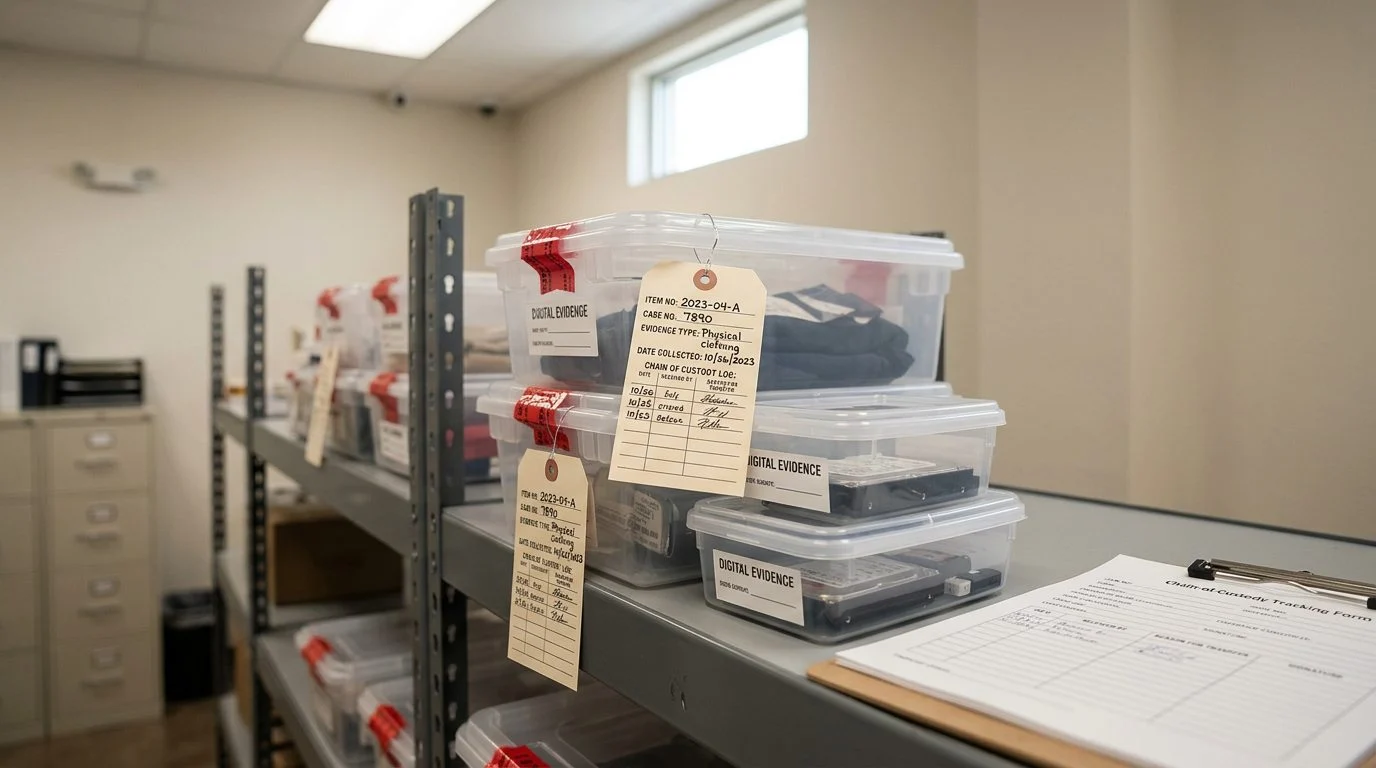
- The proof. Review forensic interview recordings, medical or physical examination findings, school or daycare records, and any CPS file.
- The timing. When an accusation surfaces during a divorce or custody dispute, the dates matter. Review earlier custody filings and every statement made to a family court, a guardian ad litem or a caseworker.
- The statements. Find out how and when each statement was taken, and whether the interview followed accepted protocol.
These findings decide which routes make sense. The accusation alone does not.
Routes Toward a Lesser Offense in Texas
The main routes are a negotiated amendment, a lesser included offense at trial, pretrial motions, and a plea to a lesser offense. Which one fits depends on the facts of your case.
- Negotiated amendment. The defense asks the prosecutor to lower the charge, based on weak spots in the proof and on your circumstances.
- Lesser included offense. At trial, the jury may be instructed on a lesser offense if the evidence supports it.
- Pretrial motions. We will review the evidence, including searches, seized phones and computers, and statements, and explain your options. Narrowing what the State can prove can change negotiations.
- Entrapment in sting cases. Under Penal Code § 8.06, entrapment applies when a law enforcement agent induces the conduct using persuasion or other means likely to cause persons to commit the offense. Giving someone an opportunity to offend is not entrapment.
- Under art. 42A.111, if the judge has not proceeded to an adjudication of guilt, the judge dismisses the proceedings and discharges the defendant at the end of deferred adjudication community supervision, and this article applies only to deferred adjudication community supervision. Art. 62.001(5) includes a deferred adjudication among reportable convictions or adjudications, but under paragraphs (F), (H) and (I), a second Texas indecent-exposure violation, an offense under another state’s, federal, foreign or Uniform Code of Military Justice law that is substantially similar to a listed offense, and a second such out-of-state, federal, foreign or military indecent-exposure violation are not reportable if they result in a deferred adjudication. Outside those exceptions, a dismissal under this article does not by itself avoid sex offender registration. Early discharge is barred for offenses requiring registration. Texas Code of Criminal Procedure Art. 42A.111 reads: “(b) The judge may dismiss the proceedings and discharge a defendant before the expiration of the period of deferred adjudication community supervision if, in the judge’s opinion, the best interest of society and the defendant will be served, except that the judge may not dismiss the proceedings and discharge a defendant charged with an offense requiring the defendant to register as a sex offender under Chapter 62.”
Whether to go to trial is a decision we will talk through with you after we explain your options. You decide after advice on the risks of each path.
Online Solicitation Stings and Family or CPS Overlap
In an online sting, the full message history matters more than any single message. Review who started the contact, the timing, the identity claimed, and the device and account records.
The meeting does not have to happen. The statute says that is not a defense. A defense applies if the minor was married to you, or if you were not more than three years older and the minor consented.
Online child exploitation cases are often investigated by task forces. The Office of the Texas Attorney General describes the Southern Texas ICAC Task Force, which investigates online child exploitation, including sexual solicitation.
A CPS case or family court matter runs separately from the criminal case. What you say in one can affect the other. Talk with counsel before you answer questions from police or a caseworker.
Bond conditions also matter. Follow every order until your lawyer reviews it.
What to Expect: Step-by-Step Process
Your case moves through six steps, from the first call to a plea or trial. Timing depends on the court, the complexity of the case and how quickly evidence is produced.
- Free first consultation. Your first consultation is free, confidential and comes with no obligation to continue. Bring every paper you have, including charging documents and any bond or protective order.
- Document review. Charging papers, bond terms and any custody or protective orders are reviewed. You get advice on what to avoid while the case is pending.
- Records and evidence. Records are requested, including forensic interviews, device data, medical findings, and CPS or family court files.
- Options explained. Each route is explained in plain language, including what it would mean for punishment and registration.
- Negotiation and motions. The defense negotiates with the prosecutor and files pretrial motions where warranted. You make decisions at each stage.
- Plea or trial. You choose whether to accept an offer or go to trial, after advice on each path.
Why Barbieri Law Firm
Barbieri Law Firm is an all-women criminal defense firm in Frisco, Texas. It defends people accused of sex crimes and assaultive offenses in Collin County, the Dallas-Fort Worth area and across Texas.
Heather Jean Barbieri, Board Certified, Criminal Law — Texas Board of Legal Specialization.
Heather Barbieri and Carrie Thomas are the firm’s lawyers. They are supported by assistants and office staff. Our team reviews forensic interviews, device data, and CPS or family court records, then explains your options in plain terms.
The firm does not predict a particular result. It explains what the evidence supports and what each option would mean for you.
Not sure what your next step is?
Talk it through with our team — the first consultation is free, confidential, and carries no obligation.
Common Questions About Reducing a Child Sex Crime Charge
A reduction is possible in some cases, but no one can say in advance whether your case will qualify.
Can a first-degree felony child sex charge be reduced?
It can be pursued through negotiation, a lesser included offense or evidence challenges. No one can say in advance whether a reduction will be reached.
Does a reduced charge mean I won’t have to register?
Registration depends on the offense of conviction and how the case ends. The exact charge must be reviewed.
Will a reduction keep me out of prison?
No one can predict that. Punishment depends on the offense, the court and the record.
What to expect after the charge is filed
Evidence can still be presented that bears on that decision.
Can I see my children while the case is pending?
Bond conditions, protective orders and custody orders control contact. Follow them until your lawyer has reviewed them.

Talk With Heather Barbieri About Your Case
If you were arrested, served with a warrant, or contacted by a caseworker or family court about an accusation, your work, your children and your freedom may feel on hold. If an accusation has put your children, your job and your freedom on hold, our team can review your charge and records with you and explain your options.
To schedule a consultation, call (972) 424-1902 or send us your case details.
Attorney responsible for this site: Heather Barbieri, Barbieri Law Firm, Frisco, Texas.
Ways a Child Sex Crime Charge May Be Addressed
Negotiation With the Prosecution
We examine the charging documents and the evidence to determine whether discussions about the charge may be appropriate in your case.
Evidence Challenges
We review how the State's proof was gathered, including statements, interviews and forensic reports, and identify issues that may affect the case.
Lesser Included Offenses
We look at whether the facts may support a different offense under Texas law and explain how that would change the case.
Registration and Collateral Consequences
We explain how the offense of conviction and the way a case ends may affect sex offender registration and other long-term consequences.
How We Approach Your Case
Careful Evidence Review
We review the charges, the evidence and any statements, then explain which options may apply to your situation.
Free, Confidential First Consultation
Your initial consultation is free and confidential, and there is no obligation to continue.
Clear Explanations
We explain the charge, the court process and the possible paths forward in plain language so you can make informed decisions.
Direct Attention From Our Team
Barbieri Law Firm is led by Heather Barbieri, and our team, including attorney Carrie Thomas, works with each client on the details of his or her case.
Important: Every Case Is Different
No lawyer can promise a reduced charge, a particular outcome or any result in your case. The information on this page is general and does not replace a confidential discussion of your specific facts.
Talk With Our Team About Your Options
Related practice areas
Request a Consultation
Fill out the short form and we will take it from there.