

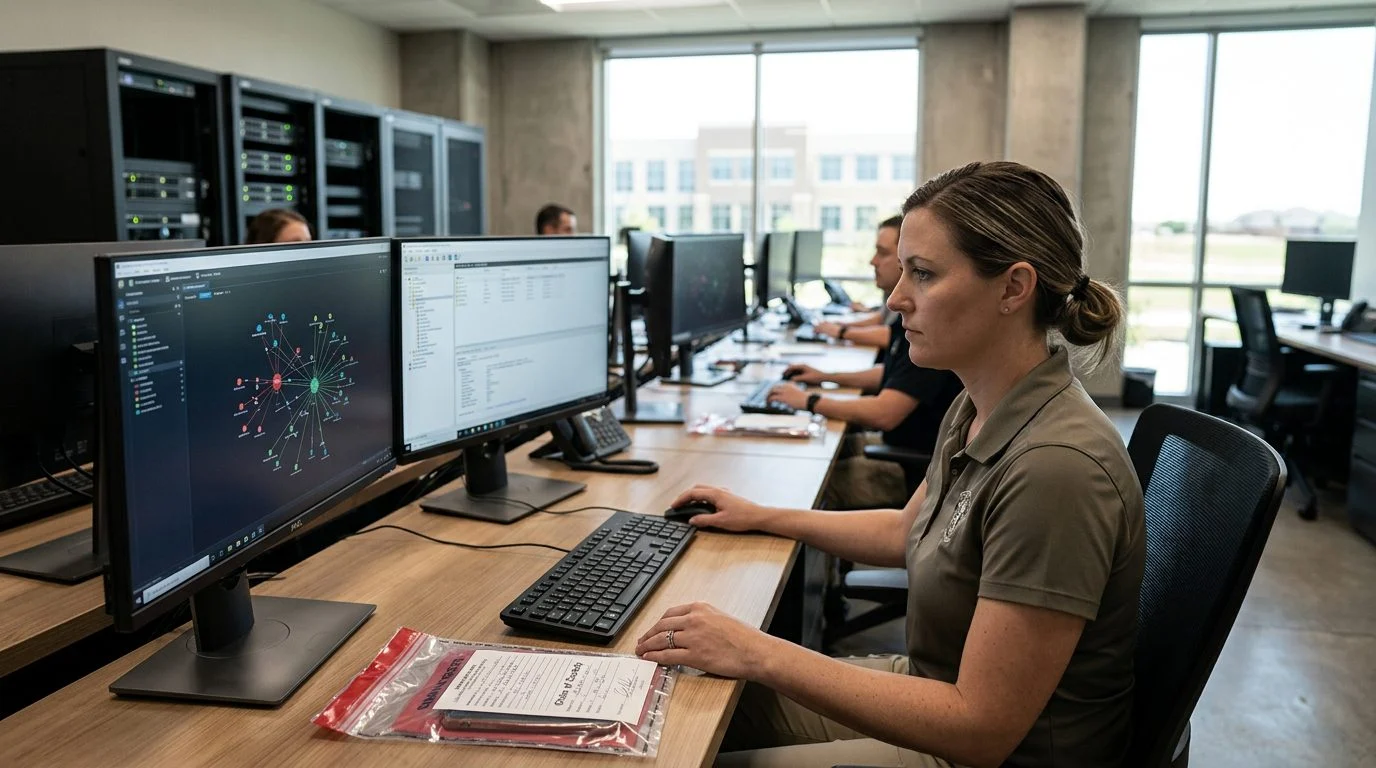
Collin County & Texas | Online Sex Crimes Defense
Charged Online in Texas, Even Though No Meeting Happened?
Many people facing these charges are surprised by how the case is built. Here is how we review the messages, the investigation and the choices ahead of you.
By Heather Barbieri · Published November 17, 2026
If you face an online sex crime charge in Texas and no meeting ever happened, the case can still move forward. Under Texas Penal Code § 33.021, it is not a defense to prosecution under Subsection (c) (solicitation to meet) that the meeting did not occur.
This guide explains what the charge requires, what the law can attach, and which parts of the evidence a defense can test. It also shows how these cases usually move, so you can ask better questions.
Charged Online Without a Meeting: What the Accusation Means
Yes. A Texas charge can rest on online messages alone, with no in-person contact.
Under Texas Penal Code § 33.021, solicitation to meet is a second-degree felony.
Texas Penal Code § 33.021 reads: “(f) An offense under Subsection (b) is a felony of the third degree, except that the offense is a felony of the second degree if the minor is younger than 14 years of age or is an individual whom the actor believes to be younger than 14 years of age at the time of the commission of the offense.”
Age is central. A “minor” is someone younger than 17, or someone the accused believes is younger than 17. Read the exact subsection and alleged age in your charging document.
The grade can also rise. If the State proves the offense happened during regular public or private primary or secondary school hours, and the accused knew or reasonably should have known the minor was enrolled in a public or private primary or secondary school, the punishment moves to the next higher category.
If messages you never expected to be read this way have put your job, your children and your freedom at stake, we can review them with you. Talk it through with our team — the first consultation is free, confidential, and carries no obligation.
What You Are Afraid Of, and What the Law Can Attach
Punishment depends on the exact charge. Registration depends on how the case ends.
If the charge is a first-degree felony, Texas Penal Code § 12.32 sets the range. It is life, or any term of not more than 99 years or less than 5 years, in the Texas Department of Criminal Justice. A fine of up to $10,000 can also apply.
Registration is a separate question. Under Texas Code of Criminal Procedure art. 62.001, a violation of Penal Code § 33.021 is a reportable conviction or adjudication. That definition includes deferred adjudication.
Online cases can draw state and federal investigators. Federal firearm limits can also apply after a qualifying sex-crime conviction, or while a person is under indictment for a crime punishable by more than one year, according to the ATF.
Custody and CPS matters run on their own track. They can overlap with the criminal case, so review them together. Court filings can be public, so ask your lawyer what gets filed and said in court.
Defense Options: What a Review of the Evidence Tests
A review tests the chat record, the identity behind the account, and how police gathered the evidence. Each point below is a question to ask about your own file.
- Full transcripts. Was the whole conversation preserved, or only quoted lines? Context can change what a message means.
- Who was typing. Who controlled the account, phone or screen name? Can the State connect it to you?
- Who was on the other end. Some stings use an adult posing as a minor. What the State can prove about the stated age matters.
- Entrapment. Under Texas Penal Code § 8.06, entrapment applies when a law enforcement agent induces the conduct with persuasion or other means likely to cause the offense. Giving someone an opportunity to commit an offense is not entrapment.
- Phone searches. Under Texas Code of Criminal Procedure art. 18.0215, an officer may not search a phone after a lawful arrest without a warrant, with limited exceptions. Riley v. California holds that a warrant is generally required, even after arrest.
- Discovery. For child-exploitation material, art. 39.15 requires a court to deny copying if the State makes the material reasonably available, meaning at a facility under the control of the state that provides ample opportunity for inspection, viewing, and examination by the defendant, the defendant’s attorney, and any individual the defendant seeks to qualify to give technical testimony at trial.
- Your statements. Under Dickerson v. United States, a statement from custodial interrogation depends on whether Miranda warnings came first.
Bond Conditions, Protective Orders, and Family Contact
Bond conditions can bar contact with the complaining person. Breaking them can create a new charge.
Texas Penal Code § 25.07 covers violating a bond condition in a sexual assault or abuse case when the condition relates to safety. If the order bars any communication with a protected individual or a member of the family or household, reaching out in any manner counts, except through your lawyer or a court-appointed person.
Do not contact the complaining person or any witness, directly or through others. Do not discuss the case in texts, emails or social media posts. Messages can be obtained and used later.
If a divorce, custody or protective order is also pending, ask your lawyer to review every order together before you act on any of them.
How the Case Moves: A Step-by-Step Process
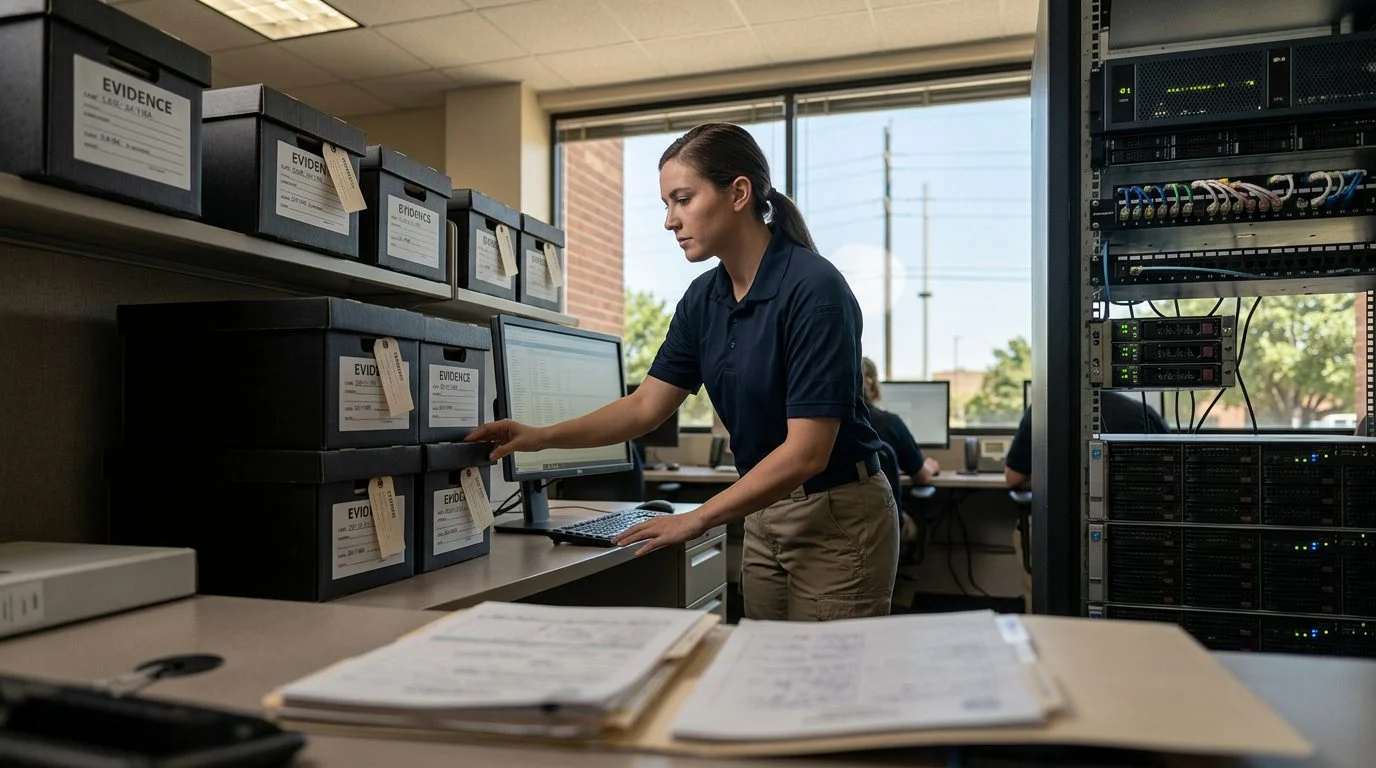
A case usually moves from arrest and bond to charging, evidence review, motions and then resolution.
- Arrest and booking. You are booked, and bond and release conditions are set.
- Charging. The State files the complaint or indictment. Each count shows the subsection and alleged age.
- Discovery. The State produces reports, messages, forensic reports and recordings. Your lawyer reviews each item.
- Pretrial motions. Motions can challenge evidence, identity or the scope of a search, where the facts support them.
- Resolution. The case may be negotiated or set for trial.
The timeline depends on the county, the complexity of the digital evidence and the facts of your case. No lawyer can know how a case will end.
Why Barbieri Law Firm for an Online Sex Crime Charge
Barbieri Law Firm is an all-women criminal defense firm in Frisco, Texas. It defends sex crimes and assaultive offense charges across Collin County, Dallas-Fort Worth and Texas.
Heather Jean Barbieri, Board Certified, Criminal Law — Texas Board of Legal Specialization. Heather Barbieri is the responsible lawyer for this page. Our lawyers include Heather Barbieri and Carrie Thomas.
Our team reviews the evidence described above, including chat logs, devices and warrants. We will review the charging document, the messages and the bond conditions with you, and explain your options in plain language.
Bring the charging papers, bond paperwork and any orders you have. The review starts with those documents.
Not sure what your next step is?
Talk it through with our team — the first consultation is free, confidential, and carries no obligation.
Frequently Asked Questions About Online Sex Crime Charges With No Meeting
Can I be charged in Texas if no meeting ever happened?
Yes. Under Texas Penal Code § 33.021(d), it is not a defense to prosecution under Subsection (c) (solicitation to meet) that the meeting did not occur.
Will my children be affected while the case is pending?
Custody, CPS and bond conditions can run alongside the criminal case. They should be reviewed together.
What should I do right now?
Do not contact the complaining person or any witness, and do not discuss the case online. Review your rights with a lawyer before any police interview.
Take the Next Step: Send Your Case Details or Call (972) 424-1902
If a charge built on messages has landed on you, you do not have to sort it out alone. A lawyer can review the charging document, the messages and your bond conditions with you.
Call (972) 424-1902, or send your case details through our contact page. The initial consultation is free, confidential, and carries no obligation to continue.
Attorney responsible for this site: Heather Barbieri, Barbieri Law Firm, Frisco, Texas.
How We Review an Online Charge
The Full Message History
We examine the exact messages, timestamps, accounts and devices involved, and who had access to them.
The Investigation Itself
We look at how the contact started, who initiated it, and whether the investigation followed proper procedure.
The Intent Question
We evaluate what the state must prove about intent and whether the evidence supports that element.
Clear Options Explained
We explain every available path in plain language, so you can decide with full information.
Act Carefully From the Start
Anything you say to investigators, family, or on social media can become evidence. Speak with a lawyer before answering questions or agreeing to a interview, and keep your concerns about the case private until you have advice.
Issues We Examine in These Cases
Identity and Access
Who sent the messages, and who else could have used the account or device at the time?
Intent and Context
What was actually said, and does the full conversation support the state's version of events?
Law Enforcement Conduct
How the contact was initiated and whether the sting or decoy operation followed the rules that govern it.
Evidence Handling
How devices were seized, searched and preserved, and whether the digital evidence is complete and reliable.
Talk With Heather Barbieri About Your Charge
Related practice areas
Request a Consultation
Fill out the short form and we will take it from there.