

Child Sex Crimes Defense · Collin County, Texas
What Prosecutors Use in a Child Sex Crimes Case, and Why Each Piece Needs Review
Forensic interviews, medical exams, digital records and witness statements can all end up in a file. Here is how each one is gathered and what it can and cannot show.
By Heather Barbieri · Published October 26, 2026
What types of evidence do prosecutors typically use in Texas child sex offense cases, such as forensic interviews, digital records, and DNA?
Texas prosecutors usually build child sex offense cases from a recorded forensic interview of the child, medical records, digital messages and device data, DNA or other physical evidence, and records from CPS, schools, and witnesses. Which of these appear in a case depends on the facts.
Not every case contains every category. The charge matters, and so do the child’s age and how the matter came to light. A case that began with online messages leans heavily on digital records. A case that began with a disclosure to a teacher may lean on school and CPS files. Some charges turn on age. For example, under Texas Penal Code § 22.021, sexual assault becomes aggravated sexual assault, a felony of the first degree, if the victim is younger than 14, whether or not the person knew the victim’s age. The minimum prison term rises to 25 years if the victim was younger than 10, or younger than 14 when other aggravating factors listed in the statute are present.
Each category below is explained in plain terms. You’ll see what the item is, how it’s gathered, and what the defense reviews. For the wider picture of charges and defenses, read our guide on CPS investigations of child sexual abuse accusations.
If a recorded interview, a seized phone, or a CPS report has reached your family, you don't have to sort through it alone. We offer a free, confidential initial consultation with no obligation to continue. Talk it through with our team — the first consultation is free, confidential, and carries no obligation.
How Forensic Interviews Are Used as Evidence
A forensic interview is a structured, recorded interview of a child, usually led by a trained interviewer. It often takes place at a child advocacy center. Law enforcement, CPS, or both may request it. It can be one of the first formal records of what a child has said.
The recording matters. The video or audio, any transcript, and the interviewer’s notes become part of the investigative file. The defense reviews the recording itself, not a summary of it. It looks at how questions were asked, whether they were open or leading, and how the interview was set up.
The defense also checks whether the child talked about the subject earlier. Did the child mention it to a parent, a friend, or school staff before the interview? Children’s statements can change over time. The timing and setting of each statement are part of how it gets weighed.
Texas law also addresses how a child’s statement can be used in certain hearings. Texas Code of Criminal Procedure art. 7B.004 makes a statement describing the offense by a child younger than 14 years of age who is the victim of an offense under Section 21.02, 21.11, 22.011, 22.012, or 22.021, Penal Code, admissible in a hearing on an application for a protective order. That article applies to protective order hearings, so it is not the same as a criminal trial.
What Medical Exams and Physical Findings Can and Cannot Show
After a disclosure, a child may receive a medical or sexual assault exam. The examining clinician writes down the history the child gave and what was observed. Records from a pediatrician or an emergency visit may also be requested.
Physical findings are not present in every case. A normal exam does not, by itself, answer whether an offense happened. The exam is one piece of the file, not the whole answer.
When findings are present, the record describes what was seen. The defense reviews who made the observation, when it was made, and what history came with it. It reads the medical records alongside the other evidence, not on their own.
Some charges are defined by contact or exposure rather than penetration. Under Texas law, indecency with a child involves engaging in sexual contact with a child younger than 17, or causing the child to engage in sexual contact, or exposing one’s own anus or genitals while knowing a child is present, or causing the child to expose the child’s anus or any part of the child’s genitals, when done with intent to arouse or gratify sexual desire. In those cases, the medical file may play a different role than it does in a penetration case.
How Digital Records, Messages and Online Evidence Are Collected
Common digital sources include phones, tablets, computers, messaging apps, social media accounts, email, and cloud storage. Investigators often obtain devices through a search warrant or with consent. A forensic extraction then produces reports of messages, call logs, images, and timestamps.
Account and internet records may come from service providers through legal process. These records show account activity. They do not, by themselves, show who was typing at the time. The defense looks closely at device sharing, metadata, and timestamps.
Online cases often involve chat logs from an undercover or sting operation. Texas law defines online solicitation of a minor to cover sexually explicit communication and solicitation to meet, and each version of the offense requires proof of intent. The defense reviews the full conversation, not just the excerpts the state chooses.
Entrapment is a separate issue. Under Texas Penal Code § 8.06, entrapment requires inducement by a law enforcement agent. Merely giving a person an opportunity to commit an offense does not count as entrapment. The Texas Attorney General’s Internet Crimes Against Children page describes the state task force that investigates online child exploitation.
How DNA and Other Physical or Trace Evidence Are Analyzed
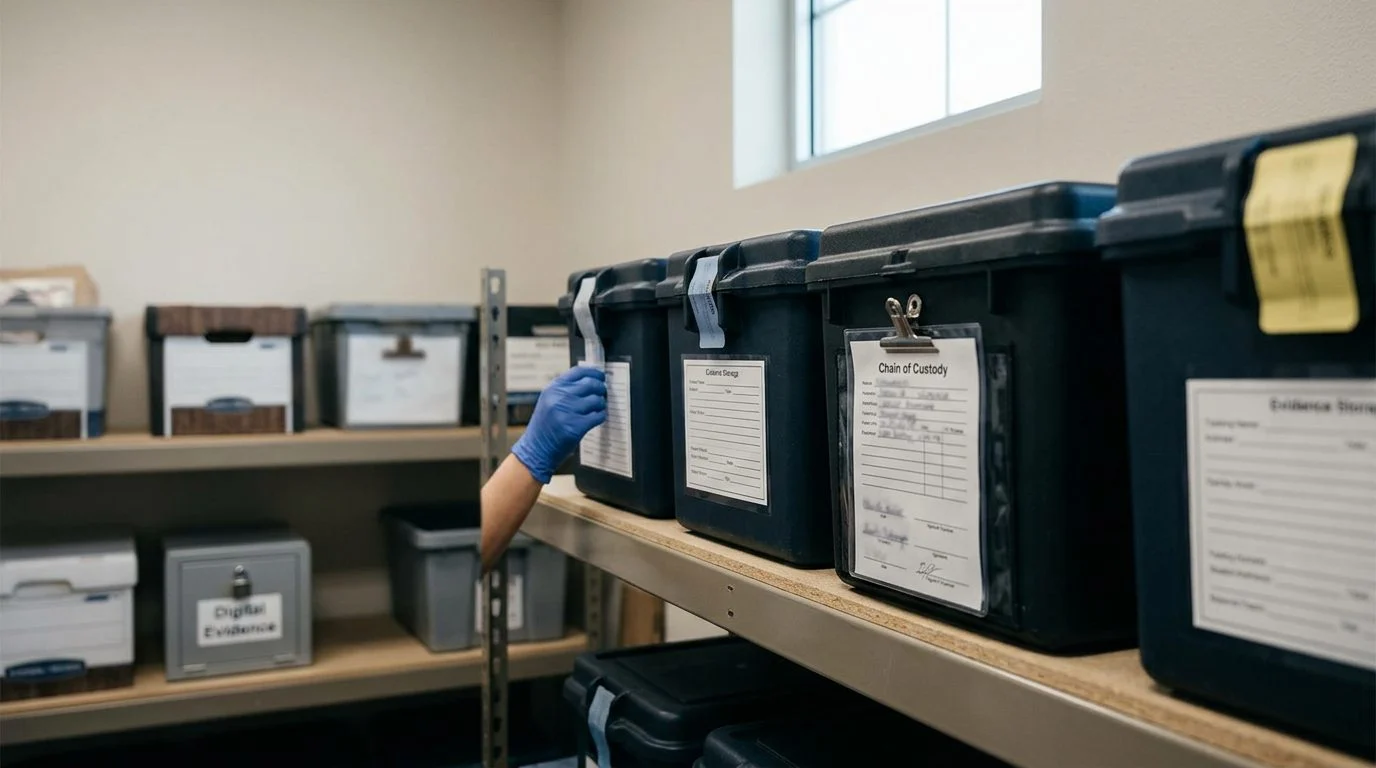
Physical items may include clothing, bedding, swabs, and other objects connected to an allegation. Each item has a history. The chain of custody records who collected it, how it was packaged, where it was stored, and every transfer between agencies and labs.
A DNA result reports whether a profile matches or is excluded. A match shows that the DNA was present. It does not, by itself, show when or how it got there. Context matters, and the defense looks for it.
The lab report, bench notes, and any statistical statements are part of the file the defense reviews. The defense also asks what was tested and what was not. A missing test can matter as much as a result that came back.
How CPS Reports, School Records and Witness Statements Fit Into a Case
Teachers, medical staff, and others who work with children may make reports when they suspect abuse. Those reports can start a CPS investigation, and a criminal investigation can run alongside it. Each track may create its own records.
CPS files can include case notes and home visit records. School files can include counselor notes, attendance records, and behavior reports. These may document a statement or a change in behavior that the prosecution later cites.
Witness statements from family members, caregivers, friends, and other adults also matter. The timing and source of each statement are important. Someone who heard a story secondhand is a different witness than someone who saw something directly.
The defense reviews how each report was created. It also checks whether the same information appears consistently across records, or whether it changes from one document to the next.
Not sure what your next step is?
Talk it through with our team — the first consultation is free, confidential, and carries no obligation.
How the Defense Reviews the Evidence in a Texas Child Sex Offense Case
The defense starts by obtaining the prosecution’s file. That includes recordings, reports, lab results, and device extractions. Next, it builds a timeline that places each interview, exam, report, and digital event in order.
The child’s statements are then compared across the forensic interview, medical records, CPS notes, and school records. Consistency and changes both matter. The review also checks what the evidence can and cannot establish.
Some charges have specific rules that shape the review. Under Texas Penal Code § 21.02, jurors in a continuous sexual abuse case need not agree on the exact acts or dates. They must agree that two or more acts occurred over a period of 30 or more days. Indecency with a child has affirmative defenses. One applies if the actor was not more than three years older than the victim and of the opposite sex, did not use duress, force, or a threat, and met the Chapter 62 registration conditions. Another applies if the actor was the spouse of the child at the time of the offense.
Each category is reviewed against the others. The lawyer then explains the options that follow from that review. No lawyer can say in advance how a case will turn out.
Talking Through Your Situation With a Texas Child Sex Crimes Defense Lawyer
If you’re reading this for a child in your family, or because you’ve just learned an accusation exists, the amount of records and statements can feel overwhelming. You may be trying to understand a recorded interview, a device that was seized, or a CPS report that has reached your home.
Can a child’s forensic interview be used in court?
It can be used in certain hearings, and its use depends on the type of proceeding. The recording and notes are reviewed as part of the file.
Does a normal medical exam end the case?
No. A normal exam does not, by itself, answer whether an offense occurred. It is one piece of the evidence.
Can a DNA match prove a sexual offense?
A DNA match shows the DNA was present. It does not, by itself, show when or how it got there.
Our firm is an all-women criminal defense practice in Frisco, Texas, and we handle child sex crimes matters across Collin County, Dallas-Fort Worth, and Texas. Call (972) 424-1902 or send your case details through our contact page. The first consultation is free, confidential, and carries no obligation to continue.
Attorney responsible for this site: Heather Barbieri, Barbieri Law Firm, Frisco, Texas.
How Our Firm Reviews the Evidence
We read the full file
We review police reports, interview recordings, lab and medical records, and any digital data the State has produced or plans to use.
We test how each item was gathered
We look at who collected the evidence, how it was documented, and whether the process followed accepted practice.
We explain what the evidence does and does not show
We walk you through each category of evidence in plain language, so you understand what it means for your case.
We protect your privacy
Your questions and case details stay confidential. Our team handles every contact with discretion.
Important: A Normal Exam Is Not the End of the Story
Many people assume a medical exam settles whether an offense happened. It does not. A normal result does not, by itself, answer that question. Medical findings are one piece of a larger file, and they need to be read alongside every other item.
Common Types of Evidence in These Cases
Forensic interview recordings
Prosecutors often rely on recorded interviews of a child. We examine how the interview was set up, what questions were asked, and how the recording and notes were kept.
Medical and physical exam records
Exam notes, photographs and lab results are reviewed in context, including the timing of the exam and any other explanations documented in the records.
Digital and online evidence
Phone extractions, messages, images and account records can be central to online sex crimes cases. We review how the data was collected and whether the chain of custody is documented.
Witness and outcry statements
Statements from family members, school staff or others are tested for consistency, timing and the circumstances in which they were first made.
Talk With Our Team About the Evidence in Your Case
Request a Consultation
Fill out the short form and we will take it from there.