

Frisco, Texas | Collin County and Dallas-Fort Worth
Child Sex Offense Evidence: How It Is Gathered and Challenged
Every piece of proof in these cases was collected by someone, stored somewhere and interpreted by someone. Those steps deserve a close look.
Working with Barbieri Law Firm
Free
Confidential first consultation, with no obligation to continue
Texas
Defense in Collin County, Dallas-Fort Worth and statewide
All-women
Criminal defense firm led by Heather Barbieri
By Heather Barbieri · Published November 8, 2026
If you’ve been arrested after an online sting, or accused of touching a child during a divorce, custody fight or CPS case, the evidence is where your defense begins. Texas prosecutors usually build a child sex offense case from outcry statements, recorded forensic interviews, digital records, DNA or other physical samples, and testimony from family members or CPS staff.
A defense attorney tests each piece by asking how it was gathered, recorded, stored and explained. This page walks through those types of evidence and what can be checked in each one. It does not predict how any case will end.
Where You Are Now and Why the Evidence Matters
The evidence is what the state will rely on to prove the charge. That makes each piece worth a close look before you decide what comes next.
Your fears are real, and they are worth understanding. Continuous sexual abuse of a young child or disabled individual under Penal Code § 21.02 is a first-degree felony punishable by life in prison or by a term of 25 to 99 years.
Sex offender registration is another fear. For some listed offenses, the duty to register ends only when the person dies, except where the law provides otherwise. For other offenses, the duty can end ten years after a date tied to the case’s outcome. Which rule applies depends on the charge and the conviction.
Your children matter too. Custody and family court matters can run alongside a criminal case, and their records can help test when things were said and by whom. The rest of this page explains how this evidence is usually gathered and what a defense attorney reviews.
If the evidence in your case feels overwhelming, our team can review it with you in a free, confidential first consultation with no obligation to continue. Talk it through with our team — the first consultation is free, confidential, and carries no obligation.
What types of evidence do prosecutors use in Texas child sex offense cases, such as forensic interviews, digital evidence, and DNA, and how can a defense attorney challenge them?
Prosecutors usually rely on outcry statements, recorded forensic interviews, digital and messaging records, DNA or other physical samples, and testimony from family, medical or CPS sources. A defense attorney challenges each type by examining how it was collected, recorded, stored and interpreted.
The mix changes with the case. An online sting centers on messages, device data and chats written by officers. A touching allegation often centers on what the child said, how the interview went and any medical findings.
Timing can matter as much as content. If the state charges continuous sexual abuse of a young child, it must show that a person 17 or older committed two or more acts of sexual abuse during a period of 30 or more days, against a child younger than 14 or a disabled individual (§ 21.02). Jurors need not agree on which specific acts occurred or on exact dates, but they must agree on that pattern. The timeline in the records becomes central.
The sections below take each type of proof in turn.
Challenging the Forensic Interview
A defense attorney challenges a forensic interview by reviewing the complete recording and checking how each question was asked. A forensic interview is a recorded interview with the child about the alleged conduct, and prosecutors often treat it as central proof.
Start with the full recording, not a summary. Ask for any conversation that happened before the recorded session began. A complete session shows the questions, the prompts and any repeated suggestions. A summary may leave those out.
Next, check whether the questions were open-ended or suggestive (questions that point the child toward an answer). Then compare the child’s words with the adult’s words in the written report. If a report uses adult phrasing, it may describe what the interviewer expected rather than what the child said.
Then build the timeline. Compare the interview date with any custody hearing, divorce filing, visitation dispute or CPS contact. Conversations about an allegation that happen before an interview can shape what a child says later, so these dates matter.
A defense attorney may also consult a qualified professional to review the interview protocol. Whether that step fits your case is a strategy question for the defense.
Challenging Digital Evidence and Online Sting Records
A defense attorney challenges digital evidence by checking whether each record is complete, who actually typed each message and how the data was collected. In an online sting, digital evidence usually includes chat logs, screenshots, phone or computer extractions, account records and messages written by officers.
The online solicitation statute focuses on communication and intent. Under § 33.021(c), a person commits an offense by knowingly soliciting a minor over the Internet to meet, with intent that the minor engage in sexual contact, sexual intercourse or deviate sexual intercourse. It is not a defense that the meeting did not occur.
The statute also covers a person the actor believes is a minor. In a sting, what the messages show about belief and intent can become the main issue.
Check these points in the records:
- Completeness and order: Are the messages whole and in sequence, or pulled as excerpts?
- Attribution: A phone, computer or account can be used by more than one person. Who had access at the time?
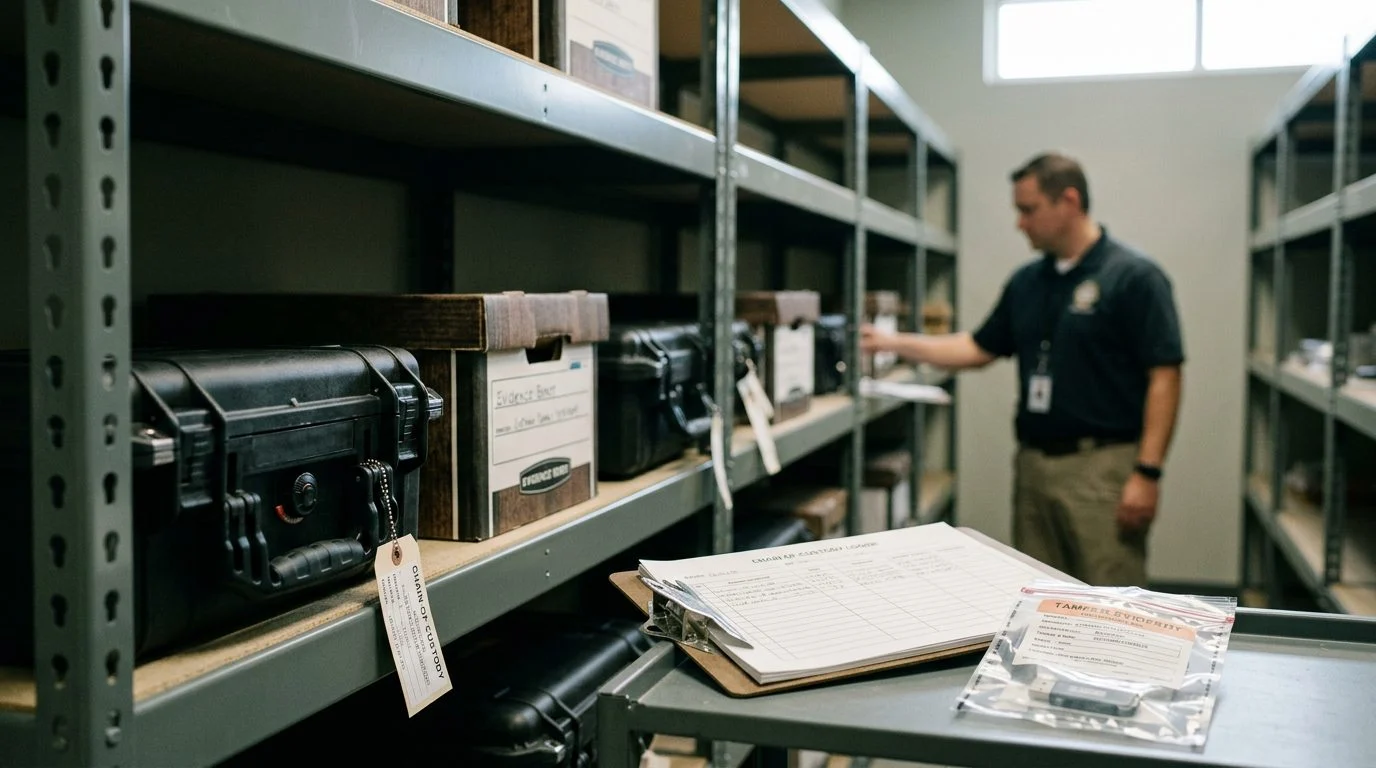
- Chain of custody: This is the written record of who handled each device and file, and when. Who extracted the data, with what tool, and was the extraction complete?
- Warrant scope: Do the warrants and affidavits match what was searched and what was seized?
- Timestamps: Time zone settings can shift when a message appears to have been sent.
Each answer shows what the records can and cannot establish.
Testing DNA and Physical Evidence
A defense attorney tests DNA and physical evidence by reviewing how each sample was collected, stored, tested and handled. DNA shows that biological material was present. It does not by itself show how or when that material got there.
Keep two questions separate: whether the material was present, and what happened. A result that shows presence still needs context about timing and transfer.
Review the records at each step. Look at chain of custody, the lab’s accreditation, and how each sample was stored and moved between handlers. These records show who handled each sample and when.
Look also for explanations other than the alleged event. Those include transfer between people or objects, contamination, and the timing of the sample relative to the alleged event.
Ask for the underlying data, not just the summary conclusion. Independent testing may be considered where it fits the case.
Outcry Testimony, Inconsistent Statements and Custody or CPS Timing
A defense attorney tests outcry testimony by comparing it with every statement the child made over time and placing each one on a timeline. Outcry testimony comes from the adult the child first told about the alleged conduct. That account can differ from what was written or recorded at the time.
Compare every statement the child made. Look at what was said to family members, school staff, CPS caseworkers, medical providers and investigators. Note changes in details over time, and which statements were recorded and which were only retold.
Check the timeline next. Find out whether the accusation came during a divorce, a custody hearing, a visitation dispute or a CPS investigation. Records from those proceedings may help test when things were said and by whom.
Review any inconsistencies as part of the record. A defense attorney identifies differences in testimony and presents them through the documents. This is a review of what was said, not a prediction about any witness.
Not sure what your next step is?
Talk it through with our team — the first consultation is free, confidential, and carries no obligation.
Your Next Step: Talk Through Your Evidence With Barbieri Law Firm
The next step is a conversation about the evidence itself, with a lawyer who can review it with you. You may still be gathering information, possibly while a family or CPS matter is ongoing. Reading this page is a sensible first step.
If your case involves a forensic interview, digital records or a DNA report, those are the first items a careful review examines. Barbieri Law Firm is based in Frisco and handles child sex crimes, online sex crimes and related charges across Collin County and Texas.
No lawyer can promise a result, but the firm will review the evidence with you and explain your options. To start, call (972) 424-1902 or send your case details through the contact form. The first consultation is free, confidential and carries no obligation to continue.
For the broader picture of charges and process, read child sex crimes defense.
Attorney responsible for this site: Heather Barbieri, Barbieri Law Firm, Frisco, Texas.

Frequently Asked Questions
What evidence do prosecutors usually use in a Texas child sex offense case?
Prosecutors often rely on the child’s statements, a recorded forensic interview, medical records, and digital data from phones or computers. How each item was collected and preserved can matter, so your lawyer should review all of it with you.
Can I challenge how police collected phone or computer evidence in my Texas case?
Yes. Your lawyer can check whether the search warrant was supported and limited properly, and how digital data was preserved. We will review that evidence with you and explain your options, but no lawyer can ensure an outcome.
Can my lawyer get the forensic interview recording and related records?
Your lawyer can request discovery under Texas law, which may include the recording, interviewer notes, and related reports. Reviewing them shows how the interview was conducted and whether it followed accepted procedures.
Can records from a divorce, custody, or CPS case be used in my criminal case?
Records from those proceedings can sometimes become evidence in a criminal case, and they may be handled differently in each one. If your situation involves a custody or CPS matter, we will look at those records alongside the criminal evidence and explain how they could affect your options.
How We Review the Evidence in Your Case
Forensic interview and statements
We review how any recorded interview was conducted, what was asked, and how the account changed over time.
Phones, computers and accounts
We look at how devices and accounts were searched, what was seized, and whether the data was preserved in a reliable way.
Medical and records evidence
We examine medical findings, records and their limits, and how they fit with the rest of the case.
Clear explanation of your options
We will explain what the evidence shows, what it does not show, and the choices available to you at each stage.
Important: protect the evidence and speak carefully
Do not delete, alter or discard any phone, computer, message or account connected to the allegations. Do not contact the accuser or witnesses about the case. Talk with a lawyer before you give any statement to investigators.
Questions to Bring to Your Consultation
What was collected?
Ask which devices, accounts, statements and records the State has, and who gathered them.
How was it preserved?
Ask how the evidence was stored and whether a record of its handling was kept.
What is missing?
Ask which recordings, reports, messages or witnesses have not been produced yet.
What are my options?
Ask how the evidence review affects the decisions ahead, including whether challenges are worth pursuing.
Talk with Barbieri Law Firm about the evidence in your case.
Request a Consultation
Fill out the short form and we will take it from there.