

Child Sex Crimes Defense | Frisco, Texas
Facing a child sex crime accusation in Texas? Start with a clear plan.
Barbieri Law Firm, an all-women Frisco firm, defends people accused of child sex offenses in Collin County, Dallas-Fort Worth and across Texas.
By Heather Barbieri · Published November 20, 2026
Being accused of a child sex offense in Texas is frightening, especially when a first-degree felony is on the table. This page explains how child sex crimes defense in Texas is built and what outcomes can follow.
What defense strategies are used to challenge child sex offense charges in Texas, and what outcomes such as dismissal, reduced charges, or acquittal are possible?
Defense work tests three things: the accusation, the evidence and the charge itself. Possible outcomes include dismissal, reduced charges, acquittal and other resolutions, and no lawyer can promise which one applies to you.
The stakes are high. Aggravated sexual assault is a first-degree felony under Texas Penal Code § 22.021. Under Texas Penal Code § 12.32, a first-degree felony is punishable by imprisonment for life or for any term of not more than 99 years or less than 5 years, plus a possible fine of up to $10,000. For certain sexual assault charges, Penal Code § 22.021(f) sets a minimum term of 25 years if the victim is younger than 10, or younger than 14 in the manner described in § 22.021(a)(2)(A). That’s why early review matters.
Your case may also involve a divorce, custody dispute or CPS case running alongside the criminal charge. Those matters can raise separate questions. The sections below cover the accusation, the evidence, the charge and the outcomes, in that order.
If you're facing this charge, you don't have to work through it alone. Barbieri Law Firm offers a free, confidential first consultation with no obligation to continue. Talk it through with our team — the first consultation is free, confidential, and carries no obligation.

Testing the accusation: the complainant’s account, timing and surrounding records
The defense starts by asking who made the accusation, when, and in what setting. It then tracks how the account changed across interviews, reports and court filings. Shifts in detail matter, and a defense lawyer can explain what they mean.
When a custody dispute, divorce or CPS investigation runs at the same time, timing matters. The defense can review when the accusation first surfaced and what those proceedings produced. That review assumes no motive. It only checks whether the records support the account.
The Texas Department of Family and Protective Services investigates child abuse allegations in Texas. Its findings are another record to compare with the criminal file.
Recorded forensic interviews, school and medical records, and earlier statements are compared with each other. A child’s account is weighed for consistency and for whether other evidence supports it. If the state wants to use prior acts against other children, Texas prosecutors must first complete a required hearing, as the Texas District and County Attorneys Association explains.
Challenging the evidence: digital records, warrants and forensic claims
The defense checks whether the evidence ties you to the conduct, and whether the state collected it lawfully.
In online cases, the key question is who sent each message. Chat logs, profiles, screenshots and account records are reviewed for identity and authorship. An account name does not always show who was typing.
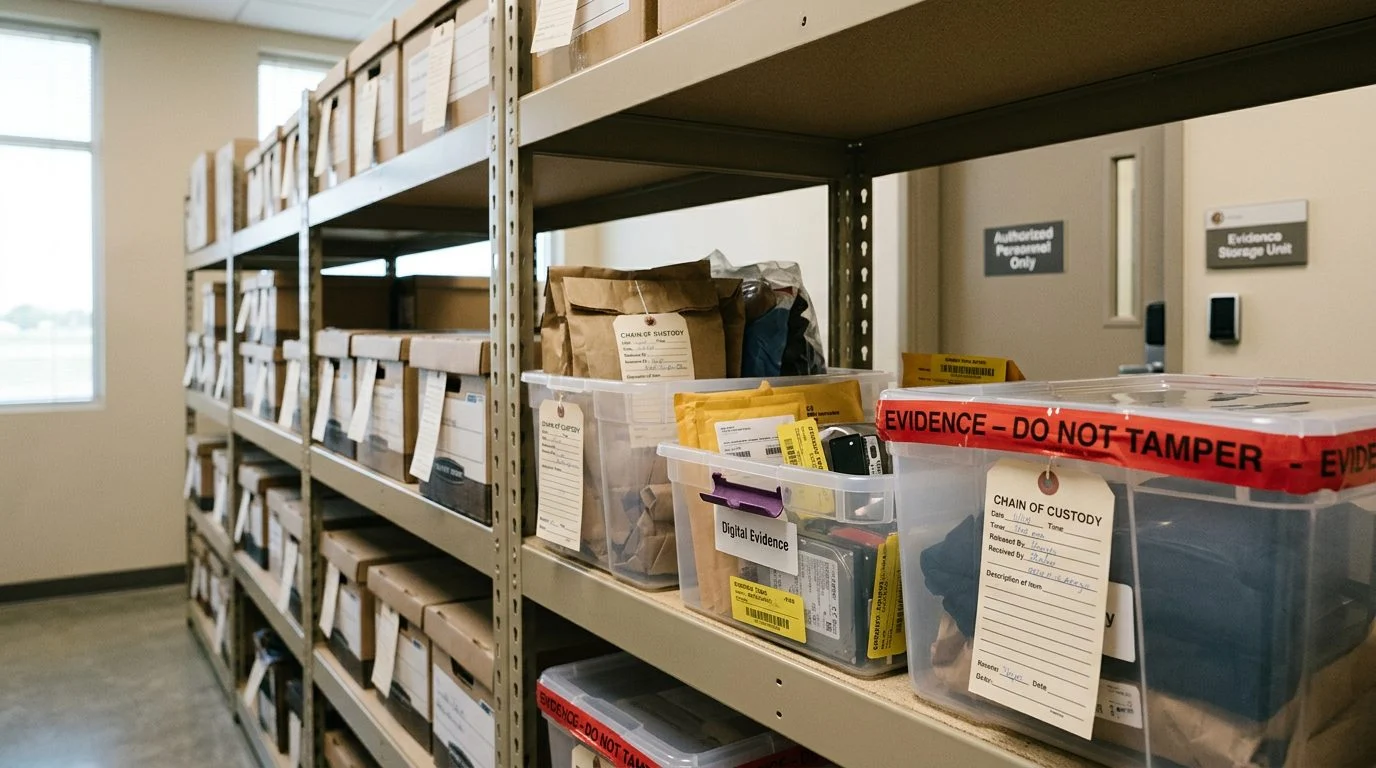
Search warrants and the affidavits behind them are reviewed. The defense asks whether a search stayed within the scope the warrant allowed. Chain of custody for devices and files matters, and so does how the digital extraction was done. Outside forensic reviewers can test the state’s findings.
Physical and medical claims get the same close look. The defense checks how they were collected, documented and interpreted.
One practical point: don’t delete messages, accounts or devices. Altering evidence can create a second problem on top of the first.
Challenging the charge: the elements, the degree and the conduct the statute requires
The defense compares the charge against the statute, element by element. Each offense has parts the state must prove.
Section 12.32(a) provides: “An individual adjudged guilty of a felony of the first degree shall be punished by imprisonment in the Texas Department of Criminal Justice for life or for any term of not more than 99 years or less than 5 years.” Exposing yourself to a child, or causing a child to expose, is a third-degree felony under a different section of the Penal Code; Section 12.32 sets punishment for first-degree felonies only. Sexual contact requires intent to arouse or gratify sexual desire, so intent is an element to test. The affirmative defenses that depend on age difference, force and registration history are found in a different section of the Penal Code, not in Section 12.32, which sets punishment for first-degree felonies.
Online cases raise different questions. Under Texas Penal Code § 33.021, a minor includes someone the actor believes is younger than 17. Knowingly soliciting a minor over the Internet to meet another person, with the intent that the minor will engage in sexual contact, sexual intercourse, or deviate sexual intercourse, is a second-degree felony, and it is no defense that the meeting did not occur. The National Center for Missing & Exploited Children describes how online enticement works, which helps frame what the state must show.
Entrapment is a defense in sting cases. Texas Penal Code § 8.06 applies when a law enforcement agent induces the conduct using persuasion or other means likely to cause the offense. Merely giving a person an opportunity to commit an offense is not entrapment. The question is which side of that line the police conduct falls on.
Continuous sexual abuse of a young child is a first-degree felony under Texas Penal Code § 21.02(h), punishable by imprisonment in the Texas Department of Criminal Justice for life, or for any term of not more than 99 years or less than 25 years. Under § 21.02(d), jurors are not required to agree unanimously on which specific acts of sexual abuse were committed or on the exact date when those acts were committed, but they must unanimously agree that the defendant, during a period that is 30 or more days in duration, committed two or more acts of sexual abuse. Long before any trial date, our lawyers can go through the evidence in your case with you and explain the options you may have.
What outcomes are possible: dismissal, reduced charges, acquittal and other resolutions
Dismissal, reduced charges, acquittal and other resolutions are all possible. Each depends on the evidence, the charge and the court.
A dismissal happens when the prosecution drops the case or a court orders it dismissed. Deferred adjudication is another path.
If the supervision period ends without an adjudication of guilt, Texas Code of Criminal Procedure art. 42A.111 requires dismissal and discharge. A judge may not end supervision early for a charge that requires sex offender registration.
The degree of a charge changes the punishment range. Under the indecency statute, sexual contact is a second-degree felony and exposure is a third-degree felony. A different charge can therefore carry a different range.
If you’re acquitted, Texas Code of Criminal Procedure art. 55A.201 provides for an expunction order. It is entered at the acquitted person’s request after notice to the state, or at the state attorney’s request with the acquitted person’s consent, not later than the 30th day after the acquittal, for a person entitled to expunction.
Other resolutions exist. Each case depends on its own evidence, charge and court, so no one can predict your result.
How each outcome affects registration, custody and public record questions
Registration depends on the offense and the outcome, so ask about it early. Under Texas Code of Criminal Procedure art. 62.001, a reportable conviction or adjudication includes deferred adjudication for listed offenses, but not a second indecent exposure violation that results in deferred adjudication. Those include indecency, sexual assault and aggravated sexual assault. Deferred adjudication does not avoid the registration question.
Nondisclosure is a separate question.
Custody questions can change with each outcome. A pending case, a dismissal, a reduction or an acquittal can each shape family court questions. Coordinating the criminal and family matters early helps you see how they affect each other.
Ask early what is confidential in your case and what may appear in public records.
Not sure what your next step is?
Talk it through with our team — the first consultation is free, confidential, and carries no obligation.

Talking through your situation with Barbieri Law Firm
If you’re reading this while facing a charge you didn’t expect, general information only goes so far. A page like this can’t answer questions about your record, your charges or your family situation.
Barbieri Law Firm is based in Frisco, Texas, and serves Collin County, Dallas-Fort Worth and Texas. Heather Barbieri is the attorney responsible for this site.
Frequently asked questions
How does child sex crimes defense in Texas start?
It starts with reviewing the charging papers, the accusation and the evidence.
Does deferred adjudication mean no sex offender registration?
No. Deferred adjudication can still count as a reportable conviction or adjudication for listed offenses.
Can a child sex crime charge be dismissed in Texas?
It can be, when the prosecution drops it or a court orders dismissal. No one can promise that result.
Our first consultation is free, confidential and comes with no obligation to continue. To talk through your case, send your case details or call (972) 424-1902.
Attorney responsible for this site: Heather Barbieri, Barbieri Law Firm, Frisco, Texas.
What a defense review involves
Charging papers and evidence
We review the accusation, the charging papers and the evidence the State has disclosed, and explain what each piece means for your case.
How the case was built
We examine how statements, interviews, searches and digital records were gathered, from the first contact with investigators onward.
Plain-language communication
We explain each step of the process and answer your questions as the case moves forward.
Options at every stage
We discuss the options available at each stage so you can make informed decisions with advice you understand.
Talk with a lawyer before you speak with investigators
Statements to police, school officials, family members or online contacts can become evidence. Do not discuss the accusation or post about it until you have spoken with a lawyer.
Child-related and sex offense charges we defend
Child sex crimes defense
Defense for people accused of sexual offenses involving a child, handled with attention to the evidence, the allegations and each stage of the case.
Online sex crimes defense
Defense for charges based on online communications, images or digital evidence, including review of how that evidence was obtained and analyzed.
Aggravated sexual assault defense
Defense for serious felony sexual assault accusations, with a careful review of the State's proof and the facts surrounding the allegations.
Sex crimes defense
Defense for related sex offense charges across Collin County, Dallas-Fort Worth and Texas, with clear guidance on your options.
Speak with Barbieri Law Firm about your case
Related practice areas
- Change of Venue in a Texas Child Sex Crime Case
Request a Consultation
Fill out the short form and we will take it from there.