

Child Sex Crimes Defense | Collin County
Child Sex Crimes Defense for Prosper and Frisco Residents
Facing a charge involving a child is frightening. Our team at Barbieri Law Firm will listen, explain the process in plain language and help you decide what comes next.
By Heather Barbieri · Published November 10, 2026
Waiting for a court date after a charge involving a child is a hard place to be. You may be asking which courthouse and which office matter right now.
The short answer is below. The rest of this page covers the charge, the timeline and the fears that come with it.
Which Texas courts and prosecutor’s offices handle child sex offense cases for Prosper and Frisco residents in Collin County?
The office that files the charge prosecutes the case.
Prosper and Frisco both sit inside Collin County. Where the alleged act happened often shapes where a case is filed, so check the county and court listed on your paperwork.
Some online cases can also be brought in federal court. A lawyer can review your charging papers and explain which court fits your charge.
A case can also start with a child-abuse investigation. The Texas Department of Family and Protective Services investigates those allegations, and that work runs separately from the criminal court.
Court dates, filings and offices can change as a case moves. Keep every notice, bond paper and charging document in one place. Bring them to your first meeting with a lawyer.
Waiting on a court date with your children on your mind is hard, and you don't have to sort out the charge alone; call or send your case details for a free, confidential first consultation. Talk it through with our team — the first consultation is free, confidential, and carries no obligation.

What a first-degree felony charge means for the court your case lands in
A first-degree felony carries a prison range of life or 5 to 99 years, plus a fine of up to $10,000 (Texas Penal Code § 12.32).
Not every child sex charge is a first-degree felony. The exact statute decides the grade, so the number on your paperwork matters.
Exposure, or causing a child to expose, is a third-degree felony (Texas Penal Code § 21.11).
Continuous sexual abuse of a young child is a first-degree felony with a life or 25-to-99-year range (Texas Penal Code § 21.02). Aggravated sexual assault under § 22.021 is also a first-degree felony.
The charge written at arrest is not always the final charge. Charges can change as the case moves forward, so ask your lawyer to review each version.
How a child sex offense case moves from arrest to trial in Collin County
A case usually moves from arrest and booking to a bond decision, a formal charge, pretrial motions, and then trial or a resolution. The timeline varies with each case and each court’s schedule, so don’t expect one fixed date sequence.
Bond conditions can limit contact with children and protected people. Under Texas Penal Code § 25.07, violating a bond condition tied to safety in a sexual assault or abuse case is its own offense. Under Penal Code § 25.07(g), violating a protective order or a bond condition is generally a Class A misdemeanor. It becomes a state jail felony in circumstances such as committing certain violations while possessing a deadly weapon. It becomes a third-degree felony in circumstances such as committing the violation through an assault or stalking.
A protective order can bar you from going to or near a school or child care facility where a protected child attends. It can also bar contact with the protected person, except through your attorney or a court-appointed person. Tell your lawyer about every condition the day you learn of it.
Prosecutors may try to use evidence of other alleged acts.
What the fears about prison, lifetime registration and your children mean in a Texas courtroom
The statute sets the range of punishment, but the sentence a court imposes depends on the facts. Your lawyer’s review of the evidence is where that picture starts.
Prison time is a real concern in these cases.
Sex offender registration falls under Chapter 62 of the Texas Code of Criminal Procedure. Article 62.101 sets when the duty ends. Under Texas Penal Code § 21.11, a person commits an offense if, with a child younger than 17 years of age, the person, with intent to arouse or gratify the sexual desire of any person: (A) exposes the person’s anus or any part of the person’s genitals, knowing the child is present; or (B) causes the child to expose the child’s anus or any part of the child’s genitals. The definition of sexually violent offense applies to people 17 or older, so the exact offense controls the answer.
Custody, visitation and CPS matters run in separate proceedings from your criminal case. Both can affect each other, so tell your lawyer about any family court or CPS dates.
What is filed can reach people beyond the court, so ask a lawyer early what has been filed and what is still pending.
Why the evidence and the court-appointed or retained lawyer question matter early
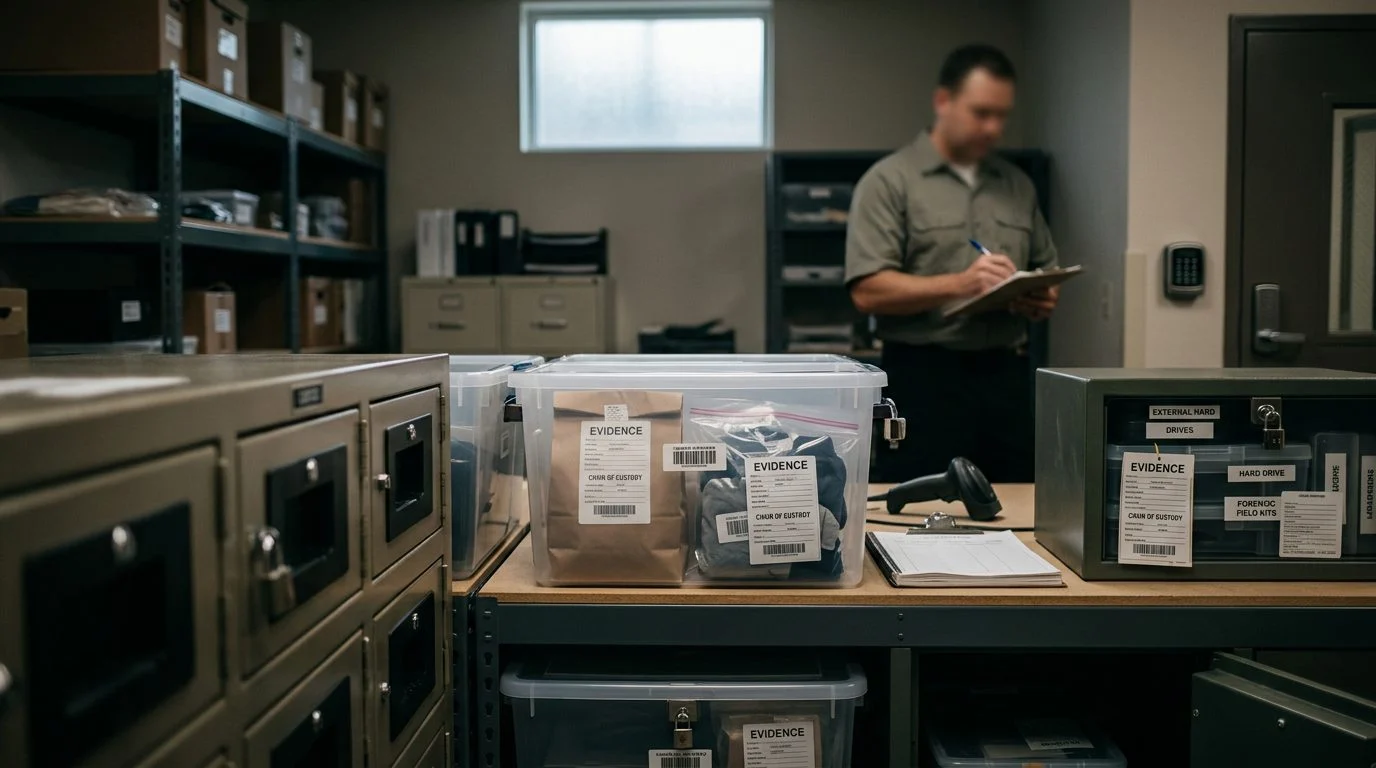
Early review of the evidence matters because a defense tests each piece of the accusation. That includes interviews, digital devices, forensic reports and how evidence was handled.
Knowing those limits helps you ask better questions.
Read more about what to examine in the State’s evidence on our child sex offense evidence review page.
If money is tight, contact our office to talk through your options. Our page on court-appointed lawyers in felony sex crimes explains that process.
For Collin County cases, see our Collin County sexual assault of a child defense page.

Next step: a free, confidential first consultation about your Collin County case
The next step is a free, confidential initial consultation with Barbieri Law Firm, with no obligation to continue.
You may be waiting on a court date, unsure which office is handling the charge, and worried about your children and your name. You don’t have to sort that out alone. At that meeting, the charge, the court and the evidence can be reviewed together.
Call (972) 424-1902 or send your case details through our contact form. No lawyer can promise how a case will end.
Quick answers
Is every child sex charge a first-degree felony? No. Indecency with a child by sexual contact is a second-degree felony. Online solicitation of a minor is a third-degree felony under subsection (b) of Penal Code § 33.021 (communicating in a sexually explicit manner or distributing explicit material), except that the offense is a second-degree felony when the minor is younger than 14 years of age or is an individual the actor believes to be younger than 14 years of age.
Attorney responsible for this site: Heather Barbieri, Barbieri Law Firm, Frisco, Texas.
What we do from the first call
We review the charging papers
We go through the charge, the affidavit and the evidence the State has disclosed, and explain what each part means for you.
We advise you before you speak
We explain how to handle contact from investigators, school staff and family members, so you know what to say and what to avoid.
An all-women firm
Barbieri Law Firm is an all-women firm. Our team handles these matters with discretion, care and respect for you and your family.
Plain-language answers
We explain the court process, the next settings and your options without legal jargon, so you can make informed decisions.
Reach our team directly
Call (972) 424-1902 to speak with our team about your case in confidence.
Get advice before you give a statement
Statements made to police, school officials or family members can affect your case later. Talk with a lawyer before you give a statement or post about the allegation online.
Questions to bring to your consultation
Which court and prosecutor
Ask which Collin County court and which prosecutor's office are handling the case, and what the next settings are.
The paperwork you have
Bring any notices, bond conditions and court papers you have received so we can review them with you.
Contact you have received
Tell us about any contact from investigators, school officials or others so we can advise you on next steps.
Your options
We will review the evidence and explain your options, so you can decide how to move forward with a clear picture of your case.
Talk with Heather Barbieri before your next court setting
Request a Consultation
Fill out the short form and we will take it from there.