

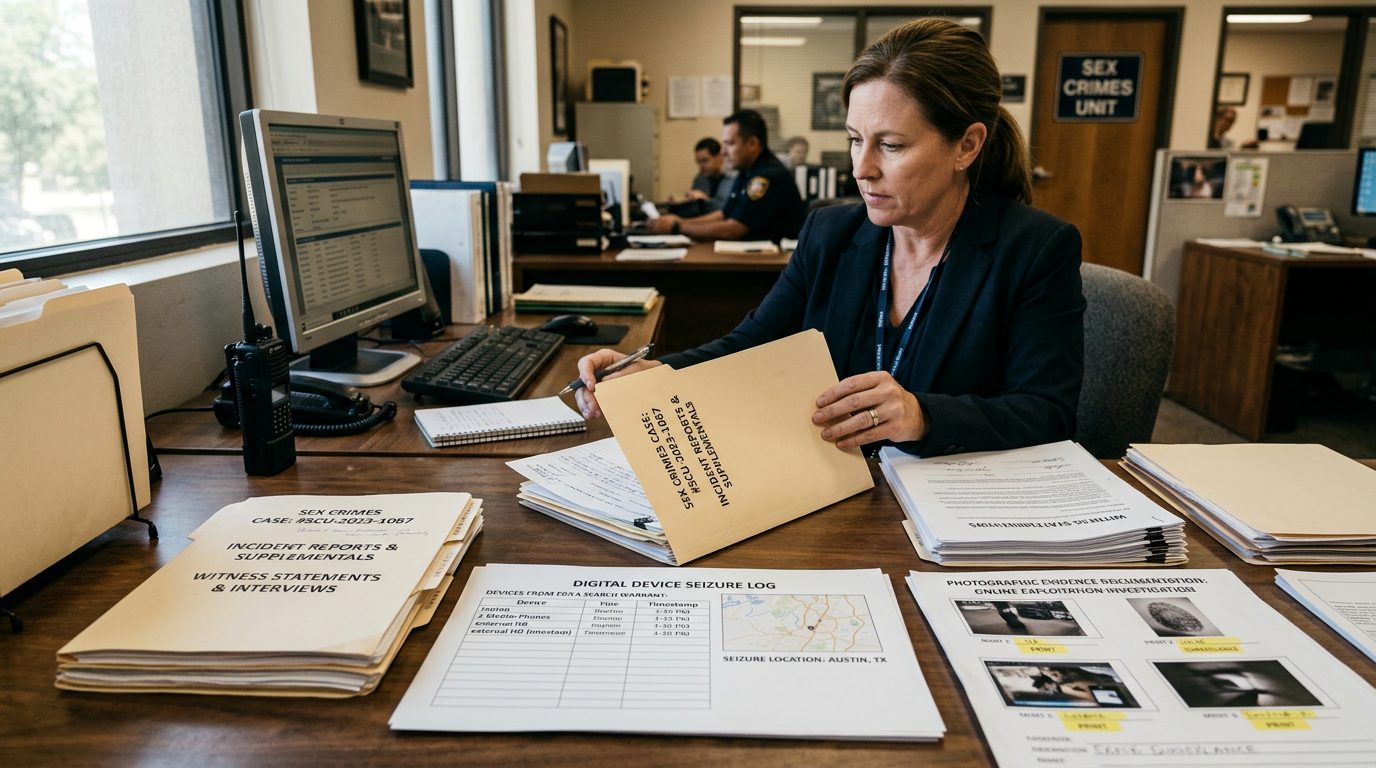
Texas Sex Crime Investigation: How Police Investigate
By Heather Barbieri · Published October 11, 2026
A sex crime investigation Texas police open often starts with a single report, and many people first learn of it from a phone call. A detective may leave a message, stop by your home or job, or ask you to come in for a talk. This page explains how that process usually works, from the first report to the point a case is filed. It also shows where a defense lawyer’s involvement matters most. For the bigger picture, read our sex crimes defense overview.
How a Texas Sex Crime Investigation Usually Begins
Most Texas sex crime investigations begin with a report, not an arrest. A report can come from a person who says they were harmed, a family member, a school, a workplace, or an online platform that flagged messages or images. Police may also act on a tip, or a medical provider may refer a case after an exam. Each starting point gives investigators different information to check.
An investigation can begin with no arrest at all. Many people first learn about it when a detective calls, visits, or asks for an interview. That contact can feel routine, but it is part of a live case.
An allegation is not a finding of guilt. The investigation is a fact-gathering stage. Whether a case is ever filed is a separate question that comes later. Our sex crimes defense lawyer page covers the charges that can follow.

Who Takes Part in the Investigation
Several people usually take part, and each one has a different job. Patrol officers often take the first report and write down what they hear. Criminal investigators, often called detectives, then gather records and decide who to interview.
In cases involving children, a trained forensic interviewer often talks with the child. That work often runs through a children’s advocacy center, and the interview may be recorded.
A sexual assault nurse examiner may perform a medical exam and collect physical evidence. That work documents findings. It does not decide whether a crime happened.
Police do not make the final call on filing. The prosecutor’s office reviews the file and decides on charges. A detective’s belief about a case is only one input into that review.
Evidence Collection: Medical Exams and Digital Records
Investigators usually gather physical, medical, and digital evidence. Physical evidence can include exam results and items such as clothing or bedding. Lab results can take time to return, so a case may stay open for weeks or longer after the first report.
Digital evidence is common in these cases. Texts, photos, call logs, location data, and social media messages can all be reviewed. Police may request these records from phone companies or account providers.
That review can be incomplete. A message pulled out of a longer conversation can look very different from the full exchange. The same is true of a photo without its date, or a post without the words that came before it.
A defense lawyer can ask to see what police collected. A lawyer can then compare it with the complete conversation and the full timeline.
Interviews, Interrogations, and Your Choices
Anything you say to a detective can become evidence. Detectives are trained to gather information. Even when you believe you’re helping, a statement can be recorded, written up, and used later.
Small details matter. Memories fade, and time gets mixed up. A casual answer can be read in ways you never intended.
Be careful with your devices, too. Deleting messages, closing accounts, or wiping a phone can look like hiding evidence. It can also create new questions for the investigation. Ask a lawyer before you change or remove anything.
How Online Sex Crime Investigations Differ
Online sex crime investigations usually start with a digital trail, not a witness in the room. Many begin with a platform report, an internet address traced to a home, or a subpoena to an internet or service provider. Some involve officers posing as a minor.
Texas law can treat a person as a minor based on belief. Under Penal Code § 33.021, a minor includes someone the actor believes to be younger than 17. That detail matters in decoy cases.
Not meeting is no defense. Under § 33.021, it is not a defense that the meeting did not occur.
Entrapment may be an issue in some decoy cases. Under Penal Code § 8.06, entrapment involves persuasion or other means likely to cause a person to commit the offense. Merely giving someone an opportunity to commit an offense is not entrapment.
Digital images follow separate rules. For local context, see our Collin County sex crime charges page.
Arrest, Booking, and Bond Conditions
After an arrest, bond terms may be set, and some sex crime cases come with conditions. Those conditions can limit contact with a protected person or keep a person away from a home, workplace, or school.
Under Penal Code § 25.07, violating a bond condition in a family violence, sexual assault, or related case is an offense. The condition must relate to the safety of a victim or the community. Covered conduct includes going to or near a protected person’s residence or workplace. It also includes possessing a firearm and tampering with a GPS monitoring system.
Many people don’t know this rule. Under § 25.07(e), an officer investigating a possible violation may not arrest the person protected by that order for that violation.
Conditions are not fixed forever. A lawyer can review them and raise questions with the court. Knowing the exact terms of your bond is the first step.
Charging Decisions and What Comes Next
A case may be declined, or it may move forward to court. The outcome depends on the evidence and the prosecutor’s review. Police reports alone do not decide the matter.
The offense level matters a great deal. Under Penal Code § 12.04, Texas felonies fall into five categories. Aggravated sexual assault is a first-degree felony under § 22.021. Texas courts have generally held that a mistaken belief about the child’s age is not a defense to sexual assault of a child. The statute itself, § 22.011, does provide certain affirmative defenses. These include a defense based on how close in age the two people are and a defense where the actor was the child’s spouse at the time. Each one applies only when its specific statutory conditions are met.
Charges can change as a case develops. A charge filed at the start may look different later. For how disputed allegations are tested, see our false sexual assault allegations page.
The National Registry of Exonerations lists false accusations and mistaken identification among causes of wrongful convictions. That is one reason the early evidence deserves a close look.
Why Early Involvement by a Defense Lawyer Matters
Early involvement helps you understand what police have before you make choices that are hard to undo. A defense lawyer can review the investigation as it develops and manage contact with investigators. A lawyer can also examine the evidence before any charge is filed.
Early review matters because first statements and records can shape the rest of a case. A casual interview or a deleted message can create problems that are hard to fix later.
No lawyer can promise an outcome. Results depend on the facts, the evidence, and the court. A good lawyer explains the process and your options in plain terms.
Common Questions
Should I talk to police if a detective wants an interview? Anything you say can become evidence, so pause and get advice before you answer questions.
Is an accusation the same as a conviction in Texas? No. An accusation starts an investigation, and an investigation is not a finding of guilt.
Can police arrest a protected person for violating a protective order? Not for that violation. Under Penal Code § 25.07(e), an officer investigating a possible violation may not arrest the protected person for it.

Talk With Heather Barbieri Before You Speak to Police
If a detective has called, left a voicemail, or asked you to come in, you don’t have to decide what to say alone. Call Barbieri Law Firm at (972) 424-1902, or send your case details through the contact form. The firm will review what the investigation involves and explain your options.
Attorney responsible for this site: Heather Barbieri, Barbieri Law Firm, Frisco, Texas.
Ready to take the next step?
Request a Consultation
Fill out the short form and we will take it from there.