

Sex Crimes Defense | Frisco, Texas
Accused Falsely in Texas? Speak With a Criminal Defense Lawyer Early.
Barbieri Law Firm defends people accused of sex crimes and assaultive offenses across Collin County, Dallas-Fort Worth and Texas. A false accusation can still lead to arrest and charges, so we review the evidence and explain your options from the start.
By Heather Barbieri · Published October 13, 2026
Defending against false sexual assault allegations in Texas starts with one question: what must the State prove? The answer is set out in the Penal Code, and each element has to be tested against real evidence. An accusation starts the process, but it does not decide the outcome. This guide explains how these cases are built, which evidence tends to matter most, and what to do in the first days. It is general information, not a prediction about any case. Barbieri Law Firm is located in Frisco, Texas.
What a False Sexual Assault Allegation Looks Like in a Texas Case
A false allegation is a claim that does not match what actually happened. It can take several forms, and each one needs its own investigation.
Sexual assault turns on consent and other listed elements. Penal Code § 22.011 lists the ways the offense can be committed. Aggravated sexual assault under Penal Code § 22.021 adds elements, such as serious bodily injury, threats, a deadly weapon, or a victim younger than 14. For a child victim, the State does not have to show the accused knew the child’s age.
Four categories come up often. The first is a complete fabrication. The second is mistaken identity. The third is a disagreement about what each person understood at the time. The fourth is a report shaped by outside pressure, such as a custody dispute, a breakup, or a workplace conflict. These are categories to investigate. They are not conclusions about any person.
An allegation alone can start an investigation, set bond conditions, and bring public attention. All of that can happen before any evidence has been tested.
If you've just learned that someone has accused you, or that a police report has been filed, you don't have to sort out the next steps alone. Talk it through with our team — the first consultation is free, confidential, and carries no obligation.

How Prosecutors and Investigators Evaluate the Case
Investigators usually follow a set sequence. The defense often sees the full file only after charges are filed.
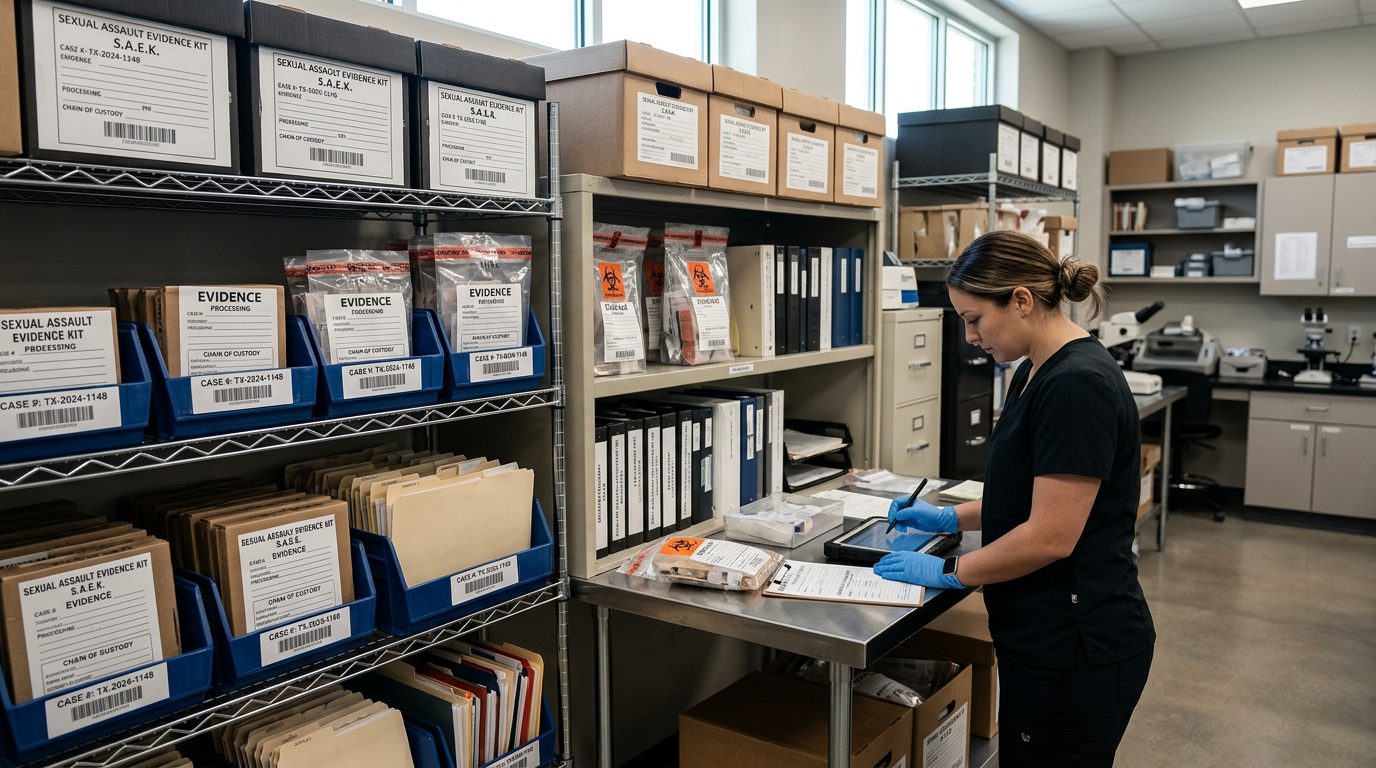
The process often starts with a report and a police interview of the complainant. If a child or vulnerable person is involved, a forensic interview may follow. Evidence collection can include a sexual assault forensic exam. The case then goes to a prosecutor, who decides whether to file charges.
The charging decision rests on the State’s version of events. The defense does not start from that version. Every recording, report, and lab result should be requested in writing. The defense then checks what the State produced against what the State says exists.
Investigators also focus on consistency. They compare statements, documents, and physical evidence. Gaps between those sources are often where a defense begins. Ask your lawyer which gaps matter in your case, and why.
The Evidence That Often Matters Most
Digital records, a documented timeline, witnesses, and medical findings often shape how a consent case reads.
Digital records can show contact and tone before and after an event. Text messages, social media messages, call logs, and photos can carry timestamps and metadata. Rideshare, location, and building camera records can show where people were. Preserving these records early matters.
A timeline is useful only when it is checked against records. Each person’s whereabouts, companions, and messages should be matched to a source. Sources carry more weight than memory alone.
Witnesses matter too. Someone who saw the two people together, heard statements at the time, or noticed a change in behavior afterward can help. Counsel and investigators locate and interview these people.
Medical and forensic evidence needs context. A lack of physical evidence does not by itself prove an assault occurred. DNA does not by itself prove a lack of consent. Medical or counseling records the complainant created may also matter. Whether they were requested in discovery is a question your lawyer should check.
Consent, Context, and the Limits on Sexual History Evidence
Consent is often the central question. The surrounding facts give it meaning.
Under Penal Code § 22.011, a sexual assault is without consent when the actor compels submission by force, violence, or coercion. It is also without consent in other listed situations, including when the actor knows the person is unconscious or physically unable to resist, when the actor knows the person is unaware that the sexual assault is occurring, or when the actor has intentionally impaired the person’s power to appraise or control their conduct by administering a substance without the person’s knowledge. Under Texas law, consent is not effective when the actor knows the person cannot make reasonable decisions because of youth, mental disease or defect, or intoxication.
In many consent cases, the relationship history, prior messages, and conduct before and after the encounter become central.
A case built on one uncorroborated account is tested differently from one with several accounts. The defense looks for both corroboration and contradiction. It does not assume either one.
Testing the Complainant’s Account Over Time
The defense compares every version of the account against the others and against the records.
Start with the first report. Then compare police interviews, recorded forensic interviews, statements to friends or family, messages, and any later changes. Line up each version side by side, with the date and audience noted.
A change is not automatic proof of fabrication. Trauma, memory, delay, and fear can all affect how a person describes events. The real questions are whether a change is material and whether the record explains it.
A recantation carries weight that depends on how and why it was made. It may or may not change the State’s position. Prior inconsistent statements can help, but they must be used carefully before a judge or jury. The approach must fit the evidence that is actually available.
What to Do in the First Days After an Accusation
Defending against false sexual assault allegations in Texas often starts in the first days. Avoid contact, hold off on statements, and keep every record intact.
Do not contact the complainant, their family, or shared friends about the allegation. Contact can be used as evidence of intimidation. It can also lead to new allegations or bond problems.
Do not give a statement to police, a school or employer investigator, or anyone else without first speaking with a lawyer. A voluntary interview often becomes the State’s most important exhibit.
Do not delete messages, accounts, photos, or devices. It can also hurt credibility at trial. Preserve what exists, and let counsel handle collection.
Write a private timeline for your lawyer. A timeline shared with others may not stay private. Read any bond conditions carefully, since they can limit contact, travel, or access to certain places. A violation can lead to arrest. Tell your lawyer every fact you know, including the ones you worry about.
Not sure what your next step is?
Talk it through with our team — the first consultation is free, confidential, and carries no obligation.
How the Defense Investigation Is Built
A defense investigation tests the State’s evidence. It also looks for records that may not have been gathered yet.
A defense investigator may visit the scene, request records, interview witnesses, and collect third-party data. That data can come from phone carriers, rideshare companies, and building operators. Early requests matter because retention periods vary.
Preservation letters and subpoenas are tools for locking down evidence early. Delay can make some records harder to obtain. The timing should be planned, not guessed.
Counsel may also retain outside professionals, such as forensic examiners or digital-data analysts. They are retained when the file warrants it. Their findings may help the defense, or they may not. Either result is useful to know early.
Whether a report is false is a factual question. It must be answered with evidence, not assumption. A careful, counseled review is the only sound basis for any such decision.
Collateral Consequences and What Comes Next
A conviction for a sexually violent offense can bring registration obligations. A pending case can also affect work, housing, and family life before any verdict.
Under Code of Criminal Procedure art. 62.001, sexual assault under § 22.011 and aggravated sexual assault under § 22.021 are sexually violent offenses when committed by a person 17 or older. Under art. 62.101, the duty to register for a sexually violent offense ends at death, subject to exceptions in the statute.
Deferred adjudication for these offenses is still a reportable adjudication that requires registration (art. 62.001(5)). It is also not available in every case. Under Code of Criminal Procedure art. 42A.102, a judge may not grant deferred adjudication in listed situations. These include a § 22.021 charge punishable under § 22.021(f) or § 12.42(c)(2), and a defendant who was previously placed on community supervision for a listed sex offense. Even when a § 22.011 or § 22.021 charge is eligible, the judge may grant deferred adjudication only after making a finding in open court that doing so is in the best interest of the victim. It is a limited statutory option, not a predicted result.
The usual pretrial path includes arraignment, bond review, discovery, motions, and negotiations. Every case is different. No lawyer can say in advance how a particular case will be resolved. Employment, licensing, housing, and family issues should be part of the strategy from the start. The firm’s sex crimes defense overview covers the broader practice.

Talking Through Your Situation With Barbieri Law Firm
If you’ve just learned that someone has accused you, or that a police report has been filed, you don’t have to sort out the next steps alone. Barbieri Law Firm, based in Frisco, can review the evidence with you, including the complainant’s account, digital records, and your timeline, and explain your options. The first consultation is free and carries no obligation to continue. To talk, call (972) 424-1902 or send your case details through the contact form.
Attorney responsible for this site: Heather Barbieri, Barbieri Law Firm, Frisco, Texas.
No lawyer can say in advance how a case will turn out.
Common Questions About Defending Against False Sexual Assault Allegations in Texas
How is aggravated sexual assault different from sexual assault in Texas?
Texas Penal Code § 22.021 sets out aggravated sexual assault, which requires the conduct described in § 22.021(a)(1) together with an aggravating circumstance listed in § 22.021(a)(2). For a child victim, the statute requires a child younger than 14 or another listed aggravating circumstance; under § 22.011, a child is younger than 17. Aggravated sexual assault under § 22.021 is classified as a first-degree felony, and the consequences can be harsher: for certain child victims, § 22.021(f) sets a 25-year minimum, and § 12.42(c)(2) requires a mandatory life sentence for qualifying repeat sex offenses.
Does a conviction require sex offender registration?
A conviction for a sexually violent offense generally carries a registration duty that ends only at death, subject to exceptions.
How We Approach a False Accusation
Review the evidence
We look at the accusation, the timeline, messages, photos, records and any statements, and explain what each piece may mean for your case.
Protect your position
We identify what needs to be preserved and what should be handled carefully before anyone speaks on your behalf.
Clear communication
We explain each stage of the process in plain language, so you know what is happening and what your choices are.
Respect for your situation
An accusation affects your family, your job and your reputation. We take that seriously from the first call.
Talk to a Lawyer Before You Give a Statement
If police, detectives or anyone else asks you questions about an allegation, call a lawyer before you answer.
What Happens After You Contact Our Office
1. Free initial consultation
Call us or send your case details. Heather Barbieri will discuss the allegation and answer your questions. The consultation is free and comes with no obligation to continue.
2. Case review
We review the accusation and the accounts involved, along with any texts, messages, records and witnesses that may bear on the allegation.
3. Investigation
We work to identify and preserve evidence that may bear on the allegation, including evidence that supports your account.
4. Defense planning
We explain your options and what each would involve. Our team keeps you informed as the case moves forward, and you make the decisions about your defense.
Talk With Heather Barbieri About Your Case. Call (972) 424-1902 or Send Us Your Case Details.
Related practice areas
Request a Consultation
Fill out the short form and we will take it from there.