

Sex Crimes Defense | Frisco, Texas
DNA Evidence in Your Case? Review It With a Defense Lawyer Before You Respond
Barbieri Law Firm reviews how DNA was collected, tested and reported, and explains what the results can and cannot show. We serve Collin County, Dallas-Fort Worth and Texas.
By Heather Barbieri · Published November 8, 2026
If your loved one faces a sexual assault charge in Texas, a DNA report can feel like the end of the story. It usually isn’t. A sexual assault DNA evidence defense lawyer reads a lab report for what it shows and for what it leaves open. This page explains that difference in plain words. Barbieri Law Firm is a criminal defense firm in Frisco, Texas, and it reviews these reports against each element the state must prove.
What a Sexual Assault DNA or Forensic Lab Report Is
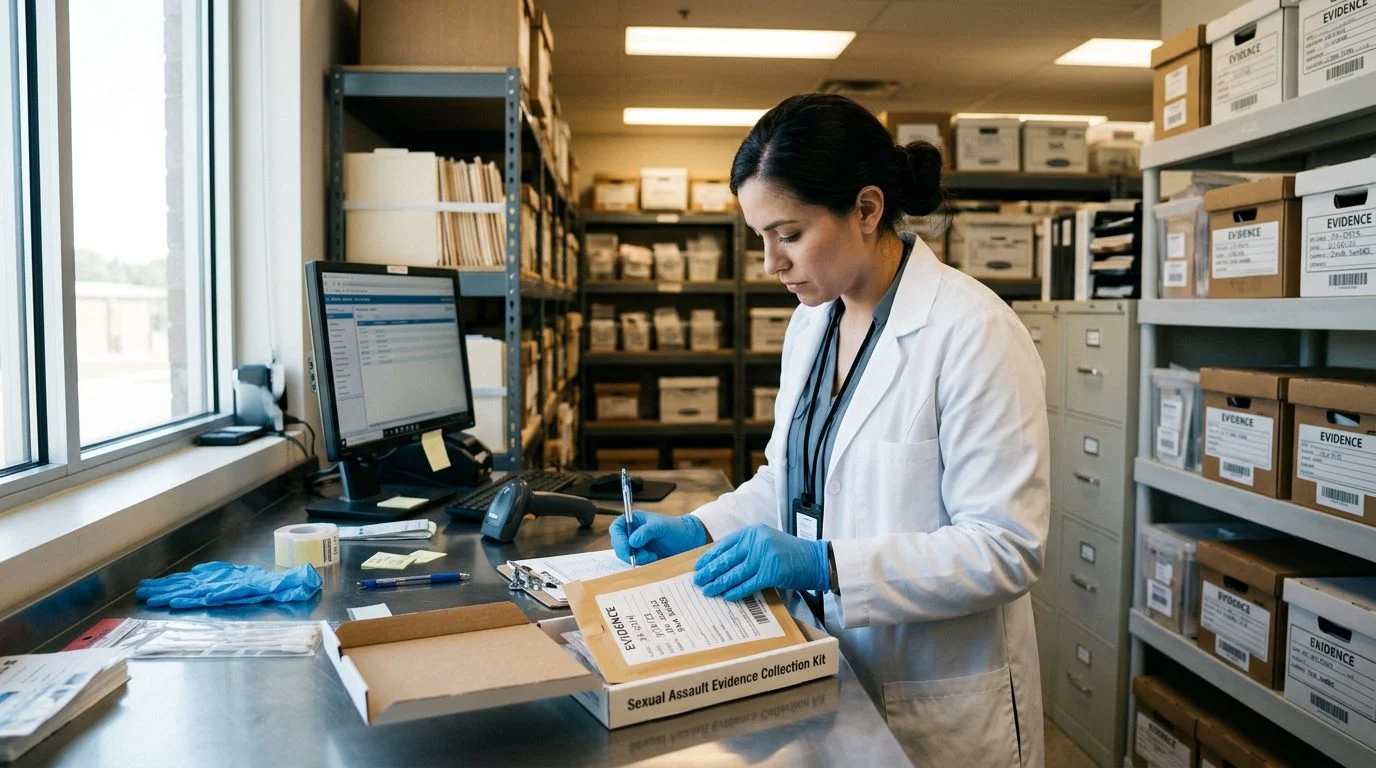
A sexual assault DNA or forensic lab report is the crime lab’s written record of what it received, what it tested, and what it found. Most reports begin with the items submitted. These often include swabs from a sexual assault examination, along with clothing, bedding, or other collected objects.
Next comes the list of tests. The lab states whether it obtained a DNA profile. It then reports any comparison it made against a known sample. The examiner closes with conclusions, and the exact wording of those conclusions matters.
The report is one piece of the prosecution’s file. It sits beside statements, medical records, timelines, and other evidence. Read alone, it can look more complete than it is.
This page is for you if you are a parent, spouse, adult child, sibling, or friend of a person facing a DNA-related charge or investigation in Texas. You may have a copy of a report, a notice of an investigation, or only a call from police. Either way, you need plain answers.
If a DNA lab report has arrived in your loved one's case, we can review what it shows and what it does not, starting with a free, confidential consultation. Talk it through with our team — the first consultation is free, confidential, and carries no obligation.

What a Lab Report Can Show and What It Cannot Prove
A lab report can show that a sample was tested. It can show whether a DNA profile was obtained. It can show whether a comparison was reported as a match, an exclusion, or an inconclusive result.
It cannot show who committed the act. A match links a profile to a sample. It does not show how that material got there or when.
Other limits matter too:
- Consent. A report does not answer whether the other person agreed. Texas defines consent as “assent in fact, whether express or apparent” (Texas Penal Code § 1.07). That answer comes from words, conduct, and circumstances outside the lab.
- Timing. A report may not say when contact occurred.
- Shared items. A match on a shared object does not show that a particular person caused the contact.
- Mixtures. A sample with more than one contributor can be hard to read. The report should say whether the examiner could separate the profiles.
Read the conclusion line closely. An inclusion, an exclusion, and an inconclusive result each mean something different.
How DNA Evidence Fits Into a Texas Sexual Assault Charge
DNA evidence usually speaks to identity or contact. Other evidence must prove the rest of the charge.
Texas defines sexual assault by several kinds of conduct. Under Texas Penal Code § 22.011, a sexual assault is without consent if the actor compels submission by physical force, violence, or coercion. It is also without consent if the other person is unaware the assault is occurring. Many prongs turn on consent, not just contact.
Consent can also be invalid. Texas Penal Code § 1.07 separately defines “effective consent,” a term tied to consent by or for an owner, and says it is not effective if induced by force, threat, or fraud.
Aggravated sexual assault adds facts to the charge.
So each DNA result is reviewed against each element. A result about contact does not, by itself, answer consent or the added facts. Every part of the file deserves review, including evidence about the alleged victim.
What Our Defense Review of the Forensic Evidence Covers
Our review checks how evidence was collected, who handled it, how it was tested, and whether the report matches the underlying data.
- Collection: how the examination swabs were taken, when, and what paperwork followed.
- Chain of custody: who handled each item, when it moved, where it was stored, and any gaps in logs or labels.
- Testing: the lab’s protocols, the methods used, and how mixtures or low-level samples were read.
- Report and bench notes: whether the conclusion matches the data, and whether any contamination or error was documented.
- The rest of the file: how the forensic results line up with statements, timelines, and other evidence.
Tracking matters because kits and profiles move through state systems.
How the Process Works and What to Expect
The process starts with a free, confidential consultation. It then moves through the evidence file as it becomes available.
- Free initial consultation. The meeting is confidential and carries no obligation to continue. Share the charge, the stage of the case, and any report or notice you have.
- Gather the file. Collect the lab report, bench notes, chain-of-custody forms, and the investigative file as it comes in.
- Review the evidence. Compare the forensic results against each element of the charge. Write down questions for the lab or the prosecutor.
- Explain the options. We explain, in plain language, what the evidence can and cannot show at each stage.
The pace depends on how fast the prosecution produces its file. So the review follows each stage of the case, not a fixed calendar.
Why Barbieri Law Firm for Sex Crimes Forensic Defense
Barbieri Law Firm is an all-women criminal defense firm in Frisco, Texas. It defends people accused of sex crimes and assaultive offenses across Collin County, Dallas-Fort Worth, and Texas.
Heather Jean Barbieri, Board Certified, Criminal Law — Texas Board of Legal Specialization.
The firm’s lawyers are Heather Barbieri and Carrie Thomas. Our team reads the lab file and the investigation together, not the lab report alone. The firm handles aggravated sexual assault, child sex crimes, online sex crimes, aggravated assault, and family violence matters.
No lawyer can ensure a particular outcome. What we can offer is a careful, written review of the evidence and a clear explanation of your options.
Not sure what your next step is?
Talk it through with our team — the first consultation is free, confidential, and carries no obligation.
Questions Families Ask About DNA and Forensic Evidence
A DNA report answers a narrow question. The answers below show where its limits begin.
Does a DNA match mean my loved one committed the offense?
A match links a profile to a sample. It does not, by itself, show the act, consent, or timing.
What if the report says the result was inconclusive?
The wording and the underlying data show what the lab could and could not establish. We review both.
Can lab results be questioned?
Collection, chain of custody, testing methods, and documentation can all be reviewed.
Should we wait for the prosecutor to explain the evidence?
You don’t have to wait. A consultation helps you understand the charge and the file now.
Does a DNA report automatically lead to an arrest?
No. Timing and decisions depend on the investigation, so we review the file as it develops.

Talk With Barbieri Law Firm About the Lab Report in Your Loved One’s Case
If a DNA lab report has arrived in your loved one’s case, call (972) 424-1902 or send your case details to schedule a free, confidential consultation.
Bring the lab report, any notice of the charge, and the dates you know. The review can start with the forensic file. The consultation carries no obligation to continue.
Attorney responsible for this site: Heather Barbieri, Barbieri Law Firm, Frisco, Texas.
How We Review DNA Evidence in a Sexual Assault Case
The full lab file
We review the laboratory report, the bench notes and the underlying data, not just the summary a prosecutor or officer shares.
Collection and chain of custody
We examine how the sample was collected, labeled, stored and transferred, and whether those steps are documented.
What the result actually shows
A DNA profile links a person to a sample. We explain what the testing does and does not establish about contact, consent or timing.
Statistics in context
We check how match probabilities were calculated and whether the report explains the assumptions behind them.
Talk to a lawyer before you respond
Do not discuss DNA testing with investigators, sign documents, or post about the case online until you have spoken with a defense lawyer. Your free, confidential consultation comes with no obligation to continue.
Common Questions About DNA Evidence
Does a DNA match prove the offense?
A match connects a profile to a sample. We look at how the sample was obtained and what else the evidence shows about the act.
What if the result is inconclusive?
An inconclusive or limited result has specific meaning. We review the wording and the data to show what the lab could and could not establish.
Can lab results be challenged?
We evaluate testing methods, quality controls and reporting practices, and explain the questions they raise for your defense.
Who handles the review?
Heather Barbieri and our team of attorneys review the evidence and explain your options in plain language, at a pace that fits your situation.
Talk with Barbieri Law Firm about the DNA evidence in your case. Your initial consultation is free, confidential and comes with no obligation to continue.
Related practice areas
Request a Consultation
Fill out the short form and we will take it from there.