

Collin County Sex Crimes Defense | Frisco, Texas
Indicted in Collin County? Here Is What to Do Next
Clear answers, calm guidance, and a plan built around your family's situation.
Why people call Barbieri Law Firm
All-Women
Criminal defense firm
Frisco
Serving Collin County and Dallas-Fort Worth
Free
Confidential first consultation, no obligation to continue
By Heather Barbieri · Published November 11, 2026
A sexual assault indictment in Collin County is one of the most stressful things a family can face. An indictment is a formal charge that a grand jury acts on. It is not a finding of guilt. After it, the case moves through arraignment, bond, evidence review, and then a plea, a dismissal, or a trial.
This page explains each step in plain words. It is written for family members and close contacts who want to understand the process and know what to ask a lawyer.
What an Indictment Means for Your Loved One
An indictment is a formal charge, not a finding of guilt. Under Texas Code of Criminal Procedure art. 12.06, an indictment is “presented” once the grand jury has acted on it and the court has received it.
A grand jury reviews the State’s evidence and decides whether to bring a charge.
The indictment names the offense. Sexual assault is defined in Texas Penal Code § 22.011. Aggravated sexual assault, under Texas Penal Code § 22.021, is a felony of the first degree. These are different charges, so read the indictment closely.
An indictment can come before an arrest or after one. You may learn of it from a phone call, a notice, or a court record. For the broader picture of these charges, see the online sex crimes defense guide.
If your loved one was just indicted for sexual assault in Collin County and bond or arraignment is near, send your case details through our contact form so we can talk through the next steps. Talk it through with our team — the first consultation is free, confidential, and carries no obligation.

What Happens Right After the Grand Jury Acts
The case typically moves through three early steps after an indictment.
- Arrest or surrender. If your loved one is not already in custody, the case may start with an arrest on the indictment or a voluntary surrender. Booking follows.
- Arraignment. The charges are read in court, the accused enters a plea, and bond is addressed.
- Court assignment. The case is assigned to a court. Early choices about bond, conditions, and the defense shape what comes next.
Practical first steps help. Keep copies of the indictment and every court notice. Write down each court date. Do not discuss the facts with witnesses or the complainant, and do not post about the case online.
Timing varies by court and by case, and it depends on the facts.
Bond Conditions and Daily Life While the Case Is Pending
Breaking a safety-related bond condition can bring its own charge.
Under Texas Penal Code § 25.07, violating a bond condition in a sexual assault case is a separate offense when the condition relates to the safety of a victim or the community.
Conditions in these cases may limit contact with the complainant or with minors. They can also restrict travel or internet use. Those limits can affect work, school, housing, and family life.
A defense lawyer reviews the bond amount and each condition. If a condition is unclear or hard to follow, the lawyer can raise the question with the court.
How the Evidence Is Reviewed in Discovery
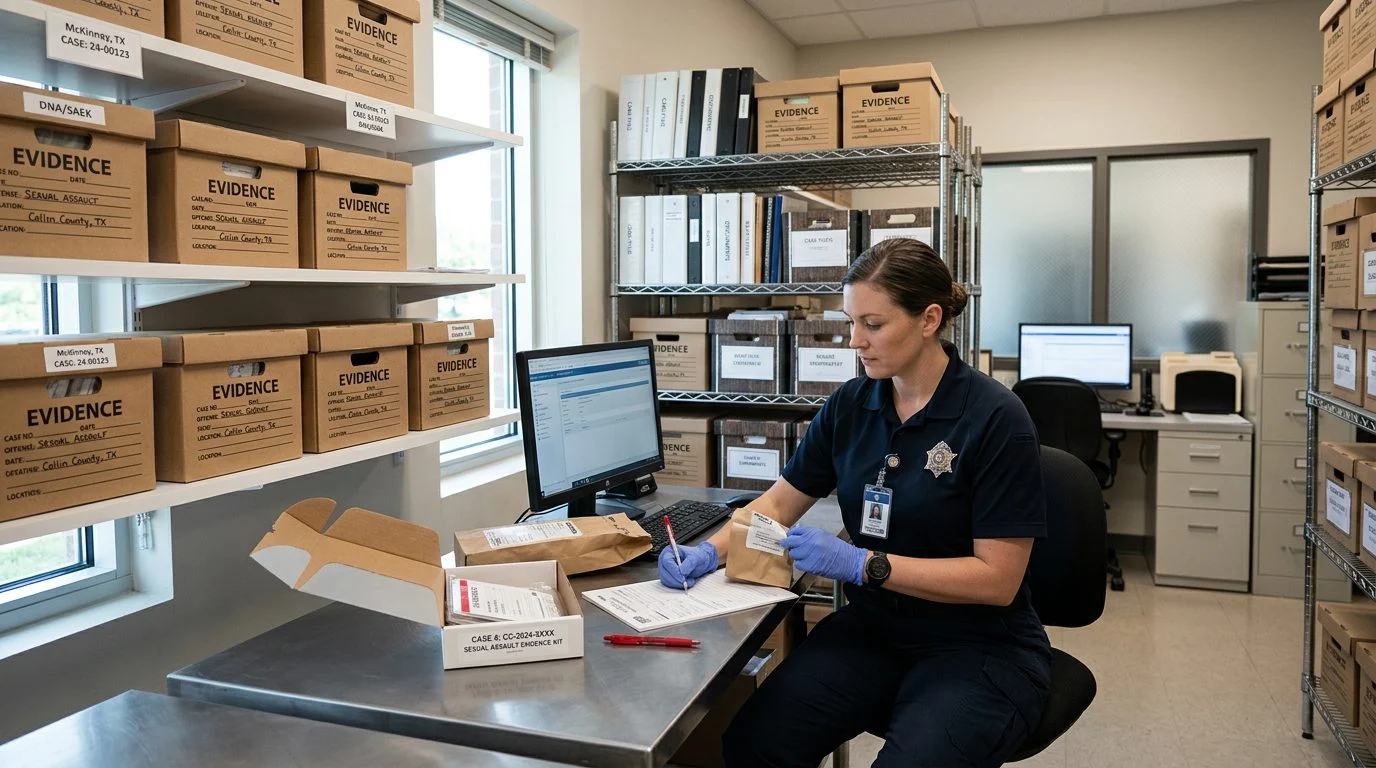
In discovery, the defense reviews what the State has gathered. This can include police reports, recorded interviews, video, phone and digital records, and medical or forensic exam records.
The review looks for gaps, inconsistencies, and anything missing from the file. The defense may also investigate on its own. No one can say in advance what that review will show.
In cases with child witnesses, a forensic interview can be central. Read more about forensic interviews in child abuse allegations and outcry witnesses in child sexual assault cases.
Evidence of other alleged acts is another key issue.
Accusations that surface during a divorce raise their own questions. See accused of sexual assault during a divorce in Collin County.
The Paths a Case Can Take
After indictment, a case generally moves toward pretrial motions, plea talks, dismissal, or trial.
- Pretrial motions ask the court to rule on issues such as evidence before trial.
- Plea negotiations are talks between the prosecutor and the defense. The accused decides whether to accept any plea, after advice.
- Dismissal depends on the facts and the law in each case.
- Trial puts the case before a jury. The accused decides whether to go to trial.
Each route has different timelines, stress levels, and consequences. Review the options with the lawyer before any decision is made.
No lawyer can promise how a case will end. This section describes the process, not how any case will turn out.
Registration and Other Consequences if There Is a Conviction
A conviction for some sex offenses can require registration as a sex offender in Texas. Under Texas Code of Criminal Procedure art. 62.001, sexual assault and aggravated sexual assault are “sexually violent offenses” when committed by a person 17 or older. Indecency with a child is also among the offenses listed in Texas Code of Criminal Procedure Art. 62.001.
Under Texas Code of Criminal Procedure art. 62.101, except as provided by Subsection (b) and Subchapter I, the duty to register for a person with a reportable conviction or adjudication, other than an adjudication of delinquent conduct, for a sexually violent offense ends when the person dies. Other listed offenses also end registration at death under certain conditions. That article also has exceptions and other timelines, so ask about your loved one’s specific charge.
Other consequences can affect employment, professional licenses, and housing. For a non-citizen, immigration status is also a concern. Ask the defense lawyer about each one before any plea decision.
Not sure what your next step is?
Talk it through with our team — the first consultation is free, confidential, and carries no obligation.
Why Families Bring These Cases to Barbieri Law Firm
Barbieri Law Firm is an all-women criminal defense firm in Frisco, Texas. It defends people accused of sex crimes and assaultive offenses in Collin County, Dallas-Fort Worth, and across Texas.
Heather Jean Barbieri, Board Certified, Criminal Law — Texas Board of Legal Specialization.
Heather Barbieri is the responsible attorney for this site. Carrie Thomas is also a lawyer at the firm. The firm also has support staff.
When a new matter comes in, the firm reviews the charging papers and bond status. Then it explains the options in plain terms.
Frequently Asked Questions
What can we do if a loved one has been indicted?
Our lawyers can go over the paperwork you have, explain in plain terms where the case stands and what may come next, and answer your questions in a free, confidential consultation with no obligation to continue.
Can an indictment come before an arrest?
Yes. It can come before an arrest or after one.
What is arraignment?
It is the court appearance where the charges are read, a plea is entered, and bond is addressed.
Should family members contact the complainant or witnesses?
No. Send case questions to the defense lawyer instead.
Does every conviction require sex offender registration?
No. Registration depends on the offense and the rules in the registration statute.
What if my loved one is not a citizen?
Ask the defense lawyer about immigration consequences before any plea decision.

Talk With Barbieri Law Firm About Your Loved One’s Indictment
If your loved one has been indicted, it helps to raise questions early. Send your case details through the contact form, or call the firm. A lawyer will review the indictment, the bond status, and your list of questions. The first consultation is free, confidential, and carries no obligation to continue.
Attorney responsible for this site: Heather Barbieri, Barbieri Law Firm, Frisco, Texas.
What our team does with you
Review the paperwork
We go over the indictment and any other documents you have so you know exactly what the State has charged.
Explain the case in plain terms
We explain where the case stands and what may come next, without legal jargon.
Weigh your options
We review the evidence and discuss the choices available to you, so you can decide with clear information.
Protect your rights
We advise you on how to handle contact with investigators, the court and anyone involved in the matter.
Talk to a lawyer before you speak about the case
Statements to police, messages, social media posts and conversations with others can affect a criminal case. Speak with a lawyer before you give a statement or post anything about the charge.
Your first steps after an indictment
Gather your paperwork
Bring the indictment, any bond or court documents, and anything you have received from the court or police.
Write down what you remember
Note the dates, names and events you recall while the details are fresh. Share them only with your lawyer.
Ask your questions
Bring a list of what worries you most, including your job, your family and your privacy.
Make a plan together
We help you choose a direction for the case and explain what each step will involve.
Get clear answers about your Collin County case
Request a Consultation
Fill out the short form and we will take it from there.