


Sexual Assault Consent Defense | Frisco, Texas
Facing a Consent-Based Sexual Assault Allegation in Texas? Start With the Facts
Barbieri Law Firm defends clients across Collin County and Dallas-Fort Worth. Here is how these cases take shape and where a defense can begin.
By Heather Barbieri · Published November 15, 2026
If you’ve been accused of sexual assault in Texas, and the other person says the contact wasn’t consensual, the next steps can feel unclear. A consent defense argues that the other person agreed to the contact, or that the State cannot prove it happened without consent. This page explains how Texas defines consent, what a sexual assault consent defense lawyer in Texas reviews, and what the process looks like.
What a Consent Defense Means in a Texas Sexual Assault Case
A consent defense says the sexual contact was agreed to, or that the State cannot prove it was without consent. Consent is the central question, so it shapes nearly every decision that follows.
Many of these cases come down to two accounts that don’t match. One person describes an agreement. The other describes contact that wasn’t wanted. The evidence and the timeline then carry most of the weight.
This page is for you if you’ve been charged with, or are under investigation for, sexual assault in Texas and consent is in dispute. A charge is an accusation, not a finding of guilt. Every case turns on its own facts.
If you're facing a sexual assault allegation where consent is disputed, we'll review the evidence with you and explain your options. Talk it through with our team — the first consultation is free, confidential, and carries no obligation.
What Texas Law Means by “Without Consent”
Under the aggravated sexual assault statute (Texas Penal Code § 22.021), the offense requires two things together: first, intentionally or knowingly causing the penetration of, or contact with, another person’s anus, mouth or sexual organ without that person’s consent (or, against a child, the same conduct regardless of whether the person knows the child’s age); and second, one of the aggravating circumstances listed in the statute, including causing serious bodily injury or attempting to cause death in the same criminal episode, using or exhibiting a deadly weapon in the same criminal episode, placing the victim in fear that death, serious bodily injury or kidnapping will be imminently inflicted on any person, acting in concert with another person against the same victim, or the victim being younger than 14. Texas law defines consent as “assent in fact, whether express or apparent” (Texas Penal Code § 1.07).
The offense itself is set out in Texas Penal Code § 22.011. Among other circumstances, for an offense under Subsection (a)(1), the statute treats contact as without consent when:
- Force, violence or coercion is used to make the other person submit or take part.
- The actor compels the other person to submit or participate by threatening to use force or violence against the other person or to cause harm to the other person, and the other person believes the actor has the present ability to execute the threat.
- The other person has not consented, and the actor knows the other person is unconscious or physically unable to resist.
- The other person has not consented, and the actor knows the other person is unaware the sexual assault is occurring.
Whether any of these fits your case depends on the facts. A single fact, such as a text message or someone’s silence, rarely settles the question alone. The defense tests each circumstance the State alleges against the evidence. If the charge alleges force, the review asks what evidence actually shows force.
Related Charges: Aggravated Sexual Assault, Enhanced Penalties and Registration
Aggravated sexual assault is the more serious charge, and it requires an aggravating factor. The factors listed in Texas Penal Code § 22.021 include causing serious bodily injury, using or exhibiting a deadly weapon, and acting in concert with another person. The statute also covers a victim younger than 14, or an elderly or disabled individual.
Aggravated sexual assault is a first-degree felony. The base range is life, or 5 to 99 years, plus a fine of up to $10,000 (Texas Penal Code § 12.32); under Penal Code § 22.021(f), however, the minimum term is 25 years if the victim is under 10, or under 14 and the offense is committed in a manner described by Subsection (a)(2)(A).
Prior convictions can change the range.
Registration is a consequence to ask about early. Chapter 62 of the Code of Criminal Procedure defines a sexually violent offense to include sexual assault and aggravated sexual assault committed by a person 17 or older.
A case can also end before trial. Under Code of Criminal Procedure art. 32.02, the State’s attorney may dismiss with the court’s permission and written reasons. Whether that happens in your case depends on the facts.
How a Consent Defense Is Built: The Evidence Review
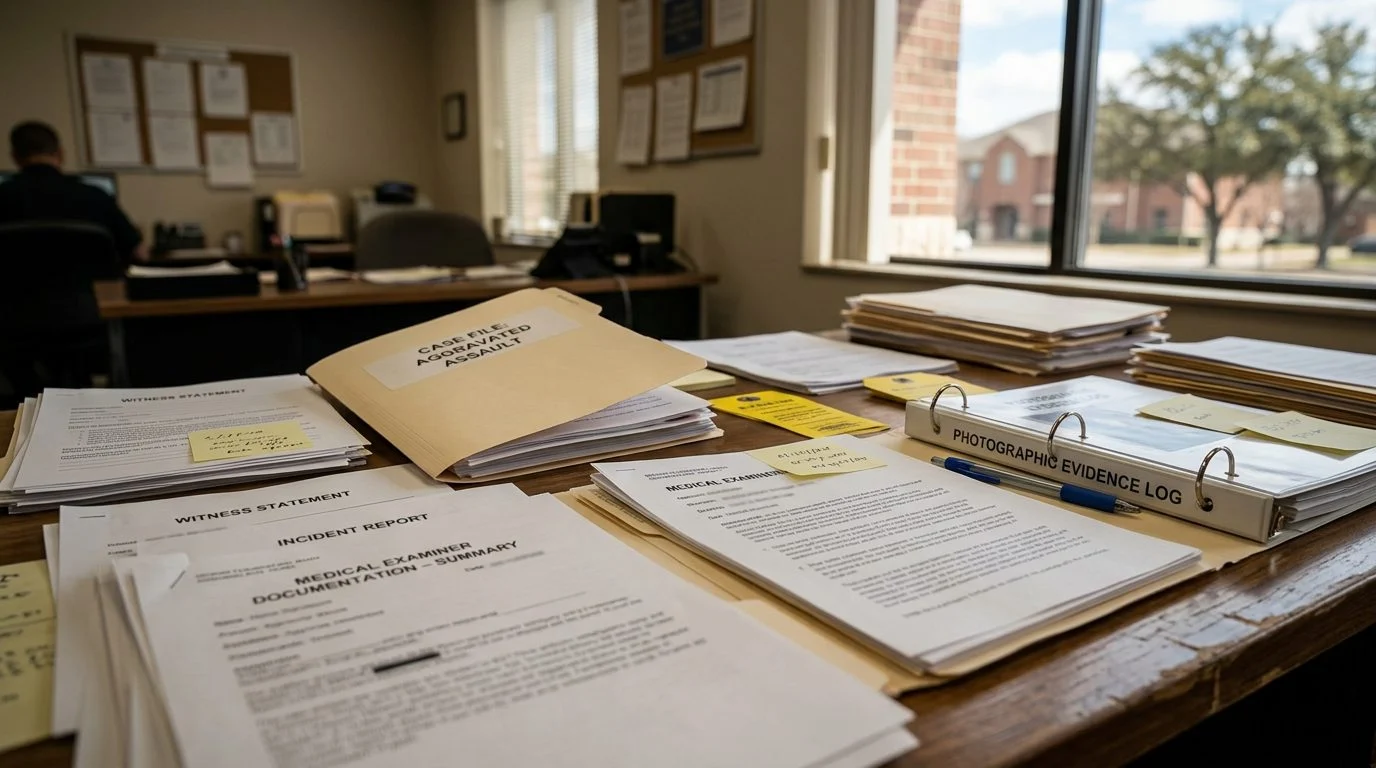
A consent defense is built from the evidence, starting with what the State has gathered. On a timely request, and subject to the restrictions in Section 264.408, Family Code, and Article 39.15 of the Code of Criminal Procedure, the State must produce offense reports and written or recorded statements (Code of Criminal Procedure art. 39.14). It must also disclose exculpatory or impeachment information it holds.
Materials a defense review typically covers include:
- Police reports and witness statements.
- Text messages, social media messages and call logs.
- Phone, location and video records.
- Medical and forensic records.
Police generally need a warrant before searching a cell phone, even one seized during an arrest. Our holding, of course, is not that the information on a cell phone is immune from search; it is instead that a warrant is generally required before such a search, even when a cell phone is seized incident to arrest (Riley v. California).
If police questioned you in custody, whether your statements can be used depends on whether they gave the four required warnings (Dickerson v. United States).
Evidence of the other person’s past sexual behavior is tightly limited. In a prosecution for sexual assault, aggravated sexual assault or another offense the rule lists, the Texas Rules of Evidence require a defendant who wants to offer evidence of a specific instance of an alleged victim’s past sexual behavior to first ask the court, outside the jury’s presence.
Timing matters. Gaps in time and changes between accounts are checked against messages, records and video.
What to Expect: From First Call to Court Dates
The process starts with a confidential consultation and moves through review, negotiations and court dates. Timing depends on the charge, the facts and the court’s calendar.
- Consultation. You describe the allegation and bring any paperwork, such as a warrant, bond papers or police notices.
- Early steps. Keep copies of messages and records you already have. Avoid discussing the allegation with investigators without a lawyer present, and don’t post about the case online.
- Review and options. Your lawyer reviews the State’s file and explains your options, which may include dismissal, reduction or trial.
- Court dates. Hearings, pretrial motions and negotiations follow. The court and prosecutor set those dates, not a fixed schedule.
Your lawyer will walk you through the expected steps for your case.
Why Barbieri Law Firm: Credentials and Local Focus
Barbieri Law Firm is an all-women criminal defense firm based in Frisco, Texas. Heather Barbieri leads the firm. Its lawyers include Heather Barbieri and Carrie Thomas, supported by staff.
The firm defends clients accused of sex crimes and assaultive offenses across Collin County, the Dallas-Fort Worth area and Texas. Its practice areas include aggravated sexual assault defense, child sex crimes, online sex crimes, aggravated assault and family violence.
Heather Jean Barbieri, Board Certified, Criminal Law — Texas Board of Legal Specialization.
Our team focuses on what the evidence shows and explains what your options are. Your first consultation is free, confidential, and comes with no obligation to continue.
Not sure what your next step is?
Talk it through with our team — the first consultation is free, confidential, and carries no obligation.
Common Questions About Consent Defense in Texas
Here are short answers to questions people often ask about these cases.
How hard is it to win a sexual assault case?
Outcomes depend on the evidence and the facts of each case. No lawyer can predict or ensure an outcome.
How long does the State have to file a Texas felony charge?
Time limits depend on the offense. Article 12.01 sets three years only for felonies that are not listed separately, while listed offenses carry other periods; for example, aggravated sexual assault under Section 22.021(a)(1)(B), Penal Code, has no limitation, and sexual assault generally carries a ten-year period under Subdivision (2)(E).
What type of lawyer handles sexual assault cases?
A criminal defense lawyer handles these charges. At Barbieri Law Firm, Heather Barbieri and Carrie Thomas defend sexual assault charges.
Talk Through Your Situation With Barbieri Law Firm
If you’re facing a sexual assault allegation where consent is disputed, it can feel like nothing is clear yet. An accusation you didn’t expect, two conflicting accounts and no picture of what comes next is hard to face. You don’t have to sort it out alone. Call (972) 424-1902 or send us your case details, and we’ll review the evidence and explain your options.
Attorney responsible for this site: Heather Barbieri, Barbieri Law Firm, Frisco, Texas.
How We Approach a Consent Defense
Explaining Your Options
We walk you through the charge, the process and each path forward in plain language so you can make informed decisions.
Protecting Your Position
From the first contact with investigators, we work to keep your statements and conduct from being used against you.
Building the Defense
Where the facts support it, we develop the timeline, context and evidence that bear on consent.
Be Careful Before You Speak to Investigators
If you are under investigation, do not discuss the allegation with police, the accuser or anyone else before you have spoken with a lawyer. Statements made early can shape the case that follows.
Issues That Often Shape a Consent Case
Consent as the Central Question
In many allegations, consent is the core dispute. The circumstances of the relationship and the encounter are examined closely.
Messages and Digital Records
Texts, social media posts and app records can show what happened before and after an encounter. We review both what the State relies on and what it leaves out.
Timing and Changing Accounts
Delayed reports, shifting details and the way each interview was conducted can all matter. We look at how the account developed over time.
The Charges That Follow
A single allegation can lead to more than one charge. We explain how the State frames a case and what that means for you.
Your First Consultation Is Free, Confidential and Carries No Obligation to Continue
Related practice areas
- Online Sex Crimes Defense Lawyer
- Sex Crimes Defense Lawyer in Collin County
Request a Consultation
Fill out the short form and we will take it from there.