

Sex Crimes Defense | Frisco, Texas
When Consent Is Disputed Between Spouses, the Details Decide the Case
Heather Barbieri and our team review the evidence, the relationship history and each person's account, then explain the options available to you from the first call.
By Heather Barbieri · Published November 17, 2026
If your spouse has been charged with sexual assault, you may be trying to make sense of it without having been part of the arrest or the police interview. Whether the other person consented at the time of the act can matter to the charge, depending on the offense.
That makes consent the central question. This page explains how consent gets disputed, what penalties are involved and what usually comes next.
Who This Page Is For and What the Charge Means
Under Texas Penal Code § 22.011, a person commits sexual assault when the person intentionally or knowingly, without that person’s consent (as defined in Texas Penal Code § 1.07), causes the penetration of the anus or sexual organ of another person by any means; causes the penetration of the mouth of another person by the sexual organ of the actor; or causes the sexual organ of another person to contact or penetrate the mouth, anus, or sexual organ of another person, including the actor. For a child younger than 17, subsection (a)(2) covers listed acts regardless of whether the person knows the child’s age, and it is a defense to prosecution under that subsection that the conduct consisted of medical care for the child and did not include contact between the anus or sexual organ of the child and the mouth, anus, or sexual organ of the actor or a third party.
A couple’s history may matter to the story, but the legal question is what happened at the time and whether consent existed.
Family violence often comes up alongside these charges. Under Texas Family Code § 71.004, family violence includes an act by a family or household member against another member of the family or household that is intended to result in sexual assault. Protective orders and bond conditions can follow.
If you are married to the person facing charges, you may feel shut out. Your role is not to decide the facts. It is to understand the charge and the next steps so you can support your spouse wisely.
If your spouse is facing this charge, you do not have to work through the consent questions alone. Our team can talk through the charge with you. Talk it through with our team — the first consultation is free, confidential, and carries no obligation.

What the State Must Prove: Consent Is the Disputed Element
Consent is the element a defense examines first. Under Texas Penal Code § 1.07, consent means “assent in fact, whether express or apparent.”
Section 22.011(b) lists situations where a sexual assault under Subsection (a)(1) is without the consent of the other person. These include force, violence or coercion, threats the other person believes can be carried out, and the actor knowing the other person is unconscious or physically unable to resist. Each situation points to different evidence. A threat claim turns on words and belief. An unconsciousness claim turns on the other person’s condition.
A past relationship or a shared home does not answer that question. A defense looks at the specific circumstance alleged and the evidence the State has for it.
How Consent Gets Disputed Between Spouses or Partners
Consent is disputed by testing the accuser’s account against the full record. A defense starts with the evidence, not the accusation. Common categories include:
- Messages and call logs from before and after the incident, which can show how the couple communicated and acted.
- Witness accounts from people who saw the couple that day or heard about the incident soon after.
- Medical and physical evidence, reviewed for what it does and does not show about consent.
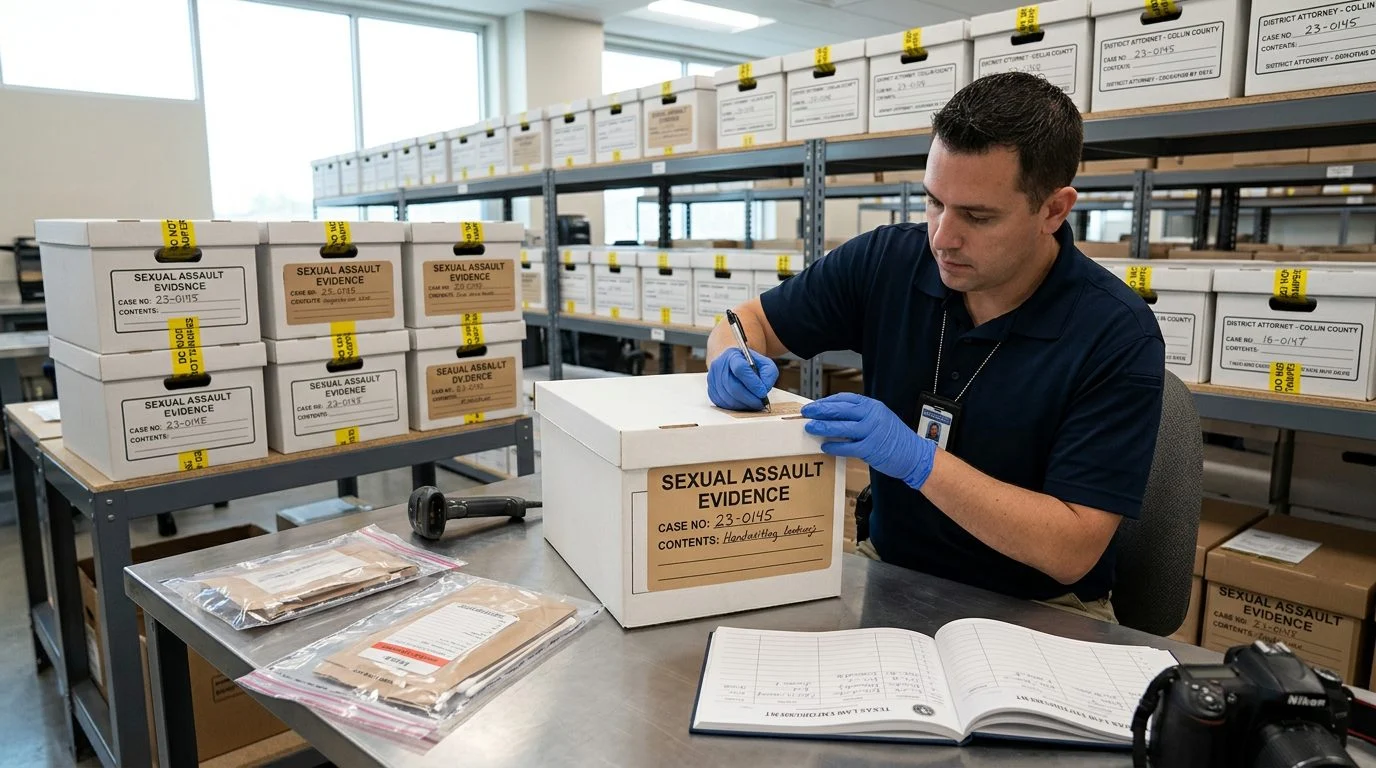
- DNA and forensic testing, where how a sample was collected and handled can matter as much as the result.
- The accuser’s later statements, including changes, gaps or inconsistencies over time.
- Past sexual conduct, which Texas limits. Evidence of a specific instance of a victim’s past sexual behavior is admissible only if the court follows the rule’s procedure and makes the findings the rule requires. Specific instances come in only after a judge rules outside the jury’s presence.
A past relationship does not answer the consent question for one specific incident. Each incident gets its own review.
Penalties and What Is at Stake for Your Spouse and Family
Sexual assault is generally a second-degree felony, and aggravated sexual assault is a first-degree felony. Under Texas Penal Code § 12.33, a second-degree felony carries 2 to 20 years in prison and a fine of up to $10,000.
Aggravated sexual assault under Texas Penal Code § 22.021 can apply when the statute’s extra circumstances are alleged, such as serious bodily injury, a deadly weapon or a victim younger than 14. Under Texas Penal Code § 12.32, a first-degree felony carries life or 5 to 99 years in prison and a fine of up to $10,000.
Beyond prison time, a conviction can affect work, housing, licensing and family arrangements. Families often feel these effects early.
Protective orders and bond conditions matter right away. Under Texas Penal Code § 25.07, a person commits an offense only if, knowingly or intentionally and in violation of a bond condition or protective order related to safety in a family violence or sexual assault case, the person engages in conduct the statute lists, such as certain communications, going to a specifically described place, or possessing a firearm. The statute covers communicating with the protected person in any manner, except through the defendant’s attorney or a court-appointed person, when the order bars contact. You should not carry messages, even kind ones.
How the Defense Process Works, Step by Step
The process usually moves from the charge, to the evidence, to the options. Timing depends on the court schedule and the evidence.
- Initial consultation. You describe what you know. The firm explains the charge and the next steps.
- Review of the charge and conditions. The team reviews the charging papers, bond or protective-order terms and what your spouse told police. Statements from custodial interrogation depend on whether police first gave the four Miranda warnings, under Dickerson v. United States. Police generally need a warrant to search a cell phone’s digital data, even after an arrest, under Riley v. California.
- Evidence review. Messages, witness statements, medical records and forensic results are checked for where consent is disputed.
- On a timely defense request, and subject to the restrictions provided by Section 264.408, Family Code, and Article 39.15 of this code, the State must produce offense reports and witness statements under Texas Code of Criminal Procedure art. 39.14. The defense checks them for gaps and inconsistencies.
- Options. The team explains options such as negotiation with the prosecutor, pretrial motions or trial, along with the tradeoffs of each.
No lawyer can ensure a particular timeline or result.
Why Families Turn to Barbieri Law Firm for This Charge
Barbieri Law Firm is an all-women criminal defense firm in Frisco, Texas. It defends people accused of sex crimes and assaultive offenses across Collin County, Dallas-Fort Worth and Texas.
Heather Jean Barbieri, Board Certified, Criminal Law — Texas Board of Legal Specialization. Carrie Thomas is also a lawyer with the firm. Our team reviews the evidence, including the accuser’s account, messages and forensic results, and explains your options.
The initial consultation is free, confidential, and carries no obligation to continue.
No lawyer can ensure an outcome, including the decision on any charge.
Not sure what your next step is?
Talk it through with our team — the first consultation is free, confidential, and carries no obligation.

Frequently Asked Questions
Can a sexual assault charge be dropped in Texas?
The prosecutor decides how to proceed based on the evidence. No lawyer can ensure a dismissal.
Does the firm handle these cases in Collin County?
Yes. The firm defends sex crimes and assaultive offense cases across Collin County and Dallas-Fort Worth.
Is consent usually the main issue?
Consent is the element a defense examines first. The review covers the evidence categories listed above.
If your spouse is facing this charge, you don’t have to sort out the consent questions alone. Call Barbieri Law Firm at (972) 424-1902, or send your case details through the contact page.
Attorney responsible for this site: Heather Barbieri, Barbieri Law Firm, Frisco, Texas.
How We Approach a Consent Dispute
Review the Evidence
We review the police report, witness statements, messages and any medical records, and explain what each item shows and what it leaves unanswered.
Act Early
Early review helps us identify and preserve timelines, messages and other evidence while details are still fresh.
Explain Your Options
We walk you through the choices at each stage of the case so you can make decisions with full information.
Handled With Discretion
Our team treats every conversation as confidential, and we take the time to understand what this situation means for you and your family.
Be Careful What You Say and Post
Text messages, social media posts and conversations with family members or your spouse can later be used as evidence. Speak with a lawyer before you give a statement to investigators or post anything about the accusation.
What Shapes a Consent Dispute
What the State Must Prove
We examine how the evidence supports or weakens each element.
Relationship History
Prior communications, living arrangements and past intimacy can all bear on what each person understood at the time. We look at the full context, not a single moment.
Medical and Physical Evidence
We review medical records, photographs and forensic findings with a critical eye and discuss what they can and cannot establish.
Your Account
We help you decide whether and how to speak with investigators or prosecutors, with the goal of protecting your position from the start.
Talk With Heather Barbieri in a Confidential Consultation
Related practice areas
Request a Consultation
Fill out the short form and we will take it from there.