

Accused of Sending Explicit Messages to a Minor? Talk With a Texas Defense Lawyer
Barbieri Law Firm defends people across Collin County, Dallas-Fort Worth and Texas, starting with a careful review of the messages, the people involved and the timeline.
By Heather Barbieri · Published November 20, 2026
Sending explicit messages to a minor can lead to criminal charges in Texas. Whether a charge applies turns on who sent what, to whom, and what the sender knew. This guide explains the main Texas laws, the facts that shape a defense, and the steps to take if you have been contacted about messages.
What Sending Explicit Messages to a Minor Means Under Texas Law
Sending explicit messages to a minor is not one crime in Texas. Several statutes can apply, depending on the ages involved and the material sent.
- Minor to minor. Under Texas Penal Code § 43.261, a minor commits an offense by electronically promoting sexual visual material of a minor to another minor. The sender must have produced it, or known another minor did.
- Possession. Possessing that material in electronic form is a Class C misdemeanor under the same section. Prior convictions raise the level.
- Adult to minor. Under Texas Penal Code § 33.021, a person 17 or older can commit an offense by communicating sexually with a minor online. The minor must be under 17, and the adult must intend to commit a listed offense. This is a third-degree felony, or a second-degree felony if the minor is under 14. Texas Penal Code § 33.021 reads: “(f) An offense under Subsection (b) is a felony of the third degree, except that the offense is a felony of the second degree if the minor is younger than 14 years of age or is an individual whom the actor believes to be younger than 14 years of age at the time of the commission of the offense.”
- Unwanted images. Under Texas Penal Code § 21.19, knowingly sending sexually explicit visual material electronically that the recipient did not request or expressly consent to is a Class C misdemeanor.
The Texas Attorney General cyber safety resources offer Texas information on online solicitation of minors.
Sexting Between Teens and Juvenile Court
A minor accused of sexting another minor may face a juvenile matter, not an adult case. The ages of both people are central to the analysis.
Section 43.261 includes an affirmative defense. It applies when the material shows only the sender or another minor, and that minor is not more than two years older or younger. The two must have had a dating relationship at the time, or the other minor must have been the actor’s spouse at the time of the offense. The material must also have gone only between them. See § 43.261 for the full text.
A school referral or a police referral can start a case before any charge is filed. School discipline can also run on its own track, separate from any court case.
You should take the allegation seriously without assuming the worst. The ages, the relationship, and who sent each message will shape what happens next.
What the State Must Prove and Where Defenses Are Built
A defense starts by testing the evidence against each element.
- Under § 43.261, the state must show the sender produced the material or knew another minor did.
- Under § 33.021, the state must show the adult’s intent. It must also show the minor was under 17, or that the adult believed the minor was.
- Facts to review: who sent each message, whether an image arrived unasked, whether an account was shared or fake, and whether the other person gave a false age.
Possession has its own defenses. Section 43.261 also has a defense for a person who received material from another minor, did not solicit it, and destroyed it within a reasonable time.
Images can bring separate possession or promotion allegations. Each needs its own analysis.
Complicating Factors That Change the Case
Several facts can raise the level of a charge or add a second one.
- School hours. Under § 33.021, punishment rises to the next higher category if the offense happens during school hours and the adult knew or should have known the minor was enrolled in school.
- Prior convictions. Under § 43.261, a prior conviction raises a possession charge to a higher misdemeanor level.
- Obscenity. Under § 43.23, promoting obscene material is a Class A misdemeanor.
- Registration. Under Article 62.301, a person required to register only as a result of a single reportable conviction, whose judgment includes an affirmative finding under Article 42.017 or 42A.105(c), may petition the court for an exemption. The court decides after a hearing.
- Protective orders. Under Article 7B.003, a conviction or deferred adjudication for certain listed offenses counts as reasonable grounds for a protective order.
Investigations can take months before a charge is filed. Early choices can affect later options.
If Police, a School or a Parent Contacts You
Do not delete messages, accounts, or images, and talk with a lawyer before answering detailed questions about the messages.
- Do not delete anything on any device.
- Do not tell the minor to delete anything. Deleting can create new questions for investigators.
- Do not give detailed answers to police or school officials before you speak with counsel.
- How a minor is questioned turns on the setting and the statutes involved.
For general context, read talking to police about online allegations. That guide does not replace advice about your own case.
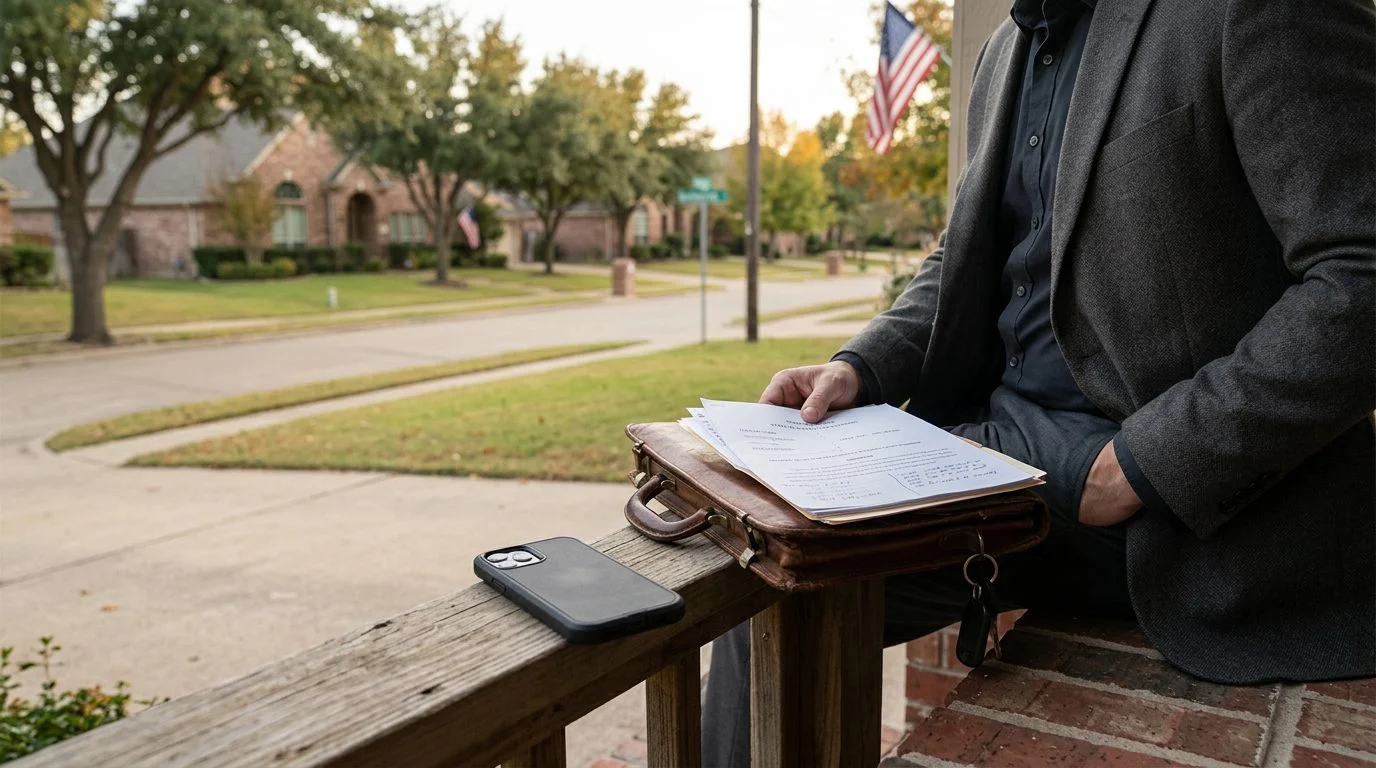
How a Texas Sexting Defense Case Typically Moves Forward
A case usually moves through four stages: a consultation, an evidence review, a discussion of options, and court dates.
- Consultation. We review the charge, the timeline, and your immediate questions.
- Evidence review. We look at the messages, devices, accounts, and any police or school records. We explain what the evidence shows and what it does not.
- Options. These may include talks with the prosecutor, pretrial motions, or trial. You make the decisions after you get advice.
- Court dates. Timelines vary by county, court, and charge. No fixed schedule applies.
Why Clients Work With Barbieri Law Firm
Barbieri Law Firm is an all-women criminal defense firm in Frisco, Texas. It defends people accused of sex crimes and online sex crimes in Collin County, Dallas-Fort Worth, and across Texas.
Our lawyers are Heather Barbieri and Carrie Thomas. Heather Jean Barbieri, Board Certified, Criminal Law — Texas Board of Legal Specialization.
We will review the evidence, including the messages, the device, and the timeline. We will explain what it shows and what options your case may have. No lawyer can promise or predict the outcome of a case.
Frequently Asked Questions About Sexting Charges in Texas
Is sending explicit messages to a minor always a sex crime in Texas?
No. The charge turns on the ages, what was sent, and which statute applies.
Bring those facts to a lawyer early.
Talk Through Your Situation With Barbieri Law Firm
If police, a school, or a parent has raised explicit messages on a phone, you may be facing a situation you did not choose. You do not have to sort it out alone.
To schedule a free consultation, call (972) 424-1902, or send your case details through the contact form. Our first consultation is free, confidential, and comes with no obligation to continue.
Attorney responsible for this site: Heather Barbieri, Barbieri Law Firm, Frisco, Texas.
How our team approaches these cases
We review the full conversation
We look at the complete exchange, the platform used and the timeline, not only the excerpts that have been shared with you.
We explain your options
After reviewing the facts, we walk you through the questions that matter and what each path could mean for you.
A women-led firm
Barbieri Law Firm is an all-women firm based in Frisco, Texas. Our attorneys and support staff work with clients throughout Collin County and beyond.
Prompt attention
Early contact helps us gather information while it is still fresh and before statements are made.
Before you speak to anyone
Investigators, school officials or family members may ask questions that seem routine. Talk with a defense lawyer before you answer questions, delete anything or hand over your phone.
Questions people ask us first
Do the ages of the people involved matter?
Age is often central to these cases. We examine the exact ages, the dates and what the sender knew about the other person.
What if the messages were sent through an app or game?
Messages sent through apps, social media or games are reviewed together with platform records, timestamps and account information.
Who should I contact first?
Contact a defense lawyer before you respond to police, school staff or the other family. Our free, confidential consultation is a good place to start.
What happens at the first consultation?
We listen to your account, review what you already have and explain the questions to consider. The consultation is free, confidential and carries no obligation to continue.
Talk with Barbieri Law Firm about your case
Related practice areas
- Online Sex Crimes Defense Lawyer
- Online Sex Crimes Defense for Medical Professionals in Texas
- Online Sex Crime Charges in Collin County
- What Should I Say If Police Contact Me About Online Messages in Texas?
Request a Consultation
Fill out the short form and we will take it from there.