


Frisco, Texas | Collin County and Dallas-Fort Worth
Facing a Protective Order After an Online Sex Crime Accusation?
Get clear answers about your children, your home and your next steps from a Texas criminal defense lawyer who focuses on these cases.
By Heather Barbieri · Published November 16, 2026
You may have just been handed papers asking for a protective order, and a criminal case may already be open. Your first question is probably about your children.
Short answer: a Texas protective order can limit your contact with your children. A judge sets those limits case by case, and no lawyer can predict the ruling. Here is how these orders work alongside a criminal case.
Why a protective order may come up in your case
A protective order request can be filed alongside an online sex crime accusation or another child-related accusation. It can come up during a divorce, a custody fight or a CPS case. It is a separate court matter from the criminal charge, so the two can move on different schedules and in different courtrooms.
Under Texas Code of Criminal Procedure art. 7B.001, the victim of a listed offense may file the application. So may an adult acting for a victim younger than 18.
A request is not a conviction. At the hearing, the judge decides whether there are reasonable grounds to believe the applicant is a victim of a listed offense, under art. 7B.003.
Losing time with your children while the criminal case is open is a heavy fear. This page answers it directly.
If a protective order request has reached you while a criminal case is open, your children may be on your mind. Our team can review the papers and deadlines with you. Talk it through with our team — the first consultation is free, confidential, and carries no obligation.

The types of protective orders in Texas
Texas uses two main paths. The facts of the allegation shape which one applies.
- Listed offenses (Chapter 7B). Under Chapter 7B of the Texas Code of Criminal Procedure, victims of listed offenses, including sexual assault and aggravated sexual assault, may apply for a protective order. The application can go to a district, juvenile or county court where the applicant lives, where the alleged offender lives, where an element of the offense occurred, or to any court with jurisdiction over a protective order under Title 4, Family Code, involving the same parties.
- Family violence (Chapter 85). At the close of a hearing, the court must find whether family violence has occurred. Family Code § 85.001.
- Temporary orders. The court may issue a temporary ex parte order without notice to you and without a hearing, if it finds a clear and present danger. Art. 7B.002.
A temporary order can be issued before you are heard. Read it closely the day you receive it, and bring it to counsel.
Can you still see your children while a protective order is in place?
The answer comes from the order’s exact terms, which a judge sets for each case. Contact limits can be broad or narrow, so read the wording itself.
Under art. 7B.005, a court may bar you from communicating with the applicant or household members in a threatening or harassing way. The court may also bar all contact except through the applicant’s attorney or a court-appointed person, if it finds good cause.
The court may bar you from going to or near the home, workplace or business of the applicant or a household member. It may also bar you from a child-care facility or school they use. Each prohibited place and any minimum distance must be named in the order, unless the court has received a request to maintain confidentiality of information revealing the locations.
Family Code orders can reach a child’s school too. Family Code § 85.022 allows a court to bar you from going near a school or child-care facility a protected child normally attends.
No lawyer can predict how a judge will rule on access to your children. Review any existing family-court order about your children alongside the protective order.
What happens at the first hearing, step by step
Before the hearing, you can work through these steps with counsel.
- Read every paper. Note each date, each requested term and any temporary order.
- Review the allegations. Check what the applicant says about your children, and compare it with the criminal charge.
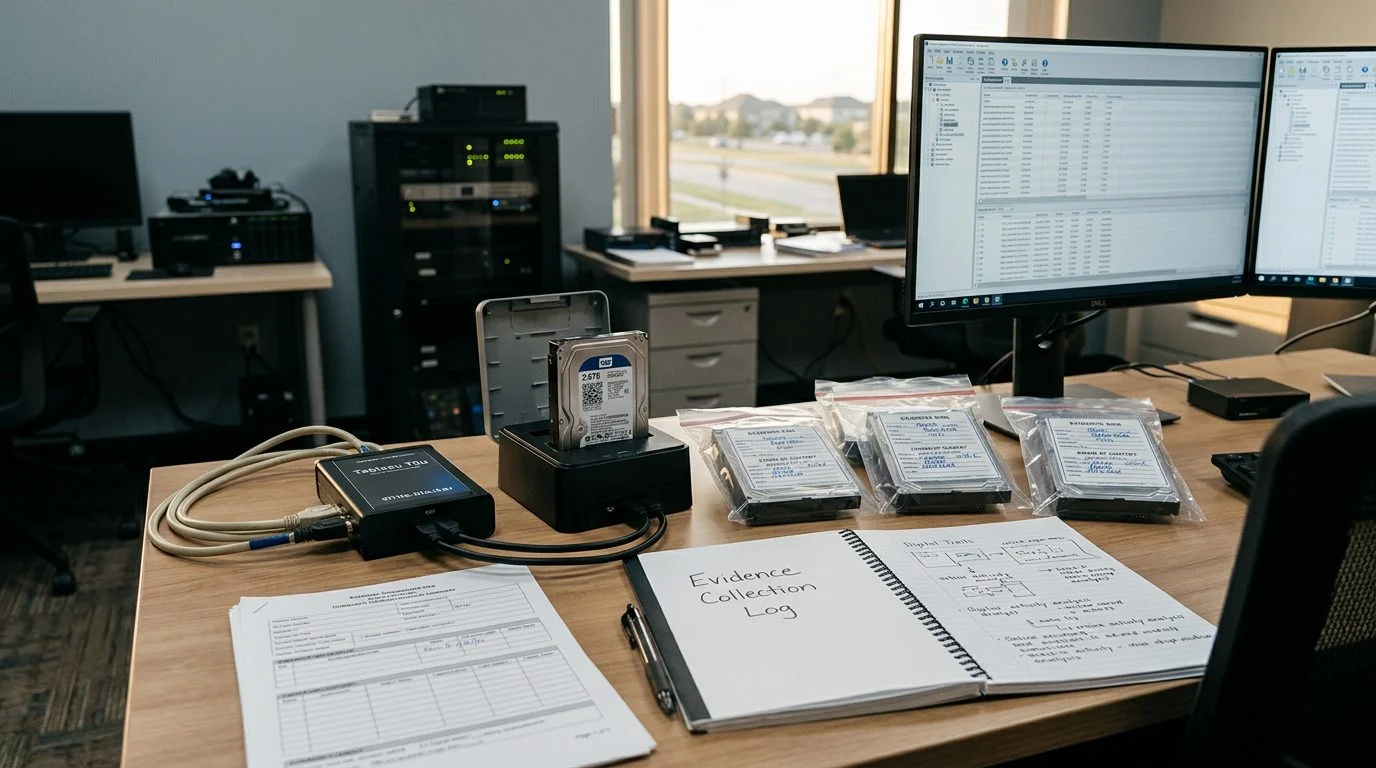
- Review the digital evidence. Police generally need a warrant before searching a cell phone’s digital information, even after an arrest. Exceptions for urgent, case-specific emergencies may still apply. Riley v. California
- Plan your testimony. The Fifth Amendment says no one may be compelled in any criminal case to be a witness against himself. Talk with counsel before you answer questions about the allegations, in either court. Fifth Amendment text
- Expect the court’s findings. The court must make the findings the law requires at the close of the hearing.
What violating a protective order can add to your case
Violating a protective order can be charged as a separate offense, on top of the original allegation. Art. 7B.006 notes that an act resulting in a separate offense may be prosecuted in addition to the order violation.
Penal Code § 25.07 makes it an offense to knowingly or intentionally violate an order or bond condition related to the safety of a victim or the community in a family violence, sexual assault or abuse, indecent assault, stalking, or trafficking case. It covers threatening or harassing communication and going to or near the home or workplace of a protected person, or a child-care facility or school where a child protected by the order normally resides or attends, as specifically described in the order or condition of bond.
Indirect contact can count too. The statute covers a threat sent through another person, and communication the order bars in any manner, except through the person’s attorney or a person appointed by the court.
How Barbieri Law Firm handles the protective order and the criminal case together
Barbieri Law Firm reviews the protective order and the criminal case together. That way, a position taken in one court gets checked against the other.
The firm is an all-women criminal defense firm in Frisco, Texas. It defends sex crimes and assaultive offenses across Collin County, Dallas-Fort Worth and Texas, including online sex crimes and child sex crimes.
Heather Jean Barbieri, Board Certified, Criminal Law — Texas Board of Legal Specialization, leads the firm. Our lawyers include Heather Barbieri and Carrie Thomas.
In practice, our team reviews the petition, the criminal allegation, the digital evidence and the family-court record. We identify the deadlines, explain your options and prepare for each hearing. No lawyer can predict an outcome in a case like this.
The initial consultation is free, confidential and without obligation to continue.
Not sure what your next step is?
Talk it through with our team — the first consultation is free, confidential, and carries no obligation.
Frequently asked questions about protective orders and your children
Is it worth contesting a protective order if I did not do what I am accused of?
A judge decides the request at a hearing.
What can a protective order require me to stay away from?
Under art. 7B.005, the court can bar you from places the order names, such as a home, workplace, school or child-care facility. Each place, and any minimum distance, must be spelled out, unless the court has received a request to maintain confidentiality of information revealing the locations.
Under Texas Code of Criminal Procedure Art. 7B.003, if the court finds reasonable grounds to believe the applicant is the victim of a listed offense, the court shall issue a protective order, and a conviction of or placement on deferred adjudication community supervision for a listed offense constitutes reasonable grounds.
Can I still see my children if the order is in place?
A judge sets the terms case by case, and the order’s wording controls what you may do. No lawyer can predict that ruling.
Talk with a Frisco criminal defense team before your hearing
If a protective order request has reached you, a hearing date may be close, and your children are on your mind. You do not have to sort out the papers alone.
Call (972) 424-1902 or send your case details through the contact form. Our team will review your papers and deadlines with you.
Attorney responsible for this site: Heather Barbieri, Barbieri Law Firm, Frisco, Texas.
How our team approaches your case
We review the order line by line
We look at what the order names, including places, contact limits and any distance requirements, so you know exactly what it asks of you.
We review the evidence
We examine the accusation, the messages and any digital records, and explain what they may mean for the case.
We plan around your children
We talk through your parenting schedule, school and child-care needs, and how to address them with the court.
We explain your options
We walk you through the hearing and the choices ahead, so you can make informed decisions.
Talk to a lawyer before you act on the order
Before you contact the protected person, your children's school or the other parent about the order, speak with a lawyer about what you can say and do.
Questions parents ask us most
Can I still see my kids?
The answer depends on what the order says and what the court decides at the hearing. We will review the order with you and explain your options.
What happens at the hearing?
We prepare you for the hearing, including the evidence the court will consider and the questions you may be asked.
What if the accusation is online?
Messages, accounts and device records can be central to these cases. We review the digital evidence carefully with you.
Can I talk to the court about my children?
We help you think through what to say, how to present your parenting plan and how to keep your focus on your children.
Talk with a Frisco criminal defense lawyer about your children. Your first consultation is free, confidential and carries no obligation to continue.
Related practice areas
Request a Consultation
Fill out the short form and we will take it from there.