


Online Sex Crimes Defense | Frisco, Texas
Under Investigation for an Online Offense? Get Your Footing Before the Next Step
Investigators often move quickly, and what you do in the first days can shape what comes next. Here is how to protect yourself while the case is still unfiled.
By Heather Barbieri · Published November 18, 2026
Learning that police are looking into you can make everything feel urgent. If you have received a detective’s voicemail, heard about a warrant, or been served with a protective order, you may be facing this stage before any charge is filed. This page explains what that stage looks like and what to do in the first days, so you can decide with clear facts.
What a Pre-Charge Online Sex Crime Investigation Is
A pre-charge investigation is police work that happens before anyone files a case against you. It often starts with a tip. The National Center for Missing & Exploited Children runs a CyberTipline for suspected online child exploitation, including online enticement. NCMEC refers those tips to law enforcement agencies for possible investigation.
Investigators then work to connect an online account, a device and internet activity to a person. The offense of online solicitation of a minor is set out in Texas Penal Code § 33.021. A “minor” under that statute includes someone you believe is younger than 17. So what you believed about age is part of the legal question. Soliciting a minor to meet for sexual contact, sexual intercourse, or deviate sexual intercourse under that section is a felony of the second degree, while an offense under Subsection (b) is a felony of the third degree, or of the second degree if the minor is younger than 14 years of age or is someone the actor believes to be younger than 14 at the time of the offense.
Your first contact may be a phone call, an interview request, a warrant or a protective order. Each one calls for a different response. The next sections explain how to handle them.
If a detective has called, or a warrant or protective order has reached you, you do not have to face the next step alone, and our team is ready to talk with you. Talk it through with our team — the first consultation is free, confidential, and carries no obligation.
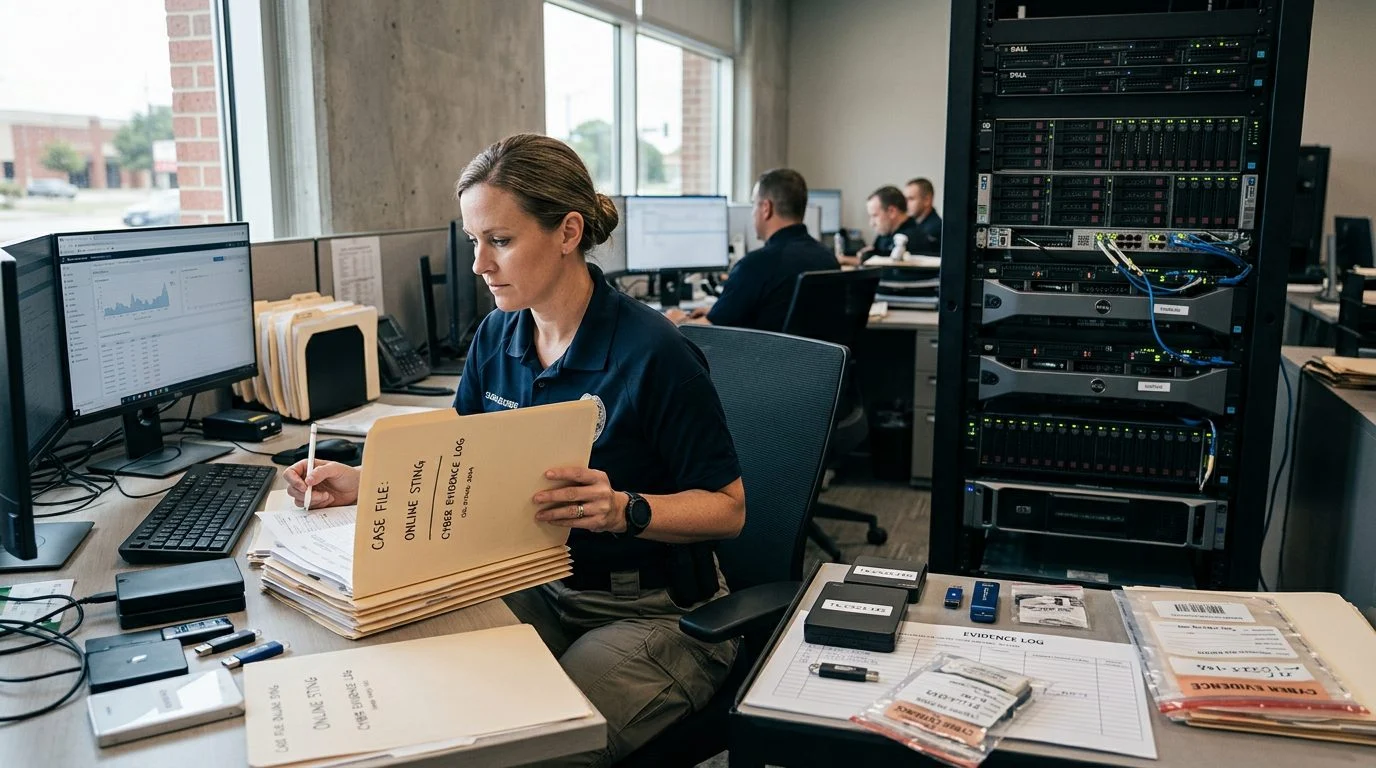
What to Do and What to Avoid in the First Days
In the first days, if you are subpoenaed to appear before a grand jury, you can refuse to answer any question whose answer would incriminate you, and you have the right to a lawyer to advise you outside the room before answering such questions. Under Texas Code of Criminal Procedure art. 1.051, a defendant is entitled to be represented by counsel in an adversarial judicial proceeding. The right also includes the right to consult in private with counsel sufficiently in advance of a proceeding to allow adequate preparation for the proceeding. The Fifth Amendment also protects you from being compelled to be a witness against yourself.
Keep these habits in mind:
- Do not delete messages, accounts, photos or files. Deleting can create new problems, so ask counsel first.
- Do not contact the person who made the report, their family or anyone tied to the allegation.
- Write down each detective’s name, agency, any case number, and the date and time of each contact.
- Keep every warrant, protective order or notice you receive.
- Limit talk at work, and do not post about the matter online.
- If police call, take the name and number, and say you will respond through counsel.
Interviews, Devices and the Forensic Review
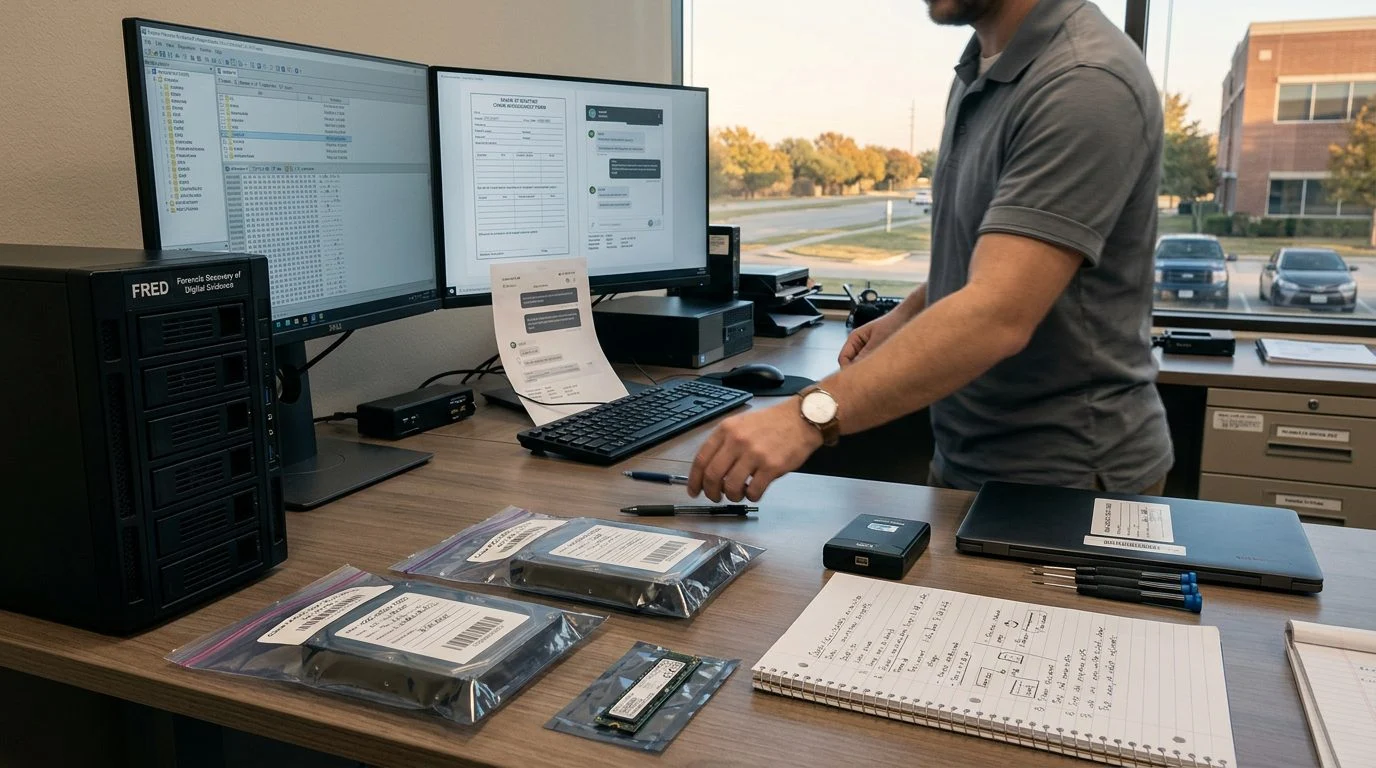
Police generally need a warrant before they search the digital contents of a phone. That rule applies even to a phone taken from someone lawfully arrested. In Riley v. California, the Court explained: “Our holding, of course, is not that the information on a cell phone is immune from search; it is instead that a warrant is generally required before such a search, even when a cell phone is seized incident to arrest.”
Phone location records follow a similar path. Carpenter v. United States holds that the government generally needs a warrant supported by probable cause to get historical cell-site location records from a phone company.
Consent is a separate path. Under Texas Code of Criminal Procedure art. 18.0215, an officer may search a phone without a warrant if the owner or possessor of the phone consents to the search. That is why a request to look through your phone deserves a conversation with counsel first.
Interviews carry their own risk. Under Dickerson v. United States, whether a statement from custodial interrogation can be used against you turns on whether police first gave the Miranda warnings. Those warnings include the right to remain silent. After a device is taken, examiners review its data and the timing of activity. That work takes time, so early planning matters.
What Defense Work Covers Before Any Charge
Pre-charge defense work means reviewing what you know, advising on each request, and routing contact through one lawyer. Our team reviews the report, the messages or account activity described to you, and your own timeline of contacts. For clients at this stage, we also:
- Advise whether to speak with investigators, and how to answer requests for interviews, devices or records.
- Communicate with the investigating agency and the prosecutor’s office, so requests come through one channel.
- Evaluate device and account evidence, and explain the options available now.
- Prepare for a possible arrest or warrant, including bond conditions and what to do at home or at work.
Some issues need early attention. Under Texas Penal Code § 25.07, knowingly or intentionally violating certain protective orders, or a bond condition related to the safety of a victim or the community in a family violence, sexual assault or abuse, indecent assault, stalking, or trafficking case (for example, by communicating with a protected person or going near their home or work), is its own offense. Under Texas Code of Criminal Procedure art. 7B.002, if the court finds from the application that there is a clear and present danger, it can issue a temporary protective order without further notice to the accused or a hearing. In an undercover online sting, Texas Penal Code § 8.06 makes entrapment a defense when a law enforcement agent induces the conduct using persuasion or other means likely to cause persons to commit the offense. Merely giving someone an opportunity to offend is not entrapment.
No lawyer can assure you how a case will end. No pre-charge review can predict whether a charge will be filed.
From Investigation to Arrest, Charges and Bond
An investigation can end without charges, or it can move toward an arrest, a warrant or a formal charge. Under Texas Code of Criminal Procedure art. 18.03, a search warrant may also order an arrest if the facts show probable cause that a person committed an offense.
Court papers can become visible. Under art. 18.01, a sworn affidavit showing probable cause must be filed to request a search warrant. Unless this code provides otherwise, the affidavit becomes public information when the search warrant for which it was presented is executed, and the clerk must make a copy available for public inspection. If a grand jury subpoenas you, art. 20A.258 requires warnings in writing and orally. You also get a reasonable chance to consult with counsel before appearing.
Registration is tied to specific outcomes. Under art. 62.001, a reportable conviction includes a deferred adjudication for a violation of Penal Code § 33.021.
Your License, Employer and Family: Records and Reporting
An investigation, a charge and a conviction can each leave a different record. Planning starts with knowing which records may exist for your situation.
- A warrant affidavit can become public once the warrant is executed, as described above.
- Sex offender registration follows certain qualifying convictions and adjudications.
- Employers may have policies on investigations. Plan with counsel about what to say and when.
- If your family does not yet know, how and when they hear about it is a decision you can make with counsel. You want them to hear it from you, not from someone else.
Not sure what your next step is?
Talk it through with our team — the first consultation is free, confidential, and carries no obligation.
Common Questions Before You Decide
You can decline a detective’s questions and ask for a lawyer, and a lawyer can help you plan each step.
Can I stay silent if a detective calls?
You can decline to answer questions and ask for a lawyer. Speak with counsel before you respond to any call.
Will police come to my workplace?
Whether and how police make contact depends on the facts of the investigation. A lawyer can help coordinate any contact.
Does an investigation go on my record?
An investigation without a charge leaves a different record than a filed case. A warrant affidavit can become public once the warrant is executed.
Can a lawyer tell me how this will end?
No lawyer can assure you how a case will end. A consultation reviews what you know and explains your options.
What does the first consultation cost?
The initial consultation is free, confidential and carries no obligation to continue.
Why Barbieri Law Firm for This Stage
Barbieri Law Firm is an all-women criminal defense firm in Frisco, Texas. It defends professionals accused of sex crimes and assaultive offenses across Collin County, Dallas-Fort Worth and Texas.
Heather Jean Barbieri, Board Certified, Criminal Law — Texas Board of Legal Specialization.
Our lawyers include Heather Barbieri and Carrie Thomas, and our support staff assist the office. At this stage, we review the evidence, including device and account records. We explain your options and communicate with investigators and prosecutors for you.
If a detective has called, or a warrant or protective order has reached you, you do not have to face the next step alone. Call (972) 424-1902, or send your case details through our contact page. Our team will talk with you about your options.
Attorney responsible for this site: Heather Barbieri, Barbieri Law Firm, Frisco, Texas.
Why early legal guidance matters
Protect your rights
A lawyer can explain your options and help you avoid statements or actions that could complicate the investigation.
Review the evidence
We review the devices, accounts, messages and records involved so you understand what investigators may already have.
Coordinate any contact
If police or prosecutors reach out, we can handle communication so your side of the story is not shared without planning.
Act while options remain open
Early involvement gives us time to gather information, preserve evidence and build a defense before charges are filed.
Warning: Do not talk to investigators without a lawyer
Anything you say to a detective, officer or prosecutor can become part of the case. Decline to answer questions and ask for an attorney before you respond to any call, text, visit or email.
What to do right now
Stay calm and stay quiet
Do not explain, apologize or argue about the allegations with anyone involved in the investigation.
Keep your devices and accounts intact
Do not delete, edit or reset messages, profiles, files or devices. Destroying information can create serious new problems.
Write down what you remember
Note who contacted you, when, and what was said. Share these notes only with your lawyer, not with friends or online forums.
Reach out to a defense lawyer
Bring any letters, subpoenas, screenshots or notices to a consultation so we can review them with you.
Talk with Barbieri Law Firm before the investigation advances. The first consultation is free, confidential and carries no obligation to continue.
Related practice areas
Request a Consultation
Fill out the short form and we will take it from there.